111582424449
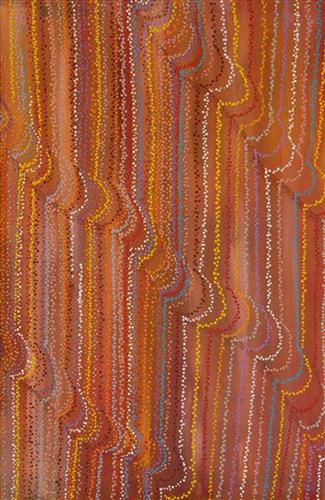
Tali
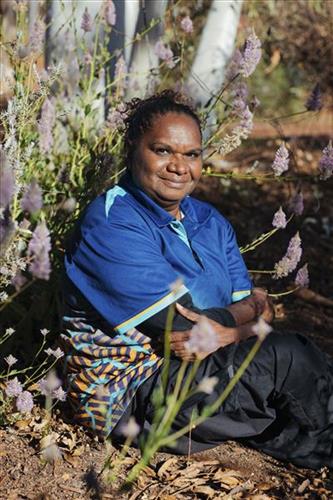
“The sand dunes play important roles in our Martu culture, especially in most parts of the desert regions. Tali (sandhills) are sometimes boundaries, travel pathways, and act as wind breaks in windy seasons for Martu. I have been guided by my elders, Muuki, Nola, and Wokka Taylor in what to paint and what not to paint. And as young adults we paint seasons, some rockholes and sand dunes, some animals too. This painting are the Tali, at Kulyakartu.”
– Nuriah Jadai
The traditional lands of the Martu people encompass the Great Sandy Desert and Rudall River regions of Western Australia, an enormous tract dominated by distinctive red tali, or tuwa (sandhills). These sandhills present an unforgiving landscape; sparse vegetation covers a seemingly never ending expanse of dunes, and yet these lands and the location of resources within them was known intimately by its pujiman (traditional, desert dwelling) inhabitants. At this time, Martu traversed very large distances annually in small family groups, moving from water source to water source through the harsh desert landscape with incredible stamina and resourcefulness. Travel was often undertaken at night, and when travelling during the day, Martu wore yakipiri (woven bark sandals) to protect their feet from the hot desert sand.
The Martu term for family, walytja, encapsulates a broader idea of relatedness that permeates every aspect of life. The Martu four-section kinship system determines a person as belonging to either the Purungu, Milangka, Panaka or Karrimarra skin group, and was created by the Jukurrpa (Dreaming) ancestors.
The significance of walytja is revealed in Martu art not only in its depiction of ngurra as delineated by ancestral inheritance, but also through the act of painting itself. Martumili artists begin to paint with their parents, grandparents and extended family, fostering an organic process of learning about painting techniques, along with knowledge of specific locations and their related Jukurrpa narratives. In this way, the passing down of cultural knowledge through art ensures the continuity of Martu heritage.