111582428781

Published by on


Kiriwirri

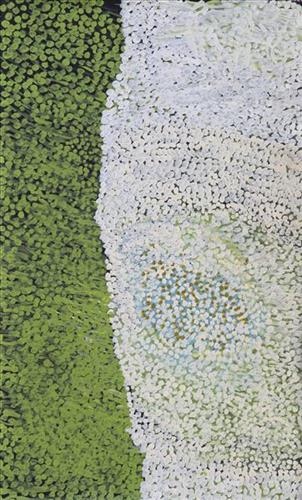
Kiriwirri is a soak located in the Percival Lakes region of Western Australia’s Great Sandy Desert. The site was a popular camping area during the pujiman (traditional, desert dwelling) era due to its reliable water source and the abundance of minyarra (bush onion) found in the area. Kiriwirri is also a site visited by the Wati Kujarra (Two Goanna Men), ancestral beings responsible for the creation of many land features in Martu Country and beyond in a key Jukurrpa (Dreaming) narrative. The Wati Kujarra existed as half men, half goanna who travelled, hunted, and burned Country together.

During the pujiman period, Martu would traverse very large distances annually in small family groups, moving seasonally from water source to water source, and hunting and gathering bush tucker as they went. At this time, knowledge of water sources was critical for survival, and today Martu Country is still defined in terms of the location and type of water. Each of the hundreds of claypans, rockholes, waterholes, soaks and springs found in the Martu desert homelands is known by name, location, quality and seasonal availability through real life experience and the recounting of Jukurrpa narratives. 

Soaks, or soakwaters, derive their name from the manner in which their waters generally seep into the sand from below stores, sometimes as part of an ephemeral river or creek. Soaks were an especially important source of water during the pujiman era, being the most dependable water source in times of drought. Water was obtained from soaks by scooping away the sand with a piti (timber bowls used for carrying food and water) until clear water gathered at the base of the hole, sometimes at a depth of several metres. 
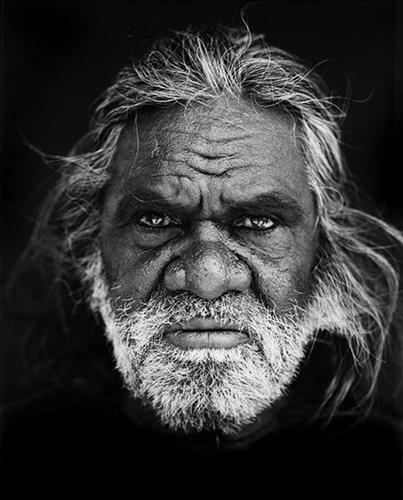
Name: Muuki Taylor OAM


Language: Manyjilyjarra


Community: Parnngurr


Biography:

“Long ago we were living pujiman (traditional, desert dwelling) [lifestyle]. Our people took us about and grew us up. We stayed around in the north and grew up around Punmu… and along the lake [Nyayartakujarra, Lake Dora] to Karlamilyi. We would [hunt] animals… eat kalaru (salt bush, samphire) seeds, [witchetty] grubs… [and] minta (botanical gum). 

We would see aeroplanes, then we would run and keep quiet in the bushes. We didn’t know what it was. We had never seen a white man… We stayed there, where there were no white men. We didn’t see any motorcars. Nothing… Then Aborigines and white men got us and took us to Jigalong.” 

Muuki Taylor as translated by Kanyirninpa Jukurrpa


Muuki was born around 1945 at Wayinkurangu, a soak located within the Percival Lakes region of the Great Sandy Desert. He is the eldest brother of fellow Martumili Artists Wokka Taylor and Ngalangka Nola Taylor. In his youth Muuki’s family travelled hundreds of kilometres on foot, from the northern boundary of the Martu homelands through to Parrngurr, at the southern end of the Karlamily (Rudall River) region. They continued to live a pujiman (traditional, desert dweliing) lifestyle until being collected from Balfour Downs Station and taken to Jigalong Mission in the 1960s. They were one of the last Martu families to leave the desert.

Muuki is a highly respected cultural leader, and is often called upon as an authority by other artists. In addition to painting with Martumili Artists, Muuki works as a Senior Cultural Advisor for local Martu ranger group, Kanyirninpa Jukurrpa, where he provides invaluable advice and guidance.

Muuki paints his ngurra (home Country, camp) in the north of Martu Country, with a particular focus on Kulyakartu; flat, grass Country close to the Percival Lakes. He spent much time in this area in his youth, and has incredibly in depth knowledge of its resources, physical elements, seasonal life cycles and Jukurrpa (Dreaming) narratives. His works are encyclopaedic, detailing all aspects of Country from vanished roads to living water sources embedded within a subtle patina composed of hovering dots and brushstrokes. Muuki’s work has been exhibited widely across Australia and internationally, and acquired by the National Museum of Australia.

In 2020 Muuki was awarded the Order of Australia Medal (OAM) for his service to Martu and work with KJ. In 2023, His Excellency Chris Dawson, Governor of Western Australia, presented the award to Muuki on behalf of all Australians.


© the artist / art centre