Lalapakujarra
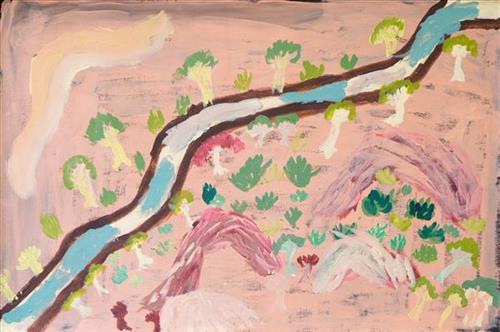
“This painting shows Karlamilyi River (Rudall River) and [the] yinta (permanent spring), Lalapakujarra. This is our father’s name; it is his Country. This Country has a lot of stories. I asked my dad and grandfathers what was the stuff coming out of the tree here. I was a silly kid then. They used to get waranu (sugarbag, lerp), fall down out of the tree, the old people swept it up, yandied (winnowed) it and cooked it up. The mumanl (god) gave it to the old people in the Jukurrpa (Dreaming) days, at what is now Christmas time.”
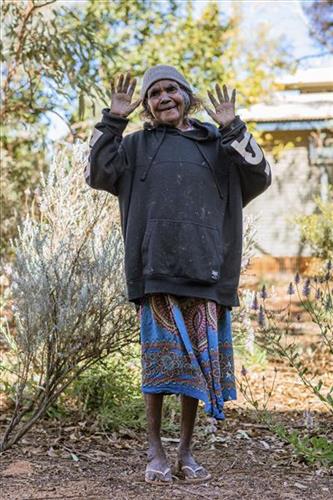
– Sisters Jatarr Lily Long and Wurta Amy French
Lalapakujarra is a creek located along the Karlamilyi River. According to two of the central Martu Jukurrpa (Dreaming) narratives, the Karlamilyi River and its surrounds were created by the ancestral beings Jila Kujarra (Two Snakes) and the Wati Kujarra (Two Goanna Men) as they travelled across the lands.
Lalapakujarra is particularly significant for sisters Wurta and Jatarr, as this site is the birthplace for their father, and through him part of their ngurra (home Country, camp). The Western Desert term ‘ngurra’ is hugely versatile in application. Broadly denoting birthplace and belonging, ngurra can refer to a body of water, a camp site, a large area of Country, or even a modern house. People identify with their ngurra in terms of specific rights and responsibilities, and the possession of intimate knowledge of the physical and cultural properties of one’s Country. This knowledge is traditionally passed intergenerationally through family connections. Painting ngurra, and in so doing sharing the Jukurrpa stories and physical characteristics of that place, has today become an important means of cultural maintenance. Physical maintenance of one’s ngurra, like cultural maintenance, ensures a site’s wellbeing, and is a responsibility of the people belonging to that area.
Also referred to in Wurta and Jatarr’s account of the Lalapakujarra area is the collection of a type of botanical gum that was yandied, cooked and then eaten. During the pujiman (traditional, desert dwelling) period, Martu would traverse very large distances annually in small family groups, moving seasonally from water source to water source, and hunting and gathering bush tucker as they went. Whilst desert life has moved away from mobile hunter-gatherer subsistence throughout the course of the twentieth century, bush tucker continues to be a significant component of the modern Martu diet.