Lighting and Rock
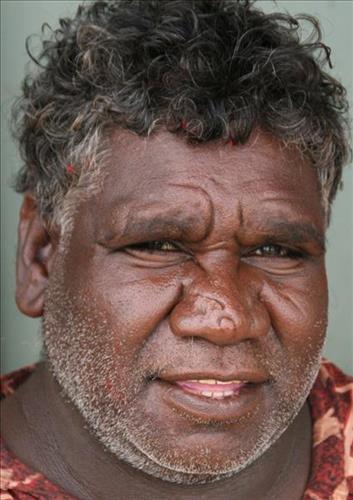
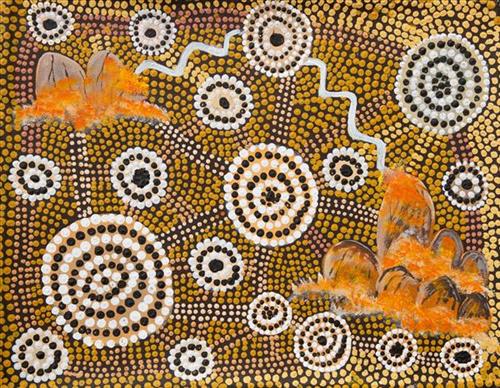
“Kiwirrkurra road. That’s where the Kataputa (thorny devil) is. Two Wati (men) Kujarra there. They were fighting and they striked each other. That’s why they turned into rock. Kumpaya told me this story.
Tingarri [is a] man who hold the lore and the land. Man who holds knowledge. Tingarri look after the land. I was showing young man how to carve the boomerang and the shield. Tingarri is the name of the man who controls the lore, looks after the people, and the country, the waterholes. It’s a person, and three rockholes. Not far from 33 [Kunawarritji], just further East. Tingarri is more of a story – man who holds knowledge and holds law. Lighting strikes turned the human into rocks. On Manyjilyjarra land. Right up to east of Wiluna. That old fella, he was the last one holding the Tingarri but know he’s finished, in 33”
– Kennedy Finlay
The term Jukurrpa is often translated in English as the ‘dreaming’, or ‘dreamtime’. It refers generally to the period in which the world was created by ancestral beings, who assumed both human and nonhuman forms. These beings shaped what had been a formless landscape; creating waters, plants, animals, and people. At the same time they provided cultural protocols for the people they created, as well as rules for interacting with the natural environment. At their journey’s end, the ancestral beings transformed themselves into important waters, hills, rocks, and even constellations.
Kunawarritji (33) is an important site in the Great Sandy Desert where multiple stories and histories intersect. Originally a spring water and major Martu pujiman (traditional, desert dwelling) camping site, at the turn of the 20th century Kunawarritji was converted into a well along the Canning Stock Route. Each year throughout the 1930-50s, the well became a site of contact between the drovers, their cattle, and desert families.