111982434740

Published by on


Bekka (File Snake)

Throughout the 1990s, artists Lena Yarinkura and her mother Lena Djammarrayku (now deceased) diverged from the more conventional fibre work of their contemporaries, extending traditional weaving techniques and materials to make new ambitious and innovative sculptural forms. Yarinkura applied the dilly bag, fish trap and coil basket weaving techniques to make the body of new forms, such as djamo (dog), yok (bandiboot) and yawkyawk (female water spirit), which she then filled with paperbark and painted with ochre. Yarinkura and her husband Bob Burruwal have also become renowned for their distinctive spirit figures, including wurum and wyarra, which are often displayed as part of large installations. In using her weaving skills to make three-dimensional representations, Yarinkura has adapted a traditional weaving technique to explore new narrative possibilities for expressing important cosmological themes or illustrating stories from her homeland. Yarinkura and Burruwal’s children, grandchildren and extended family, including Yolanda Rostron, Philimena Kelly, Vera Cameron and Gloreen Campion, continue this legacy.
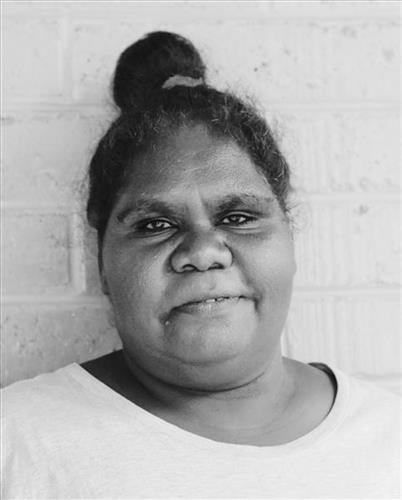
Name: Yolanda Rostron


Language: Kune, Rembarrnga


Community: Maningrida


Biography:

Yolanda Rostron (born 1979) is a fibre artist from central Arnhem Land and the daughter of two of Australia's most celebrated contemporary Indigenous artists, Lena Yarinkura and the late Bob Burruwal. She lives with her mother at Ankabadbirri, an outstation inland south-east of Maningrida, where she continues to practise and develop her art on Country.

Raised within a family renowned for its artistic innovation, Rostron learnt by observing the creative practices of her parents from an early age. Her mother, Lena Yarinkura, is recognised internationally for transforming Arnhem Land fibre traditions through her pioneering sculptural works, while her father, Bob Burruwal, was celebrated for his fibre sculptures, bark paintings, ceremonial knowledge and major collaborative installations. Together, Yarinkura and Burruwal were instrumental in expanding the possibilities of contemporary fibre art in Arnhem Land, creating works that have been exhibited and collected nationally and internationally.

Rostron's artistic education emerged through close observation and participation in this rich creative environment. 

"I have always watched how my parents make things. I watch their hands at work. By watching them, I put what I learn inside my head. I make the things they have taught me."

Initially taught by Yarinkura in contemporary fibre sculpture and installation, Rostron began exhibiting in 2004 and has since established herself as an accomplished artist in her own right. While her work is grounded in the fibre traditions and storytelling practices of her family, she brings her own interpretations to inherited narratives and cultural knowledge, creating works that honour her lineage while expressing a distinct artistic voice. Her practice continues the strong tradition of innovation that characterises the artistic legacy of both Yarinkura and Burruwal, demonstrating how cultural knowledge is sustained, adapted and carried forward across generations.


© the artist / art centre