115682414515
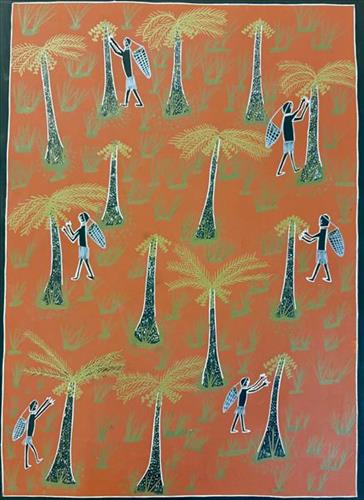
Collecting cycads
For Yolŋu collecting cycad nuts for damper is a deeply knowledgeable practice that brings together Country, seasonality, and intergenerational teaching. Cycad palms grow across Arnhem Land and knowing when and where to harvest is guided by close observation of the environment. Elders pass on this knowledge to younger generations through time spent on Country, showing not only how to gather the nuts, but how to do so respectfully, taking only what is needed and ensuring the plants continue to thrive.
Cycad nuts are highly nutritious but naturally toxic, so their preparation requires patience and skill. After harvesting, the nuts are carefully cracked and the kernels processed through repeated soaking and leaching in fresh or running water over many days. This slow process removes toxins and transforms the nuts into a safe flour. It is a powerful example of Yolŋu scientific knowledge developed over thousands of years, grounded in experimentation, memory, and care.
Once prepared, the cycad flour is mixed with water and shaped into damper, often cooked in the coals of a fire while families sit together, talk, and share stories. Eating cycad damper is more than nourishment. It is a reminder of self-sufficiency, cultural continuity, and the strength of Yolŋu food systems that have sustained people on Country long before introduced foods. The practice continues today as an expression of identity, resilience, and respect for ancestral ways of living well with the land.