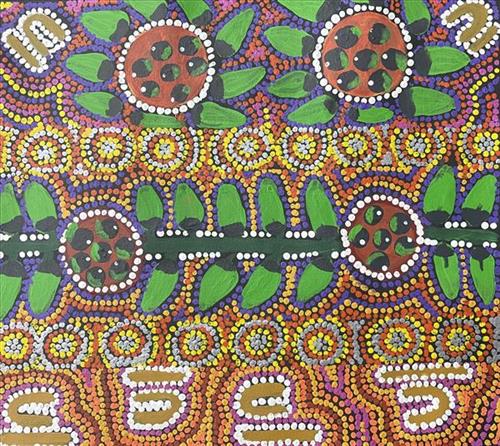
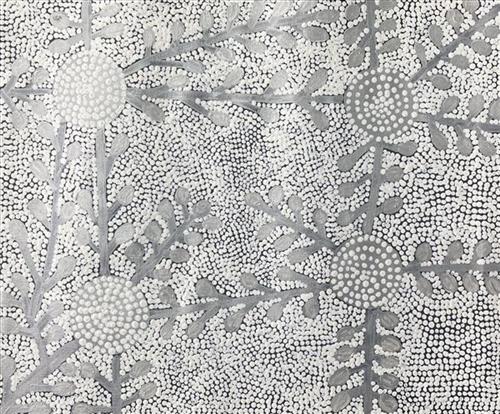
Wild Flowers
This painting is about the wild flowers that grow in the desert.

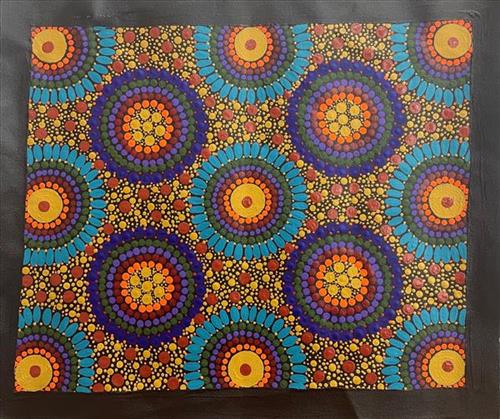
This painting is about the wild flowers that grow in the desert.

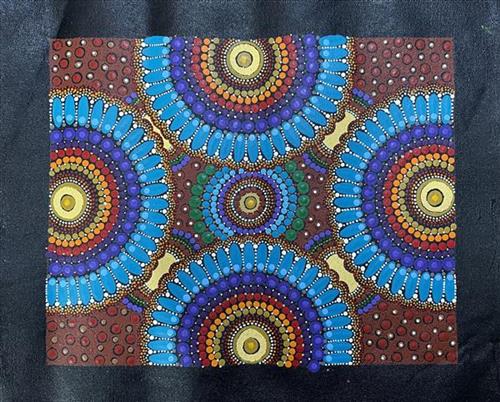
This painting is about the wild flowers that grow in the desert.

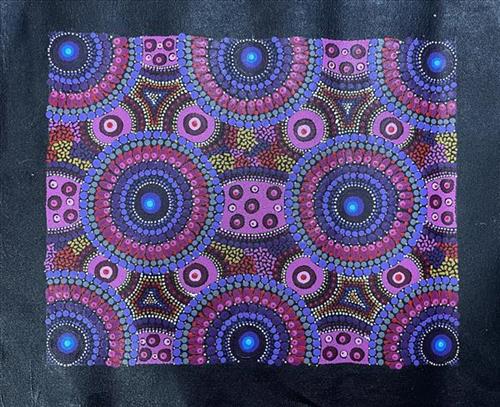
This painting is about the wild flowers that grow in the desert.
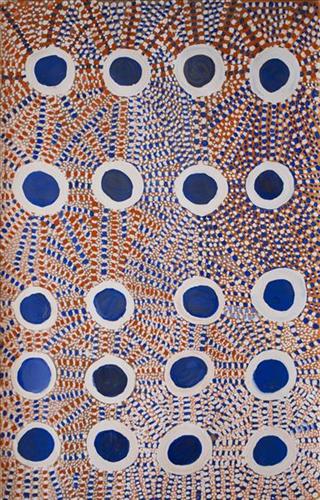
“There’s a spring there, on top of the hill. It’s a waterfall. If you sing out for Kajarra, he’ll know. He’ll hear his name and let the water fall down. He gotta have somebody to call for him, otherwise there’ll be no water.
That’s my father’s place, all the family come from there, from Kajarra and Birriliburru. They walked from there to Jigalong, past the Rabbit Proof Fence.”
– Miriam Atkins
This painting portrays physical elements of Martu Country, such as the dominant tali (sandhills), warta (trees, vegetation), and water sources. Rock holes, waterholes, soaks and springs were all extremely important sites for Martu people during the pujiman (nomadic bush) era, with many important jukurrpa (dreamtime stories) chronicling the creation of these landmarks. In the past the Martu lived nomadically, moving from water source to water source, and hunting and gathering bush tucker as they went. They would traverse very large distances annually, visiting specific areas in the dry and wet season depending on the availability of water. As they travelled and hunted they would also burn areas of country creating a larger diversity of plant and animal life.

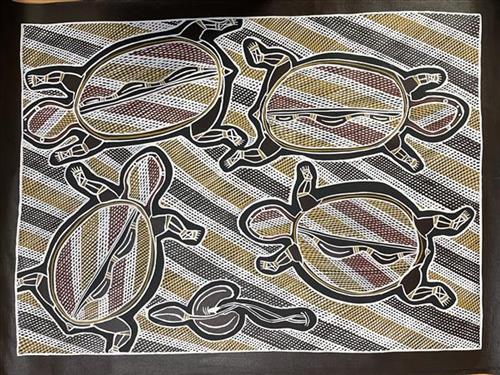


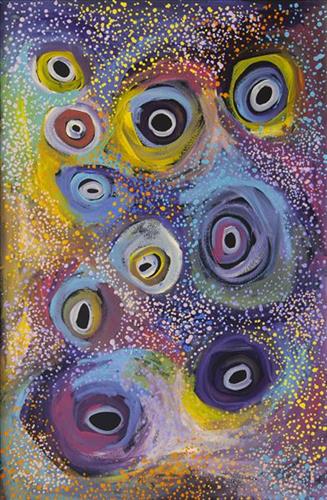
“Long time ago I been there. It is my grandmothers, grandfathers, fathers, mothers country, Kulyakartu. I am painting this particular place it keeps me connected, sense of belonging. Tell my grandmothers story through my art. Where she was born, I’m apart of that.
It makes me feel proud painting. Most important is telling the story behind the painting so people can understand where I am coming from. Kulyakartu is our ngurra (home, country, camp). I will continue telling the story through my art.”
– Derrick Butt
This painting depicts Kulyakartu, Derrick’s ancestral ngurra (home Country, camp). Kulyakartu is located in the far north of the Martu homelands, near the Percival Lakes region of Western Australia’s Great Sandy Desert.
Kulyakartu is mostly grass Country where there is very good hunting. In particular parnajarrpa (goanna), wild cats, and lunki (witchetty grub) are found in abundance here. There is no permanent water source in Kulyakartu, so the site was visited annually following the wantajarra (wet season).