11151355


Status: Stock


Kun Kun

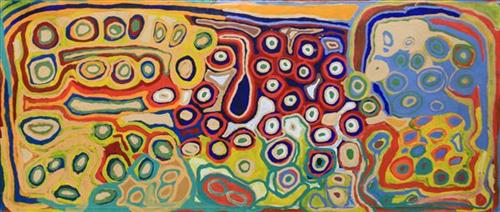
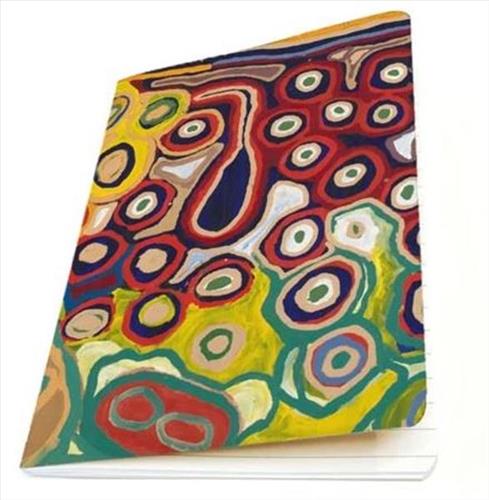
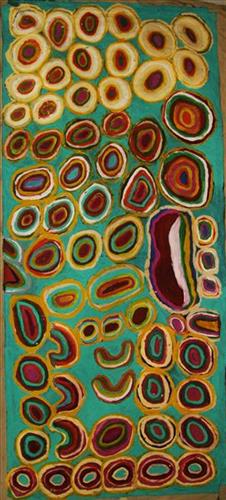
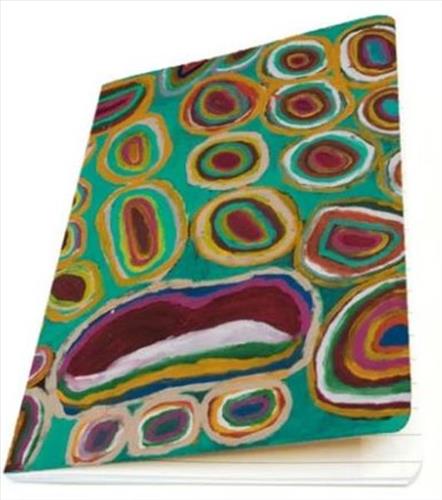
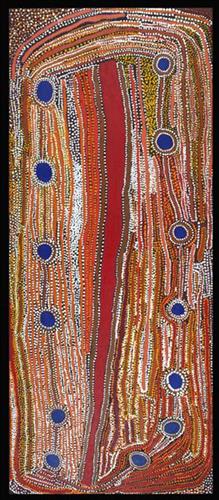
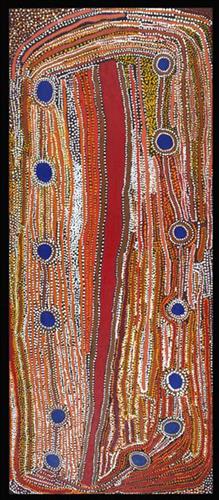
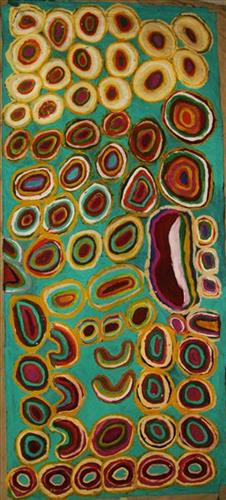
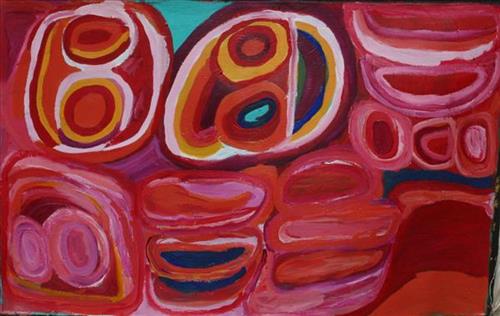
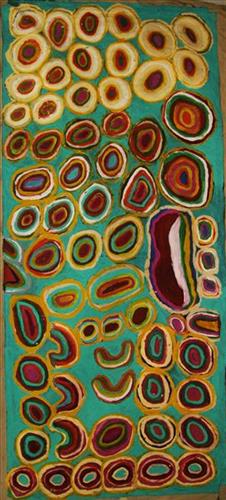
A lined, 24 page, A6 notebook with a cover featuring a detailed section from the collaborative work ‘Kun Kun’ by Martumili Artists Nora Nungabar, Nora Wompi, Bugai Whyoulter and Kumpaya Girgaba.

The central water in this painting is Kuny Kuny (Kun Kun), an important women’s site belonging to the Marlu Jukurrpa (Kangaroo Dreaming). This Jukurrpa is also significant within men’s law and contains elements restricted to initiated men and women.

Despite the title, there are 57 named sites in this painting, 11 of which are Canning Stock Route wells. These are places where the artists lived, where family members were born and died, and where ancestral beings left their power.

11151354


Status: Stock


Exercise book A5

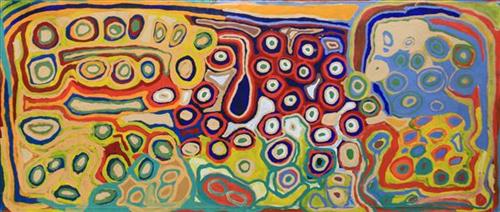
A lined, 24 page, A5 notebook with a cover featuring the collaborative artwork ‘Puntawarri, Jilakurru and Kumpupirntily” by Martumili Artists, and grandmother and granddaughter, Dadda Samson and Judith Samson.

Puntawarri, Jilakurru and Kumpupirntily are sites in Dadda’s ngurra (home country), which she has painted here with her granddaughter, Judith. Puntawarri is an important cultural area, on the middle stretches of the Canning Stock Route and east of the Jigalong Aboriginal Community, where the artists now live with their family. It is also the site of a now abandoned community, and a creek and lake. Jilakurra (Well 17 on the Canning Stock Route) is a permanent spring, and was a major meeting and ceremonial site in the pujiman (bush dwelling) era. Located here are many significant engravings and rock art, much of which are sacred to Martu people. Kumpupirntily (Lake Disappointment) is a large warla (salt lake) and one of the most sacred and dangerous sites in the far Western Desert. This is where the Ngayurnangalku (cannibal beings) live beneath the lake, surfacing only to feed on human flesh.

11151353


Status: Stock


Minyipuru

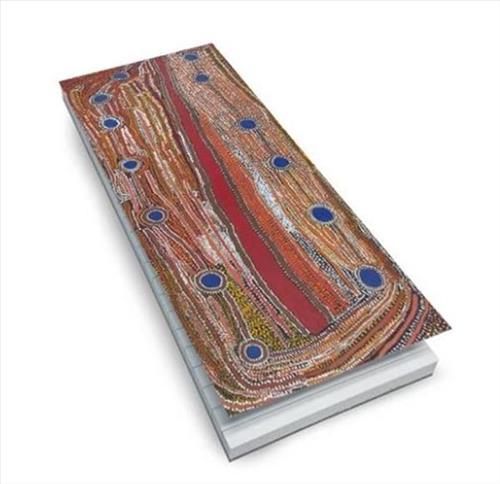
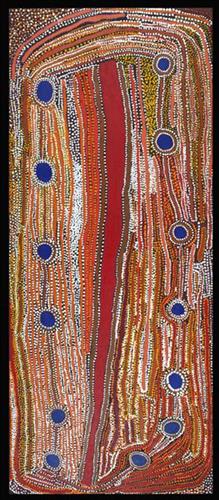
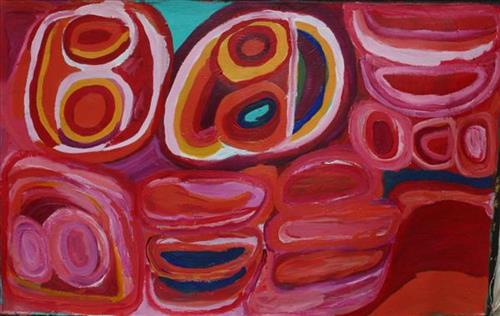
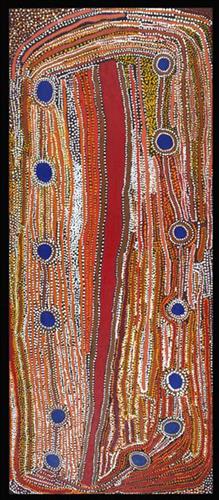
A useful 60 sheet pad for making lists with a front cover featuring the collaborative artwork ‘Minyipuru’ by Martumili Artists Muni Rita Simpson, Rosie Williams and Dulcie Gibbs.

Sisters Muni, Rosie and Dulcie grew up in the Country depicted in this painting. But it is the epic story of the Seven Sisters or Minyipuru, which they have described here. In this story, the old man Yurla, who had been pursuing the sisters, captured one of the women at Parnkarpini, between wells 35 and 36. The Minyipuru tricked him and rescued her.

Poor old fella, he had a rough time. He was trying and trying and trying.

The Minyipuru promised to stay with the old man Yurla but, when he returned from collecting wood, they were floating above his head, teasing him. Yurla made a ladder but the sisters pushed it over and laughed at him. When he collapsed, exhausted, they rescued their sister and flew away.

11151352


Status: Stock


Glasses Case with Cloth

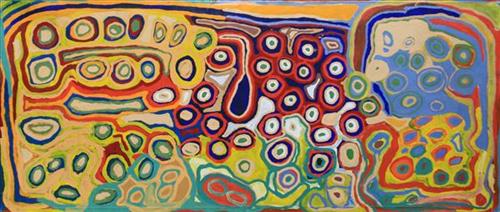
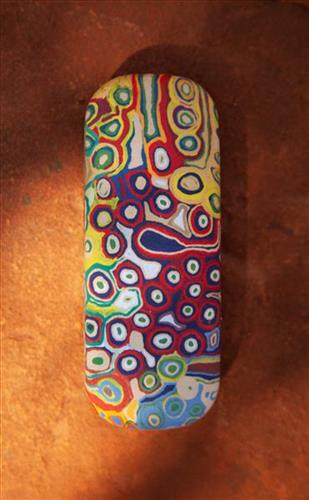
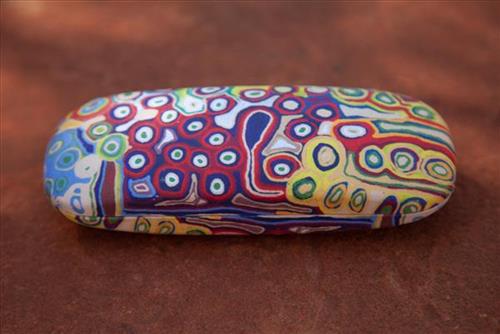
High quality case with fabric cover and matching lens cloth, both featuring the collaborative work ‘Kun Kun’ by Martumili Artists Nora Nungabar, Nora Wompi, Bugai Whyoulter and Kumpaya Girgaba.

The central water in this painting is Kuny Kuny (Kun Kun), an important women’s site belonging to the Marlu Jukurrpa (Kangaroo Dreaming). This Jukurrpa is also significant within men’s law and contains elements restricted to initiated men and women.

Despite the title, there are 57 named sites in this painting, 11 of which are Canning Stock Route wells. These are places where the artists lived, where family members were born and died, and where ancestral beings left their power.

11151351


Status: Stock


Bookmark Magnetic

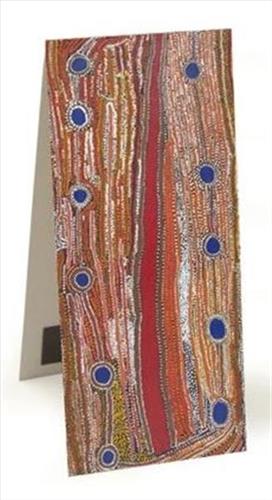
A folded bookmark with magnetic closure printed on one side featuring the collaborative artwork ‘Minyipuru’ by Martumili Artists Muni Rita Simpson, Rosie Williams and Dulcie Gibbs.

Sisters Muni, Rosie and Dulcie grew up in the Country depicted in this painting. But it is the epic story of the Seven Sisters or Minyipuru, which they have described here. In this story, the old man Yurla, who had been pursuing the sisters, captured one of the women at Parnkarpini, between wells 35 and 36. The Minyipuru tricked him and rescued her.

Poor old fella, he had a rough time. He was trying and trying and trying.

The Minyipuru promised to stay with the old man Yurla but, when he returned from collecting wood, they were floating above his head, teasing him. Yurla made a ladder but the sisters pushed it over and laughed at him. When he collapsed, exhausted, they rescued their sister and flew away.

11151350


Status: Stock


Magnet Set of 4

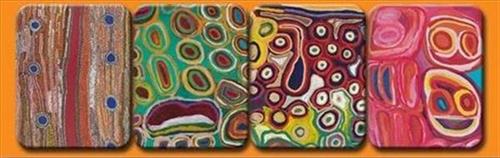
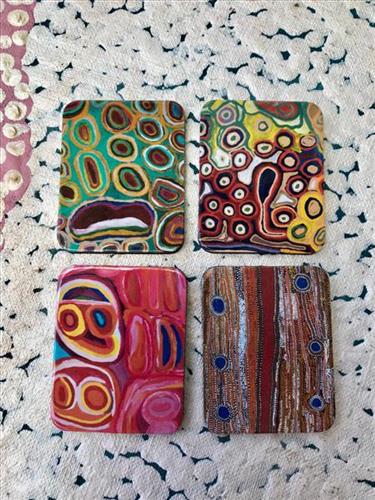
Set of four 50mm x 40mm magnet packaged with display card in clear bag. Each magnet features a painting from the ‘Ýiwarra Kuju – The Canning Stock Route’ exhibition, including;

‘Minyipuru’ by Dulcie Gibbs, Muni Simpson and Rosie Williams

‘Puntawarri, Jilakurru and Kumpupirntily’ by Dadda Samson and Judith Samson

‘Kun Kun’ by Bugai Whyoulter, Nora Nungabar, Nora Wompi and Kumpaya Girgirba

‘Sunday Well’ by Dadda Samson

11151349


Status: Stock


Sunday Well – Dadda Samson

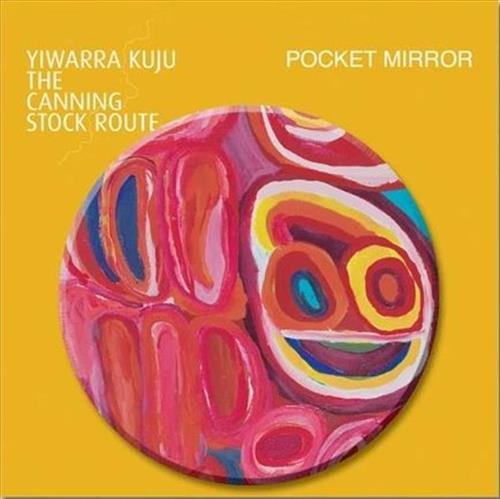
77mm diameter mirror packaged with display card in clear bag, featuring Dadda Samson’s painting ‘Sunday Well’. Sunday Well is an important historical location close to Jigalong Aboriginal Community. 

“People used to stay here. When people see the whitefella they used to run away, up to the hills and rocks. They were afraid of the whitefellas. My mother and my brothers ran away, right up to the Puntawarri because the whitefellas were shooting at the Martu people. They were sneaking in and the gun went off, and they all ran and just kept running and running until they got to Puntawarri.”

– Dadda Samson


11151348


Status: Stock


Puntawarri, Jilakurru and Kumpupirntily

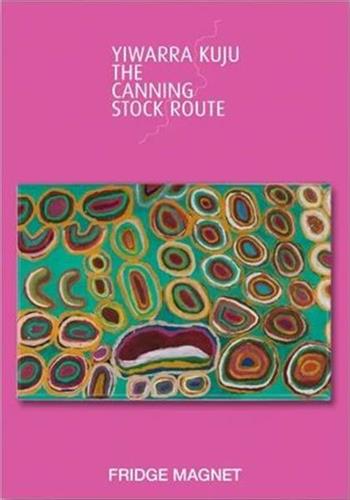
A fridge magnet featuring the collaborative artwork ‘Puntawarri, Jilakurru and Kumpupirntily” by Martumili Artists, and grandmother and granddaughter, Dadda Samson and Judith Samson. Magnets are 1.5mm thick and superior strength magnet to attach card and heavier papers to your fridge or cabinet.

Puntawarri, Jilakurru and Kumpupirntily are sites in Dadda’s ngurra (home country), which she has painted here with her granddaughter, Judith. Puntawarri is an important cultural area, on the middle stretches of the Canning Stock Route and east of the Jigalong Aboriginal Community, where the artists now live with their family. It is also the site of a now abandoned community, and a creek and lake. Jilakurra (Well 17 on the Canning Stock Route) is a permanent spring, and was a major meeting and ceremonial site in the pujiman (bush dwelling) era. Located here are many significant engravings and rock art, much of which are sacred to Martu people. Kumpupirntily (Lake Disappointment) is a large warla (salt lake) and one of the most sacred and dangerous sites in the far Western Desert. This is where the Ngayurnangalku (cannibal beings) live beneath the lake, surfacing only to feed on human flesh.

11151306


Status: Stock


Minyipuru

An individual, blank greeting card with envelope featuring a detailed section from the collaborative artwork ‘Minyipuru’ by Martumili Artists Muni Rita Simpson, Rosie Williams and Dulcie Gibbs.

Sisters Muni, Rosie and Dulcie grew up in the Country depicted in this painting. But it is the epic story of the Seven Sisters or Minyipuru, which they have described here. In this story, the old man Yurla, who had been pursuing the sisters, captured one of the women at Parnkarpini, between wells 35 and 36. The Minyipuru tricked him and rescued her.

Poor old fella, he had a rough time. He was trying and trying and trying.

The Minyipuru promised to stay with the old man Yurla but, when he returned from collecting wood, they were floating above his head, teasing him. Yurla made a ladder but the sisters pushed it over and laughed at him. When he collapsed, exhausted, they rescued their sister and flew away.

11151302


Status: Stock


Jigsaw Puzzle – Parnngurr Rockhole

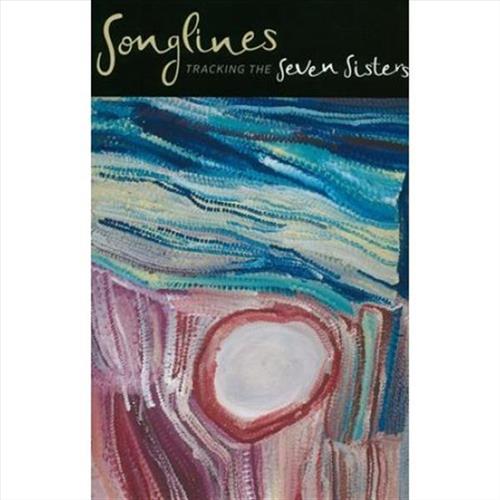
1000 piece Jigsaw Puzzle featuring Bugai Whyoulter’s painting ‘Parrngurr Rockhole’ (2015). This artwork was part of the National Musem of Australia’s exhibition ‘Songlines – Tracking the Seven Sisters’.

Parnngurr is an Aboriginal community located 370km east of Newman, at the Southern end of the Karlimilyi area in the Pilbara region of Western Australia. Created during the Return to Country movement of the 1980s, with the recognition of Aboriginal land rights and native title, the community was named after its original primary water source, a nearby rockhole and yinta (permanent water source). Until recently the community was widely known as Cotton Creek, after the European name for the ephemeral creek running alongside the community. Parngurr and its surrounds are physically dominated by distinctively red tali (sandhills), sparsely covered with spinifex and low lying shrub.

Historically and culturally Parnngurr was an important site for Aboriginal people during the pujiman (traditional, desert-dwelling) era. In the epic jukurrpa (dreamtime) story of the Jakulyukulyu, or Minyipuru (Seven Sisters), the sisters stop to rest on the adjacent Parnngurr hill before continuing on their long journey east. Throughout the pujiman period families stopped and camped here depending on the seasonal availability of water, and the corresponding cycles of plant and animal life on which hunting and gathering bush tucker was reliant. At Parnngurr and other similarly significant camp sites families would meet for a time before moving to their next destination.

Parnngurr is Bugai’s father’s Country, as well as her own ngurra (home country). She was born nearby, close to what is now Balfour Downs Station, and travelled extensively through the Parnngurr area and up and down the Canning Stock Route as far as Kunawarritji in her youth. For Bugai, Parnngurr also signifies the location at which her nomadic bush life came to an end; it was here that she and her group were picked up by whitefellas to be taken to Jigalong Mission in 1963. Collectively the group had come to the decision to move to the mission as a result of an extended drought, which had caused a scarcity in food and water resources.