111581840653


Wantili

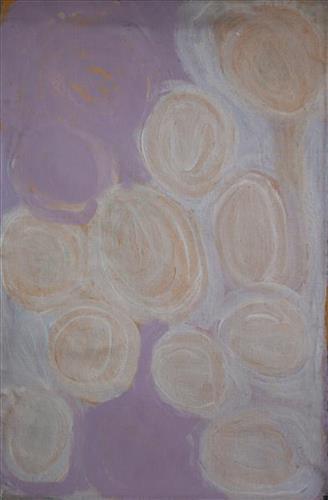
Wantili, which forms the focus of much of Bugai’s work, is a large round jurnu (soak) and lyinji (claypan) near Well 25 on the Canning Stock Route. It lies close to Bugai’s birthplace, and is her ngurra (home country). The area is dominated by claypans surrounded by tuwa (sandhills). Following rain the typically dry claypans are filled with water, with the overflow from nearby waterholes flowing to Wantili. At that time, Wantili becomes an important place for obtaining fresh water for drinking and bathing. Wantili is significant for the fact that at this site Kartujarra, Manyjilyjarra, Putujarra and Warnman people would all come together for ceremonies. Manyjiwa (stones used by women for grinding seeds) from these times can still be found there today.

(As translated by Bugai’s grandson, Cyril Whyoulter) “Bugai always tells about Wantili because she grew up around Wantili. Her family would travel between Wantili, Kaalpa, Juntujuntu, Raarki, and Wuranu Wells along the Canning Stock Route. She paints around Wantili. She saw whitefellas there for the first time, Canning mob when they were travelling up and down the stock route with the bullock. She was a young girl walking around at Wantili. Big mob of people they been walking around there. Canning and his drovers were travelling, making the road. They were running away from those whitefellas, watching them from a long distance. She was a teenager when she was travelling around there with her four mothers and one daddy. They used to travel around in family groups, Bugai and Jakayu [Biljabu], and Jakayu’s nyupa (partner) Phillip Biljabu.” Bugai returned to the Wantili area as a young woman, when she worked driving cattle along the Stock Route.

Wantili is an incredibly important cultural site, ‘‘where the creation started.’ The jukurrpa (dreamtime narrative) related to the creation at Wantili are just for Martu, but the site is open and anyone can go there. Wantili is also one of the many sites featured in the epic Minyipuru (Seven Sisters) jukurrpa. The story follows the movement of a group of women travelling all the way across the desert, beginning at Roebourne on the coast of Western Australia, as they are pursued by Yurla, a lustful old man. As the women travelled they stopped to rest at many sites to eat, dance, rest and sing, on the way leaving behind an assortment of articles that became formations in the land. The sisters rested at Wantili before throwing seeds, then continued their journey on to Tiwa, Juntujuntu, and then Pangkapini, where they finally escaped Yurla by flying into the sky to become the Pleaides constellation of stars.

112781840814


Jarntu Ninami Kapi Ka

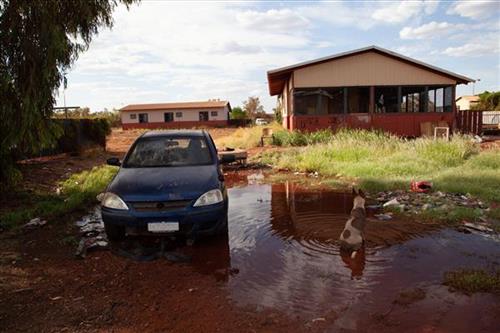
In this photo I like that you can see the clouds in shapes and that the trees are in focus even behind my house windows. In the water you can see a reflection of the sky and the dog is there in the reflection.

111981840932


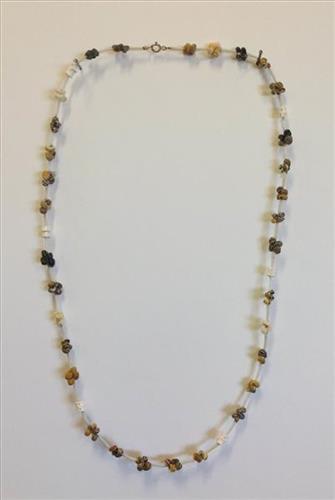
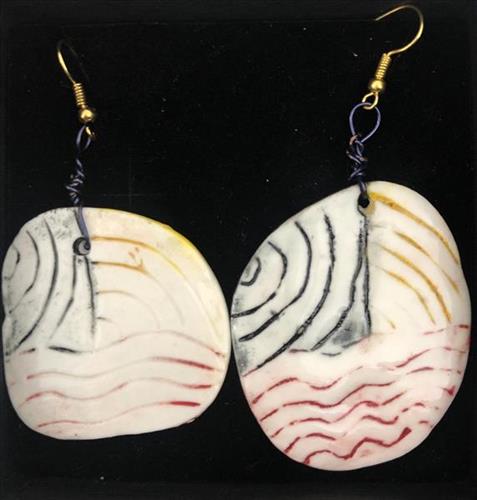
Bush Jewellery – Necklace

The women of Maningrida and surrounding homelands use a combination of locally found seeds, bone and shells to make a variety of jewellery including necklaces. earrings and bracelets.  Many of the artists use complex patterns and designs to make their beautiful creations.

111581840912


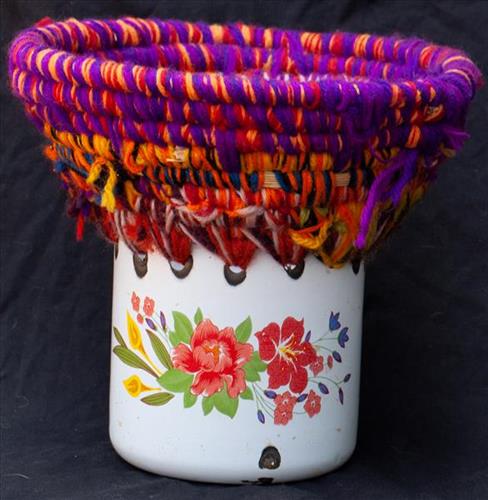
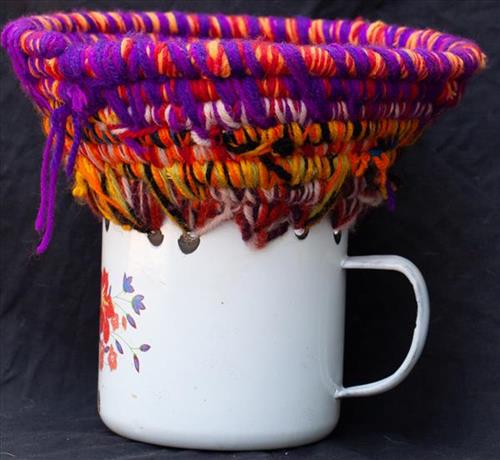
Cuppatea Basket

Baskets are made by Martu women who live in communities to the east of Newman, including Punmu, Kunawarritji, Parnngurr and Jigalong, as well as in Newman, Parnpajinya and Irrungadji (Nullagine). This style of coiled basketry was developed in the Western Desert in the 1990s and taken up by Martu women around 1999. Leading Martu fibre arts practitioner Nola Taylor says that basket weaving was so popular amongst Martu women that it “spread across the desert like a waru (fire)”. The baskets are primarily made from minarri grass (Amphipogon caricinus), which the women collect when they travel across their homelands to visit family, attend ceremonies, look after country and gather bush tucker. Each basket is built up through wrapping fine bundles of grass in brightly coloured wool and then stitching each round on to the previous one. Martu women have developed a distinctive style of basketry and individual artists continue to develop new designs and incorporate novel materials (including steel, wire and wood) into their work.

221781782848


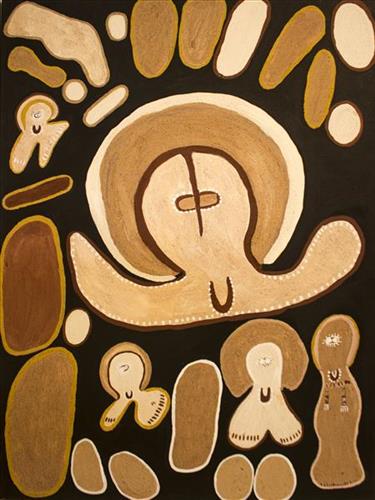
Wandjina are ancestral spirits who created country, people and animals in the North West Kimberley before turning themselves into rock paintings. They are sometimes called “lightning man” or “rain maker’ and every year they replenish water holes, creeks and rivers by making the wet season. The Wandjina can be vengeful if people break the law, by making savage storms and cyclones. The predominant white colouring and shape of the Wandjina’s body represents water and clouds. The red pigment area on the chest is the “Tili” (heart) of the Wandjina and represents the “human” part of the Wandjina.

111581842144


Untitled

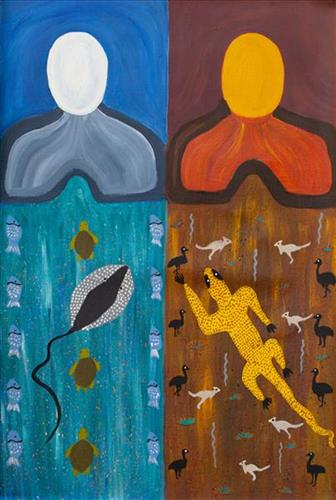
Depicted in this work are animals hunted for bush tucker, their habitats, and different hunting methods. During the pujiman (traditional, desert dwelling) period, Martu would traverse very large distances annually in small family groups, moving seasonally from water source to water source, and hunting and gathering bush tucker as they went. Whilst desert life has moved away from mobile hunter-gatherer subsistence throughout the course of the twentieth century, bush tucker continues to be a significant component of the modern Martu diet. Hunting and gathering bush tucker remains equally valuable as an important cultural practice that is passed on intergenerationally.

Typically, animals hunted for their kuwiyi (meat) include kirti-kirti (euro kangaroo) and marlu (plains kangaroo), parnajarrpa (sand goanna), kipara (Australian bustard, bush turkey) and karlaya (emu). Lunki (witchetty grub) and wuukurta (honey ants) are dug from tree and bush trunks, or from underground nests. Tuulpara (spring) is considered by Martu as the principal hunting season, when resources are productive and the weather conducive to hunting activities requiring a high degree of stamina. 

Traditional tools used for hunting were carved from wanari (mulga), mulunturu (desert oak), yurungkura (river red gum) and mijarrpa (bloodwoods), and included kurlata (spears), jurna (hitting sticks), and karli (boomerangs). Today, animals are most typically hunted using vehicles and rifles. Nonetheless, carved objects retain enormous social and ceremonial importance in Martu life. Though hunting and gathering implements have been modernised, traditional methods of tracking and the use of fire burning to drive animals from their retreats are still commonly practiced today.

111581842141


Kulyakartu

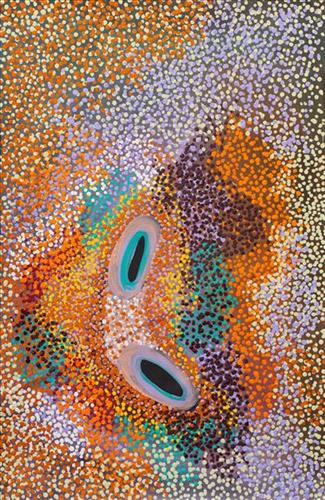
Kulyakartu; an area in the far north of the Martu homelands, near the Percival Lakes in the northern Great Sandy Desert. The artist’s elders have extensive knowledge of the Country in this region, where they grew up living traditionally during the pujiman (traditional, desert dwelling) days. Kulyakartu is mostly grass Country where there is very good hunting. There is no permanent water source in Kulyakartu,

111581842139


Kulyakartu

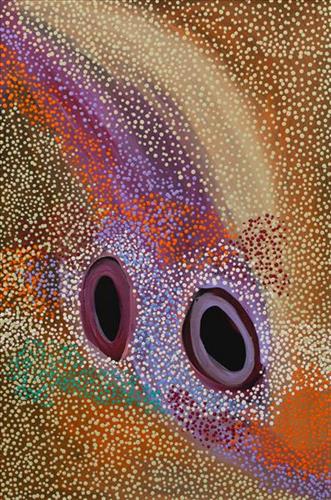
Kulyakartu; an area in the far north of the Martu homelands, near the Percival Lakes in the northern Great Sandy Desert. The artist’s elders have extensive knowledge of the Country in this region, where they grew up living traditionally during the pujiman (traditional, desert dwelling) days. Kulyakartu is mostly grass Country where there is very good hunting. There is no permanent water source in Kulyakartu,