111580606334


Parnngurr Community

Parnngurr is an Aboriginal community located 370km east of Newman, at the Southern end of the Karlamilyi (Rudall River) area, and in the Pilbara region of Western Australia. Created during the return to Country movement of the 1980s, with the recognition of Aboriginal land rights and native title, the community was named after its’ original primary water source, a nearby rockhole and yinta (permanent spring). Until recently the community was widely known as Cotton Creek, after the European name for the ephemeral creek running alongside the community. Parnngurr and its surrounds are physically dominated by distinctively red tali (sandhills), covered sparingly with spinifex and low lying shrub.

Historically Parnngurr Rockhole was an important site for Aboriginal people during the pujiman (traditional, desert born) era. During this nomadic period families stopped and camped here depending on the seasonal availability of water and the corresponding cycles of plant and animal life on which hunting and gathering bush tucker was reliant. At Parnngurr and other similarly important camp sites, families would meet for a time before moving to their next destination. 

Parnngurr is also a site chronicled in the epic Jukurrpa (Dreaming) story of the Minyipuru (Jakulyukulyu, Seven Sisters), as they flee from the lustful old man, Yurla. The sisters stopped to rest on Parnngurr Hill before continuing on their long journey east. Minyipuru is a central Jukurrpa narrative for Martu, Ngaanyatjarra, Pitjantjatjara and Yankunytjatjara people that is associated with the seasonal Pleiades star constellation. Relayed in song, dance, stories and paintings, Minyipuru serves as a creation narrative, a source of information relating to the physical properties of the land, and an embodiment of Aboriginal cultural laws. Beginning in Roebourne on the west coast of Western Australia, the story morphs in its movement eastward across the land, following the women as they walk, dance, and even fly from waterhole to waterhole. As they travel the women camp, sing, wash, dance and gather food, leaving markers in the landscape and creating landforms that remain to this day, such as groupings of rocks and trees, grinding stones and seeds. During the entirety of their journey the women are pursued by a lustful old man, Yurla, although interactions with other animals, groups of men, and spirit beings are also chronicled in the narrative.
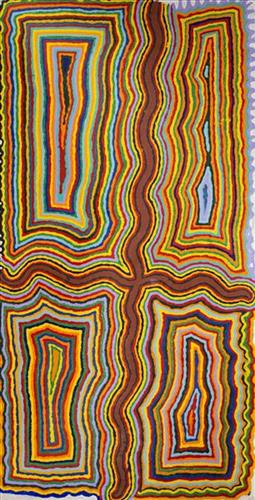
111580606693


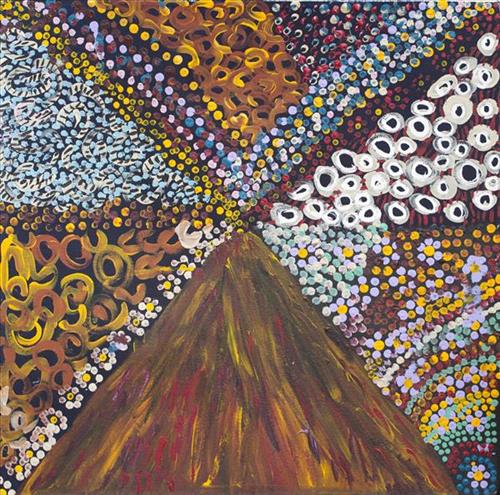
Kurturarra, Yimiri, Kupankurlu, Kiriwirri

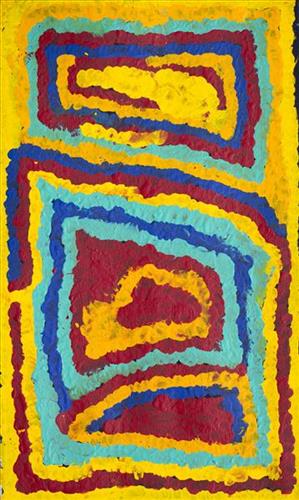
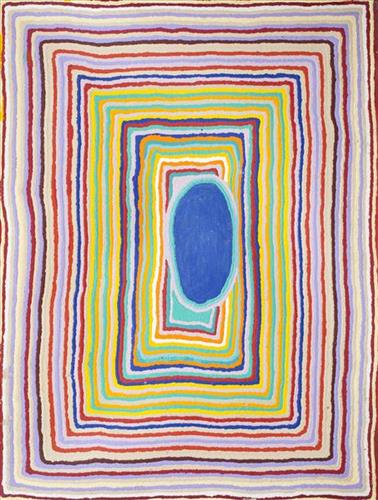
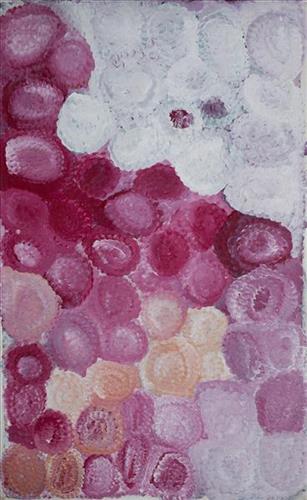
This painting is of Yimiri a very important site for yinta (fresh water). Yimiri is the larger of two soaks in the middle of a big salt warla (lake). The artist goes here to drink the water after all the yukiri (green) that grows in the kupi (water) is cleaned out. This is the artists country not too far from Punmu up the Wapet road. The lake is part of a larger series of lakes known as the Percival Lakes. The area has extensive tali (sandhills).

111580606843


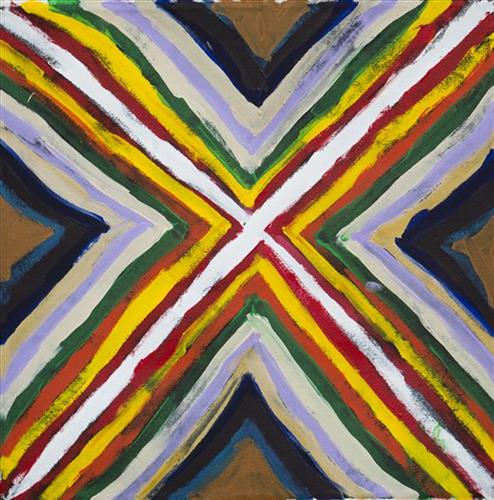
Untitled

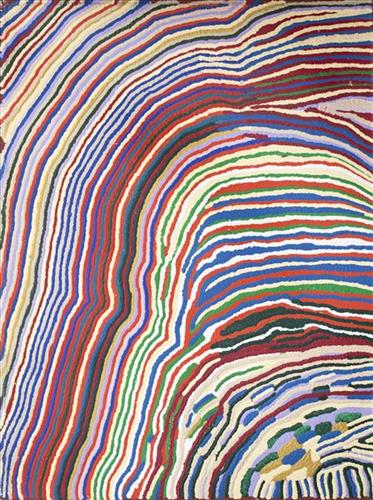
This painting depicts country around the Community of Jigalong. Jigalong is the artist’s ngurra (home) where she lives with her family.

111580606832


Puntawarri – Sandhills and Camp

This painting depicts Puntawarri, the artists’ mother’s family’s country. Puntawarri is on the middle stretches of the Canning Stock Route, near Well 17 also known as Durba Springs. Puntawarri is an important cultural area, east of the Jigalong Aboriginal Community, where the artist now lives with her grandmother. The artist’s grandmother frequently travelled and hunted with her family in this area when she was a young girl, and is now teaching Judith the stories for this country.

111580606778


Untitled

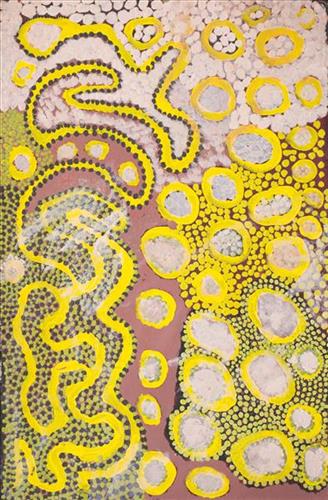
This is Mitutu’s Country- her ‘ngurra’ (home Country, camp). People identify with their ngurra in terms of specific rights and responsibilities, and the possession of intimate knowledge of the physical and cultural properties of one’s Country. Painting ngurra, and in so doing sharing the Jukurrpa (Dreaming) stories and physical characteristics of that place, has today become an important means of cultural maintenance. Mitutu’s ngurra encompasses her birthplace, Yirajarra soak, located close to Lake Auld and just north of Tiwa (Canning Stock Route Well 26), and the Country that her family walked in the pujiman (traditional, desert-dwelling) era, around the Karlamilyi (Rudall River) region.

Portrayed in this work are features of Mitutu’s family’s ngurra, such as the gorges and rivers, dominant permanent red tali (sandhills), warta (trees, vegetation), and the individually named water sources they camped at. Rock holes, waterholes, soaks and springs were all extremely important sites for Martu people during the pujiman period, and are generally depicted with circular forms. 

The encyclopaedic knowledge of the location, quality and seasonal availability of the hundreds of water bodies found in one’s Country sustained Martu as they travelled across their Country, hunting and gathering, visiting family, and fulfilling ceremonial obligations. They would traverse very large distances annually, visiting specific areas in the dry and wet season depending on the availability of water and the corresponding cycles of plant and animal life on which hunting and gathering bush tucker was reliant. As they travelled and hunted they would also burn areas of Country, generating a greater diversity of plant and animal life.

111980607753


Ngalyod (Rainbow Serpent)

The rainbow serpent is a powerful mythological figure for all Aboriginal people throughout Australia. Characteristics of the rainbow serpent vary greatly from group to group and also depending on the site. Often viewed as a female generative figure, the rainbow serpent can sometimes also be male. She has both powers of creation and destruction and is most strongly associated with rain, monsoon seasons and of course the colour seen in rainbows which arc across the sky like a giant serpent. For Aboriginal people in Northern Australia, the rainbow serpent is said to be active during the wet season.

Known as Ngalyod in the Kuninjku language of western central Arnhem Land, the rainbow serpent is mostly associated with bodies of water such as billabongs, creeks, rivers and waterfalls where she resides. Therefore she is responsible for the production of most water plants such as water lilies, water vines, algae and palms, which grow near water. The roar of waterfalls in the escarpment country is said to be her voice. Large holes in stony banks of rivers and cliff faces are said to be her tracks. She is held in awe because of her apparent ability to renew her life by shedding her skin and emerging anew. Aboriginal myths about the rainbow serpent often describe her as a fearful creature that swallows humans only to regurgitate them, transformed by her blood. The white ochre used by artists to create the brilliant white paint for bark paintings, body decoration and in the past, rock art, is said to be the faeces of the rainbow serpent.

Aboriginal people today respect and care take sacred sites where the rainbow serpent is said to reside. Often certain activities are forbidden at these places for fear that the wrath of the great snake will cause sickness, accidents and even tempests. This is not always the case however and there are many rainbow serpent sites today where people may enter to hunt, fish or swim. By painting this figure on bark today, Aboriginal people are carrying on the longest uninterrupted mythological tradition in the world, which has been the subject of art and ceremony for possibly thousands of years.

111980607553


Lorrkon (Hollow Log)

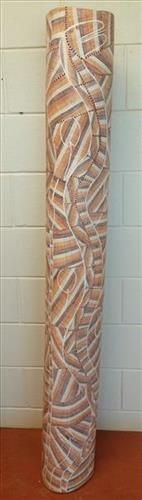
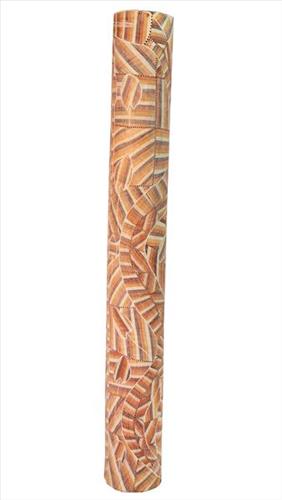
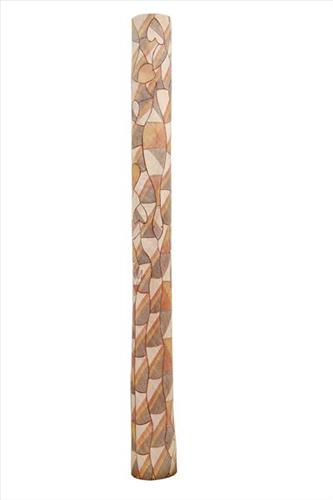
The Lorrkon or bone pole coffin ceremony was the final ceremony in a sequence of mortuary rituals celebrated by the people of Arnhem Land. This ceremony involves the placing of the deceased’s bones into a hollow log which was decorated with painted clan designs and ceremonially placed into the ground where it remained until it slowly decayed over many years.The log is made from a termite hollowed Stringybark tree (Eucalyptus tetradonta) and is decorated with totemic emblems. The western Arnhem Land version of the Lorrkon ceremony involves the singing of sacred songs to the accompaniment of karlikarli, a pair of sacred boomerangs used as rhythm instruments. During the final evening of the ceremony, dancers decorate themselves with kapok down, or today, cotton wool and conduct much of the final segments of the ceremony in the secrecy of a restricted mens’ camp. The complete ceremony may stretch over a period of two weeks, but on the last night the bones of the deceased, which have been kept in a bark container or today wrapped in cloth and kept in a suitcase are taken out, are painted with red ochre and placed inside the hollow log. This ceremony may take place many years after the person has died.At first light on the final morning of the Lorrkon ceremony, the men appear, coming out of their secret bush camp carrying the pole towards the women’s camp. The two groups call to each other using distinct ceremonial calls. The women have prepared a hole for the pole to be placed into and when it is stood upright, women in particular kinship relationships to the deceased dance around the pole in a jumping/shuffling motion. The Lorrkon is then often covered with a tarpaulin and left to slowly decay.

111580607829


Untitled

This artist primarily paints her country around Kunawarritji (Well 33) and across to Kiwirrkura which is her birth place. As a young woman, the artist travelled this country extensively so she has a very in depth knowledge of the land. Kumpaya now lives on the community of Parnngurr with her family.

111580607827


Untitled

This artist primarily paints her country around Kunawarritji (Well 33) and across to Kiwirrkura which is her birth place. As a young woman, the artist travelled this country extensively so she has a very in depth knowledge of the land. Kumpaya now lives on the community of Parnngurr with her family.

111580607824


Untitled

This is Yunkurra’s Country- his ‘ngurra’ (home Country, camp). People identify with their ngurra in terms of specific rights and responsibilities, and the possession of intimate knowledge of the physical and cultural properties of one’s Country. Painting ngurra, and in so doing sharing the Jukurrpa (Dreaming) stories and physical characteristics of that place, has today become an important means of cultural maintenance. 

Yunkurra’s ngurra encompasses his birthplace, Palatji (Palarji, Weld Springs, Canning Stock Route Well 9), and the Country that he and his family walked in the pujiman (traditional, desert-dwelling) era. Yunkurra grew up, walked and hunted primarily around the areas surrounding Kumpupirntily (Lake Disappointment), Kupayura (Savory Creek) and Jilukurru (Killagurra Springs, Canning Stock Route Well 17). Eventually, as a ‘young fella’ he, like most other Martu at the time, began working on pastoral stations around the Pilbara, ‘mustering bullock, sheep too.’ In later life Yunkurra relocated to Jigalong Aboriginal community, closer to his home Country. 

Portrayed in this work are features of Yunkurra’s ngurra, such as the striking salt lakes, dominant permanent red tali (sandhills), warta (trees, vegetation), and the individually named water sources he and his family camped at. Rock holes, waterholes, soaks and springs were all extremely important sites for Martu people during the pujiman period, and are generally depicted with circular forms. 

The encyclopaedic knowledge of the location, quality and seasonal availability of the hundreds of water bodies found in one’s Country sustained Martu as they travelled across their Country, hunting and gathering, visiting family, and fulfilling ceremonial obligations. They would traverse very large distances annually, visiting specific areas in the dry and wet season depending on the availability of water and the corresponding cycles of plant and animal life on which hunting and gathering bush tucker was reliant. As they travelled and hunted they would also burn areas of Country, generating a greater diversity of plant and animal life.