111981511218


Yawkyawk

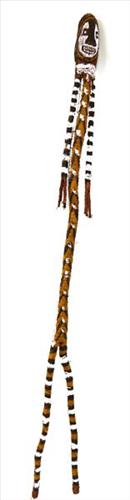
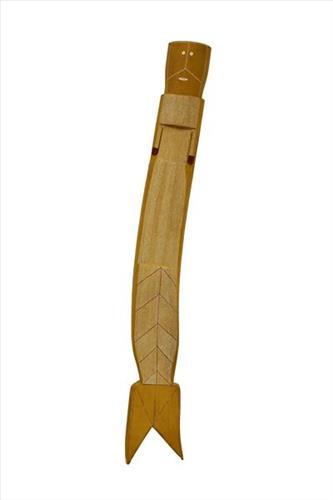
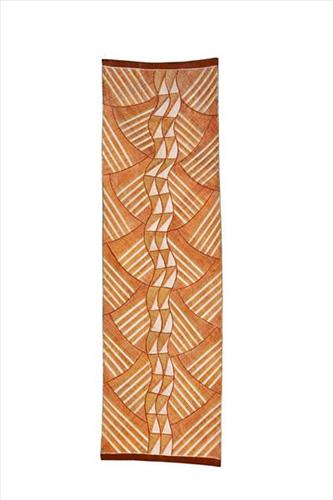
Yawkyawk is a word in the Kunwinjku/Kunwok language of Western Arnhem Land meaning ‘young woman’ and ‘young woman spirit being’. The different groups of Kunwinjku people (one of the Eastern dialect groups call themselves Kuninjku) each have Yawkyawk mythologies, which relate to specific locations in clan estates. These mythologies are represented in bark paintings and sculptures of Yawkyawk beings. There are also a few examples of rock art images of these beings.
The female water spirits Yawkyawk or Ngalkunburriyaymi are perhaps the most enigmatic of mythological themes. Sometimes compared to the European notion of mermaids, they exist as spiritual beings living in freshwater streams and rock pools, particularly those in the stone country. The spirit Yawkyawk is usually described and depicted with the tail of a fish. Thus the Kuninjku people sometimes call them ngalberddjenj which literally means ‘the young woman who has a tail like a fish’. They have long hair, which is associated with trailing blooms of green algae (called man-bak in Kuninjku). At times they leave their aquatic homes to walk about on dry land, particularly at night.
Aboriginal people believe that in the beginning most animals were humans. During the time of the creation of landscapes and plants and animals, these ancestral heroes in human form transmutated into their animal forms via a series of various significant events now recorded as oral mythologies. The creation ancestor Yawkyawk travelled the country in human form and changed into the form of Ngalkunburriyaymi as a result of various ancestral adventures. Today the Kuninjku believe that Ngalkunburriyaymi are alive and well and living in freshwater sites in a number of sacred locations.
Some features of a respective country are equated with body parts of Yawkyawk. For example a bend in a river or creek may be said to be ‘the tail of the Yawkyawk, a billabong may be ‘the head of the Yawkyawk and so on. Thus different groups can be linked together by means of a shared mythology featured in the landscape, which crosscuts clan and language group boundaries.
111981511327


Mimih Spirit

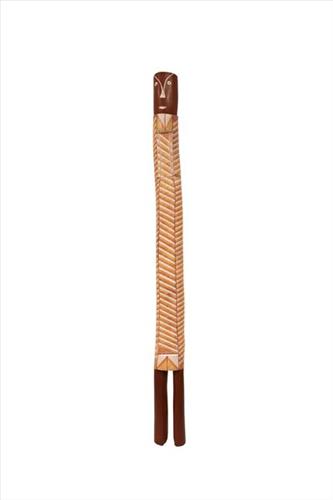
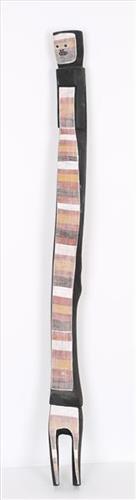
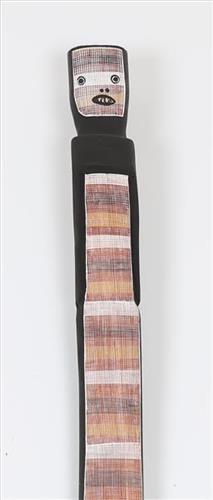
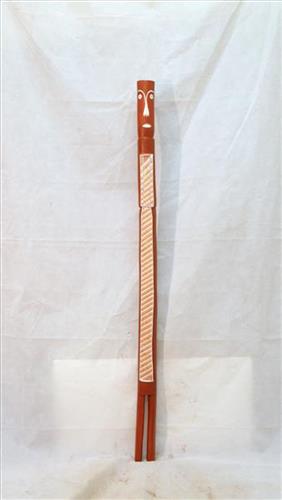
Aboriginal people in the rocky environments of western and south-western Arnhem Land tell of the existence of tall slender spirits which they call Mimih. The name Mimih is well known throughout the top end of the Northern Territory. Aboriginal groups living in the rocky environments of western and southern Arnhem Land share mythology which relates to the beings known as Mimih. These groups include the Kunwok chain of languages, and also Rembarrnga, Dalabon and Djawoyn language groups. Other groups of people with familial and ceremonial links to rock country inhabitants are also familiar with the idea of the Mimih.

In recent years the Mimih has become a topic in the repertoires of some artists among the Kunibídji people, speakers of the Ndjébbana language and the traditional landowners of the Maningrida area. The people of western Arnhem Land believe that Mimih spirits live in a social organisation similar to Aboriginal people and that Mimih society existed before humans. Mimih are credited with instructing the first people with knowledge relating to survival in the rocky environment of the Arnhem Land plateau. Mimih are said to have taught the first humans how to hunt and butcher game and also how to dance, sing and paint. The song and dance style of western Arnhem Land Aboriginal people is still known today as Mimih style. This term is also used by Aboriginal people further to the east in Central Arnhem Land when describing the dance and song of their western neighbours.

Despite the usual descriptions of Mimih as being benign towards humans, sometimes however they are attributed with mischievous and dangerous qualities, capable of kidnapping and even killing humans. ‘Clever’ men, or Aboriginal men with supernatural powers, sometimes befriend the Mimih and are taught their songs and dances and shown their secret places. The Mimih are like people using the same kinship terms and speaking the same language as the local Aboriginal group. They live in families like humans and it is said that some of these Aboriginal men with mystical knowledge have spent time living with them in their camps.

Mimih are however, terribly thin, having necks so slender that a stiff breeze would be fatal. For this reason they emerge only on windless days and nights to hunt. As soon as a breeze develops, the Mimih are said to run back to their rocky caverns and disappear inside.

111981513736


Mimih Spirit

Aboriginal people in the rocky environments of western and south-western Arnhem Land tell of the existence of tall slender spirits which they call Mimih. The name Mimih is well known throughout the top end of the Northern Territory. Aboriginal groups living in the rocky environments of western and southern Arnhem Land share mythology which relates to the beings known as Mimih. These groups include the Kunwok chain of languages, and also Rembarrnga, Dalabon and Djawoyn language groups. Other groups of people with familial and ceremonial links to rock country inhabitants are also familiar with the idea of the Mimih.

In recent years the Mimih has become a topic in the repertoires of some artists among the Kunibídji people, speakers of the Ndjébbana language and the traditional landowners of the Maningrida area. The people of western Arnhem Land believe that Mimih spirits live in a social organisation similar to Aboriginal people and that Mimih society existed before humans. Mimih are credited with instructing the first people with knowledge relating to survival in the rocky environment of the Arnhem Land plateau. Mimih are said to have taught the first humans how to hunt and butcher game and also how to dance, sing and paint. The song and dance style of western Arnhem Land Aboriginal people is still known today as Mimih style. This term is also used by Aboriginal people further to the east in Central Arnhem Land when describing the dance and song of their western neighbours.

Despite the usual descriptions of Mimih as being benign towards humans, sometimes however they are attributed with mischievous and dangerous qualities, capable of kidnapping and even killing humans. ‘Clever’ men, or Aboriginal men with supernatural powers, sometimes befriend the Mimih and are taught their songs and dances and shown their secret places. The Mimih are like people using the same kinship terms and speaking the same language as the local Aboriginal group. They live in families like humans and it is said that some of these Aboriginal men with mystical knowledge have spent time living with them in their camps.

Mimih are however, terribly thin, having necks so slender that a stiff breeze would be fatal. For this reason they emerge only on windless days and nights to hunt. As soon as a breeze develops, the Mimih are said to run back to their rocky caverns and disappear inside.

111981513734


Yawkyawk

Yawkyawk is a word in the Kunwinjku/Kunwok language of Western Arnhem Land meaning ‘young woman’ and ‘young woman spirit being’. The different groups of Kunwinjku people (one of the Eastern dialect groups call themselves Kuninjku) each have Yawkyawk mythologies, which relate to specific locations in clan estates. These mythologies are represented in bark paintings and sculptures of Yawkyawk beings. There are also a few examples of rock art images of these beings.
The female water spirits Yawkyawk or Ngalkunburriyaymi are perhaps the most enigmatic of mythological themes. Sometimes compared to the European notion of mermaids, they exist as spiritual beings living in freshwater streams and rock pools, particularly those in the stone country. The spirit Yawkyawk is usually described and depicted with the tail of a fish. Thus the Kuninjku people sometimes call them ngalberddjenj which literally means ‘the young woman who has a tail like a fish’. They have long hair, which is associated with trailing blooms of green algae (called man-bak in Kuninjku). At times they leave their aquatic homes to walk about on dry land, particularly at night.
Aboriginal people believe that in the beginning most animals were humans. During the time of the creation of landscapes and plants and animals, these ancestral heroes in human form transmutated into their animal forms via a series of various significant events now recorded as oral mythologies. The creation ancestor Yawkyawk travelled the country in human form and changed into the form of Ngalkunburriyaymi as a result of various ancestral adventures. Today the Kuninjku believe that Ngalkunburriyaymi are alive and well and living in freshwater sites in a number of sacred locations.
Some features of a respective country are equated with body parts of Yawkyawk. For example a bend in a river or creek may be said to be ‘the tail of the Yawkyawk, a billabong may be ‘the head of the Yawkyawk and so on. Thus different groups can be linked together by means of a shared mythology featured in the landscape, which crosscuts clan and language group boundaries.
111981518907


Wurum (Fish Increasing Spirit)

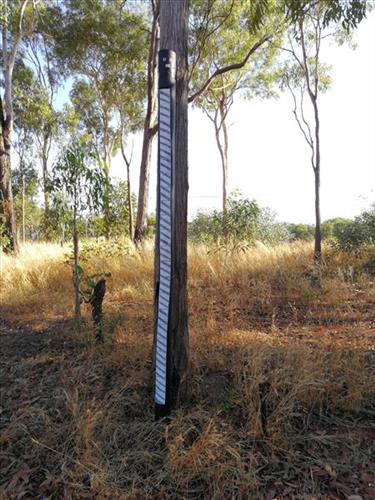
Aboriginal people throughout Australia undertook rituals, which were designed to result in the increase of various natural species. The Rembarrnga people of Central Arnhem Land tell of the spirit being Wurum who had a human form and carried fish in dilly bags. He is sometimes depicted with fins called konno on his legs and arms suggesting a transformational human-fish nature.

In order to create an abundance of certain fish species, Rembarrnga people would draw an image of Wurum on the side of a tree. They would then call out the following invocation; Deny ngarra-jalman ngarr-mangara, ‘We want to get fish’. Following this they would sleep for a night and then it is said that there would be an increase in fish.
Wurum is associated with a site called Kukaddjerre in Balngarra clan estate south of Maningrida. The Wurum also has a further function.

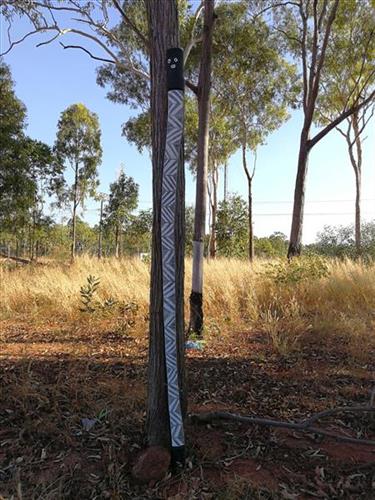
Burruwal described the paperbark Wurum he constructed as the ‘true’ or original form. This suggests that the more solid wooden carving may have been a later innovation. The artist told that ‘in the early days’ these paperbark figures would be placed, standing upright, around a mortuary site for two distinct purposes; to watch and ward off evil spirits, and to signal to people the presence of a mortuary location, so they could find or stay clear of it.

The ability of a contemporary artist like Burruwal to make these highly traditional paperbark figures – a relic of a bygone era – underscores the intimate spiritual links Burruwal has to his personal ancestry.

111981521201


Yawkyawk

Yawkyawk is a word in the Kunwinjku/Kunwok language of Western Arnhem Land meaning ‘young woman’ and ‘young woman spirit being’. The different groups of Kunwinjku people (one of the Eastern dialect groups call themselves Kuninjku) each have Yawkyawk mythologies, which relate to specific locations in clan estates. These mythologies are represented in bark paintings and sculptures of Yawkyawk beings. There are also a few examples of rock art images of these beings.
The female water spirits Yawkyawk or Ngalkunburriyaymi are perhaps the most enigmatic of mythological themes. Sometimes compared to the European notion of mermaids, they exist as spiritual beings living in freshwater streams and rock pools, particularly those in the stone country. The spirit Yawkyawk is usually described and depicted with the tail of a fish. Thus the Kuninjku people sometimes call them ngalberddjenj which literally means ‘the young woman who has a tail like a fish’. They have long hair, which is associated with trailing blooms of green algae (called man-bak in Kuninjku). At times they leave their aquatic homes to walk about on dry land, particularly at night.
Aboriginal people believe that in the beginning most animals were humans. During the time of the creation of landscapes and plants and animals, these ancestral heroes in human form transmutated into their animal forms via a series of various significant events now recorded as oral mythologies. The creation ancestor Yawkyawk travelled the country in human form and changed into the form of Ngalkunburriyaymi as a result of various ancestral adventures. Today the Kuninjku believe that Ngalkunburriyaymi are alive and well and living in freshwater sites in a number of sacred locations.
Some features of a respective country are equated with body parts of Yawkyawk. For example a bend in a river or creek may be said to be ‘the tail of the Yawkyawk, a billabong may be ‘the head of the Yawkyawk and so on. Thus different groups can be linked together by means of a shared mythology featured in the landscape, which crosscuts clan and language group boundaries.
111981522109


Waterholes (Kubumi)

During the dry season at Kubumi, the Mann River shrinks to a series of deep waterholes, exposing the tunnels through the rocky outcrop that interconnect the pools.

111981523308


Mimih Spirit

Aboriginal people in the rocky environments of western and south-western Arnhem Land tell of the existence of tall slender spirits which they call Mimih. The name Mimih is well known throughout the top end of the Northern Territory. Aboriginal groups living in the rocky environments of western and southern Arnhem Land share mythology which relates to the beings known as Mimih. These groups include the Kunwok chain of languages, and also Rembarrnga, Dalabon and Djawoyn language groups. Other groups of people with familial and ceremonial links to rock country inhabitants are also familiar with the idea of the Mimih.

In recent years the Mimih has become a topic in the repertoires of some artists among the Kunibídji people, speakers of the Ndjébbana language and the traditional landowners of the Maningrida area. The people of western Arnhem Land believe that Mimih spirits live in a social organisation similar to Aboriginal people and that Mimih society existed before humans. Mimih are credited with instructing the first people with knowledge relating to survival in the rocky environment of the Arnhem Land plateau. Mimih are said to have taught the first humans how to hunt and butcher game and also how to dance, sing and paint. The song and dance style of western Arnhem Land Aboriginal people is still known today as Mimih style. This term is also used by Aboriginal people further to the east in Central Arnhem Land when describing the dance and song of their western neighbours.

Despite the usual descriptions of Mimih as being benign towards humans, sometimes however they are attributed with mischievous and dangerous qualities, capable of kidnapping and even killing humans. ‘Clever’ men, or Aboriginal men with supernatural powers, sometimes befriend the Mimih and are taught their songs and dances and shown their secret places. The Mimih are like people using the same kinship terms and speaking the same language as the local Aboriginal group. They live in families like humans and it is said that some of these Aboriginal men with mystical knowledge have spent time living with them in their camps.

Mimih are however, terribly thin, having necks so slender that a stiff breeze would be fatal. For this reason they emerge only on windless days and nights to hunt. As soon as a breeze develops, the Mimih are said to run back to their rocky caverns and disappear inside.

111981524667


Bush Jewellery – Necklace

The women of Maningrida and surrounding homelands use a combination of locally found seeds, bone and shells to make a variety of jewellery including necklaces. earrings and bracelets.  Many of the artists use complex patterns and designs to make their beautiful creations.

111981532675


Gungara (The Spiralling Wind)

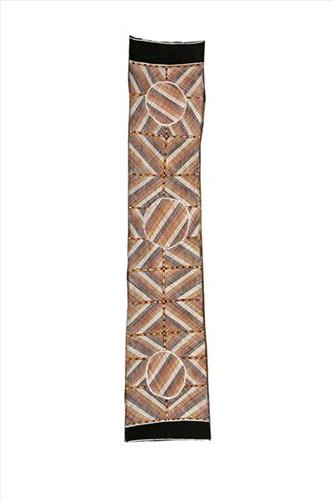
Samuel Namunjdja has painted ‘gungura’, the spiralling wind associated with several sites in the Kardbam clan. On one level, this painting can be interpreted as a depiction of the kinds of mini-cyclones common during the wet season in Arnhem Land, where the artist lives. In this painting, gungura also relates specifically to a site called Bilwoyinj, near Mankorlod, on Samuel Namunjdja’s clan estate.

At this site, two of the most important Kuninjku creation beings, a father and son known as na-korrkko, are believed to have hunted and eaten a goanna. They left some of the goanna fat behind at the site, which turned into the rock that still stands there today. The word Bilwoyinj, which is the name of this site, also refers to the fat of the goanna. Bilwoyinj site is also a ceremonial ground for a ceremony called Yabbaduruwa, a major ceremony owned by the Yirridja patrimoiety. The Yabbaduruwa ceremony is primarily concerned with initiation, land ownership and promoting the cyclical regeneration of the human and natural worlds.