377810582153531


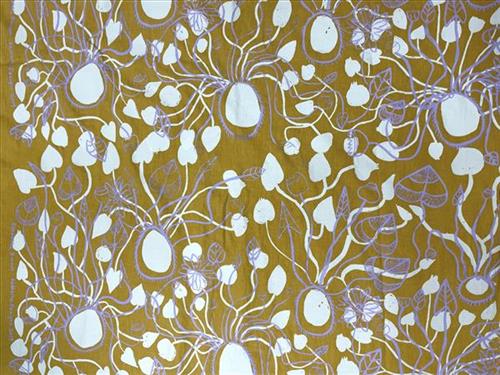
Wayuk – (Waterlily)

‘I always follow the footpath of my grandmother. I have too many stories of my grandmother. We went to the bush and ate bushtucker like yam, yabbie, barra, catfish and magpie goose. We didn’t come into town often, we were staying at Barrihdjowkkeng outstation. I learned how the old people used to live. I always think about my family out there and I keep going. My grandmother asked me to work with her for many years. I watched her making lino and screen printing. That’s why I stay in this job and I’m for the women’s centre’.  Roseanna Bonson 2021

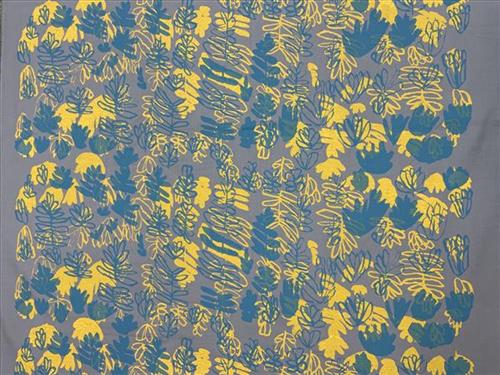
Roseanna’s first design is a 2 colour waterlily design. Wayuk (waterlily) *kuninjki grow in the swamps around Barrihdjowkkeng.

‘The flowers of the waterlily are white and yellow and I like that kind of colour.’ Roseanna Bonson 2021

377810582153496


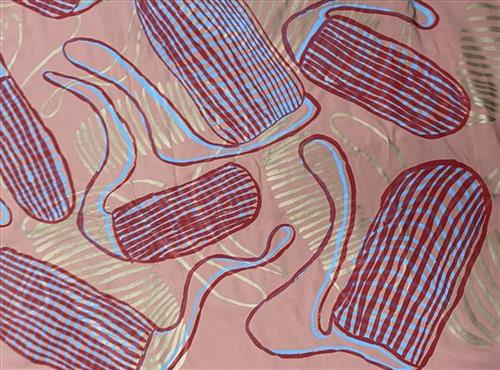
Bah-je (hunting bag)

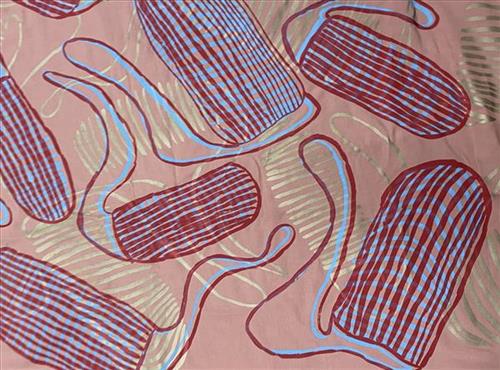
Linda Gurawana is a Djinang speaker and she calls hunting bag or dilly bag bah-je.

This design was created in 2007 however Babbarra printers keep experimenting with colours and layers to make it fresh. 

377810582153495


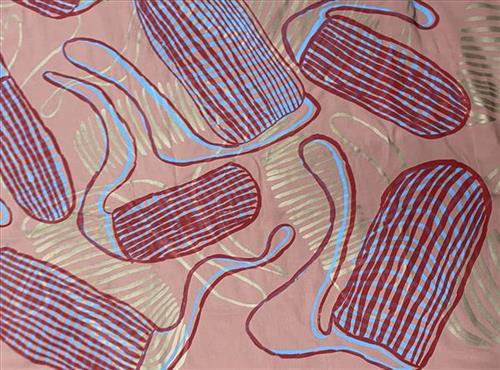
Bah-je (hunting bag)

Linda Gurawana is a Djinang speaker and she calls hunting bag or dilly bag bah-je.

This design was created in 2007 however Babbarra printers keep experimenting with colours and layers to make it fresh. 

377810582153494


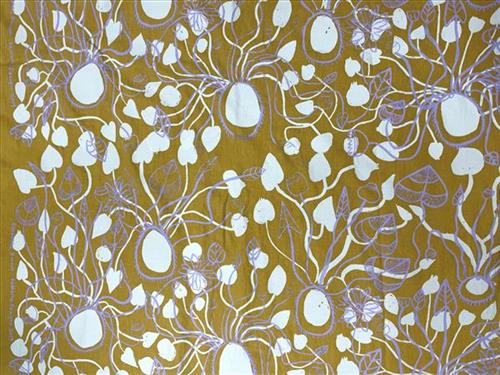
Wayuk (waterlily)

‘I always follow the footpath of my grandmother. I have too many stories of my grandmother. We went to the bush and ate bushtucker like yam, yabbie, barra, catfish and magpie goose. We didn’t come into town often, we were staying at Barrihdjowkkeng outstation. I learned how the old people used to live. I always think about my family out there and I keep going. My grandmother asked me to work with her for many years. I watched her making lino and screen printing. That’s why I stay in this job and I’m for the women’s centre’.  Roseanna Bonson 2021

Roseanna’s first design is a 2 colour waterlily design. Wayuk (waterlily) *kuninjki grow in the swamps around Barrihdjowkkeng.

‘The flowers of the waterlily are white and yellow and I like that kind of colour.’ Roseanna Bonson 2021

377810582153493


Kunngol

This design depicts certain Kun-ngol (clouds) that signal to people of central Arnhem Land that the end of the wet season is approaching. After months of daily monsoonal rain in Arnhem Land, these clouds are light and fluffy, not like the dark, heavy clouds of the monsoonal sky. At the time of the kun-ngol clouds, people know the country will soon dry up and the cold season (dry season) will arrive. When the kun-ngol clouds appear, all of the billabongs are already filled, the rivers are high and the country is brimming with life and fresh new growth after months of fresh water pouring from the sky.

377810582153492


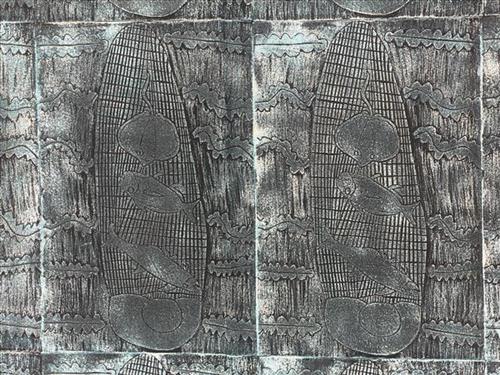
Au-gujechiya (fishtrap)

A detailed linocut design portraying a large Au-gujechiya (fishtrap) with an-maka (cowtail stingray), rajarra (barramundi) and other fish inside. 

Elizabeth is from the Burrarra language group and her homeland is Gupanga, Arnhem Land.  

377810582153491


Bah-je (hunting bag)

Linda Gurawana is a Djinang speaker and she calls hunting bag or dilly bag bah-je.

This design was created in 2007 however Babbarra printers keep experimenting with colours and layers to make it fresh. 

377810582153489


Mandjabu – discounted

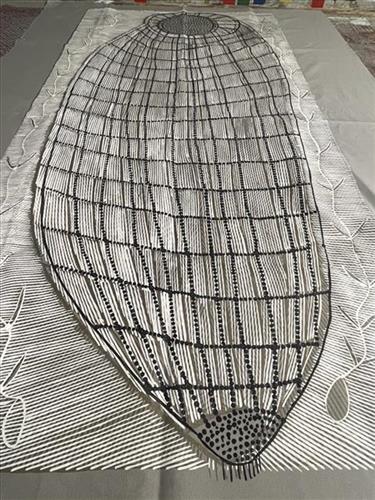
Kuninjku people traditionally make two sorts of conical fish traps. One is called mandjabu and is made from a strong, durable vine called milil, and a smaller one is called manylik mandjabu, and made from the grass manylik. The mandjabuconical fish trap is bigger and stronger and used in tidal reaches of creeks to catch large fish. The smaller, lighter manyliktrap is used in freshwater flowing creeks to catch smaller fish and freshwater prawns. In earlier times, only men were involved in the construction of the large fish traps, but children would often crawl inside and assist.

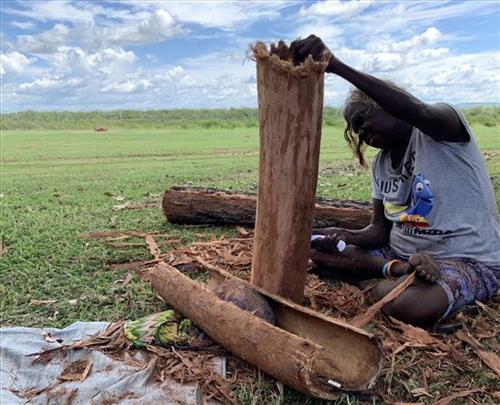
To make mandjabu, weavers firstly harvest milil (burney vine, Malaisia scandens) and put it in water overnight to make it soft. Then they start weaving it; they make rings for the inside to keep the fish trap’s shape. People also make string from the bark of burdaga (kurrajong) to attach the bardainy (hibiscus) rings and to tie the conical end of the fish trap. It’s hard work and it can take three or four weeks to make a fish trap. People also use fish-net fences called kunkarlewabe. They would put the kunkarlewabe  across rivers and creeks. In the middle they would place the mandjabu. They also used small things like sticks, rocks, mud and grass to block the fish from going through. This way we would catch fish such as saltwater barramundi rajarra, ngaldadmurrng (freshwater barramundi), small black freshwater catfish (buliya), bonefish (an-guwirrpiya), and sand bass (dalakan) in the mandjabu.

22174002199


Status: Stock


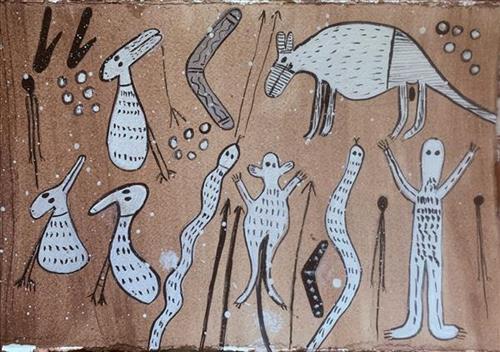
Night Herons

Our ancestors did paintings in caves that show these animals. The Night Herons cry at night to keep warm. The round circles are the eggs. Wungurr is the water snake that is the protector of the river and creeks so they won’t get dry. The dots represent the rain. There are hunting tools such as spears and boomerangs used for hunting kangaroo and digging sticks for roots and the yam plant. Aboriginal people painted these things long time ago. The water snake is good for eating, so are the yams.

11594002130


Status: Stock


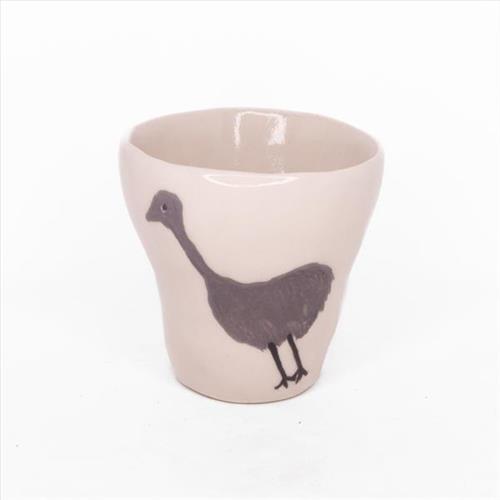
Ntaria Cup – Ilia (Emu)

STORY 
_____________________________________________________________________________________

This cup has travelled all the way from our pottery studio in the community of Ntaria (Hermannsburg), Western Aranda Country, to you.

Ilia means Emu in Western Aranda. Thepa ilia itja alkiraka-errama – the emu does not fly.

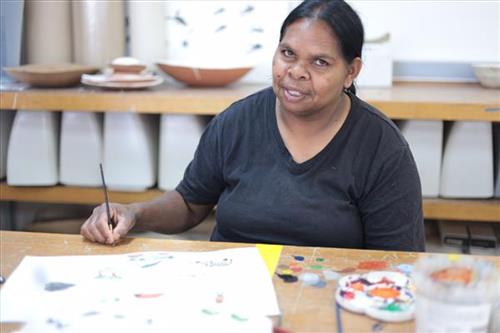
Hermannsburg Potters is an Aboriginal owned art centre located at the remote foothills of the MacDonnell Ranges, 130 kilometres west of Alice Springs in the Northern Territory. Taking inspiration from Country, culture, history and day to day life activities the Potters depict family, birds, animals, bush tucker, mission days, stories of Country and current life in Ntaria (Hermannsburg). 

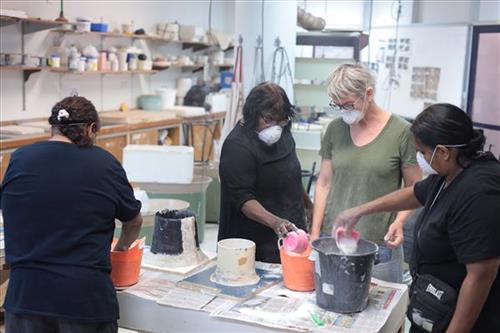
Our new range of homewares was designed by the Potters in a series of workshops at Charles Darwin University in Alice Springs, then produced by hand out here at our pottery studio in Ntaria. Each form and painting was created by one of our artists – keep reading to find out more about the artists who made your cup.  


ARTISTS
__________________________________________________________________________________________


FORM DESIGN: Andrea Rontji Pungkarta

Andrea Rontji joined the potters in 2017. Andrea comes from a big family of potters and is the niece of prominent potters Lindy and Carol Rontji and is the Grandaughter of Virginia Rontji and Irene Entata.

Andrea draws her inspiration from the landscape, flora, fauna and community surrounding Hermannsburg. She has a fine attention to detail in her brushwork and is a skilled hand builder with clay.

Andrea has a very positive and gentle approach and is an exciting emerging artist at Hermannsburg Potters.

Andrea is also a Director and Art Worker for Hermannsburg Potters. 

PAINTING DESIGN: Stephanie Ratara Ngala

Stephanie was born in Hermannsburg and then spent her early years of childhood at MutiTjulu, Uluru. Stephanie returned to Hermannsburg with her family at age 9. Stepahnie is the niece of  senior artist Anita Ratara and cousin to prominent artist Hayley Coulthard.

Stephanie draws on the landscape of Palm Valley, her fathers country. Stephanie is a strong emerging artist and dedicated member of Hermannsburg potters.