377810582149799


Kunmadj

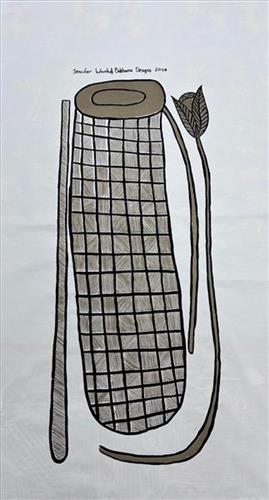
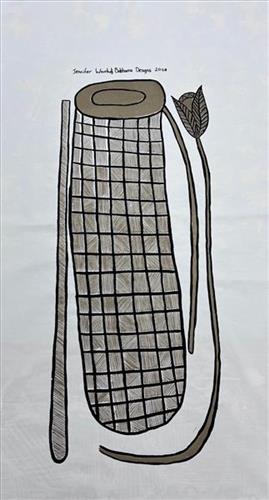
Kunmadj is the Kuninjku term for large woven collecting baskets, known as dillybags.

They are often made from the burney vine (Malaisia scandens), a strong, pliable plant that grows along the ground and into the canopy of monsoon vine thickets. The baskets are used to collect a variety of heavy foods, such as fish caught in conical fish traps or a good harvest of yams. As well as being of practical use, dillybags are of cultural significance to Arnhem Land people. Dillybags are totemic objects and they are associated with particular sites in the landscape.

377810582149794


Kunmadj

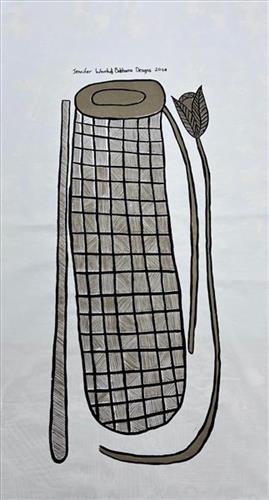
Kunmadj is the Kuninjku term for large woven collecting baskets, known as dillybags.

They are often made from the burney vine (Malaisia scandens), a strong, pliable plant that grows along the ground and into the canopy of monsoon vine thickets. The baskets are used to collect a variety of heavy foods, such as fish caught in conical fish traps or a good harvest of yams. As well as being of practical use, dillybags are of cultural significance to Arnhem Land people. Dillybags are totemic objects and they are associated with particular sites in the landscape.

377810582149792


Kunmadj

Kunmadj is the Kuninjku term for large woven collecting baskets, known as dillybags.

They are often made from the burney vine (Malaisia scandens), a strong, pliable plant that grows along the ground and into the canopy of monsoon vine thickets. The baskets are used to collect a variety of heavy foods, such as fish caught in conical fish traps or a good harvest of yams. As well as being of practical use, dillybags are of cultural significance to Arnhem Land people. Dillybags are totemic objects and they are associated with particular sites in the landscape.

377810582149789


Ngaldadmurrng (Saratoga)

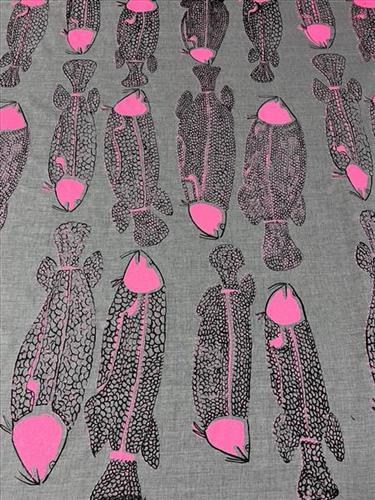
This design tells the story of Saratoga dreaming,  a freshwater fish that swims on the edge of creeks and rivers. This design is the Saratoga dreaming from the Mularra songline. Where the Saratoga we call Murdulngu, Danguny travelled from Malmyangarnak billabong to Mirrigatja.

This Billabong was owned by Murdulngu (Saratoga) before the water was taken over by shark Barlangu he came all the way from east to north then to west. He was travelling when that water level was high he went up the stream but he couldn’t make it. This Barlangu came from Murruggun clan but really this shark came from long way all the way south. This story is connected through Mularra songline it represents many clans.

With permission from clan elders, Carol is able to pass on this family knowledge through her passion in textile and art.


‘I am proud of my first design, I want to keep this design for future, for my children and grandchildren so they remember this story, this story is a big part of the mularra songline’ Carol Liyawanga Campion

377810582149788


Ngaldadmurrng (Saratoga)

This design tells the story of Saratoga dreaming,  a freshwater fish that swims on the edge of creeks and rivers. This design is the Saratoga dreaming from the Mularra songline. Where the Saratoga we call Murdulngu, Danguny travelled from Malmyangarnak billabong to Mirrigatja.

This Billabong was owned by Murdulngu (Saratoga) before the water was taken over by shark Barlangu he came all the way from east to north then to west. He was travelling when that water level was high he went up the stream but he couldn’t make it. This Barlangu came from Murruggun clan but really this shark came from long way all the way south. This story is connected through Mularra songline it represents many clans.

With permission from clan elders, Carol is able to pass on this family knowledge through her passion in textile and art.


‘I am proud of my first design, I want to keep this design for future, for my children and grandchildren so they remember this story, this story is a big part of the mularra songline’ Carol Liyawanga Campion

377810582149786


Mandjabu (Fish Trap)

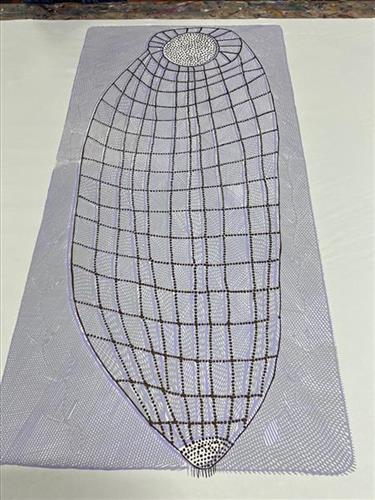
“In old times people would make these mandjabu (fish traps) to go fishing. They are made with vine we find in the jungle. That old man, Anchor Gulunba, he showed me how to make these fish traps. I would sit there and watch him making them. We catch barramundi, catfish, all kinds of fish.” – Helen Lanyinwanga

Kuninjku people traditionally make two sorts of conical fish traps. One called mandjabu made from a vine called milil, and another smaller one called manylik mandjabu, made from the grass manylik. The mandjabu conical fish trap is bigger and stronger and used in tidal reaches of creeks to catch large fish. The smaller, lighter manylik trap is used in freshwater flowing creeks to catch smaller fish and freshwater prawns. Traditionally, only men were involved in the construction of the large fish traps, but children would often crawl inside and assist.

To make fish traps and fish net fences artists firstly get vine (milil) from the jungle and they put it in water for one night to make it soft. Next they start weaving it; they make rings for the inside to keep the fish trap’s shape. Artists work for three or four weeks on the fish trap. They also make string from kurrajong (burdaga) to attach the hibiscus (bardainy) rings and to tie the conical end of the fish trap. This fish trap is used in saltwater and freshwater. People also use fish net fences called mun-dirra. A long time ago they would put the mun-dirra across rivers and creeks. In the middle they would place the an-gujechiya. They also used small things like sticks, rocks, mud and grass to block the fish from going through. People would then catch fish like saltwater barramundi rajarra, freshwater barramundi (janambal), small black freshwater catfish (buliya), bonefish (an-guwirrpiya), and sand bass (dalakan) in these fish traps.

377810582149776


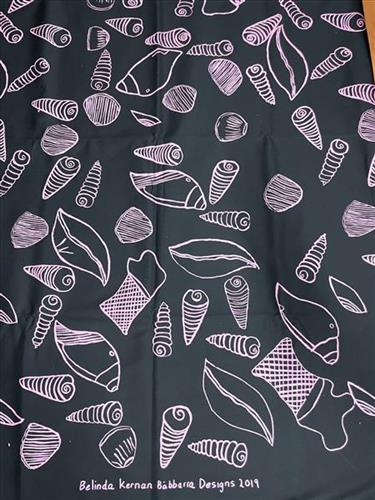
Sea Shells and Dilly Bags

‘Sometimes when we go down to the beach in Maningrida we pick all these shells up. Some family make necklaces and earrings. In the olden days they used to collect shells and put them in the dilly bags. The old people used to carry dilly bags when they went hunting. They used the dilly bag for bush food. My design shows mud muscle and long bum and cockles.’ Belinda Kernan 2022

Belinda’s mother is from Eastern Arrernte country near Alice Springs, the community of Ltyentye Apurte (Santa Teresa), and her father’s country is Maningrida. Belinda speaks languages from both sides of her family, as well as various languages belonging to Central Arnhem Land. She lives in Maningrida and prints lino at the women centre. Belinda is also a strong leader for young people in her community.

377810582149773


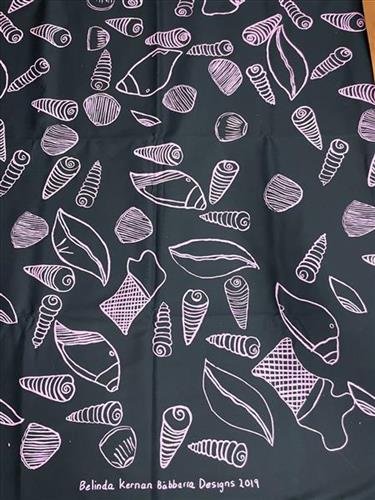
Sea Shells and Dilly Bags

‘Sometimes when we go down to the beach in Maningrida we pick all these shells up. Some family make necklaces and earrings. In the olden days they used to collect shells and put them in the dilly bags. The old people used to carry dilly bags when they went hunting. They used the dilly bag for bush food. My design shows mud muscle and long bum and cockles.’ Belinda Kernan 2022

Belinda’s mother is from Eastern Arrernte country near Alice Springs, the community of Ltyentye Apurte (Santa Teresa), and her father’s country is Maningrida. Belinda speaks languages from both sides of her family, as well as various languages belonging to Central Arnhem Land. She lives in Maningrida and prints lino at the women centre. Belinda is also a strong leader for young people in her community.

377810582149772


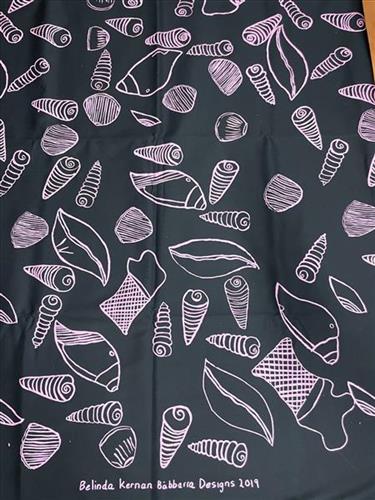
Sea Shells and Dilly Bags

‘Sometimes when we go down to the beach in Maningrida we pick all these shells up. Some family make necklaces and earrings. In the olden days they used to collect shells and put them in the dilly bags. The old people used to carry dilly bags when they went hunting. They used the dilly bag for bush food. My design shows mud muscle and long bum and cockles.’ Belinda Kernan 2022

Belinda’s mother is from Eastern Arrernte country near Alice Springs, the community of Ltyentye Apurte (Santa Teresa), and her father’s country is Maningrida. Belinda speaks languages from both sides of her family, as well as various languages belonging to Central Arnhem Land. She lives in Maningrida and prints lino at the women centre. Belinda is also a strong leader for young people in her community.

377810582149771


Mabbúlarr

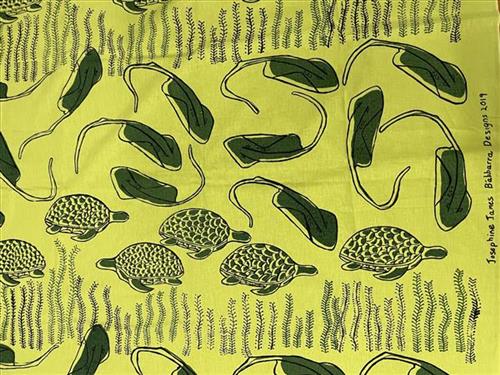
Mabbúlarr is the Ndjébbana word describing calm and stillness – both regarding people and the ocean.

This design tells the story of underwater life in the shallows. The turtle we call marláddja (green turtle, Chelonia mydas) and the stingray we call marnandjúbba (Cowtail Stingray, Pastinachus sephen).

‘When strong wind blows the sea is rough, when there’s no wind the sea is calm. We call that mábbularr. You can see through the water and look at the turtle and stingray eating karlómerr (sea grass) and dancing underwater to find their mate. When we go on the boat hunting, we go at times of mábbularr.

In the old days men used to hunt with a canoe and with traditional made harpoon.  Guided by our ancestors’ spirits they would paddle all day to find sea turtle and dugongs in the right places. The men had to be smart for the tide and know the weather to balance their canoes. They would go at times of mábbularr (calm), early morning in daytime or at night-time when there is no moon and the water glows. We call the night-time glimmer of phosphorescence mílarrng-milarrng. Today people still go hunting, it brings a lot of families together and they share eating down the beach.

We have songline for sea turtle, also men paint turtle on their back and dance turtle in the Míddjarn the same way turtle dance underwater. It is very important we look after our country and songline passed on from many generations’. Josephine James 2021