
111982152147


Djomi

There are two Dreaming ladies at Bábbarra billabong – Djómi and Bábbarra. These two are sisters: one freshwater ‘mermaid’ and one saltwater one. Big long head, big stomach and very skinny legs that Bábbarra.

Their mother is the crocodile who lives in the Bábbarra billabong.

Both sisters will give people babies through the drinking water at Bábbarra. That’s why men stay away and Bábbarra is a sacred women’s site. Too strong our Dreaming – even men can get that baby in their tummies!

When it rains at Bábbarra, or when a cyclone comes, it’s because our Dreaming is too strong. There are lots of women spirits. When the storms come, the spirits go in the underground rivers and hide safely.

If you go fishing in our country, you have to be careful not to catch the Bábbarra and Djómi ‘mermaids’. Some people catch them thinking they are barramundi, but they are actually the ‘mermaid’ spirits. You will know, because they have white hair.

Lena Djabibba, djungkay (mother’s country and ceremonial manager of Bábbarra) and Joy Garlbin (landowner for Bábbarra)

Text courtesy of Bábbarra Women’s Centre copyright 2017

377810582153067


Man-mobban (Billygoat Plum)

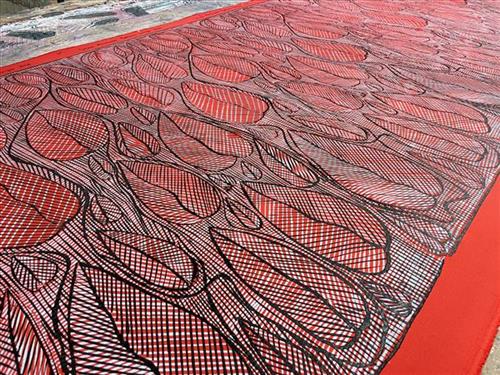
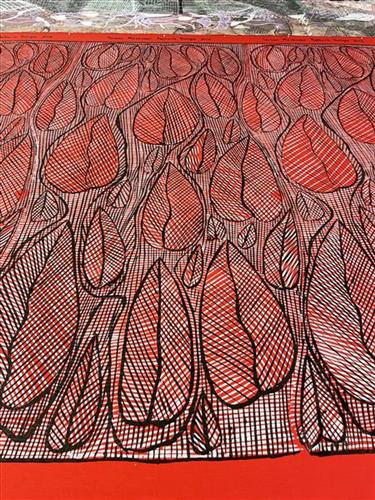
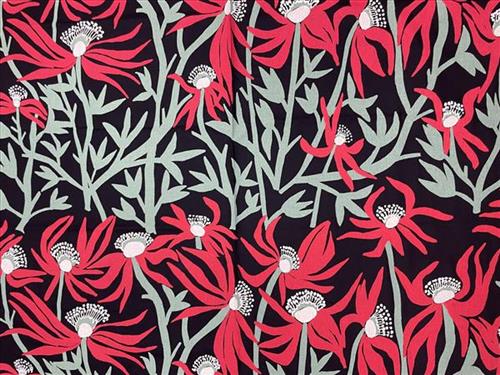
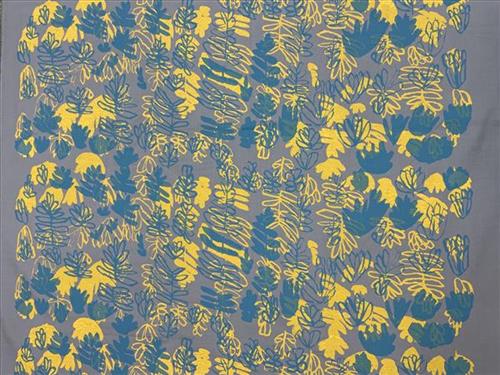
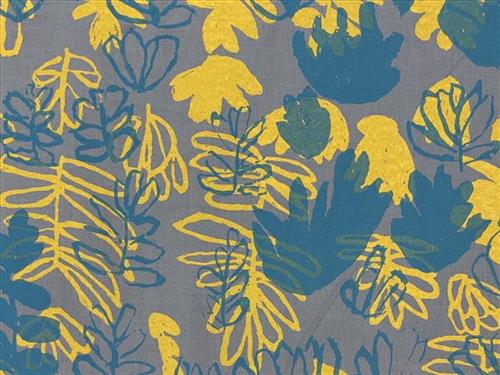
Susan has depicted the leaves of the man-mobban (billygoat plum tree,  Terminalia carpentariae). Its small green plums can be found in abundance on Susan’s homeland, Mumeka.

This is a print from our archive and was designed by Susan in 2010. There are some blemishes and minor errors in the print which adds to it’s character. Overall this is a strong design representing Susan Marawarr’s incredible legacy. 

377810582153022


Kunkurra (Spiral Wind)

‘My designs, they are all alive living up in my head’- Janet Marawarr

Janet Marawarr has depicted kunkurra, the spiralling wind associated with several sites in the Kardbam clan. On one level, this design can be interpreted as a depiction of the kinds of mini-cyclones common during the wet season in Arnhem Land, where the artist lives. Kunkurra also relates specifically to a site called Bilwoyinj, near Mankorlod, on the artist’s clan estate.

At this site, two of the most important Kuninjku creation beings, a father and son known as na-korrkko, are believed to have hunted and eaten a goanna. They left some of the goanna fat behind at the site, which turned into the rock that still stands there today.

Bilwoyinj site is also a ceremonial ground for a ceremony called Yabbaduruwa, a major ceremony owned by the Yirridja patrimoiety. The Yabbaduruwa ceremony is primarily concerned with initiation, land ownership and promoting the cyclical regeneration of the human and natural worlds.

377810582153000


Manwak (Mumeka blooms)

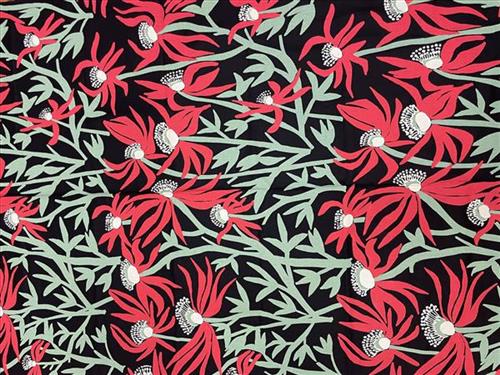
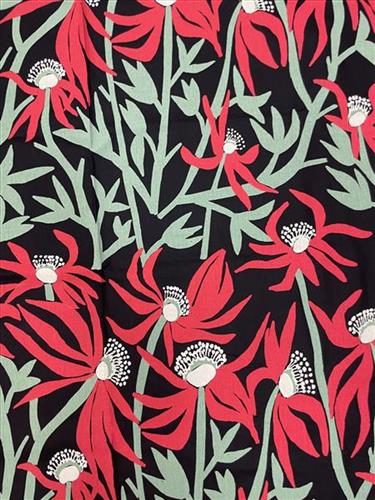
Manwak grows near Mumeka creek, on the artist’s homeland. This beautiful large flower blooms during the mandjelk (wet season). It has deep green petals with a central red kernel which swells to the size of a berry. It is known for its long, sweeping petals which seem to dance in the winds.

By dry season, the inside kernel resembles a strawberry in appearance and flavour, but is also very spicy so it burns our mouth. Kids and adults pick these berries enthusiastically when walking or going hunting on my country. The inside of the flowers are eaten fresh, a favourite manme (bush food) of our people.

“When I was painting this Manwak story, I was painting in Maningrida. In my head I was dreaming of being on my homeland, eating ripe Manwak berries”- Deborah Wurrkidj

Hand Printed by Publisher Textiles, Sydney. 

377810582152852


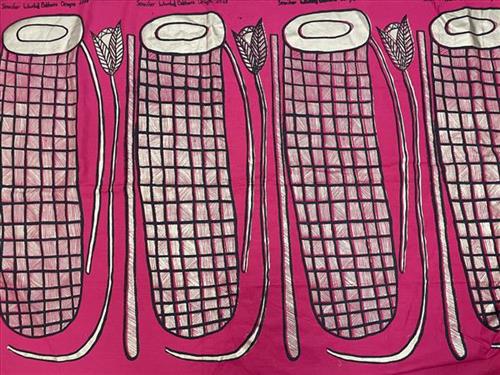
Kun-madj

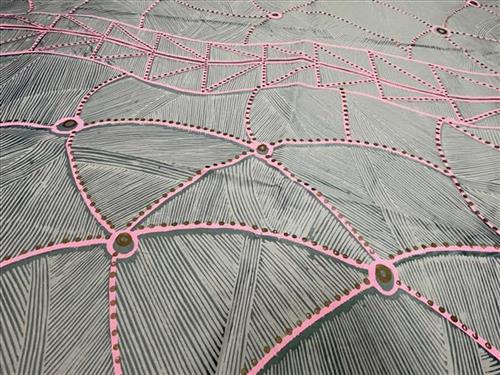
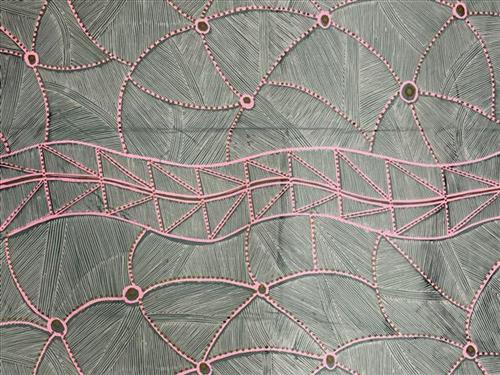
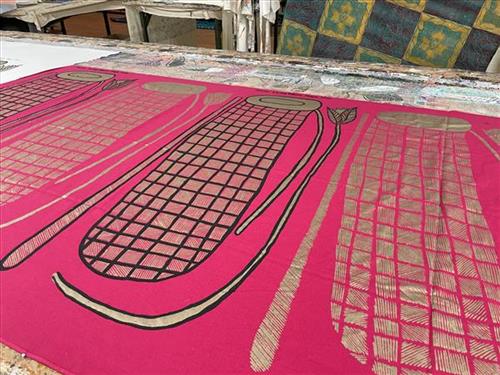
In this design, Jennifer has depicted kun-madj (dillybag), which is a large woven collecting basket. These large bags are often made from the burney vine (Malaisia scandens), a strong, pliable plant that grows along the ground and into the canopy of monsoon vine thickets. The bags are used to collect heavy foods, such as fish caught in conical fish traps or yams. They can also be made from kun-dayarr (Pandanus spiralis), a palm that grows in many areas of Arnhem Land. Tightly woven dillybags are used to collect sugarbag, the native honey.

As well as being of practical use, dillybags are of cultural significance to Arnhem Land people. They are totemic objects associated with particular sites in the landscape.

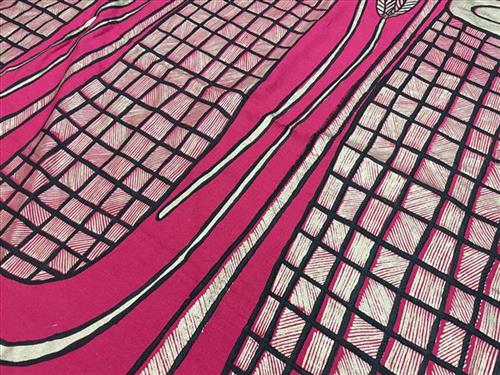
Beautiful hot pink linen with a heavy hand feel printed with black and antique gold ink. 

377810582152797


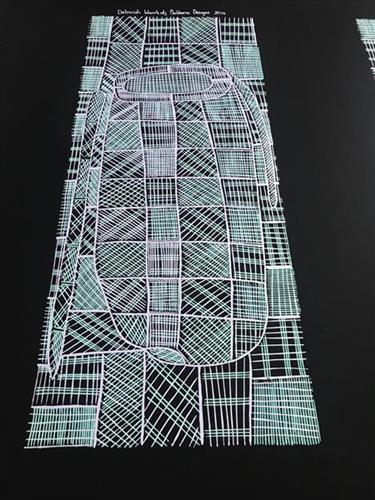
Kunmadj – Deborah Wurrkidj

Deborah has depicted kunmadj (dillybag), which is a large woven collecting basket. These large bags are often made from the burney vine (Trophis scandens), a strong, pliable plant that grows along the ground and into the canopy of monsoon vine thickets. The bags are used to collect heavy foods, such as fish caught in conical fish traps, or yams. They can also be made from kun-dayarr (Pandanus spiralis), a palm that grows in many areas of Arnhem Land. Tightly woven dillybags are used to collect sugarbag, the native honey.

As well as being of practical use, dillybags are of cultural significance to Arnhem Land people. They are totemic objects associated with particular sites in the landscape.

A single panel with space to stretch onto a canvas.

111982152638


Djamo (dog)

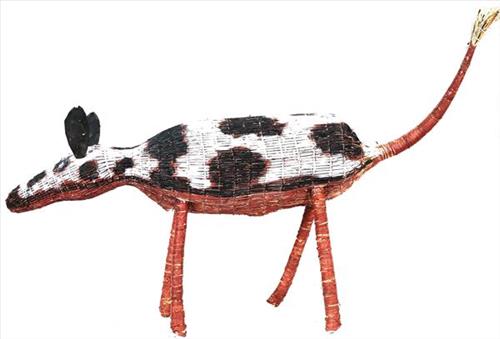
The djamo (dog) holds special mythological as well as practical significance for people of Central Arnhem land, particularly women. The men used to go hunting with a spear and the women with a dog. If the men didn’t catch a kangaroo, the women would catch a goanna. If neither caught anything, then they could catch fish. If there was neither kangaroo nor goanna, then they would eat sugarbag. This is how it was long ago – sugarbag, lily root, yam, goanna, sand goanna, fish and more were part of the regular diet. “Don’t forget that long ago we didn’t know European food, we knew bush food. We used to grow from bush food.” Rembarrnga women have literally and metaphorically brought together strands from their country and the mythology of their heritage to produce three dimensional fibre creatures filled with mystical significance. Dog, mermaid, rainbow serpent, blue tongue and fish multiplication spirits: each creature plays an important role in the clan’s cultural landscape. Materials for this camp dog comes from the clan estate. Dayarr (pandanus) and rulk (grass) are the twines used for the creature’s bodies. Warlppurrunggu (bush turkey) and nganarrngh (black cockatoo) feathers provide bulkkan-na (hair). Marnarr (red), gamununggu (white), garlba (yellow) ochres and roerroe (black) ashes are then carefully mixed and applied for colour. The use of local materials provides an integral link between the mythological nature of the creatures, which inhabit the country and their physical form.

111982152636


Djamo (dog)

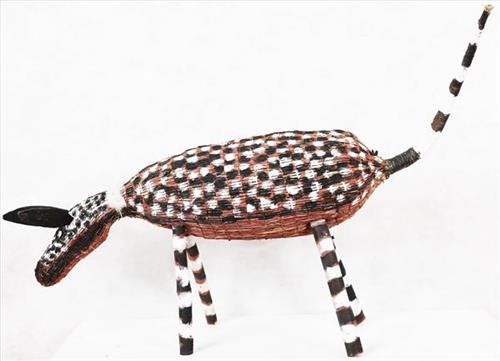
The djamo (dog) holds special mythological as well as practical significance for people of Central Arnhem land, particularly women. The men used to go hunting with a spear and the women with a dog. If the men didn’t catch a kangaroo, the women would catch a goanna. If neither caught anything, then they could catch fish. If there was neither kangaroo nor goanna, then they would eat sugarbag. This is how it was long ago – sugarbag, lily root, yam, goanna, sand goanna, fish and more were part of the regular diet. “Don’t forget that long ago we didn’t know European food, we knew bush food. We used to grow from bush food.” Rembarrnga women have literally and metaphorically brought together strands from their country and the mythology of their heritage to produce three dimensional fibre creatures filled with mystical significance. Dog, mermaid, rainbow serpent, blue tongue and fish multiplication spirits: each creature plays an important role in the clan’s cultural landscape. Materials for this camp dog comes from the clan estate. Dayarr (pandanus) and rulk (grass) are the twines used for the creature’s bodies. Warlppurrunggu (bush turkey) and nganarrngh (black cockatoo) feathers provide bulkkan-na (hair). Marnarr (red), gamununggu (white), garlba (yellow) ochres and roerroe (black) ashes are then carefully mixed and applied for colour. The use of local materials provides an integral link between the mythological nature of the creatures, which inhabit the country and their physical form.

377810582152590


Kunngol (clouds)

This design depicts certain Kun-ngol (clouds) that signal to people of central Arnhem Land that the end of the wet season is approaching. After months of daily monsoonal rain in Arnhem Land, these clouds are light and fluffy, not like the dark, heavy clouds of the monsoonal sky. At the time of the kun-ngol clouds, people know the country will soon dry up and the cold season (dry season) will arrive. When the kun-ngol clouds appear, all of the billabongs are already filled, the rivers are high and the country is brimming with life and fresh new growth after months of fresh water pouring from the sky.

377810582152585


Kunwardde dja Karrbarda (Rocks and Yam Vine)

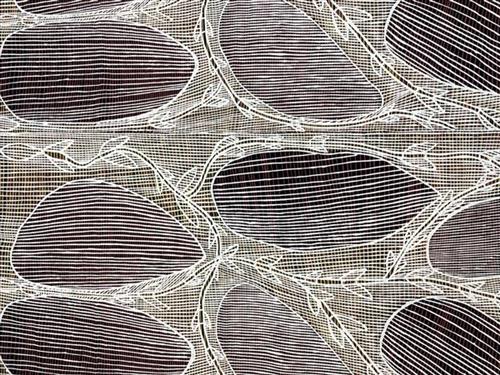
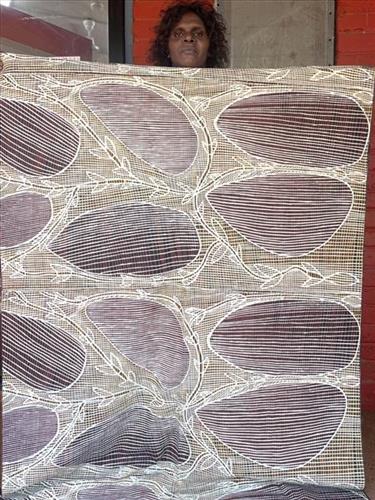
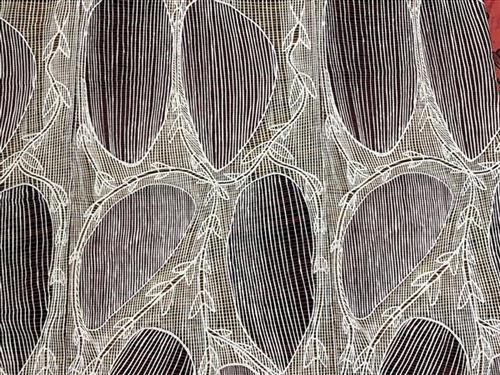
Susan Marawarr is a Kuninjku artist from the Kurulk clan whose country lies around the outstation of Mumeka in central Arnhem Land. In this design, she has depicted karrbarda (long yam) on her traditional country, the kunwardde (stone country).

The large stones represent the kunwardde rocky outcrops, which are elevated above the flat floodplains. The vines creeping around the large rocks are from the karrbarda. Women dig up karrbarda with kungarrndutj (digging sticks) and they are then cooked in the ashes of the fire to be eaten.

These yams are purple on the saltwater side of country and on inland freshwater country they are white. Karrbarda are an important manme (bush food) that are collected during the wet and dry seasons.

Printed by Publisher Textiles, Sydney