377810582171331


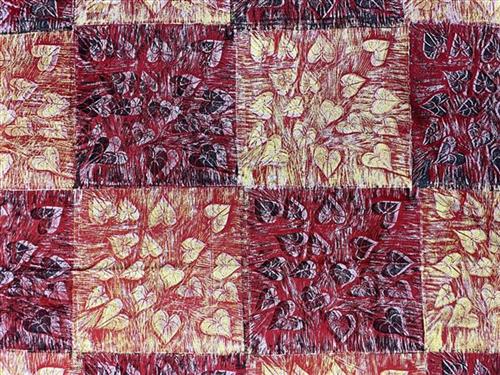
Yam Leaf – Belinda Kernan

This fabric was created using the linocut printing technique. The lino tile was carved by the artist in Maningrida and printed by hand using a variety of colours and layers. The linocut technique ensures each textile piece is a one-off, limited edition piece.

377810582171325


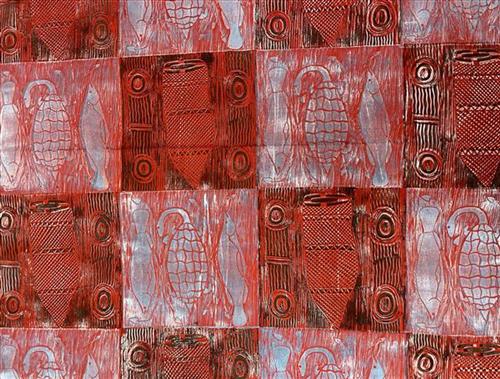
Mandjabu and Turtle

Kuninjku people traditionally make two sorts of conical fish traps. One is called mandjabu and is made from a strong, durable vine called milil, and a smaller one is called manylik mandjabu, and made from the grass manylik. The mandjabuconical fish trap is bigger and stronger and used in tidal reaches of creeks to catch large fish. The smaller, lighter manyliktrap is used in freshwater flowing creeks to catch smaller fish and freshwater prawns. In earlier times, only men were involved in the construction of the large fish traps, but children would often crawl inside and assist.

To make mandjabu, weavers firstly harvest milil (burney vine, Malaisia scandens) and put it in water overnight to make it soft. Then they start weaving it; they make rings for the inside to keep the fish trap’s shape. People also make string from the bark of burdaga (kurrajong) to attach the bardainy (hibiscus) rings and to tie the conical end of the fish trap. It’s hard work and it can take three or four weeks to make a fish trap. People also use fish-net fences called kunkarlewabe. They would put the kunkarlewabe  across rivers and creeks. In the middle they would place the mandjabu. They also used small things like sticks, rocks, mud and grass to block the fish from going through. This way we would catch fish such as saltwater barramundi rajarra, ngaldadmurrng (freshwater barramundi), small black freshwater catfish (buliya), bonefish (an-guwirrpiya), and sand bass (dalakan) in the mandjabu.

377810582171236


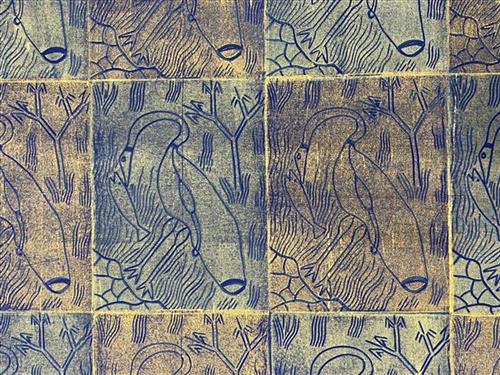
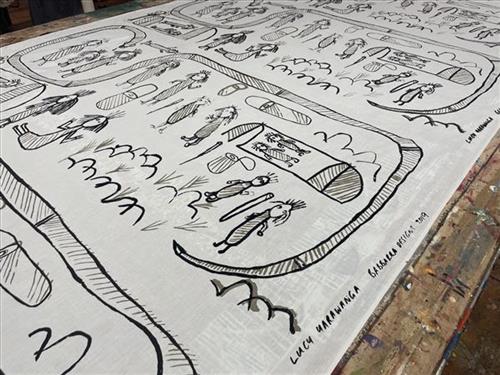
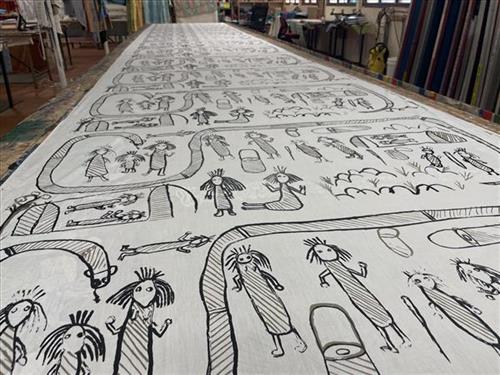
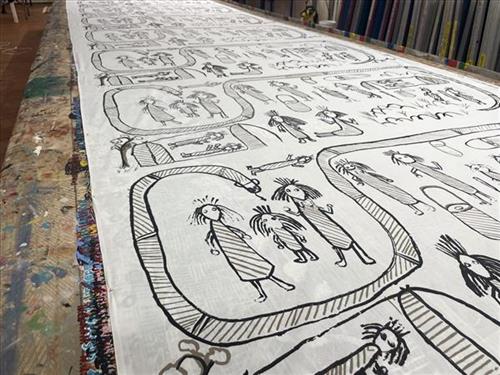
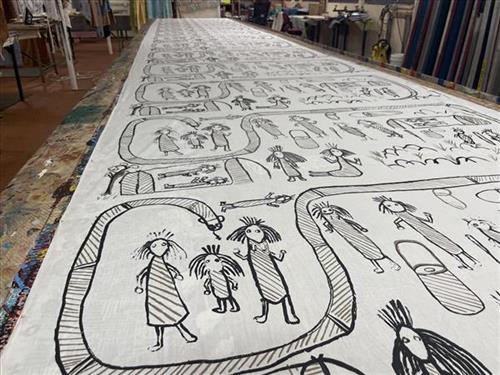
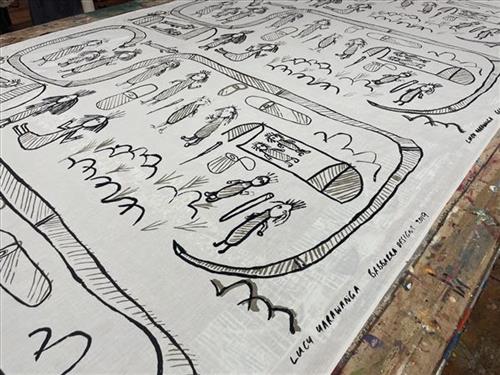
Bawaliba and Ngalyod (Rainbow Serpent)

‘My Kikka (mother), when she was alive, she would tell me these stories. I was just a  little girl and she would tell us the stories in her language Gurrgoni.

In the camps there were boy and girl Bawaliba, and old Bawaliba too. They loved to  dance by the firelight, keeping rhythm with a stick. They had lots of hair, they were  really tall and skinny, with spots on their bodies. The Bawaliba lived a long time in  peace. They were the only spirits on their country and so they were never disturbed.

One day, a long time ago, the Bawaliba were out hunting and they saw a large  snake- they didn’t know then but she was the Rainbow Serpent. They were really  scared, they had never seen that. creature before. She was really beautiful- like a  normal king brown snake but with a rainbow from the sky on her back. The rainbow  serpent was really hungry, and she could smell the Bawaliba from a long way away.  She was out looking for food.  The Bawaliba tried to stop Ngalyod coming for them but she was just too quick. She  snuck up behind the Bawaliba and before they could get away she ate them up.  When she was really full and couldn’t eat anymore Bawaliba she changed the rest of  them into stone. Still til this day, the Bawaliba stay on that same country as stones.’ Lucy Yarawanga

377810582171235


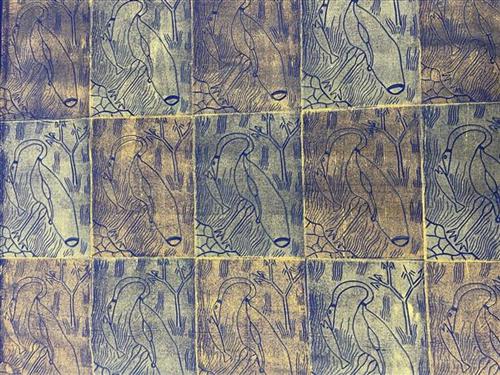
Bawaliba and Ngalyod (Rainbow Serpent)

‘My Kikka (mother), when she was alive, she would tell me these stories. I was just a  little girl and she would tell us the stories in her language Gurrgoni.

In the camps there were boy and girl Bawaliba, and old Bawaliba too. They loved to  dance by the firelight, keeping rhythm with a stick. They had lots of hair, they were  really tall and skinny, with spots on their bodies. The Bawaliba lived a long time in  peace. They were the only spirits on their country and so they were never disturbed.

One day, a long time ago, the Bawaliba were out hunting and they saw a large  snake- they didn’t know then but she was the Rainbow Serpent. They were really  scared, they had never seen that. creature before. She was really beautiful- like a  normal king brown snake but with a rainbow from the sky on her back. The rainbow  serpent was really hungry, and she could smell the Bawaliba from a long way away.  She was out looking for food.  The Bawaliba tried to stop Ngalyod coming for them but she was just too quick. She  snuck up behind the Bawaliba and before they could get away she ate them up.  When she was really full and couldn’t eat anymore Bawaliba she changed the rest of  them into stone. Still til this day, the Bawaliba stay on that same country as stones.’ Lucy Yarawanga