
377810582181918
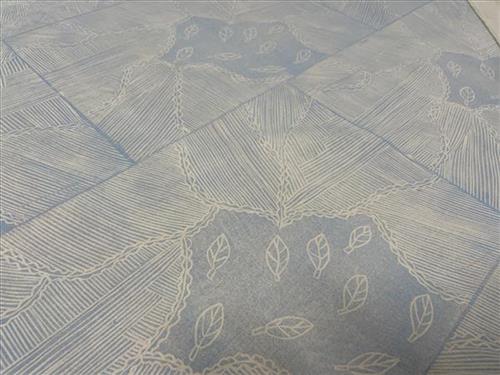
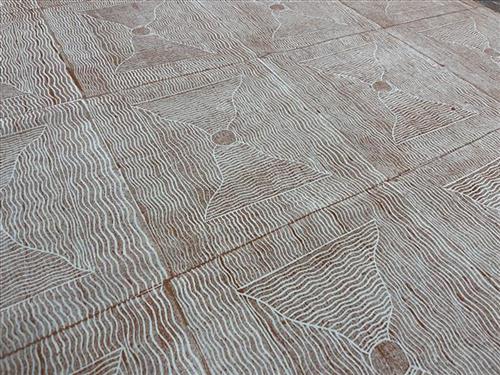
Kunkurra (Spiral Wind)
‘My designs, they are all alive living up in my head’- Janet Marawarr
Janet Marawarr has depicted kunkurra, the spiralling wind associated with several sites in the Kardbam clan. On one level, this design can be interpreted as a depiction of the kinds of mini-cyclones common during the wet season in Arnhem Land, where the artist lives. Kunkurra also relates specifically to a site called Bilwoyinj, near Mankorlod, on the artist’s clan estate.
At this site, two of the most important Kuninjku creation beings, a father and son known as na-korrkko, are believed to have hunted and eaten a goanna. They left some of the goanna fat behind at the site, which turned into the rock that still stands there today.
Bilwoyinj site is also a ceremonial ground for a ceremony called Yabbaduruwa, a major ceremony owned by the Yirridja patrimoiety. The Yabbaduruwa ceremony is primarily concerned with initiation, land ownership and promoting the cyclical regeneration of the human and natural worlds.

377810582181917
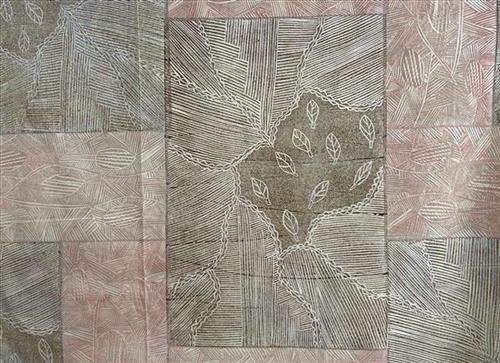
Kunkurra (Spiral Wind) and Ngalng
‘My designs, they are all alive living up in my head’- Janet Marawarr
Janet Marawarr has depicted kunkurra, the spiralling wind associated with several sites in the Kardbam clan. On one level, this design can be interpreted as a depiction of the kinds of mini-cyclones common during the wet season in Arnhem Land, where the artist lives. Kunkurra also relates specifically to a site called Bilwoyinj, near Mankorlod, on the artist’s clan estate.
At this site, two of the most important Kuninjku creation beings, a father and son known as na-korrkko, are believed to have hunted and eaten a goanna. They left some of the goanna fat behind at the site, which turned into the rock that still stands there today.
Bilwoyinj site is also a ceremonial ground for a ceremony called Yabbaduruwa, a major ceremony owned by the Yirridja patrimoiety. The Yabbaduruwa ceremony is primarily concerned with initiation, land ownership and promoting the cyclical regeneration of the human and natural worlds.
377810582181916
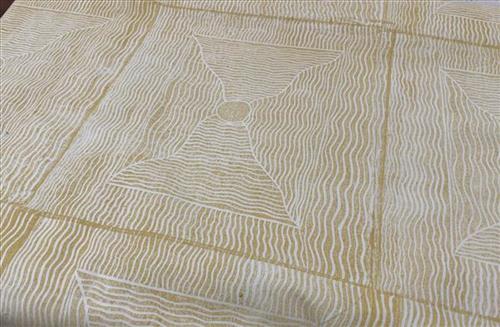
Kuluban (black Flying Fox)

377810582181915
Kuluban (Black flying fox)
225682133238
Ngawiya & Kuyu
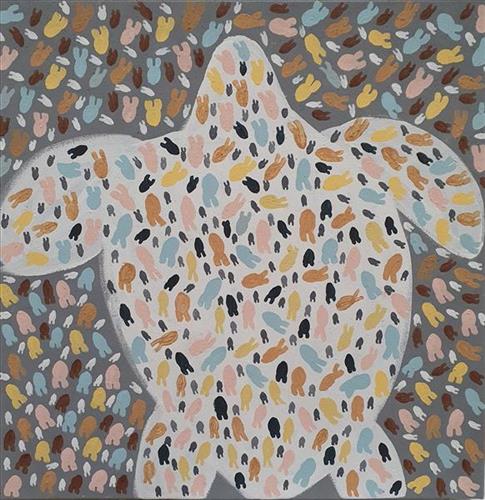
My painting is about ngawiya (turtle) and kuyu (fish). For Bama (people), the ngawiya is very important in our culture. Our men hunt in ngawiya the traditional way with spears. They then jump in the water and lift the heavy turtle into the boat.
We cook ngawiya on the fire for special occasions such as funerals, weddings and ceremonies. this has been our way for thousand of years.
In my painting the ngawiya is swimming through the ocean with all the beautiful reef kuyu following it.
225682142681
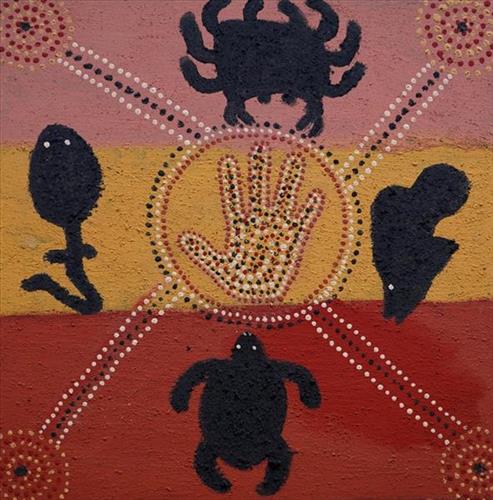
Hunting bush foods.
Hunting is one of the many ways Aboriginal Men gathered food for their tribe. Men went out for turtle and other sea animals. Hunting is still being carried on today by many Aboriginal and Torres Strait Islander men.
225682142667
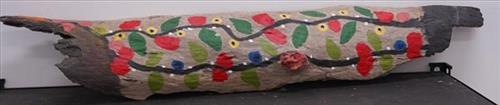
Painted Driftwood
These pieces of driftwood were collected by the artist, on country, at the local beach, Weary Bay.
Each one is hand painted and reflects the artists culture and stories, which makes each one unique and individual.
225682180939
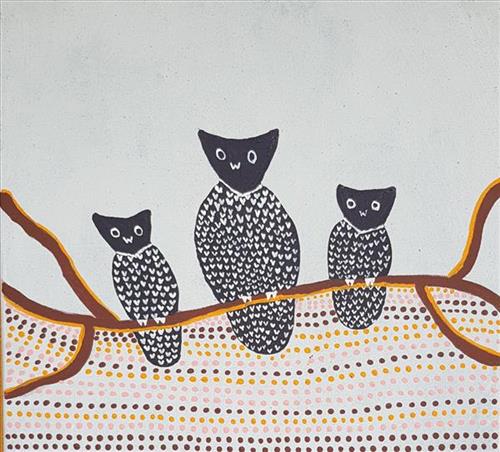
Bulnja
I am a Ngkugkul woman from Shipton’s Flat, my mother’s Country. My dad was a Kaanju man from the Coen area.
When I was about 14 years old I started painting bulnja (owls). I was still at school. I liked looking at bulnja in the rainforest. I liked their colours and patterns in the feathers. They are really good at camouflage and you need good eyes to see them! You can find the bulnja when they sing out. It’s a funny noise! Bulnja eat little insects, lizards and mice that live in the rainforest. The bulnja have important story but I can’t talk about it.
I painted bulnja because they live in the rainforest. They live up in the trees. It’s the only place you can see them around here. The rainforest, its plants, trees and animals means a lot to me.