Djenj dja Wayuk
Djenj dja Wayuk (Brim and Waterlilies)

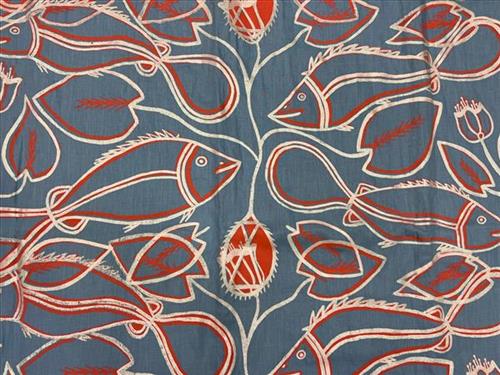
Djenj dja Wayuk (Brim and Waterlilies)

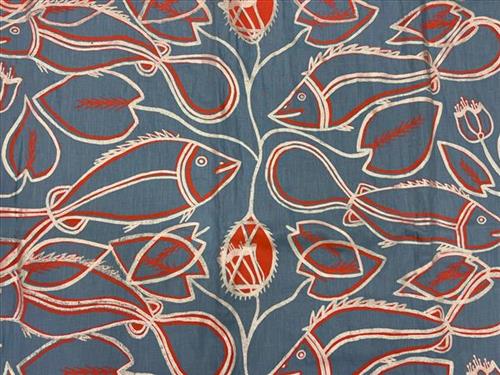
Djenj dja Wayuk (Brim and Waterlilies)

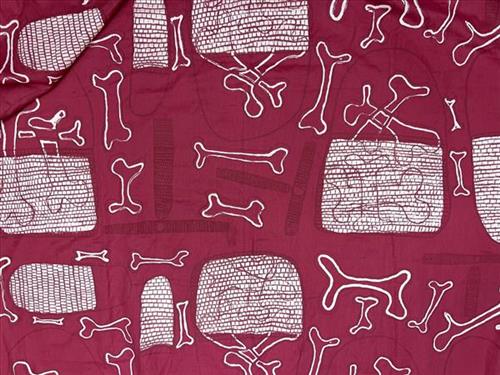
In Esther’s first screen design, she depicts the story of Mardarda (bones) and Njarlarla (fire sticks) carried in a dilly bag, reminiscent of traditional ways of the Ndjebenna people.
‘Back in the old days, our people would use a ‘bush lighter’ for lighting fires, which was two pieces of special wood which would make fire easily. The old people carried a dilly bag containing the fire stick all times, when they moved camps.
Old people would always carry dilly bags, sometimes with water, honey, food or bones of our deceased people.
When someone passed away their body would be put on a high platform built from eucalyptus and paperbark. They would use a firestick to light a fire under the platform, and people would sing and dance around that platform to send the deceased’s spirit back to his or her country.
The body would then be left here for many months. When ready, the clan would return to collect the bones to take them back to the deceased’s homeland for burial.
To travel to the homeland, people would paint the bones with brown ochre and place them in a dillybag. When they reached the deceased’s homeland, people would sing together, place the bones in the lorrkkon and to leave them rest forever.”
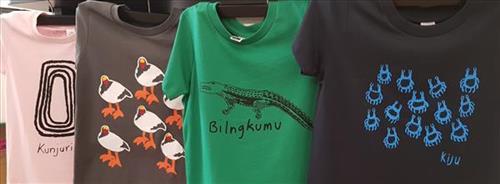
Status: Stock
These shirts have been designed by Bana Yirriji Artists, Lila Creek – Kiju, Anne Nunn – Kunjuri, Sonya Creek – Magpie Geese, Cedric Friday – Bilngkumu.

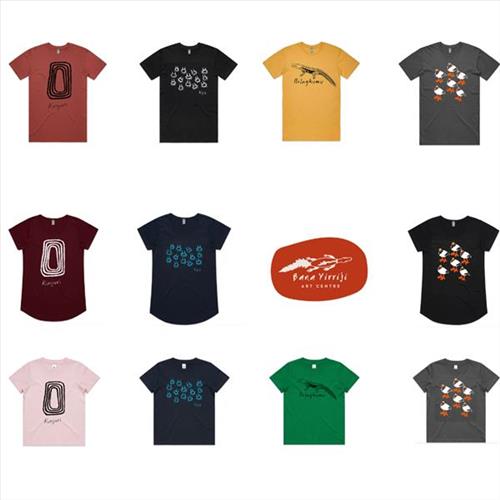
Status: Stock
These shirts have been designed by Bana Yirriji Artists, Lila Creek – Kiju, Anne Nunn – Kunjuri, Sonya Creek – Magpie Geese, Cedric Friday – Bilngkumu.
Status: Stock
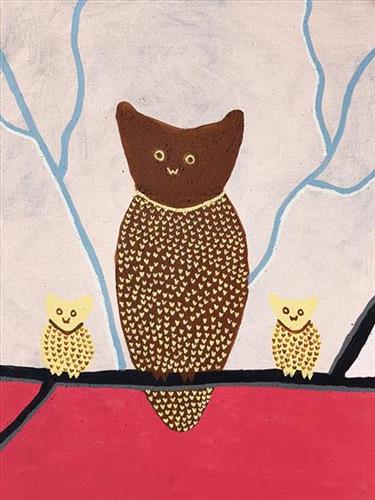
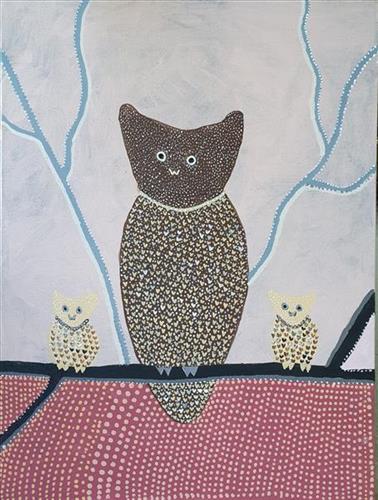
I am a Ngkugkul woman from Shipton’s Flat, my mother’s Country. My dad was a Kaanju man from the Coen area.
When I was about 14 years old I started painting bulnja (owls). I was still at school. I liked looking at bulnja in the rainforest. I liked their colours and patterns in the feathers. They are really good at camouflage and you need good eyes to see them! You can find the bulnja when they sing out. It’s a funny noise! Bulnja eat little insects, lizards and mice that live in the rainforest. The bulnja have important story but I can’t talk about it.
I painted bulnja because they live in the rainforest. They live up in the trees. It’s the only place you can see them around here. The rainforest, its plants, trees and animals means a lot to me.
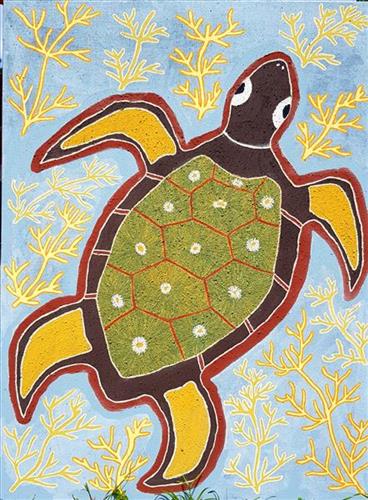
The Ngawiya, sea turtle is swimming and having a feed of Wuyul, sea grass.
Caring for Jalanji bubu (sea country), is important for our people. Our family still practice traditional hunting methods as we want our grandchildren to respect and follow the proper ways to protect everything that lives in and around my traditional home lands.
I represent the Jalanji clan which means I am from the seaside area. My paintings represent stories about the Jalun (sea) and Karrangkal (coral reef).
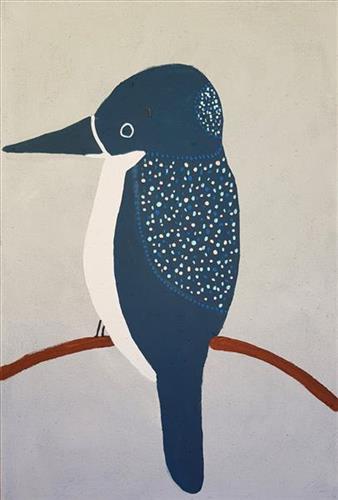
I’ve painted yindili (kingfisher). There are three types of Kingfisher that live around Wujal Wujal. They live in the rainforest and along the coastal areas. Yindili is a beautiful bird and very quick! Their feathers are like jewels. You see them flying quickly, darting around. Their colours flash by, you need to be quick to see them!
Our football team is named Wujal Wujal Yindili. Yindili is sacred to us Bama.
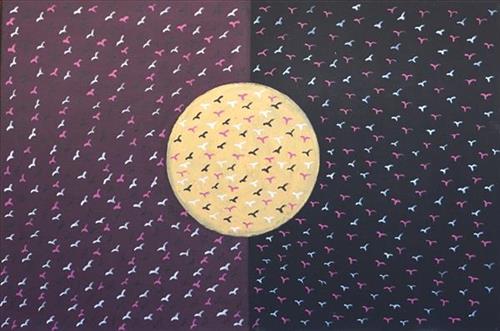
This painting is about the wabul (Torres Strait pigeon). It is a migratory bird that fly from the Torres Strait Island to the Australian mainland once a year to breed. The wabul are very good eating and I have lots of memories of my ngamu (mother) cooking up great feasts of wabul for my family when I was younger and into adulthood, passing down recipes and cultural food practices to the younger generations.