225682180165


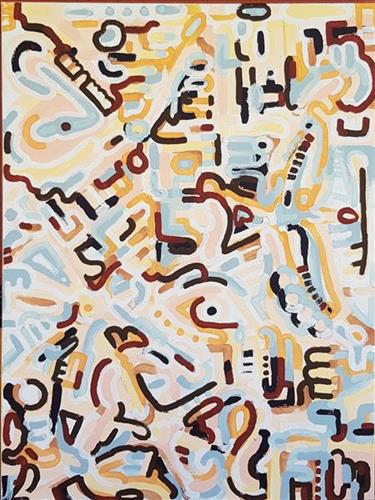
Yindili

My painting is about the female Yindili, Kingfisher. She is in love and seeking material fortune, she forgets what her natural path is. She is lost in the process and found all over again.

Tested by temptation, it is all around us. We seem to forget what we do have and are blind to the natural beauty that is life. Imagination and creation are the things we want to grasp but we do not appreciate it as it is. May we ever get the chance to see her fly.

377810582180157


Mandjabu (Fish Trap)

“This design makes me think of my old man who used to go fishing with mandjabu (fish trap). After fishing, he would come around to our camp with big mob fish from that fresh water river. We didn’t have any nets in the old days, and my father taught me to make mandjabu with jungle vine- he was taught by his old people. When I’m printing this design, I’m thinking of my father and the old times before balanda (non-Indigenous) people arrived in my country. I did drawing first, then I cut it out of wood with a thing like a really sharp spoon. I cut the lines right around the design, following the lines I’ve drawn. When I see my design printed, I’m feeling really good. I choose the really bright colours- red, orange and yellow. To me, that mandjabu looks really nice with bright colours.” This print was created using the Japanese Woodblock technique. It is a limited edition of 20 fine art prints, created in Maningrida in 2019.

377810582180155


Mandjabu (Fish Trap)

“This design makes me think of my old man who used to go fishing with mandjabu (fish trap). After fishing, he would come around to our camp with big mob fish from that fresh water river. We didn’t have any nets in the old days, and my father taught me to make mandjabu with jungle vine- he was taught by his old people. When I’m printing this design, I’m thinking of my father and the old times before balanda (non-Indigenous) people arrived in my country. I did drawing first, then I cut it out of wood with a thing like a really sharp spoon. I cut the lines right around the design, following the lines I’ve drawn. When I see my design printed, I’m feeling really good. I choose the really bright colours- red, orange and yellow. To me, that mandjabu looks really nice with bright colours.” This print was created using the Japanese Woodblock technique. It is a limited edition of 20 fine art prints, created in Maningrida in 2019.

377810582180154


Mandjabu (Fish Trap)

“This design makes me think of my old man who used to go fishing with mandjabu (fish trap). After fishing, he would come around to our camp with big mob fish from that fresh water river. We didn’t have any nets in the old days, and my father taught me to make mandjabu with jungle vine- he was taught by his old people. When I’m printing this design, I’m thinking of my father and the old times before balanda (non-Indigenous) people arrived in my country. I did drawing first, then I cut it out of wood with a thing like a really sharp spoon. I cut the lines right around the design, following the lines I’ve drawn. When I see my design printed, I’m feeling really good. I choose the really bright colours- red, orange and yellow. To me, that mandjabu looks really nice with bright colours.” This print was created using the Japanese Woodblock technique. It is a limited edition of 20 fine art prints, created in Maningrida in 2019.

377810582180153


Mandjabu (Fish Trap)

“This design makes me think of my old man who used to go fishing with mandjabu (fish trap). After fishing, he would come around to our camp with big mob fish from that fresh water river. We didn’t have any nets in the old days, and my father taught me to make mandjabu with jungle vine- he was taught by his old people. When I’m printing this design, I’m thinking of my father and the old times before balanda (non-Indigenous) people arrived in my country. I did drawing first, then I cut it out of wood with a thing like a really sharp spoon. I cut the lines right around the design, following the lines I’ve drawn. When I see my design printed, I’m feeling really good. I choose the really bright colours- red, orange and yellow. To me, that mandjabu looks really nice with bright colours.” This print was created using the Japanese Woodblock technique. It is a limited edition of 20 fine art prints, created in Maningrida in 2019.

377810582180151


Mandjabu (Fish Trap)

“This design makes me think of my old man who used to go fishing with mandjabu (fish trap). After fishing, he would come around to our camp with big mob fish from that fresh water river. We didn’t have any nets in the old days, and my father taught me to make mandjabu with jungle vine- he was taught by his old people. When I’m printing this design, I’m thinking of my father and the old times before balanda (non-Indigenous) people arrived in my country. I did drawing first, then I cut it out of wood with a thing like a really sharp spoon. I cut the lines right around the design, following the lines I’ve drawn. When I see my design printed, I’m feeling really good. I choose the really bright colours- red, orange and yellow. To me, that mandjabu looks really nice with bright colours.” This print was created using the Japanese Woodblock technique. It is a limited edition of 20 fine art prints, created in Maningrida in 2019.

377810582180144


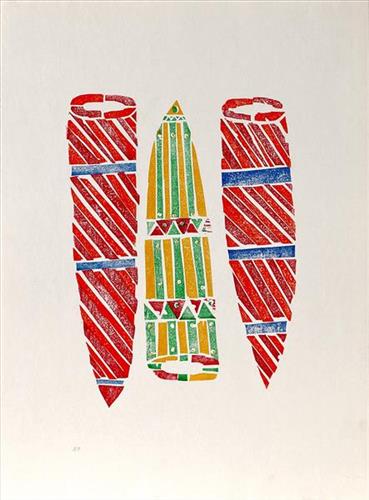
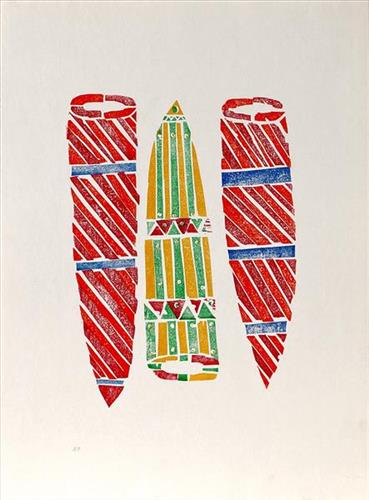
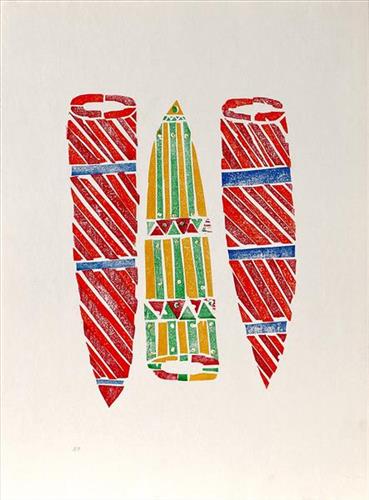
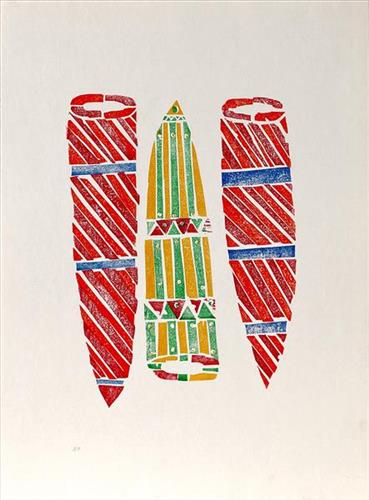
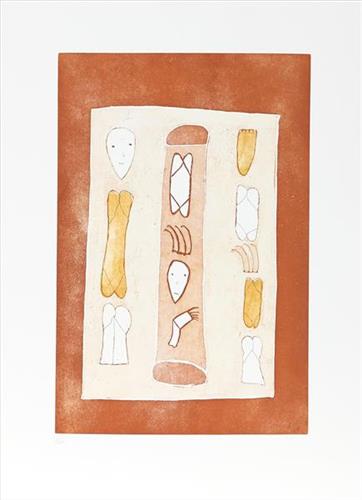
Djurrung (Sacred bones)

This artwork depicts the Djurrung (bones) inside the lorrkkon (hollow log).

“Our ancestors, when someone passed away, would put them on paperbark tower until all that was left was the bones.

Later, the men would return to that site and collect the bones. They would then fill a painted hollow log with the bones of the deceased, and perform a ceremony. The bones would be hiding inside the hollow log, keeping the passed one safe. After the lorrkkon is filled with bones, it stands up straight in the middle of camp for all to see. The women walk around the lorrkkon dancing, and singing the song that sounds like “biddarr biddarr bidda bidda biddah biddarr.

We can still see the bones from these funerals, in the rock country near Yikarrakal and Manmoyi. You can listen to the birds there singing- they speak to each other. They don’t like balanda (non-indigenous people) going there. But our people, we can call out to the birds and the ancestors to keep us safe. It is important to respect this rock country.

Some Kuninjku can speak the spirit language. That is the language that the birds and ancestors speak together.”
 

377810582180143


Djurrung (Sacred bones)

This artwork depicts the Djurrung (bones) inside the lorrkkon (hollow log).

“Our ancestors, when someone passed away, would put them on paperbark tower until all that was left was the bones.

Later, the men would return to that site and collect the bones. They would then fill a painted hollow log with the bones of the deceased, and perform a ceremony. The bones would be hiding inside the hollow log, keeping the passed one safe. After the lorrkkon is filled with bones, it stands up straight in the middle of camp for all to see. The women walk around the lorrkkon dancing, and singing the song that sounds like “biddarr biddarr bidda bidda biddah biddarr.

We can still see the bones from these funerals, in the rock country near Yikarrakal and Manmoyi. You can listen to the birds there singing- they speak to each other. They don’t like balanda (non-indigenous people) going there. But our people, we can call out to the birds and the ancestors to keep us safe. It is important to respect this rock country.

Some Kuninjku can speak the spirit language. That is the language that the birds and ancestors speak together.”

 

377810582180142


Djurrung (Sacred bones)

This artwork depicts the Djurrung (bones) inside the lorrkkon (hollow log).

“Our ancestors, when someone passed away, would put them on paperbark tower until all that was left was the bones.

Later, the men would return to that site and collect the bones. They would then fill a painted hollow log with the bones of the deceased, and perform a ceremony. The bones would be hiding inside the hollow log, keeping the passed one safe. After the lorrkkon is filled with bones, it stands up straight in the middle of camp for all to see. The women walk around the lorrkkon dancing, and singing the song that sounds like “biddarr biddarr bidda bidda biddah biddarr.

We can still see the bones from these funerals, in the rock country near Yikarrakal and Manmoyi. You can listen to the birds there singing- they speak to each other. They don’t like balanda (non-indigenous people) going there. But our people, we can call out to the birds and the ancestors to keep us safe. It is important to respect this rock country.

Some Kuninjku can speak the spirit language. That is the language that the birds and ancestors speak together.”
 

377810582180141


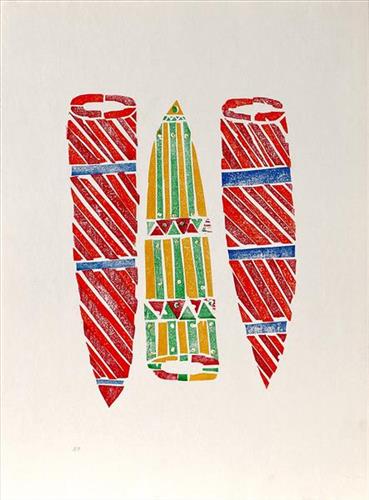
Djurrung (Sacred bones)

This artwork depicts the Djurrung (bones) inside the lorrkkon (hollow log).

“Our ancestors, when someone passed away, would put them on paperbark tower until all that was left was the bones.

Later, the men would return to that site and collect the bones. They would then fill a painted hollow log with the bones of the deceased, and perform a ceremony. The bones would be hiding inside the hollow log, keeping the passed one safe. After the lorrkkon is filled with bones, it stands up straight in the middle of camp for all to see. The women walk around the lorrkkon dancing, and singing the song that sounds like “biddarr biddarr bidda bidda biddah biddarr.

We can still see the bones from these funerals, in the rock country near Yikarrakal and Manmoyi. You can listen to the birds there singing- they speak to each other. They don’t like balanda (non-indigenous people) going there. But our people, we can call out to the birds and the ancestors to keep us safe. It is important to respect this rock country.

Some Kuninjku can speak the spirit language. That is the language that the birds and ancestors speak together.”