Unknown
FRAGMENT – ARCHIVE
FRAGMENT – ARCHIVE
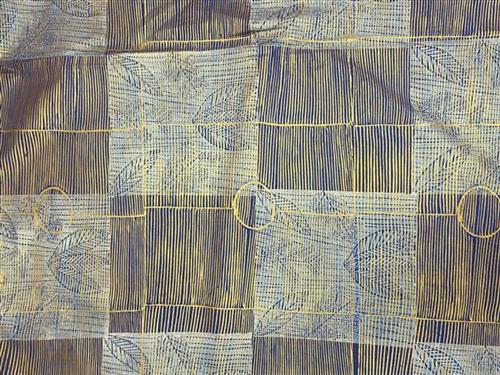
This screen print depicts a sacred site at Kurrurldul, an outstation south of Maningrida. The original screen print design was made in 2010 but continues to be printed at Babbarra Designs studio.
The ‘rarrk’, or abstract crosshatching, on this work represents the design for the crow totem ancestor called Djimarr. Today this being exists in the form of a rock, which is permanently submerged at the bottom of Kurrurldul Creek. The Djimarr rock in the stream at Kurrurldul is said to move around and call out in a soft hooting tone at night. Both the stone itself and the area around it are considered sacred.
The imagery represents the Djimarr rock at the bottom of Kurrurldul creek – the final transmutation of the Djimarr ancestor being. It also references the crow design used in the sacred Mardayin ceremony, a large regional patrimoiety ceremony now rarely conducted in central and eastern Arnhem Land.
Man-ngalinj is a root vegetable often described as ‘bush potato’. It’s duwa, the artist’s moiety. It has a bulbous root and a long thin vine with small flowers that grows across the ground or up the trunks of nearby trees. Large crops can be found near the artist’s outstation, Bolkdjam. Man-ngalinj are harvested after the Wet season in the early Dry
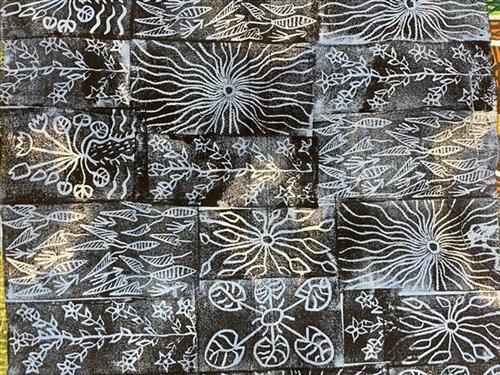
Wayuk (Waterlily) Nymphaea violacea.
The stem of wayuk is a popular bushfood and the beautiful flower is enjoyed across Arnhem Land.
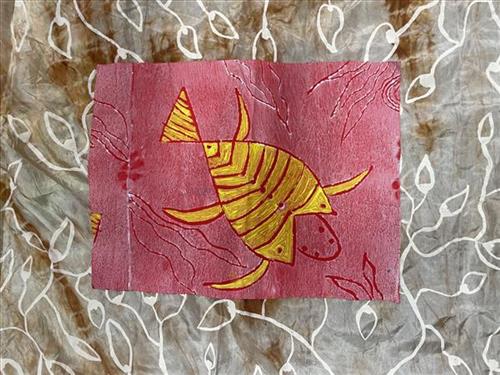
This is Debbie Pascoe’s first ever screen print design. Printed as a two colour design.
Debbie is from the Djinang language group in Maningrida, which according to the ABS Census has approximately 220 speakers.
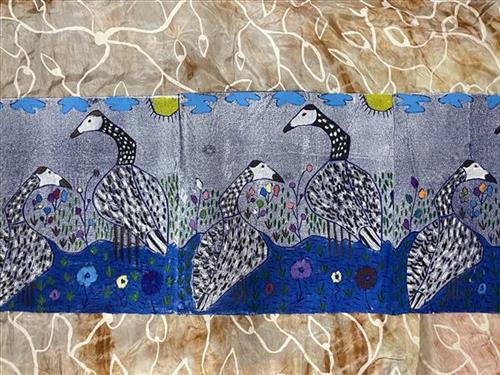
Murnubbarr (magpie geese) are a waterbird found in abundance in the wetland areas of Kakadu and western Arnhem Land. Murnubbarr are a sustainably hunted and enjoyed manme (bush food). They are known to fly long distances, particularly in the wet season.
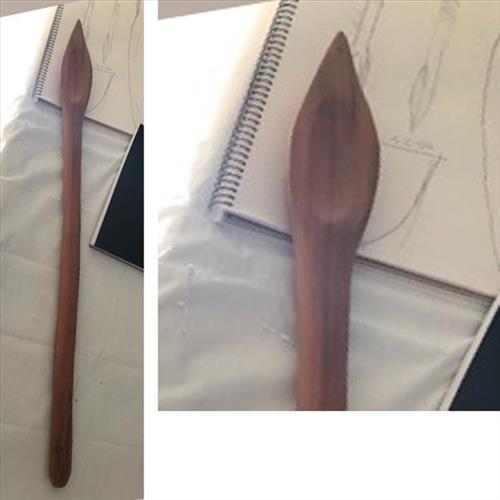
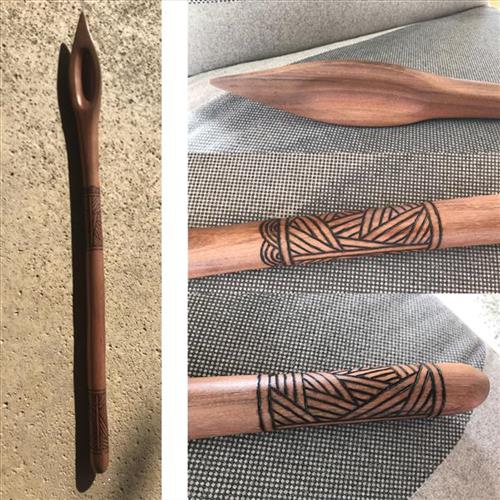
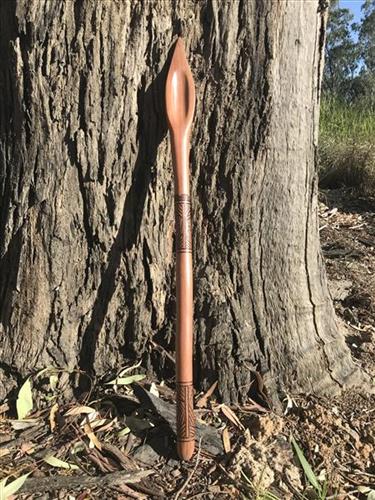
Digging stick carved by Mark Firebrace, wood burnt designs by Troy Firebrace
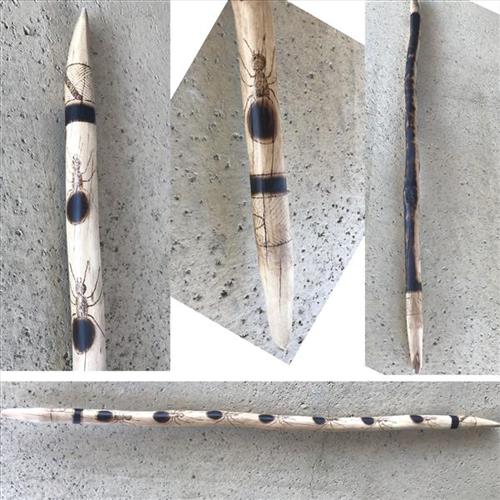
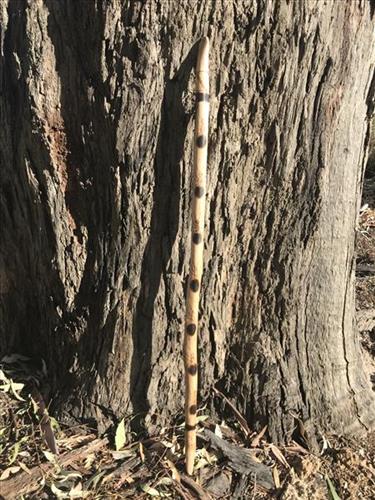
Digging in the sand the bull ant comes out.
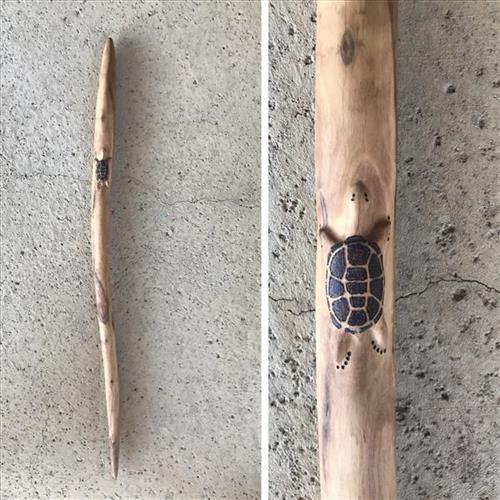
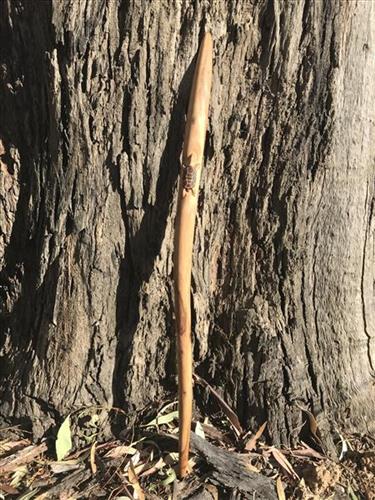
Bayadherra is my totem and Bayadherra means Long Neck turtle in Yorta Yorta language.