115682201882


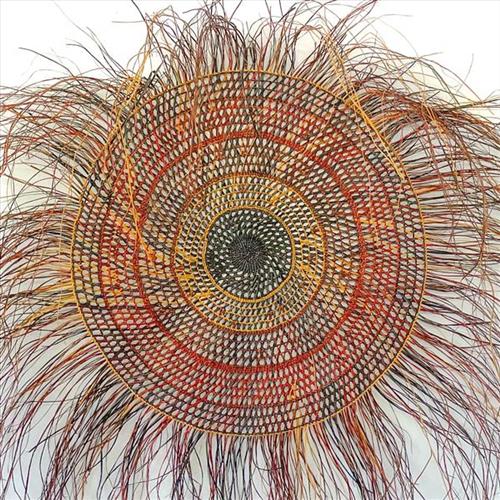
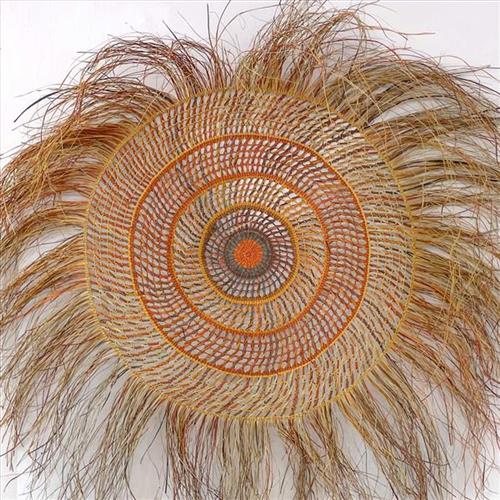
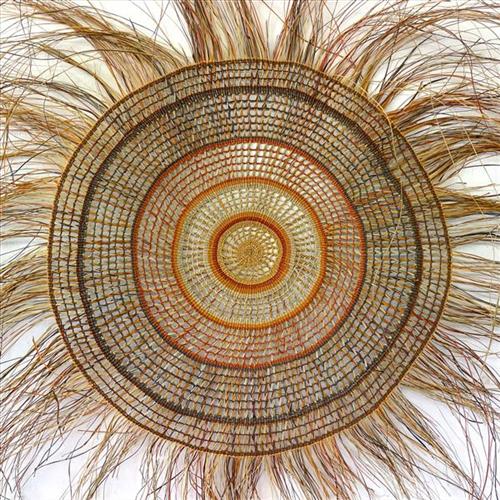
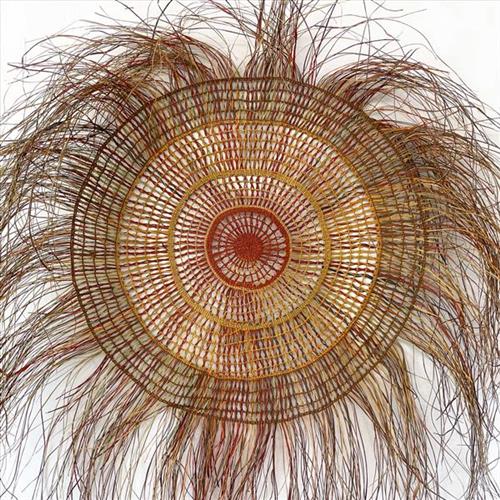
Woven Mat

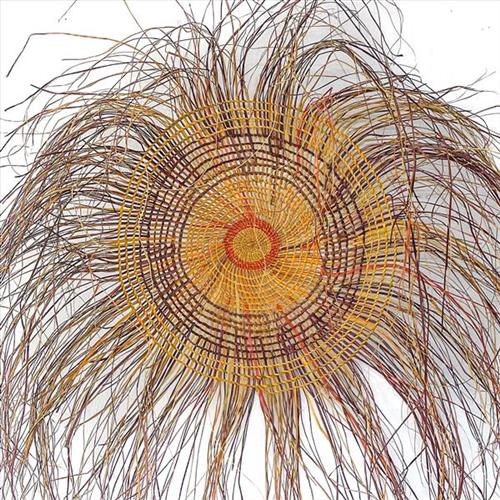
Traditionally, Nganiyal (conical mats) were used as an insect screen when erected, and as a sitting mat when folded. They are used in Ceremony as well as a functional item. 

Nowadays, artists weave many different shapes including flat, round and oblong. 

115682201847


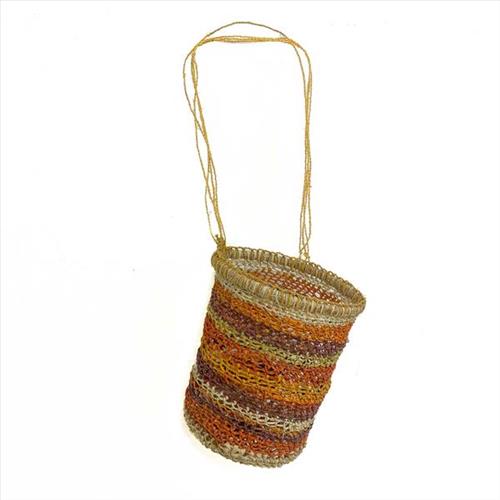
Mindirr (Pandanus Bag)

Miṉḏirr (dilly bags) are made from gunga (Pandanus spiralis), baḻgurr (kurrajong) and natural bush dyes. The body of the miṉḏirr is made from gunga, and the handles from baḻgurr. Once the gunga fronds and baḻgurr bark have been collected, they are stripped and prepared then boiled with the dyes.

Miṉḏirr were used traditionally for every day utilitarian purposes, particularly collecting bush foods such as bäḻtji (yam). Traditionally, the baḻgurr handles were worn across the forehead while the body of the miṉḏirr sat at the back, between the shoulder blades making it easily accessible when collecting ŋatha (food).

115682201761


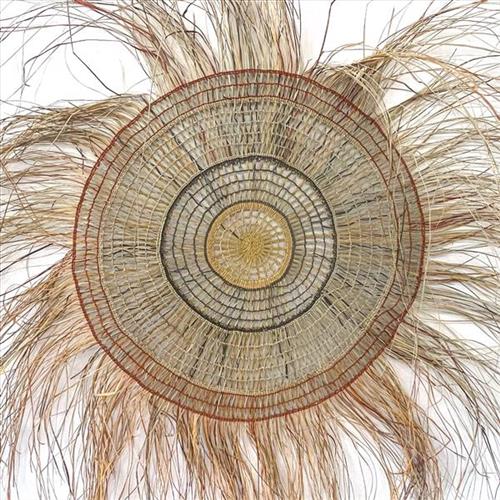
Woven Mat

Traditionally, Nganiyal (conical mats) were used as an insect screen when erected, and as a sitting mat when folded. They are used in Ceremony as well as a functional item. 

Nowadays, artists weave many different shapes including flat, round and oblong. 

115682201760


Mewana

Mewana is a bush basket/scoop primarily made from mewana grass but sometimes from other fibres such as gunga (pandanus spiralis). Traditionally Yolngu made mewana baskets to carry bush foods such as baltji (yam) and warraga ngatha (cycad nuts). Sometimes mewana were used to scoop dhulumburrk (water lily) and other water reeds from the billabongs.

115682201759


Woven Mat

Traditionally, Nganiyal (conical mats) were used as an insect screen when erected, and as a sitting mat when folded. They are used in Ceremony as well as a functional item. 

Nowadays, artists weave many different shapes including flat, round and oblong. 

115682201758


Woven Mat

Traditionally, Nganiyal (conical mats) were used as an insect screen when erected, and as a sitting mat when folded. They are used in Ceremony as well as a functional item. 

Nowadays, artists weave many different shapes including flat, round and oblong. 

115682201756


Woven Mat

Traditionally, Nganiyal (conical mats) were used as an insect screen when erected, and as a sitting mat when folded. They are used in Ceremony as well as a functional item. 

Nowadays, artists weave many different shapes including flat, round and oblong. 

115682201755


Woven Mat

Traditionally, Nganiyal (conical mats) were used as an insect screen when erected, and as a sitting mat when folded. They are used in Ceremony as well as a functional item. 

Nowadays, artists weave many different shapes including flat, round and oblong. 

377810582201881


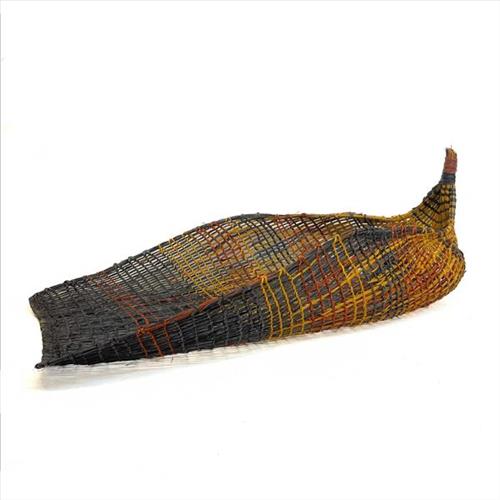
Wubbunj (Paperbark Canoe)

“Wubbunj is our traditional canoe. This design is the old history story of how people came to live in this place we call Maningrida. Two old people were staying on the other side of the saltwater, in Narlarrambarr area. The old people slept in a paper bark shelter and hunted on the water using their canoe.

A long time ago our people carved these canoes from the big paperbark trees. They had paddles with one person at the front, one at back, and other kids and passengers in the middle. Kunkot (paper bark) was used to make the sails which they would stand up and catch the wind.

One day these old people saw a new boat in their waters, which belonged to the Makassans (Indonesians). Those two old men saw the big Makassan boat coming in, and decided to paddle their canoe from Narlarrambarr to the other side (modern day Maningrida). We were scared of the Makassans, they gave us tobacco and tea, but they took many of our women.

When those two old people tasted that water at Maningrida from the Djomi spring, it was sweet freshwater and they decided to stay here. People here had no clothes in those time, we were just wearing string morkoi (loin cloths). Seven tribes were here then, but now in Maningrida there are lots more languages.” – Raylene Bonson
377810582201877


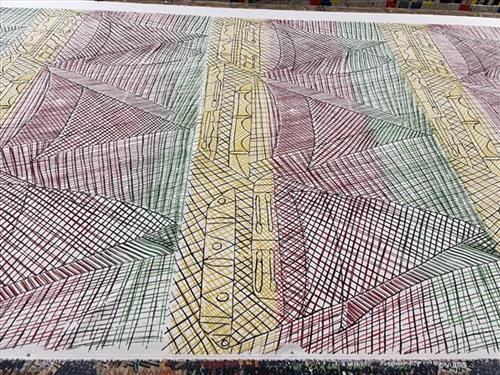
Namurre Boko and Mimih

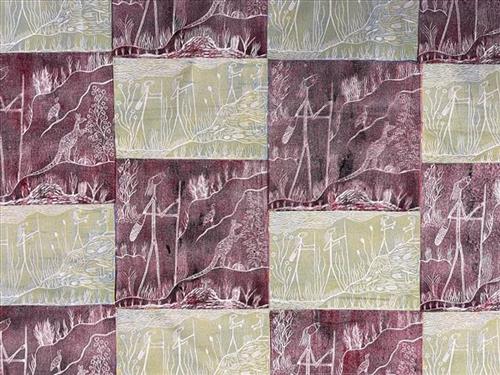
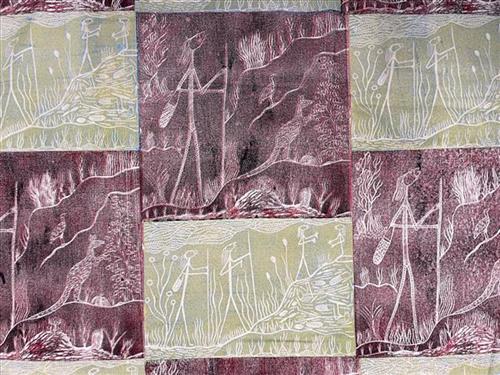
This cloth features the intricate and illustrative lino designs by Jay Jurrupula Rostron, a Kune artist from the Korlobididah homeland. The more complex rectangle design tells the story of Namurre Boko and the square tile depicts a Mimih spirit and kangaroo. 

‘Bini-murreko means two brothers – big brother and little brother.

Two brothers were really strong leaders and good hunters, sharing animals with different tribes.
With those different tribe there were jealousy going on.
Little brother went walkabout and heard the different tribe was talking about his tribe.
They said ngarribin manre djed-djedme bokko
Meaning: will make spear for them
Ngarrbin danj-bun, ngarrbinbun
Meaning: will spear them kill them
little brother turn around went back tell his brother
Namurre bokko kadi marne djed-djedme Karre wonens, kardi-djal danjbun
Meaning: they making spear for us, they gonna spear us
Couple of months they saw different tribe
They changed their attitude
They been bringing lots of animals to them and start asking for women
And that tribe realise that’s how those brothers died.
They kill them
This Why? They got jealous because two brothers was a good hunter.

This story written on the rock art and it stays forever.’