225482173332


Wandjina & Ungud (cloud and rain spirits & totem)

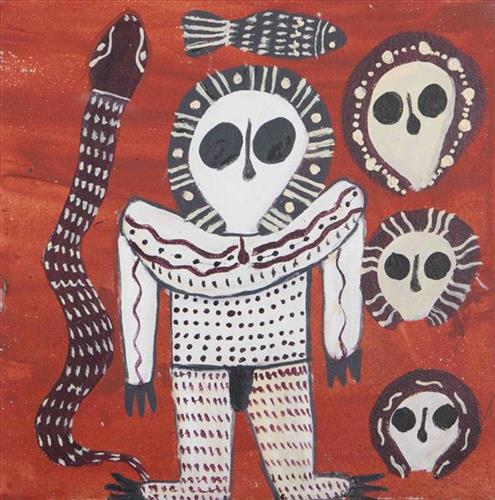
The Wandjina is the creator spirit that belongs to us (the Wororra, Ngarinyin and Wunumbul people). He is the one that created everything, he also gave us our culture, law and songs and even the dreaming of each child before they are born.

The Ungud Snake story is about two young boys who didn’t listen to their elders or believe in them. There is a big waterhole an in it lies a large Ungud Snake. The old people told the kids not to go near that waterhole, but these boys thought the elders were tricking them so they wanted to find out for themselves. So they went to the waterhole and built a hideout from branches with small holes so that they can see ( just in case the elders told the truth) they looked at the billabong and it was calm. They banged two sticks together to make clapping noise and then they saw all the lilypads starting to move apart on the water and large logs came up from out of the water, then came bubbles and after a huge head coming out of the water to have a look around for who had been making all the noise. He hadn’t seen annone so he went back down and the lilypads went flat and the water went calm. Those two boys ran back to the camp and told the elders that they were right , there was a snake and the elders told them that they should have listened in the first place. The Ungud Snake also was the chosen animal in helping with the creation of mother earth, creating rivers, gorges, stream’s and helped with the formation of the earth. Still today it lives in these dark deep water hole’s in our country which doesn’t want to be disturbed.

 

225482177039


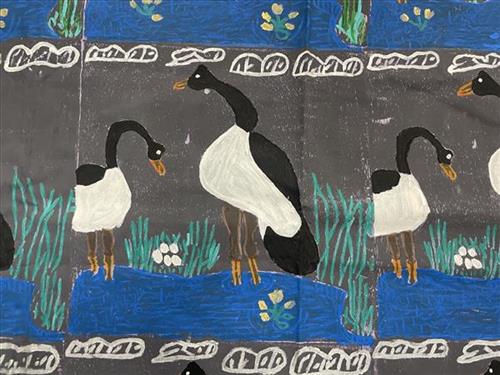
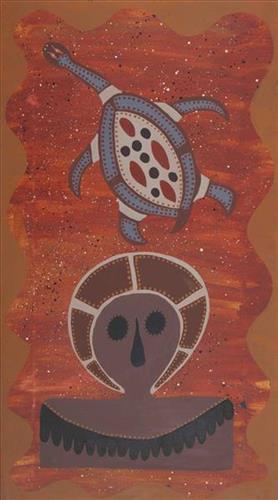
Wullamurrunge & Wandjina (longneck turtle & cloud and rain spirits)

The Wullamurrungge was created by the Wandjina. It’s special because the Wandjina left a gift inside: a skeleton that looks like the Wandjina and the Gyorn Gyorn (Bradshaw people). The law he gave to the people was that before a young boy could eat the turtle, it has to crawl on the back of the person who’s going to eat it. This then satisfies the Wandjina and you’re able to eat it. This law is passed down from generation to generation. Where you see a lot of Wandjinas they represent the laws of trees, rivers, rocks, bush fruit, animals and all of creation. The Wandjinas give the law on how we have to treat and use these creations. These customs are carried on today. The Wandjina spirits are highly respected by the Worrora, Ngarinyin and Wunumbul people who live at Mowanjum and up the Gibb River Road to Kalumburru in the North West Kimberley region of Western Australia.

225482178633


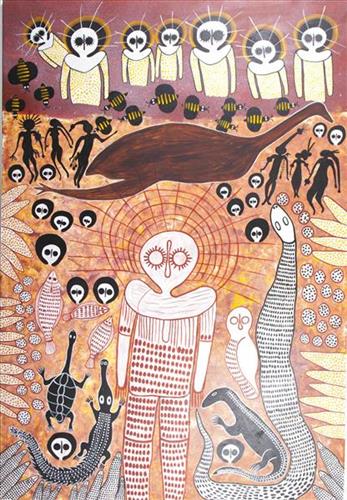
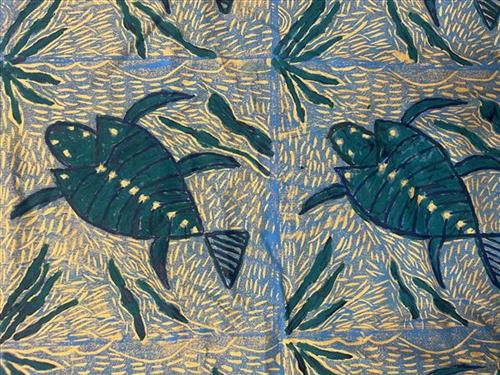
Wandjina, Jaiya and Ungud (cloud and rain spirits, fish & totem)

Where you see a lot of Wandjinas they represent the laws of trees, rivers, rocks, bush fruit, animals and all of creation. They give the law on how we have to treat and use them. These customs are carried on today. The Wandjina spirits are highly respected by the Worrora, Ngarinyin and Wunumbul people who live at Mowanjum and up the Gibb River Road to Kalumburru in the North West Kimberley region of Western Australia. Wandjina is the one who gave us Jaiya animals that are our food source that our ancestors have hunted for thousands of years. The Ungud snake is the one that made the rivers and holds water. If they are disturbed then they will kill whoever disturbs them.

225482178630


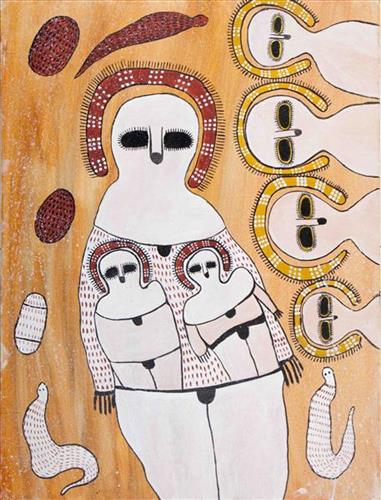
Wandjina Dreaming

The Wandjina spirit of the Wororra, Ngarinyin and Wunumbul tribe is highly respected by the people of Mowanjum. The Wandjinas brought the law, culture and language. The people of Mowanjum believe that the first Wandjina was called Idjair. He created the first human beings, the Gyorn Gyorn people. Wallungunder (Milky Way) travelled back to Idjair (the first Wandjina) to bring back more Wandjinas to give the Gyorn Gyorn (Bradshaw) people laws to live by. Wallungunder also created Ungud spirits which often appear in Mowanjum people. Every person at Mowanjum has an Ungud or Totem. It’s given before birth by the father or the grandfather through dreams, and represents a living animal. The three Wandjinas which represent the three language groups of Mowanjum are Namarali for the Worora people, Wodjin or Wanalirri for the Ngarinyin people, and Rimijmarra for the Wunumbul people. Each family group at Mowanjum has a Wandjina which guides them through their lives. The Wandjinas are most active as cloud spirits during the monsoon period, bringing rain to the entire Kimberley region. The Wandjinas facial characteristics can represent many climatic features. The eyes of the Wandjina can represent thunderstorms and even cyclones. The bigger and darker the eyes, the more powerful the Wandjina is said to be. The haloes and lines around the face represent different cloud formations and lightning. The line between the eyes resembles a nose, but it is actually a power line which is used to transfer energy. Small brush marks on the Wandjinas body usually represent rain drops. Wandjinas can be represented with either four or five fingers. When depicted with only head and shoulders the Wandjina is said to be floating in space or in the form of a cloud or storm. A full-bodied Wandjina is said to be walking the Earth. The rounded feature in the upper chest area can represent the heart of the Wandjina or a large pearl shell that was worn by tribal leaders.

225482188559


Gyorn Gyorn (Bradshaws)

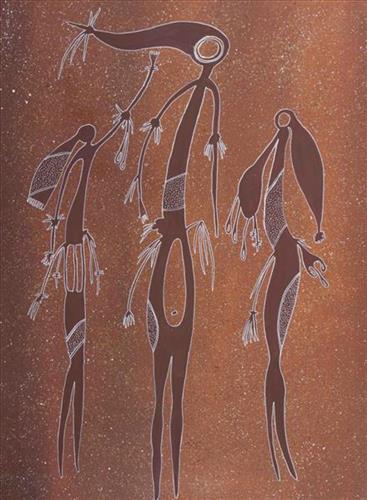
The Wandjina created the earth and all life upon it, then he created the first human beings: the Gyorn Gyorn people. He then told them to work the land and do well. The Gyorn Gyorns were confused and didn’t understand what the Wandjina wanted from them. The Wandjina was annoyed couldn’t control the Gyorn Gyorn so he travelled back to Wallungunda (Milky Way) to where Idjair was and asked if he could help with the creation. More Wandjinas came back and helped him in all areas of creation. The Gyorn Gyorns became hunters and gathers. They also show the traditional dancing amongst our tribes.

377810582200394


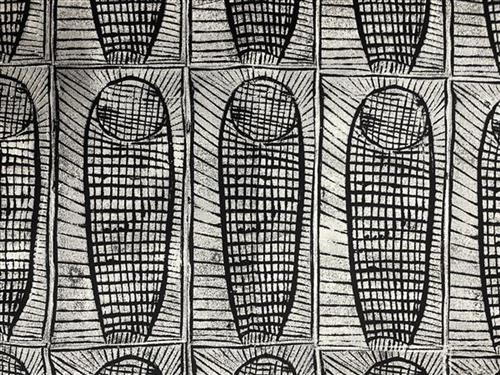
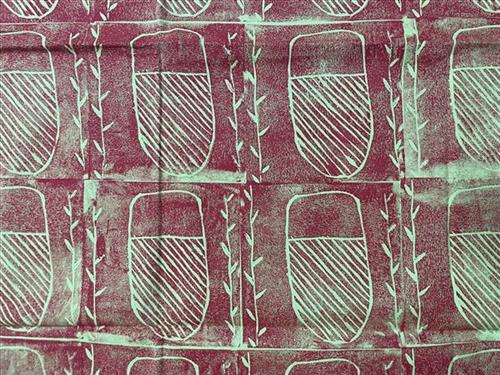
Mandjabu (Fish Trap) – Susan Marawarr

“In old times people would make these mandjabu (fish traps) to go fishing. They are made with vine we find in the jungle. That old man, Anchor Gulunba, he showed me how to make these fish traps. I would sit there and watch him making them. We catch barramundi, catfish, all kinds of fish.” – Helen Lanyinwanga

Kuninjku people traditionally make two sorts of conical fish traps. One called mandjabu made from a vine called milil, and another smaller one called manylik mandjabu, made from the grass manylik. The mandjabu conical fish trap is bigger and stronger and used in tidal reaches of creeks to catch large fish. The smaller, lighter manylik trap is used in freshwater flowing creeks to catch smaller fish and freshwater prawns. Traditionally, only men were involved in the construction of the large fish traps, but children would often crawl inside and assist.

To make fish traps and fish net fences artists firstly get vine (milil) from the jungle and they put it in water for one night to make it soft. Next they start weaving it; they make rings for the inside to keep the fish trap’s shape. Artists work for three or four weeks on the fish trap. They also make string from kurrajong (burdaga) to attach the hibiscus (bardainy) rings and to tie the conical end of the fish trap. This fish trap is used in saltwater and freshwater. People also use fish net fences called mun-dirra. A long time ago they would put the mun-dirra across rivers and creeks. In the middle they would place the an-gujechiya. They also used small things like sticks, rocks, mud and grass to block the fish from going through. People would then catch fish like saltwater barramundi rajarra, freshwater barramundi (janambal), small black freshwater catfish (buliya), bonefish (an-guwirrpiya), and sand bass (dalakan) in these fish traps.