377810582210445


Eiffel tower and the Maladj spirit

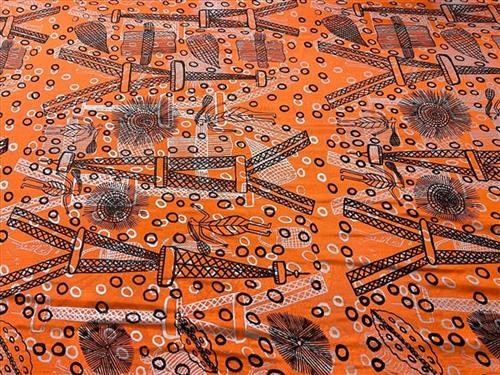
“I want to tell you about my design, that Eiffel tower one.

This year it was my first time going to Paris. I didn’t know that place, nothing. We travelled around the world to get there, we flew underneath the world in an aeroplane.

Paris was a big, crowded city. They speak a different language there, just like here in Maningrida with all our different languages.

The Bábbarra artists and Ingrid, we were all walking around, like tourists. We went on the boat in the Paris river. There was a film crew taking videos of us. We saw so many beautiful buildings covered with black string (iron balconies) and big statues. We’d never seen things like that before.

I remember when we got off that boat and I looked up and saw that tower. When I first looked up at that tower, it made me happy- it’s so long up into the sky. We walked towards it. I was standing there watching that tower and thinking, ‘wow, first time for me seeing a tower like that’.

Then I was thinking, and I said to myself, when I go back to my own country, I’m going to paint that tower.

We came to Maningrida, I started to draw. I drew that tower from France, but also I drew maladj (stone country orphan spirit), women’s sacred woven mat, fish traps and rolk (insects). I also put round kunngol (clouds) in the design, those circles. That maladj spirit, it’s standing there next to the Eiffel tower, looking at the dancing lights at night. The tower is from Paris, but everything else in my design I took from my mother’s country and my father’s country.

Maybe one day I’ll travel back to France, and take my design with me to show them, all the French mob.” Janet Marawarr
11152117633


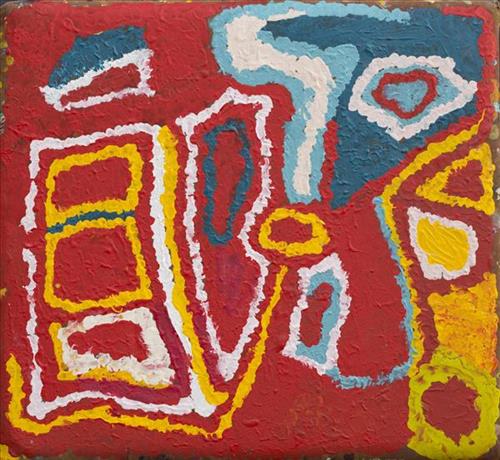
Untitled

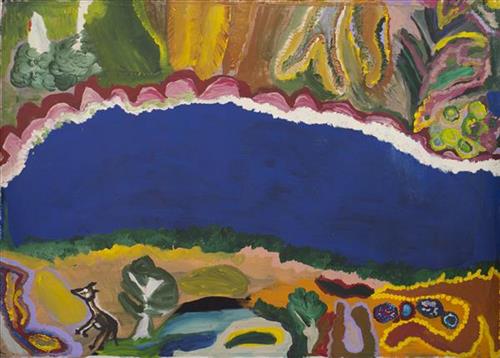
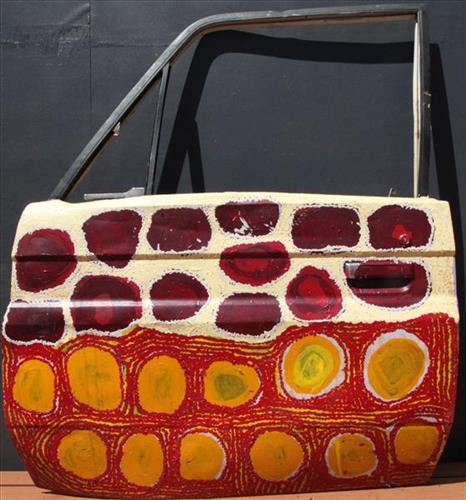
This painting depicts the artist’s country, where Mulyatingki and her sisters (and fellow artists, May Chapman and Nancy Chapman) lived and camped as children. Mulyatingki and her family walked extensively through this area with their extended family during pujiman (bush) days.

11152117631


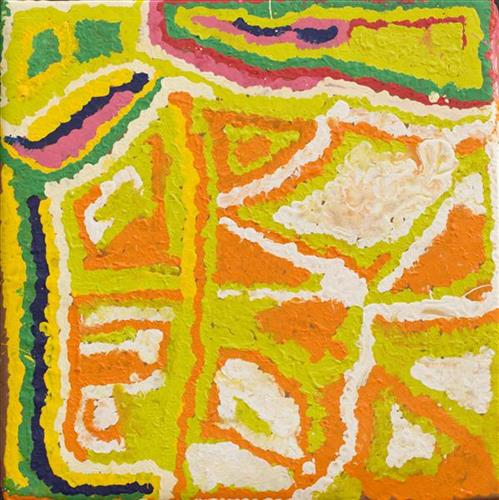
Untitled

Wompi paints the Country around her homelands of Kunawarritji, a place associated with the Minyipuru Jukurrpa (Seven Sister Dreaming). In 1906, Kunawarrtiji also became a well on the Canning Stock Route, and from an early age Wompi and her family had encounters with the white men who drove cattle along the route. As a young woman, Wompi followed the drovers north to Balgo Mission, where she stayed for many years. She learnt to paint there with her close friend, Eubena Nampitjin, and returned to Kunawarritji, where she lives and paints today, when it became a community in its own right.

11152117630


Untitled

This artist primarily paints her country in the Canning Stock Route area. As a younger woman the artist lived and travelled traditionally with her family during the pujiman (bush) days. They travelled up and down the Stock Route from well 33 to well 38 and as far as Balgo. Well 33 is now known as Kunawarritji Community and is the artist’s ngurra (home).

111576673010


Untitled

Mabel was born in the 1920s at Yirajara, which is near Jurntu Jurntu. Her parents were both Warnman people whose country encompassed Tarl and Nayijara. Mabel grew up in the pujiman (bush) way through her teens and as an adult, she walked into Jigalong Mission. She paints her ngurra (home) and her warrarn (country) to teach the young so that they can learn to paint, too.

111576673938


Untitled

This is Mitutu’s Country- her ‘ngurra’ (home Country, camp). People identify with their ngurra in terms of specific rights and responsibilities, and the possession of intimate knowledge of the physical and cultural properties of one’s Country. Painting ngurra, and in so doing sharing the Jukurrpa (Dreaming) stories and physical characteristics of that place, has today become an important means of cultural maintenance. Mitutu’s ngurra encompasses her birthplace, Yirajarra soak, located close to Lake Auld and just north of Tiwa (Canning Stock Route Well 26), and the Country that her family walked in the pujiman (traditional, desert-dwelling) era, around the Karlamilyi (Rudall River) region.

Portrayed in this work are features of Mitutu’s family’s ngurra, such as the gorges and rivers, dominant permanent red tali (sandhills), warta (trees, vegetation), and the individually named water sources they camped at. Rock holes, waterholes, soaks and springs were all extremely important sites for Martu people during the pujiman period, and are generally depicted with circular forms. 

The encyclopaedic knowledge of the location, quality and seasonal availability of the hundreds of water bodies found in one’s Country sustained Martu as they travelled across their Country, hunting and gathering, visiting family, and fulfilling ceremonial obligations. They would traverse very large distances annually, visiting specific areas in the dry and wet season depending on the availability of water and the corresponding cycles of plant and animal life on which hunting and gathering bush tucker was reliant. As they travelled and hunted they would also burn areas of Country, generating a greater diversity of plant and animal life.

111576676017


Port Hedland Seawater

“Everybody been playing cards in the park and then the kids saw him – that shark. They got him though, he’s finished. Big one too. There is also a dingo too. 

The pink are the rocks, sharp fellas, and there is that white kapi (water) on the rocks [waves]”

– Amy French

111581614541


Baby boomer tourist gets partially trampled by a camel

Artwork made in collaboration with Claire Healy and Sean Cordeiro 

111581614525


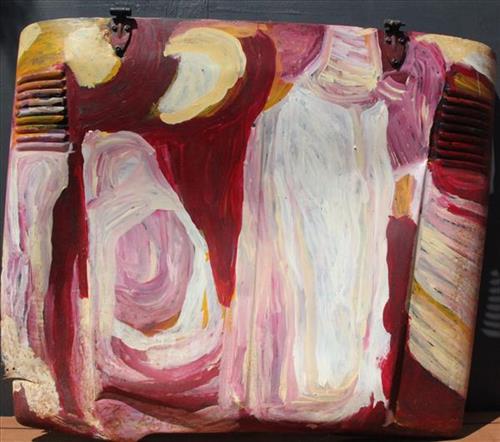
Jurtupa and Wawal

“Kakarra (east) of Karlamilyi (Rudall River National Park) there is always kupi (water) I belong there, every year the spring running all the time.”

Artwork made in collaboration with Claire Healy and Sean Cordeiro 

111581614510


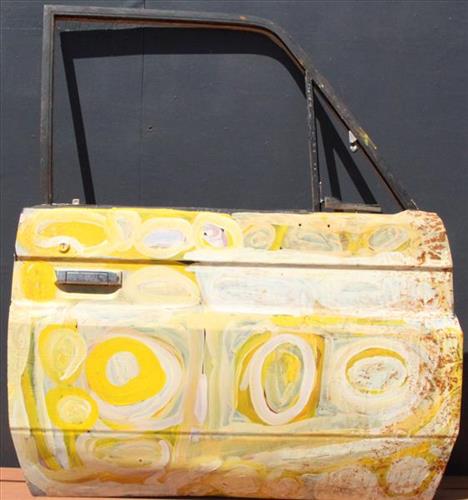
Puljalja

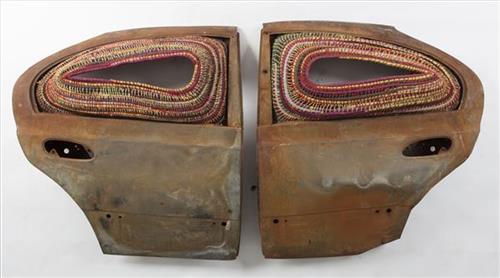
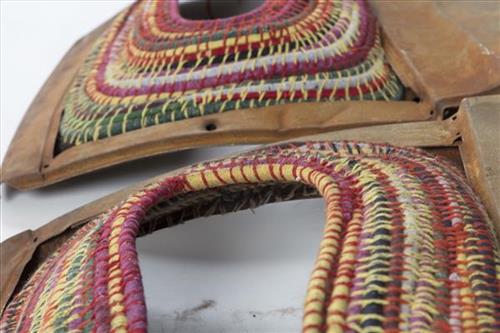
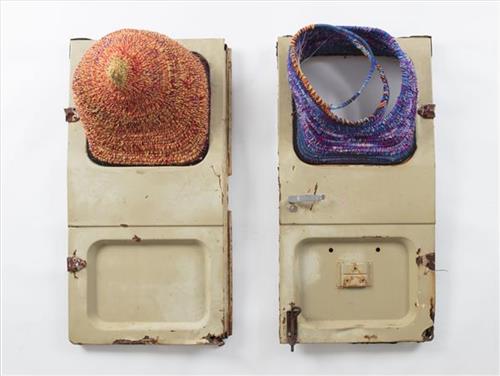
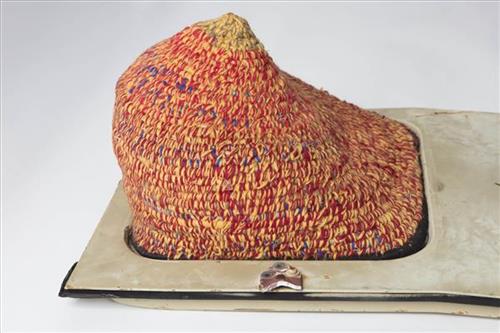
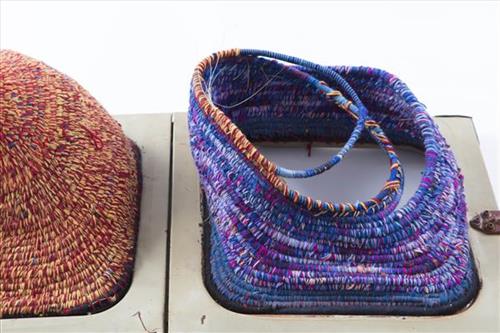
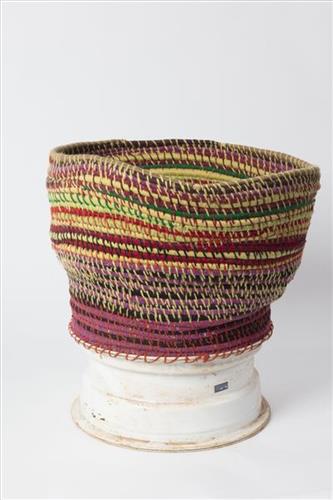
“This is a different type of basket, it was the first time I have done a basket, next time I will do Baskets from a door, learn more from this”.

Artwork made in collaboration with Claire Healy and Sean Cordeiro