377810582220865


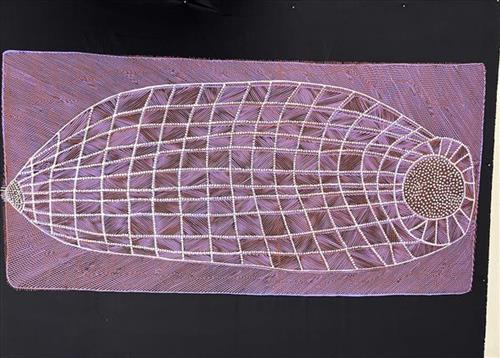
Manyawok (Cheeky Yam)

This design depicts the cheeky yam, which is found on the artist’s country, near the outstation of Mumeka in central Arnhem Land. Yams are an important bush food that are collected during the wet season.

Unlike other yams that can be eaten roasted, the cheeky yam can be poisonous if not properly prepared. The preparation process of the yam traditionally takes two days. Firstly, the yams are dug up with a digging stick and boiled over a fire. They are then peeled and sliced into thin strips, which are placed in a special dillybag woven by women from pandanus leaves. The yam-laden dillybag is then strung from an overhanging branch into a river, so the bag just touches the flowing fresh water. The cheeky yams are left like this overnight to allow the running water to remove the toxins. The next morning, people return and collect the dillybag, and leave the yam pieces in full sunlight to dry out. Finally, when the yam pieces have dried in the sun for a day, they are ready to eat.

377810582220863


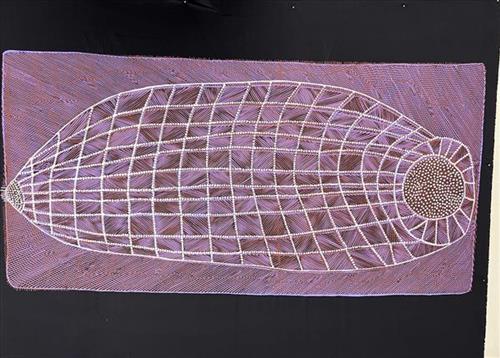
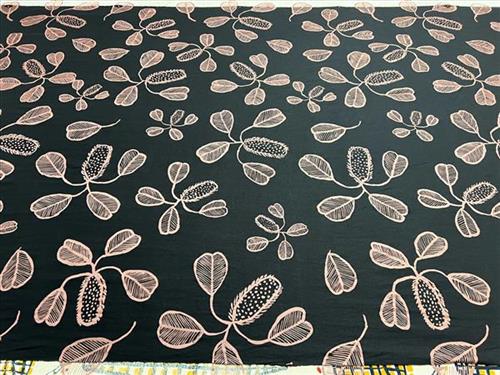
Manyawok (Cheeky Yam)

This design depicts the cheeky yam, which is found on the artist’s country, near the outstation of Mumeka in central Arnhem Land. Yams are an important bush food that are collected during the wet season.

Unlike other yams that can be eaten roasted, the cheeky yam can be poisonous if not properly prepared. The preparation process of the yam traditionally takes two days. Firstly, the yams are dug up with a digging stick and boiled over a fire. They are then peeled and sliced into thin strips, which are placed in a special dillybag woven by women from pandanus leaves. The yam-laden dillybag is then strung from an overhanging branch into a river, so the bag just touches the flowing fresh water. The cheeky yams are left like this overnight to allow the running water to remove the toxins. The next morning, people return and collect the dillybag, and leave the yam pieces in full sunlight to dry out. Finally, when the yam pieces have dried in the sun for a day, they are ready to eat.

377810582220862


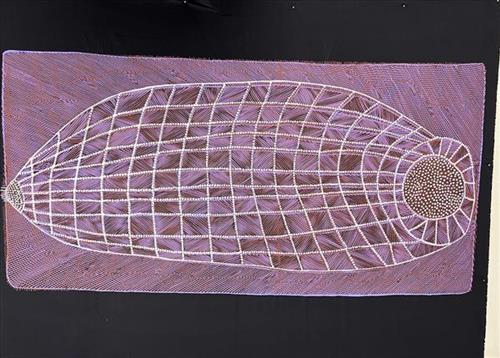
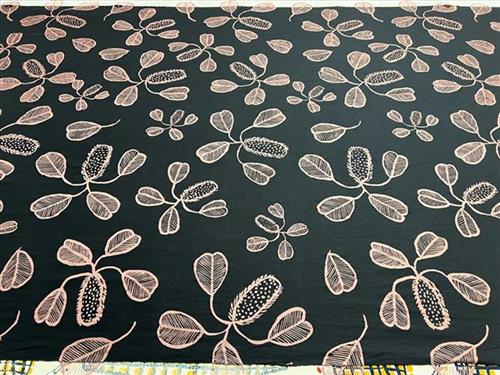
Manyawok (Cheeky Yam)

This design depicts the cheeky yam, which is found on the artist’s country, near the outstation of Mumeka in central Arnhem Land. Yams are an important bush food that are collected during the wet season.

Unlike other yams that can be eaten roasted, the cheeky yam can be poisonous if not properly prepared. The preparation process of the yam traditionally takes two days. Firstly, the yams are dug up with a digging stick and boiled over a fire. They are then peeled and sliced into thin strips, which are placed in a special dillybag woven by women from pandanus leaves. The yam-laden dillybag is then strung from an overhanging branch into a river, so the bag just touches the flowing fresh water. The cheeky yams are left like this overnight to allow the running water to remove the toxins. The next morning, people return and collect the dillybag, and leave the yam pieces in full sunlight to dry out. Finally, when the yam pieces have dried in the sun for a day, they are ready to eat.
111982220836


Wak Wak

This painting depicts a sacred site at ‘Kurrurldul’, an outstation south of Maningrida.

The ‘rarrk’, or abstract crosshatching, on this work represents the design for the crow totem ancestor called ‘Djimarr’. Today this being exists in the form of a rock, which is permanently submerged at the bottom of Kurrurldul Creek. The ‘Djimarr’ rock in the stream at Kurrurldul is said to move around and call out in a soft hooting tone at night. Both the stone itself and the area around it are considered sacred.

The imagery represents the rock mentioned above at the bottom of Kurrurldul creek, which is the final transmutation of the dreaming ancestor ‘Djimarr’. Finally, the pattern used here is also the crow design used in the sacred ‘Mardayin’ ceremony, which is a large regional patri-moiety ceremony now rarely conducted in central and eastern Arnhem Land.

111982220834


Mat

Mats can vary greatly. Artists commonly use a mix of naturally dyed and undyed fibre to create a striking variation of coloured bands. Some artists also incorporate different types of looping to produce different patterns and textured finishes. Each type of mat, fibre bag, basket and dilly bag has its own name in the various languages spoken in the Maningrida region.

111982220833


Mat

Mats can vary greatly. Artists commonly use a mix of naturally dyed and undyed fibre to create a striking variation of coloured bands. Some artists also incorporate different types of looping to produce different patterns and textured finishes. Each type of mat, fibre bag, basket and dilly bag has its own name in the various languages spoken in the Maningrida region.

111982220832


Mat

Mats can vary greatly. Artists commonly use a mix of naturally dyed and undyed fibre to create a striking variation of coloured bands. Some artists also incorporate different types of looping to produce different patterns and textured finishes. Each type of mat, fibre bag, basket and dilly bag has its own name in the various languages spoken in the Maningrida region.

377810582220797


Mandjabu (Fish Trap)

“In old times people would make these mandjabu (fish traps) to go fishing. They are made with vine we find in the jungle. That old man, Anchor Gulunba, he showed me how to make these fish traps. I would sit there and watch him making them. We catch barramundi, catfish, all kinds of fish.” – Helen Lanyinwanga

Kuninjku people traditionally make two sorts of conical fish traps. One called mandjabu made from a vine called milil, and another smaller one called manylik mandjabu, made from the grass manylik. The mandjabu conical fish trap is bigger and stronger and used in tidal reaches of creeks to catch large fish. The smaller, lighter manylik trap is used in freshwater flowing creeks to catch smaller fish and freshwater prawns. Traditionally, only men were involved in the construction of the large fish traps, but children would often crawl inside and assist.

To make fish traps and fish net fences artists firstly get vine (milil) from the jungle and they put it in water for one night to make it soft. Next they start weaving it; they make rings for the inside to keep the fish trap’s shape. Artists work for three or four weeks on the fish trap. They also make string from kurrajong (burdaga) to attach the hibiscus (bardainy) rings and to tie the conical end of the fish trap. This fish trap is used in saltwater and freshwater. People also use fish net fences called mun-dirra. A long time ago they would put the mun-dirra across rivers and creeks. In the middle they would place the an-gujechiya. They also used small things like sticks, rocks, mud and grass to block the fish from going through. People would then catch fish like saltwater barramundi rajarra, freshwater barramundi (janambal), small black freshwater catfish (buliya), bonefish (an-guwirrpiya), and sand bass (dalakan) in these fish traps.

377810582220796


Mandjabu (Fish Trap)

“In old times people would make these mandjabu (fish traps) to go fishing. They are made with vine we find in the jungle. That old man, Anchor Gulunba, he showed me how to make these fish traps. I would sit there and watch him making them. We catch barramundi, catfish, all kinds of fish.” – Helen Lanyinwanga

Kuninjku people traditionally make two sorts of conical fish traps. One called mandjabu made from a vine called milil, and another smaller one called manylik mandjabu, made from the grass manylik. The mandjabu conical fish trap is bigger and stronger and used in tidal reaches of creeks to catch large fish. The smaller, lighter manylik trap is used in freshwater flowing creeks to catch smaller fish and freshwater prawns. Traditionally, only men were involved in the construction of the large fish traps, but children would often crawl inside and assist.

To make fish traps and fish net fences artists firstly get vine (milil) from the jungle and they put it in water for one night to make it soft. Next they start weaving it; they make rings for the inside to keep the fish trap’s shape. Artists work for three or four weeks on the fish trap. They also make string from kurrajong (burdaga) to attach the hibiscus (bardainy) rings and to tie the conical end of the fish trap. This fish trap is used in saltwater and freshwater. People also use fish net fences called mun-dirra. A long time ago they would put the mun-dirra across rivers and creeks. In the middle they would place the an-gujechiya. They also used small things like sticks, rocks, mud and grass to block the fish from going through. People would then catch fish like saltwater barramundi rajarra, freshwater barramundi (janambal), small black freshwater catfish (buliya), bonefish (an-guwirrpiya), and sand bass (dalakan) in these fish traps.

377810582220795


Mandjabu (Fish Trap)

“In old times people would make these mandjabu (fish traps) to go fishing. They are made with vine we find in the jungle. That old man, Anchor Gulunba, he showed me how to make these fish traps. I would sit there and watch him making them. We catch barramundi, catfish, all kinds of fish.” – Helen Lanyinwanga

Kuninjku people traditionally make two sorts of conical fish traps. One called mandjabu made from a vine called milil, and another smaller one called manylik mandjabu, made from the grass manylik. The mandjabu conical fish trap is bigger and stronger and used in tidal reaches of creeks to catch large fish. The smaller, lighter manylik trap is used in freshwater flowing creeks to catch smaller fish and freshwater prawns. Traditionally, only men were involved in the construction of the large fish traps, but children would often crawl inside and assist.

To make fish traps and fish net fences artists firstly get vine (milil) from the jungle and they put it in water for one night to make it soft. Next they start weaving it; they make rings for the inside to keep the fish trap’s shape. Artists work for three or four weeks on the fish trap. They also make string from kurrajong (burdaga) to attach the hibiscus (bardainy) rings and to tie the conical end of the fish trap. This fish trap is used in saltwater and freshwater. People also use fish net fences called mun-dirra. A long time ago they would put the mun-dirra across rivers and creeks. In the middle they would place the an-gujechiya. They also used small things like sticks, rocks, mud and grass to block the fish from going through. People would then catch fish like saltwater barramundi rajarra, freshwater barramundi (janambal), small black freshwater catfish (buliya), bonefish (an-guwirrpiya), and sand bass (dalakan) in these fish traps.