111982219627


Ngangiy (Mud-mussels)

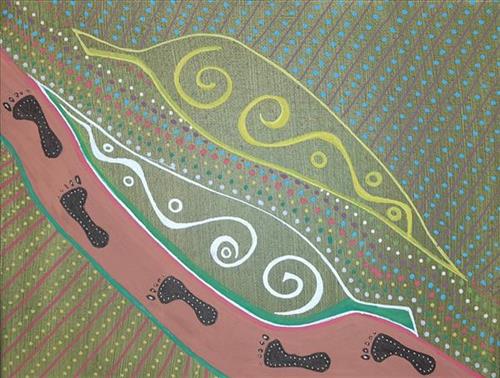
This Painting depicts Ngangiy (Mud mussels) a type of shellfish; a mussel, a commonly gathered clam found in the mangrove mud and characteristically coated with coralline growth and stained partly black. Polymesoda coaxans (Corbiculidae). This plentiful shellfish is collected in the dried out floodplains, only a small sliver of the shell is exposed as it buries itself in mud, You need good eyes to find this delicious bush food.
222082219589


My Mob

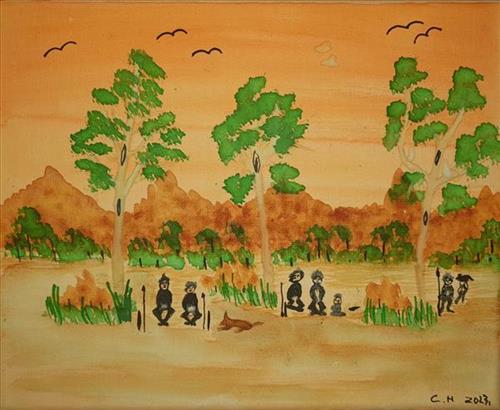
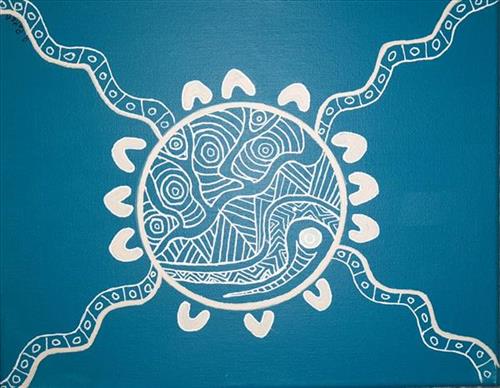
A collection of small works created by Kaiela Arts artists during a series of workshops. Artists have used Posca pens and acrylic paint to create colourful designs that represent Country, traditions and culture.

222082219586


Communities along the Dungala

A collection of small works created by Kaiela Arts artists during a series of workshops. Artists have used Posca pens and acrylic paint to create colourful designs that represent Country, traditions and culture.

222082219583


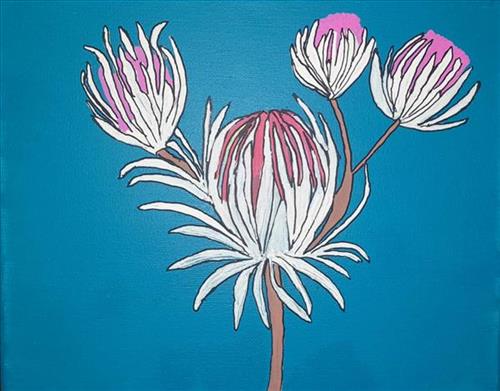
Waratah

A collection of small works created by Kaiela Arts artists during a series of workshops. Artists have used Posca pens and acrylic paint to create colourful designs that represent Country, traditions and culture.

222082219582


On Woka

A collection of small works created by Kaiela Arts artists during a series of workshops. Artists have used Posca pens and acrylic paint to create colourful designs that represent Country, traditions and culture.

115682219959


Shield

Shields were used as modesty shields for women, normally worn around the shoulders or around the waist.

115682219958


Mindirr (Pandanus Bag)

Miṉḏirr (dilly bags) are made from gunga (Pandanus spiralis), baḻgurr (kurrajong) and natural bush dyes. The body of the miṉḏirr is made from gunga, and the handles from baḻgurr. Once the gunga fronds and baḻgurr bark have been collected, they are stripped and prepared then boiled with the dyes.

Miṉḏirr were used traditionally for every day utilitarian purposes, particularly collecting bush foods such as bäḻtji (yam). Traditionally, the baḻgurr handles were worn across the forehead while the body of the miṉḏirr sat at the back, between the shoulder blades making it easily accessible when collecting ŋatha (food).

115682219957


Mindirr (Pandanus Bag)

Miṉḏirr (dilly bags) are made from gunga (Pandanus spiralis), baḻgurr (kurrajong) and natural bush dyes. The body of the miṉḏirr is made from gunga, and the handles from baḻgurr. Once the gunga fronds and baḻgurr bark have been collected, they are stripped and prepared then boiled with the dyes.

Miṉḏirr were used traditionally for every day utilitarian purposes, particularly collecting bush foods such as bäḻtji (yam). Traditionally, the baḻgurr handles were worn across the forehead while the body of the miṉḏirr sat at the back, between the shoulder blades making it easily accessible when collecting ŋatha (food).

115682219930


Northern Marbled Velvet Gecko (Oedura marmorata)

Aboriginal art in Ramingining, Central Arnhem Land is commonly illustrated through designs and images of animals, plants, and landscape. These motifs commonly reflect the artists ancestral inheritance and their dreamings and are referred to as totems.

For this painting, the artist has painted Northern Marbled Velvet Gecko (Oedura marmorata)

115682219929


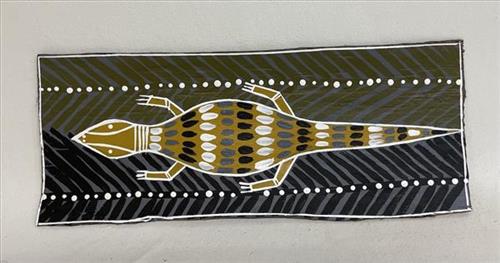
Shannon’s frilled necked lizards

The Wagilag Sisters are central to the four important ceremonies of the Dhuwa moiety; the Djungguwan, the Gunabibi, the Ngulmarrk, and the Mandaialla.

The story is primarily an account of how, in the distant past, the two Wagilag Sisters came out of the southern interior and across the countryside to the Liyagalawumirr waterhole at Mirarrmina. There the younger sister profaned the pool of Wititj (the great Olive Python) by accidently allowing her blood to fall into the waterhole. Because of this, the women (and their children) were swallowed by Wititj.

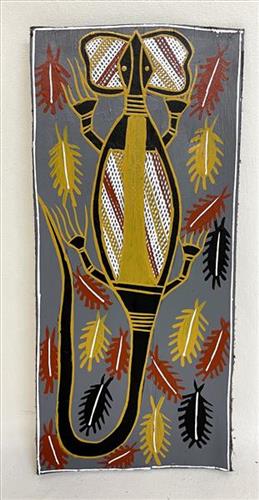
Shannon is painting a part of the story that features frilled necked lizards and lizards.