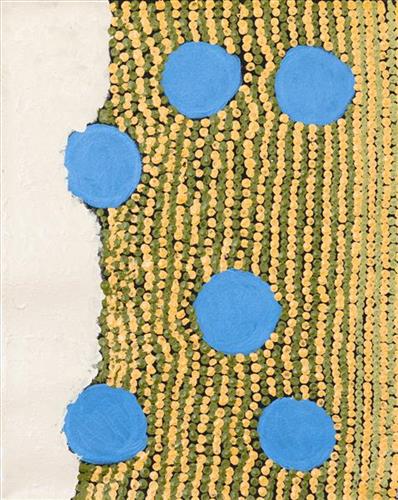
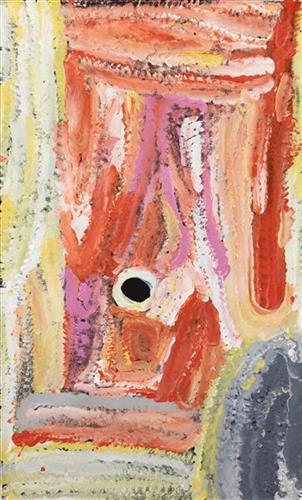
Yirrajarra
“Yirrajarra, good name. [In the] winter time, cold time, you gotta have a look. One side two claypan , another side soak water. Jamu mili (my grandfather’s) Country. I been walking there with my mummy, daddy, [and my sisters] Mayiwalku [May Chapman], Mulyatingki [Marney]. All walking around pujiman (traditional, desert dwelling) time”
– Nyanjilpayi (Ngarnjapayi) Nancy Chapman
Yirrajarra comprises of two soaks situated near Lake Auld, and north of Tiwa (Canning Stock Route Well 26). As the site of a continuous source of good fresh water, surrounded by plentiful puri (shade), Yirrajarra was an important semi-permanent camping ground during the pujiman era. This site lies within Nyanjilpayi’s ngurra (home Country, camp) through her grandfather, and forms part of the area which she knew intimately and travelled extensively with her mother, father and two sisters in her youth.
During the pujiman period, Martu would traverse very large distances annually in small family groups, moving seasonally from water source to water source, and hunting and gathering bush tucker as they went. At this time knowledge of water sources was critical for survival, and today Martu Country is still defined in terms of the location and type of water. Each of the hundreds of claypans, rockholes, waterholes, soaks and springs found in the Martu desert homelands is known by name, location, quality and seasonal availability through real life experience and the recounting of Jukurrpa (Dreaming) narratives.