111582255280


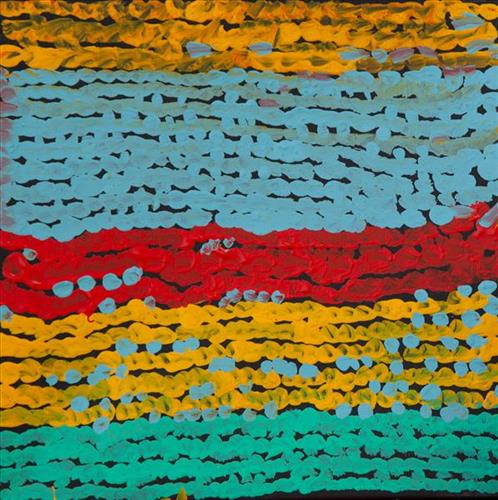
Wawul

Wawul is a spring located yulparirra (south) of Punmu Aboriginal Community, and at the southern end of Nyayartakujarra (Lake Dora), a large salt lake surrounded by tali (sand hills) and numerous springs within the Karlamilyi (Rudall River) region. Other nearby water sources include Tarl, Kartuny, Wawul, Warnkarr, Jutupa, and Kunalimpi. 

Wawul lies within Mayiwalku’s ngurra (home Country, camp), and formed part of the region she traversed extensively during the pujiman (traditional, desert dwelling) era. Mayiwalku recollects staying here as a child with her two sisters, Nyanjilpayi (Ngarnjapayi) Nancy Chapman and Mulyatingki Marney, her brother, father and three mothers. 


During the pujiman period, Martu would traverse very large distances annually in small family groups, moving seasonally from water source to water source, and hunting and gathering bush tucker as they went. At this time knowledge of water sources was critical for survival, and today Martu Country is still defined in terms of the location and type of water. Each of the hundreds of claypans, rockholes, waterholes, soaks and springs found in the Martu desert homelands is known by name, location, quality and seasonal availability through real life experience and the recounting of Jukurrpa (Dreaming) narratives.
111582255279


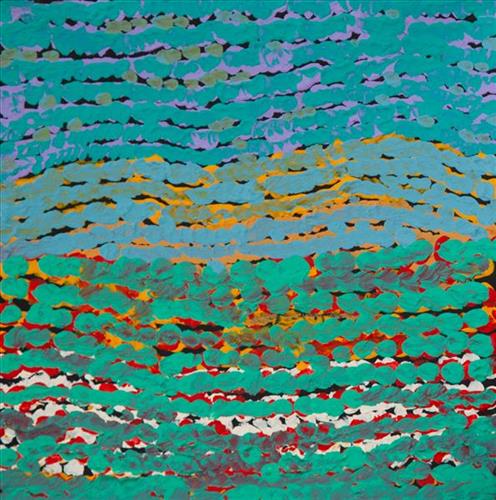
Wilarra

“The moon and the lake. The moon is taking care of the dingo pups, it’s looking after them. This here is the salt lake [and the] dingo pups laying down, they’re laying there with their mum. [The] father is here, [the] father of the pups with his wife. They are talking to each other, laying down next to each other. They sang out, kept howling. The pups listened and ran away. The moon is laying down taking care of the pups.”

– Mulyatingki Marney


 Wirlarra, the site depicted in this painting, lies on the edge of a large salt lake, Nyayartakujarra (Lake Dora), near Punmu Aboriginal community. A distinctive group of small salt water pools are clustered together here. The water from these pools is known for its’ powerful healing properties, and the pools are still visited today by Martu to bathe cuts and sores. As young girls, sisters Mayiwalku May Chapman, Mulyatingki Marney and Nyanjilpayi (Ngarnjapayi) Nancy Chapman travelled extensively around the Punmu area. They often camped at Wirlarra, where a windbreak provided shelter.

Wirlarra is also a term for ‘moon’ in Manyjilyjarra, and through the site’s Jukurrpa (Dreaming) narrative, the site is united with the moon in significance. It is said that at Wirlarra, the moon called to a family of dingoes; a mother, father and their large litter of dingo pups. The dingoes gathered at Wirlarra, where the moon cared for them and created a windbreak for the family to shelter. Here the dingoes scratched at the surface of the salt lake and created the cluster of salt water pools located there today. They lay down there. After a time, the dingoes continued travelling eastward toward the rising moon until they reached Kinyu (Well 35 on the Canning Stock Route), where they remained until all of the dingo pups had grown up. From Kinyu the family travelled further east with the moon.

111582255278


Mukunyjarra

This is Mayiwalku’s Country- her ‘ngurra’ (home Country, camp). People identify with their ngurra in terms of specific rights and responsibilities, and the possession of intimate knowledge of the physical and cultural properties of one’s Country. Painting ngurra, and in so doing sharing the Jukurrpa (Dreaming) stories and physical characteristics of that place, has today become an important means of cultural maintenance. 

Mayiwalku’s ngurra encompasses the Country that she and her family walked in the pujiman (traditional, desert-dwelling) era. Mayiwalku was born at Yirnangarri. She grew up, walked and hunted primarily around the Country extending across the Punmu, Kunawarritji (Canning Stock Route Well 33) and Karlamilyi (Rudall River) regions. Following the death of both their parents, Mayiwalku and her sisters travelled alone between Punmu and Kunawarritji, occasionally meeting with other family groups. They continued to live nomadically before eventually deciding to move to Jigalong Mission along with many other relatives following an extreme and prolonged drought in the 1960s. 

Portrayed in this work are features of Mayiwalku’s ngurra, such as the dominant permanent red tali (sandhills), warta (trees, vegetation), and the individually named water sources she and her family camped at. These include Januwa, Jilankujarra, Karlajarntu, Kartungu, Kularti, Kumpupajanu, Kunalimpi, Kunarra, Marnakarti, Pangkapirni, Wilunganinya, Wurur-wururna, Yilyara, and Yirrajarra Rock holes, waterholes, soaks and springs were all extremely important sites for Martu people during the pujiman period, and are generally depicted with circular forms. 

The encyclopaedic knowledge of the location, quality and seasonal availability of the hundreds of water bodies found in one’s Country sustained Martu as they travelled across their Country, hunting and gathering, visiting family, and fulfilling ceremonial obligations. They would traverse very large distances annually, visiting specific areas in the dry and wet season depending on the availability of water and the corresponding cycles of plant and animal life on which hunting and gathering bush tucker was reliant. As they travelled and hunted they would also burn areas of Country, generating a greater diversity of plant and animal life.

111582255277


Jarntinti

“This is a linyji (claypan). We find kalaru (seed used for making damper from samphire bush) there that we collect. Too much good tucker!”  

– Mayiwalku May Chapman

Jarntinti is a large claypan at the Southern end of Nyayartakujarra (Lake Dora), a large salt lake surrounded by tali (sand hills) within the Karlamilyi (Rudall River) region. This area forms part of Mayiwalku’s ngurra (home Country, camp), the region which she traversed extensively as a young girl. Mayiwalku’s sister Nyanjilpayi was born at Jarntinti. 

During the pujiman (traditional, desert dwelling) era, Jarntinti was primarily used as a camping site in the wantajarra (wet season), when the claypan filled with kapi (water). Other nearby water sources include Tarl, Kartuny, Wawul, Warnkarr, Jutupa, and Kunalimpi. 

Jarntinti is known as a site where kalaru grows in abundance. In the pujiman era, the black kalaru seeds were seasonally harvested from this area. Once collected a labour intensive process began to produce damper, a type of flat bread. The kalaru seeds were first washed several times before being ground with a jiwa (stones used by women for grinding seeds) to make a type of flour, which was then mixed with water to create a dough that was finally cooked in the ashes of a fire.

111582255276


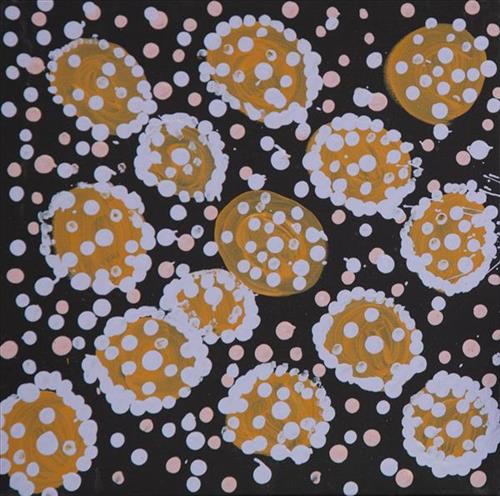
Untitled

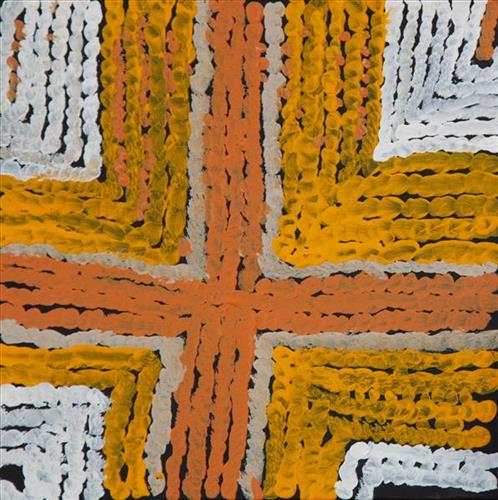
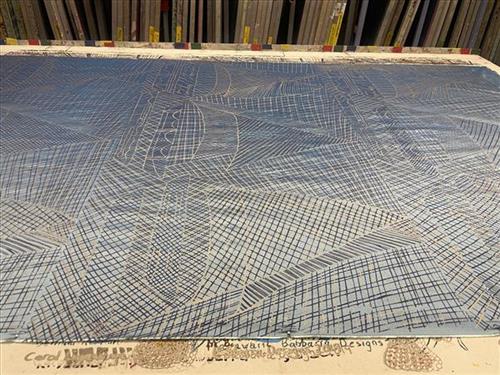
Most often explored in Doreen’s works are the motifs of her everyday modern Aboriginal community life; the animals hunted and plants gathered for bush tucker, the cars and aeroplanes used to travel to the cities and remote communities she regularly moves between, and depictions of the Country itself. 

Collectively this imagery, depicted with Doreen’s trademark wild palettes, painterly brushstrokes, and stark compositions, builds a layered representation of her Country. Doreen’s intimately known ngurra (home Country, camp) is viewed from multiple spatial perspectives, and in stylistic modes ranging from pure abstraction to images incorporating realist and traditional elements.

Doreen’s ngurra encompasses the Country between Western Desert communities and towns; Warralong, Strelley, Marble Bar, Port Hedland, and Jigalong, her birthplace. People identify with their ngurra in terms of specific rights and responsibilities, and the possession of intimate knowledge of the physical and cultural properties of one’s Country. Painting ngurra, and in so doing sharing the Jukurrpa (Dreaming) stories and physical characteristics of that place, has today become an important means of cultural maintenance.

111582255275


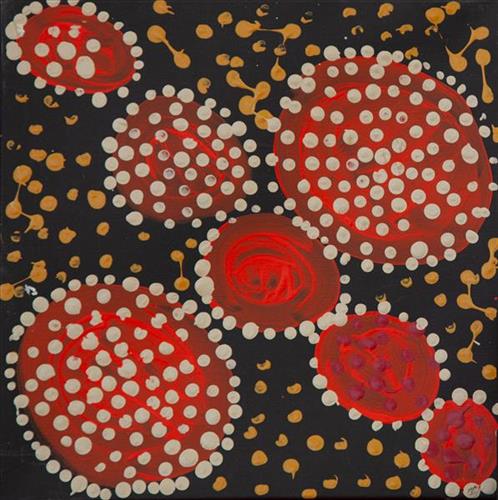
Untitled

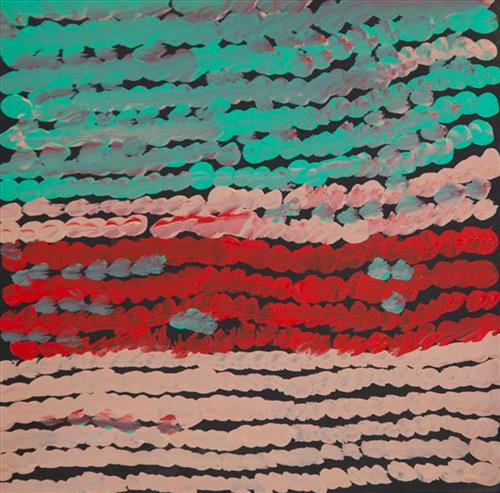
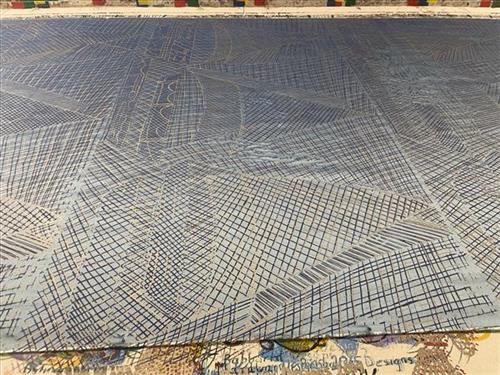
Most often explored in Doreen’s works are the motifs of her everyday modern Aboriginal community life; the animals hunted and plants gathered for bush tucker, the cars and aeroplanes used to travel to the cities and remote communities she regularly moves between, and depictions of the Country itself. 

Collectively this imagery, depicted with Doreen’s trademark wild palettes, painterly brushstrokes, and stark compositions, builds a layered representation of her Country. Doreen’s intimately known ngurra (home Country, camp) is viewed from multiple spatial perspectives, and in stylistic modes ranging from pure abstraction to images incorporating realist and traditional elements.

Doreen’s ngurra encompasses the Country between Western Desert communities and towns; Warralong, Strelley, Marble Bar, Port Hedland, and Jigalong, her birthplace. People identify with their ngurra in terms of specific rights and responsibilities, and the possession of intimate knowledge of the physical and cultural properties of one’s Country. Painting ngurra, and in so doing sharing the Jukurrpa (Dreaming) stories and physical characteristics of that place, has today become an important means of cultural maintenance.

377810582255258


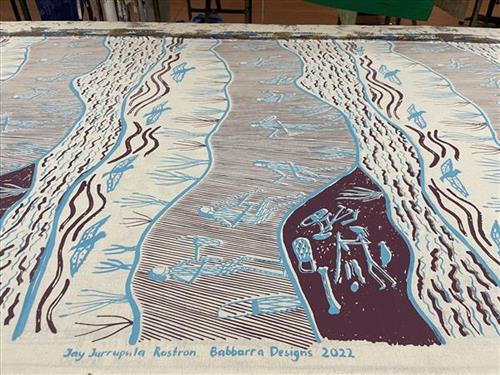
Namurre Boko

A two colour screen print design from 2022. Jay’s first large format design to join the Bábbarra Designs Collection.

‘This is my first one, I’m really happy, I’m proud. It’s just a songline for everybody. This story is from my great great grandfather on my fathers side. The songline was made by my second father. The mimihs tell the story. The painting took a long time, a few weeks to finish.’ Jay Jurrupula Rostron

‘Bini-murreko means two brothers – big brother and little brother.

Two brothers were really strong leaders and good hunters, sharing animals with different tribes.
With those different tribe there were jealousy going on.
Little brother went walkabout and heard the different tribe was talking about his tribe.
They said ngarribin manre djed-djedme bokko
Meaning: will make spear for them
Ngarrbin danj-bun, ngarrbinbun
Meaning: will spear them kill them
little brother turn around went back tell his brother
Namurre bokko kadi marne djed-djedme Karre wonens, kardi-djal danjbun
Meaning: they making spear for us, they gonna spear us
Couple of months they saw different tribe
They changed their attitude
They been bringing lots of animals to them and start asking for women
And that tribe realise that’s how those brothers died.
They kill them
This Why? They got jealous because two brothers was a good hunter.

This story written on the rock art and it stays forever.’

377810582255256


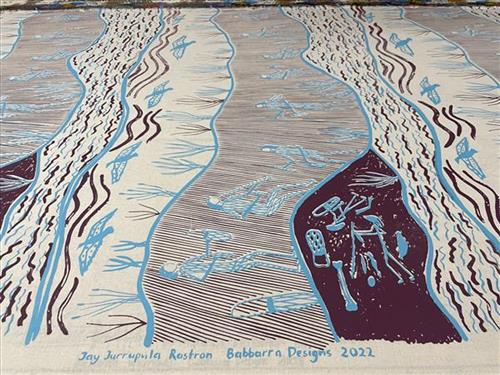
Namurre Boko

A two colour screen print design from 2022. Jay’s first large format design to join the Bábbarra Designs Collection.

‘This is my first one, I’m really happy, I’m proud. It’s just a songline for everybody. This story is from my great great grandfather on my fathers side. The songline was made by my second father. The mimihs tell the story. The painting took a long time, a few weeks to finish.’ Jay Jurrupula Rostron

‘Bini-murreko means two brothers – big brother and little brother.

Two brothers were really strong leaders and good hunters, sharing animals with different tribes.
With those different tribe there were jealousy going on.
Little brother went walkabout and heard the different tribe was talking about his tribe.
They said ngarribin manre djed-djedme bokko
Meaning: will make spear for them
Ngarrbin danj-bun, ngarrbinbun
Meaning: will spear them kill them
little brother turn around went back tell his brother
Namurre bokko kadi marne djed-djedme Karre wonens, kardi-djal danjbun
Meaning: they making spear for us, they gonna spear us
Couple of months they saw different tribe
They changed their attitude
They been bringing lots of animals to them and start asking for women
And that tribe realise that’s how those brothers died.
They kill them
This Why? They got jealous because two brothers was a good hunter.

This story written on the rock art and it stays forever.’

377810582255255


Wubbunj (Paperbark Canoe)

“Wubbunj is our traditional canoe. This design is the old history story of how people came to live in this place we call Maningrida. Two old people were staying on the other side of the saltwater, in Narlarrambarr area. The old people slept in a paper bark shelter and hunted on the water using their canoe.

A long time ago our people carved these canoes from the big paperbark trees. They had paddles with one person at the front, one at back, and other kids and passengers in the middle. Kunkot (paper bark) was used to make the sails which they would stand up and catch the wind.

One day these old people saw a new boat in their waters, which belonged to the Makassans (Indonesians). Those two old men saw the big Makassan boat coming in, and decided to paddle their canoe from Narlarrambarr to the other side (modern day Maningrida). We were scared of the Makassans, they gave us tobacco and tea, but they took many of our women.

When those two old people tasted that water at Maningrida from the Djomi spring, it was sweet freshwater and they decided to stay here. People here had no clothes in those time, we were just wearing string morkoi (loin cloths). Seven tribes were here then, but now in Maningrida there are lots more languages.” – Raylene Bonson

377810582255253


Wubbunj (Paperbark Canoe)

“Wubbunj is our traditional canoe. This design is the old history story of how people came to live in this place we call Maningrida. Two old people were staying on the other side of the saltwater, in Narlarrambarr area. The old people slept in a paper bark shelter and hunted on the water using their canoe.

A long time ago our people carved these canoes from the big paperbark trees. They had paddles with one person at the front, one at back, and other kids and passengers in the middle. Kunkot (paper bark) was used to make the sails which they would stand up and catch the wind.

One day these old people saw a new boat in their waters, which belonged to the Makassans (Indonesians). Those two old men saw the big Makassan boat coming in, and decided to paddle their canoe from Narlarrambarr to the other side (modern day Maningrida). We were scared of the Makassans, they gave us tobacco and tea, but they took many of our women.

When those two old people tasted that water at Maningrida from the Djomi spring, it was sweet freshwater and they decided to stay here. People here had no clothes in those time, we were just wearing string morkoi (loin cloths). Seven tribes were here then, but now in Maningrida there are lots more languages.” – Raylene Bonson