Sturt Pea
The Sturt Pea has a vibrant red flower. It has a succulent sweet juice that can be eaten. These flowers carpet the Pilbara and defy odds, blooming in the driest of conditions.
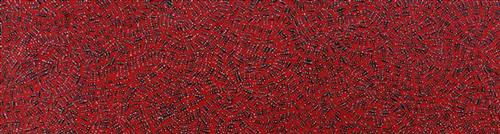
The Sturt Pea has a vibrant red flower. It has a succulent sweet juice that can be eaten. These flowers carpet the Pilbara and defy odds, blooming in the driest of conditions.
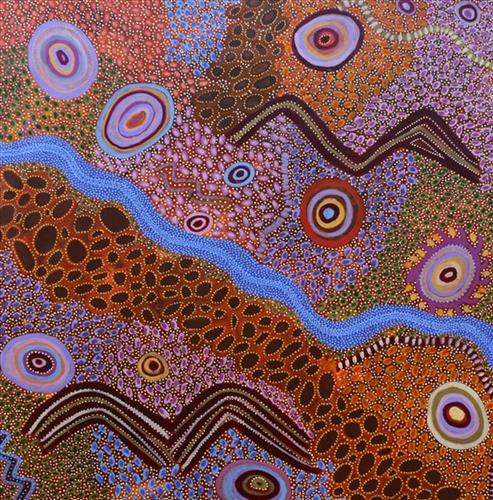
The Pilbara is the country where we the Yindjibarndi people live and share many of our Cultural stories and history that have been passed onto us by our ancestors, of how they used to walk through the flat country we call the (Table Lands) visiting family members at nearby stations. Our country has so much to offer. Bush foods and medicine as well as animals such as kangaroo, emu, goanna, and turkey. When the rains come our rivers are full and we all love to go out and spend the day fishing. We are also close to the ocean, so we often go fishing there as well. During the holidays many of our families go bush to enjoy what the country offers the beauty of our country we see through our eyes. Wildflowers bloom as nature takes its course and our country is still full of riches it always gives me joy to be a part of it, we are connected to our land it is a part of who we are.

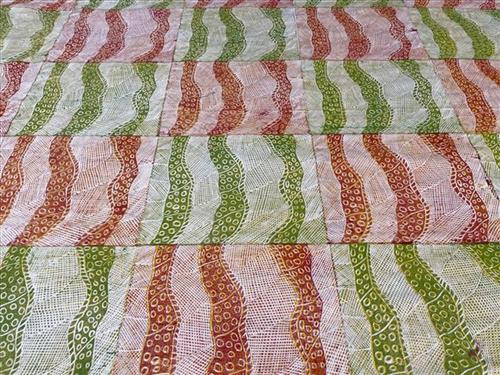
‘My designs, they are all alive living up in my head’- Janet Marawarr
Janet Marawarr has depicted kunkurra, the spiralling wind associated with several sites in the Kardbam clan. On one level, this design can be interpreted as a depiction of the kinds of mini-cyclones common during the wet season in Arnhem Land, where the artist lives. Kunkurra also relates specifically to a site called Bilwoyinj, near Mankorlod, on the artist’s clan estate.
At this site, two of the most important Kuninjku creation beings, a father and son known as na-korrkko, are believed to have hunted and eaten a goanna. They left some of the goanna fat behind at the site, which turned into the rock that still stands there today.
Bilwoyinj site is also a ceremonial ground for a ceremony called Yabbaduruwa, a major ceremony owned by the Yirridja patrimoiety. The Yabbaduruwa ceremony is primarily concerned with initiation, land ownership and promoting the cyclical regeneration of the human and natural worlds.

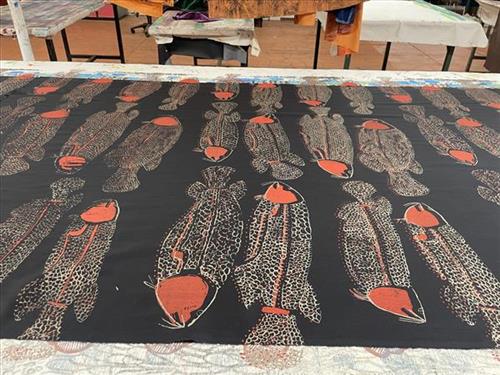
This design tells the story of Saratoga dreaming, a freshwater fish that swims on the edge of creeks and rivers. This design is the Saratoga dreaming from the Mularra songline. Where the Saratoga we call Murdulngu, Danguny travelled from Malmyangarnak billabong to Mirrigatja.
This Billabong was owned by Murdulngu (Saratoga) before the water was taken over by shark Barlangu he came all the way from east to north then to west. He was travelling when that water level was high he went up the stream but he couldn’t make it. This Barlangu came from Murruggun clan but really this shark came from long way all the way south. This story is connected through Mularra songline it represents many clans.
With permission from clan elders, Carol is able to pass on this family knowledge through her passion in textile and art.
‘I am proud of my first design, I want to keep this design for future, for my children and grandchildren so they remember this story, this story is a big part of the mularra songline’ Carol Liyawanga Campion

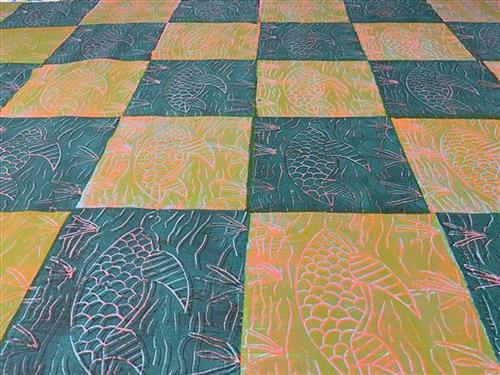
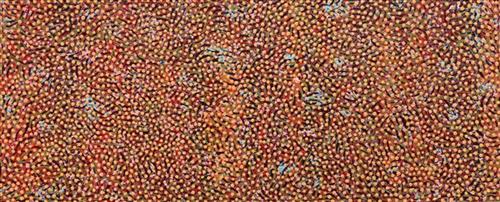
Springtime is a beautiful blending of colours in our country. After the rain all the wildflowers come up in a pattern like a puzzle. The artist often sponges her background using earthy colours. She painted over this background with her own unique style and bright colours of the yellow wattle. As in much aboriginal art, the artist has represented her country from an aerial perspective.
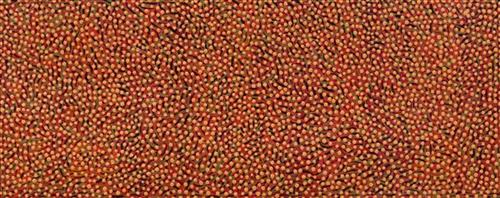
Springtime is a beautiful blending of colours in our country. After the rain all the wildflowers come up in a pattern like a puzzle. The artist often sponges her background using earthy colours. She painted over this background with her own unique style and bright colours of the yellow wattle. As in much aboriginal art, the artist has represented her country from an aerial perspective.
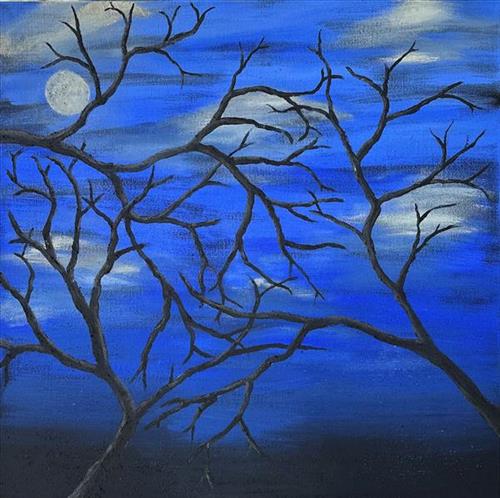
Bata Yurri is about a rare moment in time and the energy it creates
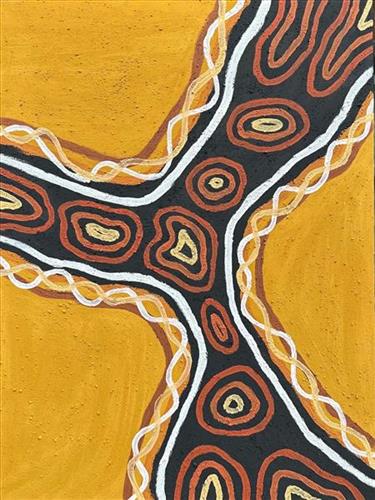
Generations is about my Mum, her children and her grandchildren
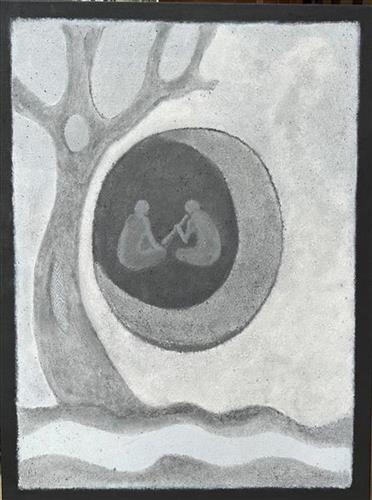
Connection to our spirit lands. Lore men.