Blue Gum
In September, when we are looking for gum from the Blue Gum Tree, we walk through the spinifex country. We pick the gum when it is crystal colour, and we eat it, or put it into hot water to make it like a toffee. We call it sugar lolly.
In September, when we are looking for gum from the Blue Gum Tree, we walk through the spinifex country. We pick the gum when it is crystal colour, and we eat it, or put it into hot water to make it like a toffee. We call it sugar lolly.
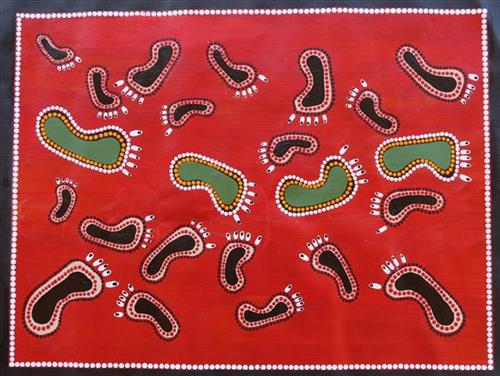
This is the story of our ancestors walking on the country many years before us. It is said that you can still still their footprints in the earth.
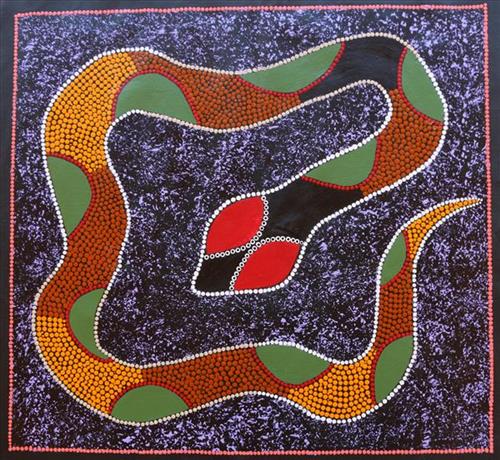
In our country we have snakes that live in the trees and they wait for flying foxes and birds to eat.
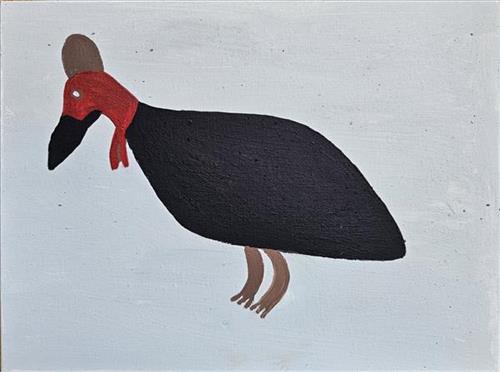
When I was a young kid, we would travel from Mossman to Cape Trip looking for Kurranji eggs. This was back in the old days when all the roads were dirt and no-one was around. There were a lot of Kurranji around then.
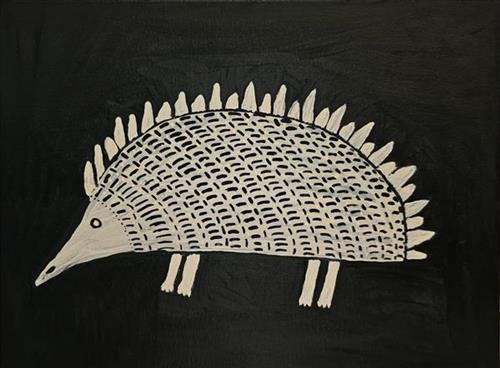
Ngangkin – Echidna is a marsupal which lives in a burrow, it eats ants & worms. It is warm blooded, it’s been a native bush tucker for 40,000 years for aboriginal & torres strait islander people.
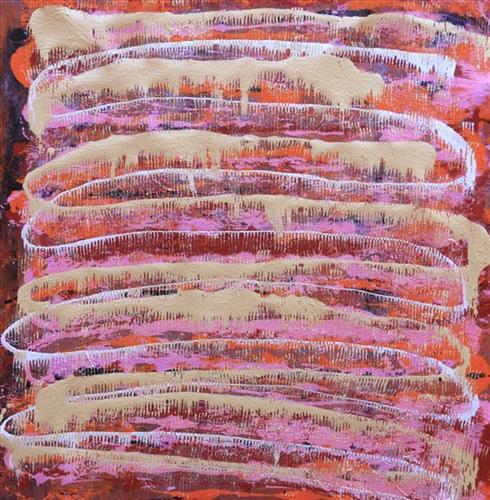
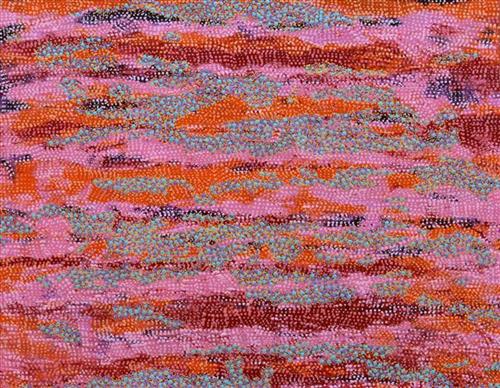
This work is playful experiment with colour and textures. The background represents the Pilbara hills, the pinks represent the wildflowers and the cream colour over the top is the dry spinifex of my country.
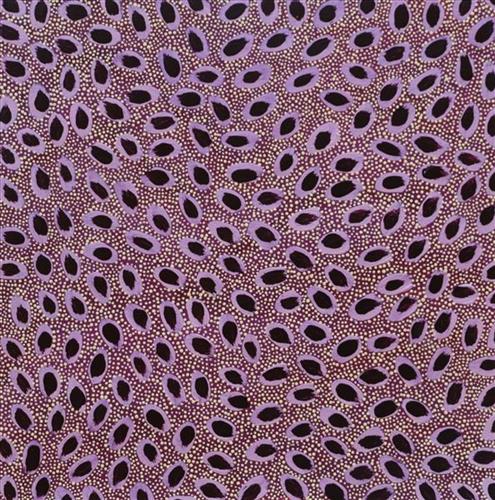
These are the Pilbara wildflower’s that grow on the ground they have a beautiful orange colour blending in the country during flower season.
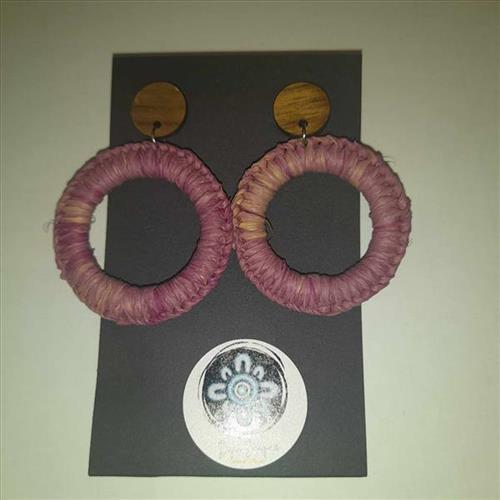
Hand Made by Jean Miller

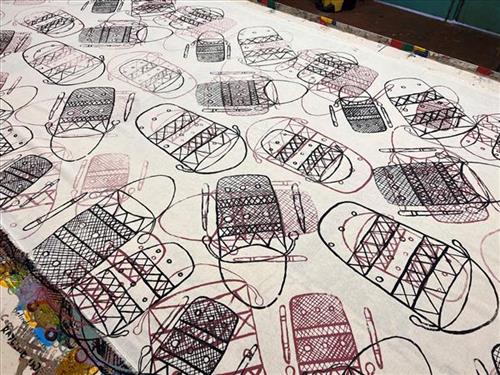
This design depicts a ‘wongkorr’ sacred dilly bag woven with brightly coloured orange parrot feathers called ‘dedded’. It is depicted alongside a digging stick. Wongkorr are used in a number of public ceremonial contexts, and are sacred objects for the Bininj Kunwok speaking people of Western Arnhem Land.
‘This is a really special kind of dillybag for us, not like a normal dillybag.
This story was from a long time ago, when my great great grandfather was alive. He’s the one that was a medicine man for our people.
We are not supposed to see that sacred spirit dillybag that lives below the saltwater. If we ever see that site, it might drag us under and drown us. When the tide goes out he floats and when the tide comes in he goes under to hide.
This story is about fresh water and salt water mixing and our ancient law. There are strings of the Wongkorr hold it under the water. The Wongkorr is made with lorikeet parrot feathers and Kurrajong bark string.
I remember having a ceremony at that outstation Bolkjam when I was only 16 years old, near Ji Bal-bal homeland, and my father would tell me the story of the Wongkorr sacred site. My two sisters taught me to paint, and my Dad was a famous painter. Some balanda (non-Indigneous) know my father’s painting, it is about digging sticks, sharks and wongkorr.
This story links to mixed water, plant life and animals living at the artist’s country, and following the lessons and knowledge of the ancestors.’ Elizabeth Kala Kala

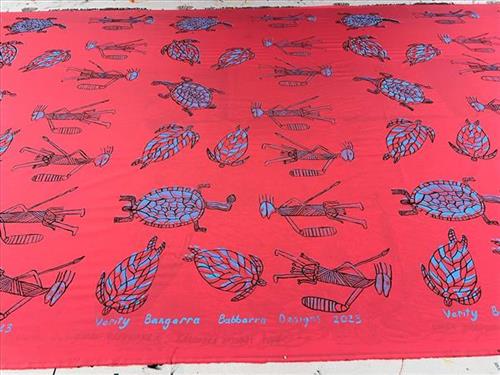
Makéddja means turtle in the Ndjébbana language of the Kunibidji people of Maningrida.