Team Seagulls
Hand printed fabric made by pressing intricately carved lino tiles onto fabric using layers of colour.

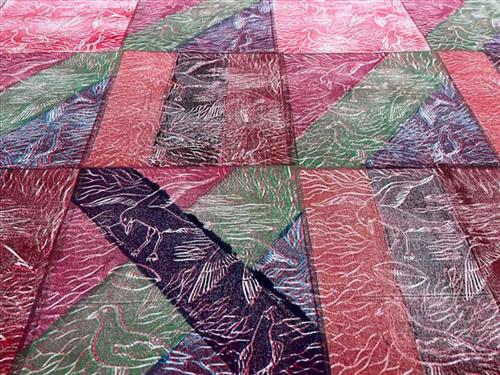
Hand printed fabric made by pressing intricately carved lino tiles onto fabric using layers of colour.

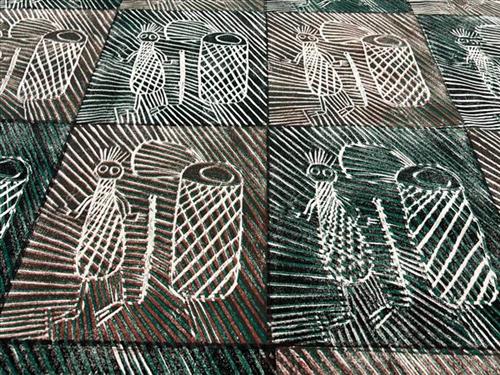
‘Bawáliba is the djang (Dreaming) of my mother and my uncles. They are good spirits, they protect us and they recognise families. They are really tall- just like human beings, like us. They dance late at night and have a lot of hair.
In olden times, long long long time ago Bawáliba were here, before people were on the land. Bawáliba used to go out hunting and care for country. They hunt carrying fish traps and digging sticks, near the homeland Djinkarr. They go out hunting on the floodplains with dilly bags and digging sticks. They collect a lot of bush foods, and sleep together with one bark shelter.
Sometimes now they still come alive when we sleep, they might come to our houses and peep through the window. At night, they cover themselves with white clay and red cloth tied around their waist. If we hear them, we jump out of bed and get up to look -but they have disappeared, they’re just too quick. Bawáliba might knock on the window to remind us they are there looking out for us.If you listen deeply you can hear them whisper, sometimes they talk about us and might say, ‘why are those people making camp here?’ then they realise ‘Oh they are family from here, it’s ok, they are just sleeping here for the night’.
During the day they always turn into stone and they sleep. We still know that green rock covered in moss near Djinkarr, that’s Bawáliba sleeping.
Some of my ancestors used to speak the same language as the Bawaliba, but all those old people are passed away now. It’s a little bit sad for us, because no one now can speak that Bawaliba language anymore.’ Lucy Yarawanga 2019

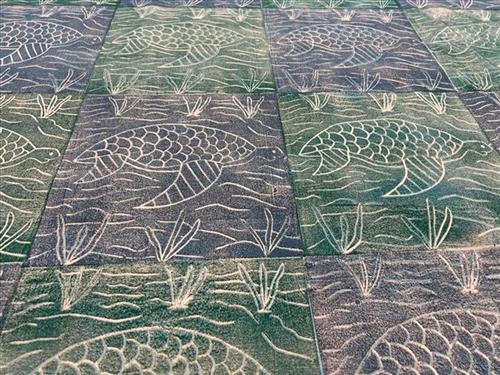
A detailed lino print design depicting a sea turtle surrounded by sea shells.
Elizabeth is from the Burrarra language group and her homeland is Gupanga, Arnhem Land.

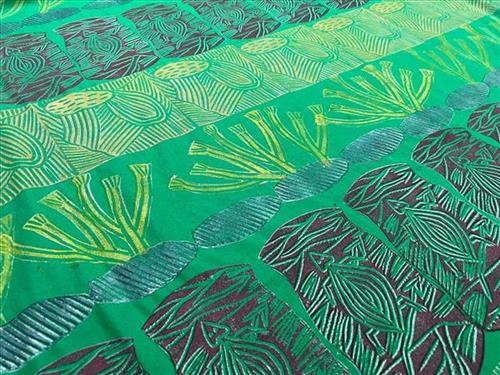
Hand printed fabric made by pressing intricately carved lino tiles onto fabric using layers of colour.

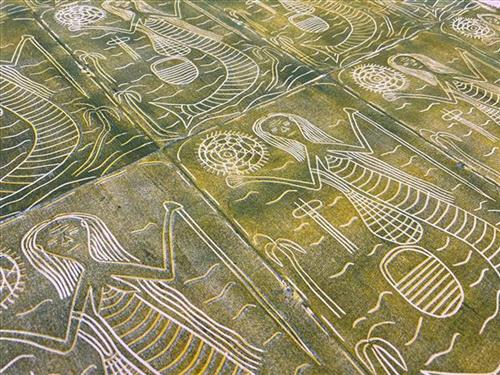
Verity has drawn the mermaid spirit found at Lady Dreaming, a significant women’s site located on the West Arnhem Highway.


Hand printed fabric made by pressing intricately carved lino tiles onto fabric using layers of colour.


In Kuninjku the name manbirrbbirr is used for a number of densely flowering shrubs and small trees including Verticordia cunninghamii, yellow flowering Austromyrtus species and also Acacia platycarpa which also has dense white.

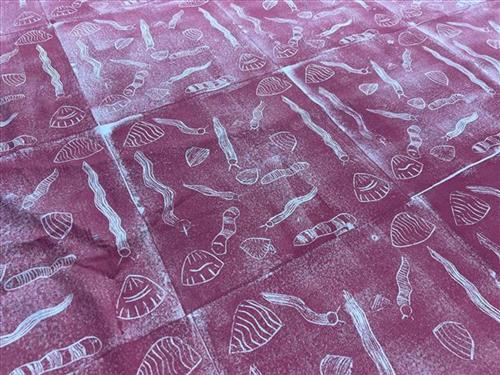
Hand printed fabric made by pressing intricately carved lino tiles onto fabric using layers of colour.
Jimi jima is similar to what is commonly known as a waterlily (monochoria australasica). The plant is mainly associated with a waterhole named Yalija, but also other sacred waterholes in the Wurdeja area. This painting of jima jima depicts the lily as it exists naturally in wet water areas at Wurdeja. They have an edible root, which is brownish and bitter when raw, but once roasted on coals it is deliciously sweet. They are only found in sacred waterholes in the Wurdeja area, including Yalija, and humans and spirits live off them. They are a bright blue flowering plant.
Fiona Steele is the daughter of the late Tommy Gondorra Steele, the last male member of the Garnawula Niya clan who lived at Wurdeja outstation, about four kilometres east of the Blyth River, and who was the traditional owner of that area. Wurdeja is surrounded by a series of sacred waterholes and it is these waterholes, which provide the subject matter for Steele’s art.
Jimi jima is similar to what is commonly known as a waterlily (monochoria australasica). The plant is mainly associated with a waterhole named Yalija, but also other sacred waterholes in the Wurdeja area. This painting of jima jima depicts the lily as it exists naturally in wet water areas at Wurdeja. They have an edible root, which is brownish and bitter when raw, but once roasted on coals it is deliciously sweet. They are only found in sacred waterholes in the Wurdeja area, including Yalija, and humans and spirits live off them. They are a bright blue flowering plant.
Fiona Steele is the daughter of the late Tommy Gondorra Steele, the last male member of the Garnawula Niya clan who lived at Wurdeja outstation, about four kilometres east of the Blyth River, and who was the traditional owner of that area. Wurdeja is surrounded by a series of sacred waterholes and it is these waterholes, which provide the subject matter for Steele’s art.