377810582259208


Rocky Point Sea Life

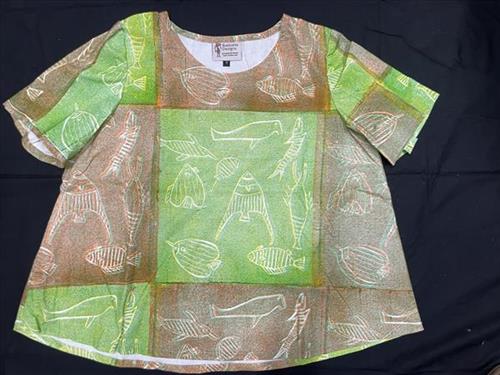
This design is a salt water story, depicting sea life from Rocky Point and Nardilmuk homelands, in Central Arnhem Land. The etching features the diverse water creatures including dugong, shark, prawn, fish, sea-snake, and lobster.

“We always go fishing and get these fish and animals and cook them on the fire for eating together. We can only see the dugongs at night time, that’s when we hunt them.

We get that line and go fishing down at the rocks and get shark and stingray. Some fish we can catch with a net or spear and some we catch out in the really deep blue sea with a boat.

In this design the animals are alive underwater, that’s why I made it blue all over.”

116482259252


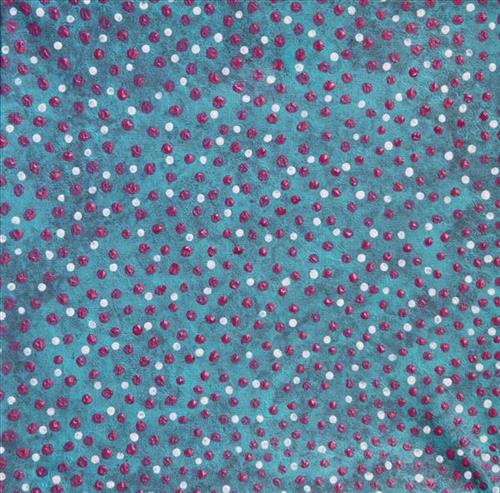
Spinifex Country

Our country is covered with spinifex. In the old days, our elders would grind the spinifex seeds to make flour to make into damper. The resin from the spinifex can be used to make glue. The kangaroos also find shelter among the spinifex bushes, to hide themselves from hunters.

111582259240


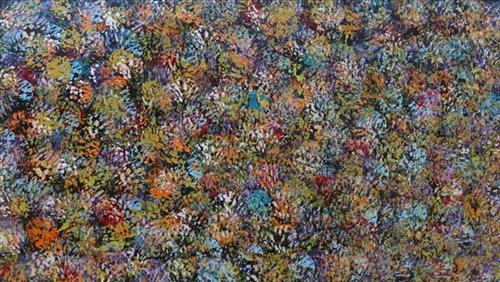
Desert Flowers

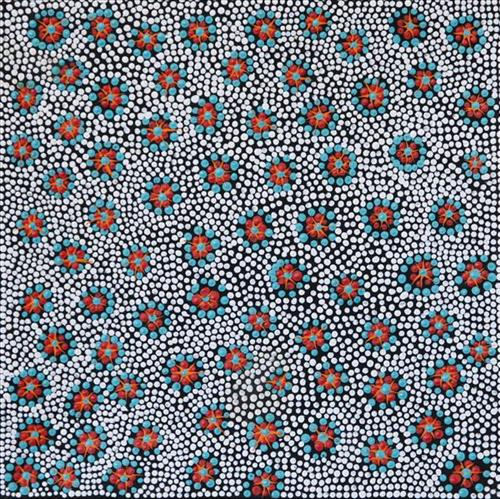
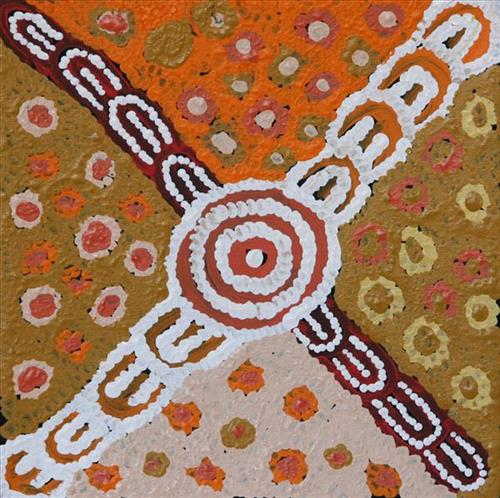
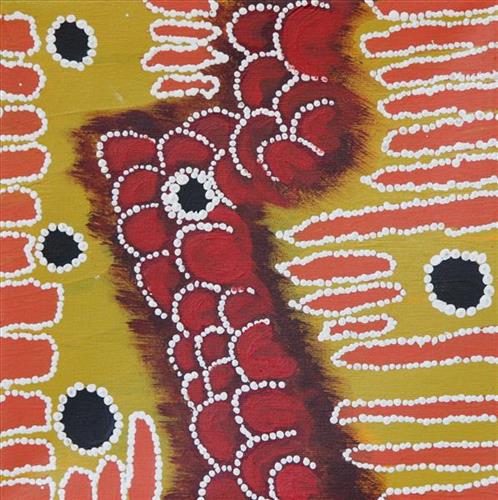
“I was thinking about flowers. Like desert flowers.”

– Delicia Attwood

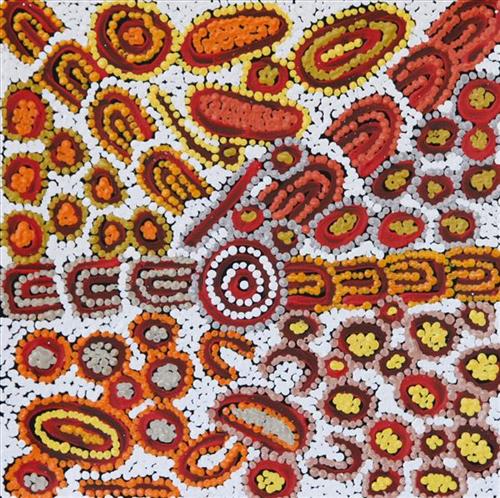
Depicted in this work are traditional types of bush tucker, their floral habitats, and their related hunting and gathering methods. During the pujiman (traditional, desert dwelling) period, Martu would traverse very large distances annually in small family groups, moving seasonally from water source to water source, and hunting and gathering bush tucker as they went. Whilst desert life has moved away from mobile hunter-gatherer subsistence throughout the course of the twentieth century, bush tucker continues to be a significant component of the modern Martu diet. Hunting and gathering bush tucker remains equally valuable as an important cultural practice that is passed on intergenerationally. Though hunting and gathering implements have been modernised, methods of harvesting, tracking and the use of fire burning to drive animals from their retreats are still commonly practiced today. 

Typically, animals hunted for their kuwiyi (meat) include kirti-kirti (euro kangaroo) and marlu (plains kangaroo), parnajarrpa (sand goanna), kipara (Australian bustard, bush turkey) and karlaya (emu). Lunki (witchetty grub) and wuukurta (honey ants) are dug from tree and bush trunks, or from underground nests. Popular mayi (plant food) includes minyarra (bush onion), collected from small, grass like plants; root vegetables dug from underground such as kulyu and mata (types of bush potato); and seeds such as kalaru (samphire, salt bush), yuwinyji, and marnkalpa (spinifex species). Jawirli (quondong), wamurla (bush tomatoes), jinyjiwirrily (wild gooseberry), ngaputa (melon), and karlkula (bush banana) are some of the most popular bush fruits. These are often collected in the wantajarra (cool season) and tuulpara (spring) months, along with juri (sweet) botanical gums and wama (nectar), obtained from various plant species. 

Traditional tools used for hunting and gathering bush tucker were carved from wanari (mulga), mulunturu (desert oak), yurungkura (river red gum) and mijarrpa (bloodwoods), and included kurlata (spears), jurna (hitting stick), karli (boomerangs), wana (digging-sticks), piti (timber bowls used for carrying food and water), and jiwa (grinding stones for grinding seeds into flour). While carved objects retain enormous social and ceremonial importance in Martu life, they are no longer used for hunting and gathering.

Over half a million square kilometres of mangroves, off shore islands, deep gorges, mountain ranges, desert sand dunes and river pools ensure the Pilbara’s flora is as diverse as the landscape. Plants and flowers in the Pilbara have evolved unique adaptations to survive in an arid climate that receives most of its rainfall during summer by way of tropical cyclones. Watercourses are lined with river red gums, coolibah, silver cadjeput and desert bloodwood trees. Gorges contain permanent water supplies to support moisture loving plants like the common rock fig and rock kurrajong. From July to September wildflowers of all colours, sizes and shapes, like the unmistakeable Sturt’s desert pea, fluffy mulla mulla, the tall majestic Ashburton pea or any number of the 65 species of Acacia (wattle) can be seen throughout the region.

111582259239


Bush tucker and wild flower

“I was thinking about flowers. Like desert flowers.”

– Delicia Attwood

Depicted in this work are traditional types of bush tucker, their floral habitats, and their related hunting and gathering methods. During the pujiman (traditional, desert dwelling) period, Martu would traverse very large distances annually in small family groups, moving seasonally from water source to water source, and hunting and gathering bush tucker as they went. Whilst desert life has moved away from mobile hunter-gatherer subsistence throughout the course of the twentieth century, bush tucker continues to be a significant component of the modern Martu diet. Hunting and gathering bush tucker remains equally valuable as an important cultural practice that is passed on intergenerationally. Though hunting and gathering implements have been modernised, methods of harvesting, tracking and the use of fire burning to drive animals from their retreats are still commonly practiced today. 

Typically, animals hunted for their kuwiyi (meat) include kirti-kirti (euro kangaroo) and marlu (plains kangaroo), parnajarrpa (sand goanna), kipara (Australian bustard, bush turkey) and karlaya (emu). Lunki (witchetty grub) and wuukurta (honey ants) are dug from tree and bush trunks, or from underground nests. Popular mayi (plant food) includes minyarra (bush onion), collected from small, grass like plants; root vegetables dug from underground such as kulyu and mata (types of bush potato); and seeds such as kalaru (samphire, salt bush), yuwinyji, and marnkalpa (spinifex species). Jawirli (quondong), wamurla (bush tomatoes), jinyjiwirrily (wild gooseberry), ngaputa (melon), and karlkula (bush banana) are some of the most popular bush fruits. These are often collected in the wantajarra (cool season) and tuulpara (spring) months, along with juri (sweet) botanical gums and wama (nectar), obtained from various plant species. 

Traditional tools used for hunting and gathering bush tucker were carved from wanari (mulga), mulunturu (desert oak), yurungkura (river red gum) and mijarrpa (bloodwoods), and included kurlata (spears), jurna (hitting stick), karli (boomerangs), wana (digging-sticks), piti (timber bowls used for carrying food and water), and jiwa (grinding stones for grinding seeds into flour). While carved objects retain enormous social and ceremonial importance in Martu life, they are no longer used for hunting and gathering.

Over half a million square kilometres of mangroves, off shore islands, deep gorges, mountain ranges, desert sand dunes and river pools ensure the Pilbara’s flora is as diverse as the landscape. Plants and flowers in the Pilbara have evolved unique adaptations to survive in an arid climate that receives most of its rainfall during summer by way of tropical cyclones. Watercourses are lined with river red gums, coolibah, silver cadjeput and desert bloodwood trees. Gorges contain permanent water supplies to support moisture loving plants like the common rock fig and rock kurrajong. From July to September wildflowers of all colours, sizes and shapes, like the unmistakeable Sturt’s desert pea, fluffy mulla mulla, the tall majestic Ashburton pea or any number of the 65 species of Acacia (wattle) can be seen throughout the region.
111582259238


The Water Tree

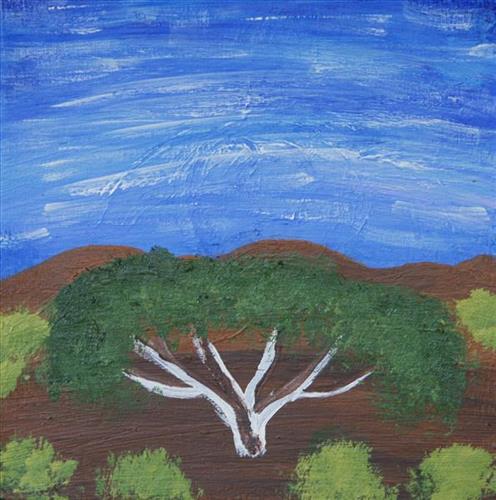
“The water tree. Poke it and water come out. Clean water. [There is] grass all around  [the tree]. In the background is a hill.”

-Shoshanna (Sharna) Jeffries (Long) 

This work portrays an area known to the artist, painted here from memory or stories told by family. During the pujiman (traditional, desert dwelling) era one’s survival depended on their intimate knowledge of the location of resources; thus physical elements of Country, such as sources of kapi (water), tali (sandhills), and different varieties of warta (trees, vegetation) were carefully observed and remembered. Today, this relationship with Country remains equally strong, despite the movement of Martu out of the desert and into remote Aboriginal communities, towns and cities.

Also visible may be traces of life cycles based around kalyu (rain, water) and waru (fire). A thousands of year old practice, fire burning continues to be carried out as both an aid for hunting and a means of land management today. As the Martu travelled and hunted they would burn tracts of land, ensuring plant and animal biodiversity and reducing the risk of unmanageable, spontaneous bush fires. The patchwork nature of regrowth is visible in many landscape works, with each of the five distinctive phases of fire burning visually described with respect to the cycle of burning and regrowth.  

Finally, metaphysical information relating to a location may also be recorded; Jukurrpa (Dreaming) narratives chronicle the creation of physical landmarks, and can be referenced through depictions of ceremonial sites, songlines, and markers left in the land. 

111582259237


All the mima (women)

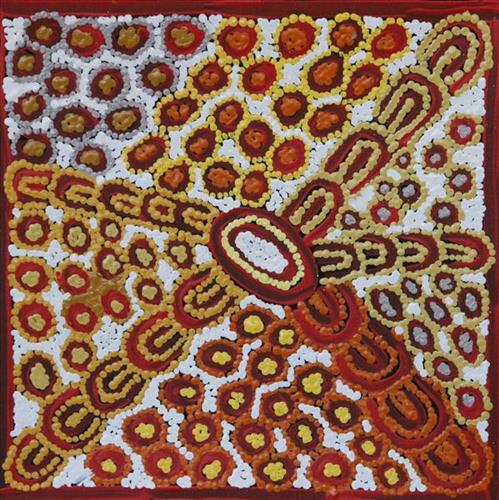
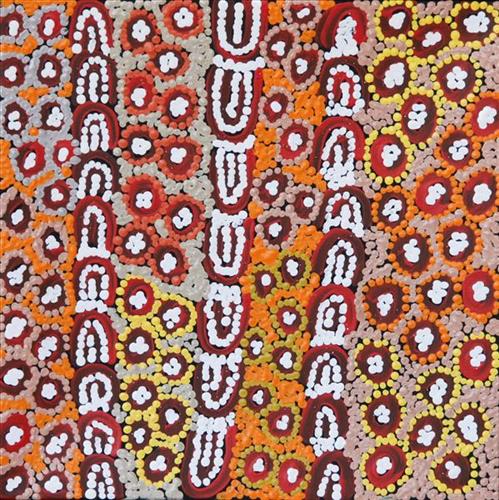
The site depicted in this work, situated to the east of Kiwirrkurra and on Pintupi Country, forms part of Sharon’s ngurra (home Country, camp) through her grandmother, Katjarra Butler. Katjarra shared with Sharon the jukurrpa (dreaming) story for this area. This narrative describes how a distinctive group of rocks located here came to be formed by “all the mima (women) sitting down next to two rocks and one rockhole. They was eating bush tucker, yellow berries, and they was drinking water from one rockhole. They was in one place, and they was eating a big round one, that yellow berry. They was looking round and round for more. They never went, they stayed sitting in one place. They still there, they turned into rocks there.” (Sharon Porter)

The term Jukurrpa is often translated in English as the ‘dreaming’, or ‘dreamtime’. It refers generally to the period in which the world was created by ancestral beings, who assumed both human and nonhuman forms. These beings shaped what had been a formless landscape; creating waters, plants, animals, and people. At the same time they provided cultural protocols for the people they created, as well as rules for interacting with the natural environment. At their journey’s end, the ancestral beings transformed themselves into important waters, hills, rocks, and even constellations.

111582259236


All the mima (women)

The site depicted in this work, situated to the east of Kiwirrkurra and on Pintupi Country, forms part of Sharon’s ngurra (home Country, camp) through her grandmother, Katjarra Butler. Katjarra shared with Sharon the jukurrpa (dreaming) story for this area. This narrative describes how a distinctive group of rocks located here came to be formed by “all the mima (women) sitting down next to two rocks and one rockhole. They was eating bush tucker, yellow berries, and they was drinking water from one rockhole. They was in one place, and they was eating a big round one, that yellow berry. They was looking round and round for more. They never went, they stayed sitting in one place. They still there, they turned into rocks there.” (Sharon Porter)

The term Jukurrpa is often translated in English as the ‘dreaming’, or ‘dreamtime’. It refers generally to the period in which the world was created by ancestral beings, who assumed both human and nonhuman forms. These beings shaped what had been a formless landscape; creating waters, plants, animals, and people. At the same time they provided cultural protocols for the people they created, as well as rules for interacting with the natural environment. At their journey’s end, the ancestral beings transformed themselves into important waters, hills, rocks, and even constellations.

111582259235


All the mima (women)

The site depicted in this work, situated to the east of Kiwirrkurra and on Pintupi Country, forms part of Sharon’s ngurra (home Country, camp) through her grandmother, Katjarra Butler. Katjarra shared with Sharon the jukurrpa (dreaming) story for this area. This narrative describes how a distinctive group of rocks located here came to be formed by “all the mima (women) sitting down next to two rocks and one rockhole. They was eating bush tucker, yellow berries, and they was drinking water from one rockhole. They was in one place, and they was eating a big round one, that yellow berry. They was looking round and round for more. They never went, they stayed sitting in one place. They still there, they turned into rocks there.” (Sharon Porter)

The term Jukurrpa is often translated in English as the ‘dreaming’, or ‘dreamtime’. It refers generally to the period in which the world was created by ancestral beings, who assumed both human and nonhuman forms. These beings shaped what had been a formless landscape; creating waters, plants, animals, and people. At the same time they provided cultural protocols for the people they created, as well as rules for interacting with the natural environment. At their journey’s end, the ancestral beings transformed themselves into important waters, hills, rocks, and even constellations.

111582259234


All the mima (women)

The site depicted in this work, situated to the east of Kiwirrkurra and on Pintupi Country, forms part of Sharon’s ngurra (home Country, camp) through her grandmother, Katjarra Butler. Katjarra shared with Sharon the jukurrpa (dreaming) story for this area. This narrative describes how a distinctive group of rocks located here came to be formed by “all the mima (women) sitting down next to two rocks and one rockhole. They was eating bush tucker, yellow berries, and they was drinking water from one rockhole. They was in one place, and they was eating a big round one, that yellow berry. They was looking round and round for more. They never went, they stayed sitting in one place. They still there, they turned into rocks there.” (Sharon Porter)

The term Jukurrpa is often translated in English as the ‘dreaming’, or ‘dreamtime’. It refers generally to the period in which the world was created by ancestral beings, who assumed both human and nonhuman forms. These beings shaped what had been a formless landscape; creating waters, plants, animals, and people. At the same time they provided cultural protocols for the people they created, as well as rules for interacting with the natural environment. At their journey’s end, the ancestral beings transformed themselves into important waters, hills, rocks, and even constellations.

111582259233


Around Kinyu (Canning Stock Route Well 35)

“That flat hill. You can see it when you climb up to [the Kunawarritji] airport. This one here, this the main place. This is where Manyjilyjarra people start. The dreaming is right here. Kinyu (Well 34, Canning Stock Route). When people are sick they just go here [to Kinyu). Sleep, they get better. They don’t go right in, they just go there and sleep, healing.”

-Nigel Neech

Kinyu (Canning Stock Route Well 35) is a small yinta (permanent spring) that was a popular camping ground during the pujiman (traditional, desert dwelling) era. The site is home to the ancestral mother dingo, who is both a generous provider and fierce protector of her Martu countrymen. Kinyu is so revered that the site and its associated ancestral being are often deferentially referred to as jarntu (dog) in place of uttering the actual name. The site is believed to possess healing and magical powers, and children born here are said to inherit these same powers.

During the Jukurrpa (Dreaming), Kinyu was the home for a family of dingoes; a mother, father, and their litter of pups. Originally the family had travelled to Wirlarra, following the call of the moon. At Wirlarra the moon cared for them and created a windbreak for the family to shelter. The dingoes stayed for a time at Wirlarra, scratching into the earth to create several distinctive small salt water pools which are still visited by the Martu for their healing properties. After a time, the dingoes continued travelling eastward toward the rising moon until they reached Kinyu, where they remained until all of the dingo pups had grown up. From Kinyu the family travelled further east. 

The intersection of the Canning Stock Route with Kinyu also made this a site of early contact with Europeans for many Martu then living a pujiman life in the desert. Following the route’s construction, Martu encountered Europeans and other Martu working as cattle drovers as they would travel up and down the Stock Route from water source to water source. Increasingly, pujimanpa (desert dwellers) followed the route to newly established ration depots, mission and pastoral stations. They were drawn to the route in search of food, by a sense of curiosity, or by loneliness. By the late 1950s and early 1960s, most of the desert family groups had left the desert. Eventually, these factors combined with an extreme and prolonged drought in the 1960s to prompt the few remaining pujimanpa to move in from the desert.