111582268039


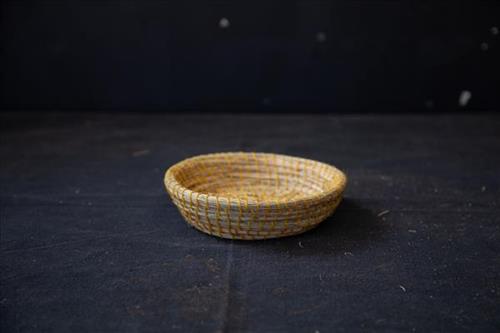
Basket

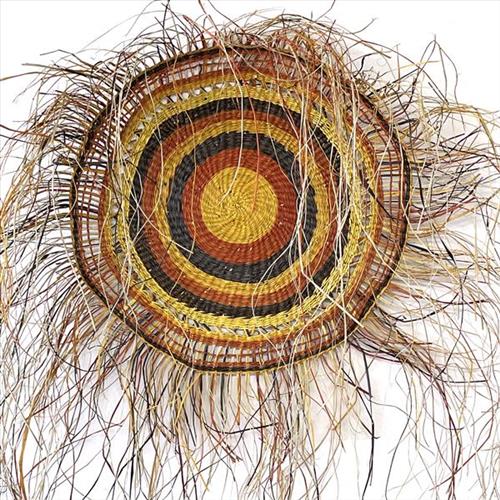
Weaving is a skill that has been practiced by Martu for thousands of years in the making of utilitarian and ceremonial items, such as yakapiri (bark sandals) and manguri (head pads for balancing carved carrying dishes). However, coiled basket weaving as an artform is a relatively newly adopted practice for the Martu, a skill passed on from Central Desert artists in the 1990’s. Leading Martu fibre arts practitioner Nola Taylor says that basket weaving was so popular amongst Martu women that it “spread across the desert like a waru (fire)”.

Each basket is built up through wrapping fine bundles of grass in brightly coloured wool and then stitching each round on to the previous one. The baskets are primarily made from puntayarra and minarri (Amphipogon Caricinus) grass, usually collected incidentally during trips to visit family, attend ceremonies, maintain Country, and hunt and gather bush tucker. Martu artists have developed a distinctive style of basketry and individual artists continue to develop new designs and incorporate novel materials, including steel, wire and wood, into their work. 

111582268038


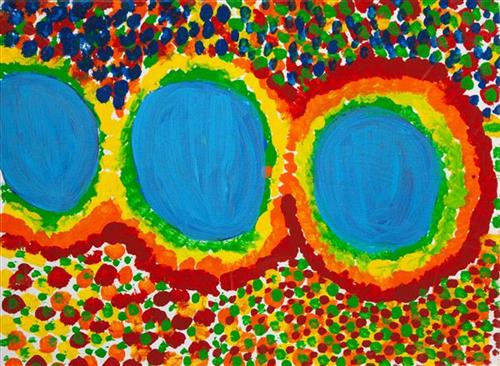
Wantili (Warntili, Canning Stock Route Well 25) – Mama Country (Father’s Country)

“That’s my jamu (grandfather) and nanna’s Country. I always go on a ranger trip there with my mum, Thelma Judson, and my little baby brothers, Junior and Jamie Rowlands.”

– Lynette Rowlands

Wantili (Warntili, Canning Stock Route Well 25) is a large round jurnu (soak) and linyji (claypan) near Well 25 on the Canning Stock Route. This site is Kuru’s birthplace, and as such forms an integral part of her ngurra. The area is dominated by claypans surrounded by tuwa (sandhills), and Nyilangkurr, a prominent yapu (hill) is located on the edge of the claypan. Following rain the typically dry claypans are filled with water, with the overflow from nearby waterholes flowing to Wantili. At that time, Wantili becomes an important place for obtaining fresh water for drinking and bathing. Wantili is significant for the fact that at this site Kartujarra, Manyjilyjarra, Putijarra and Warnman people would all come together for ceremonies during the pujiman era. Many jiwa (stones used by women for grinding seeds) from these times can still be found there today. 

Wantili is an incredibly important cultural site, ‘where the creation started.’  (Cyril Whyoulter). In this creation story, the world was initially dark, and people were like rocks, with no arms or legs. Following the sun’s first rising, life-forms become increasingly complex while particular features in the land were created. Beyond these details much of the Jukurrpa (Dreaming) narrative relating to Wantili is ngurlu (sacred, taboo), and only for Martu, but the site is open, and anyone can go there. 

Wantili is also one of the many sites featured in the epic Minyipuru (Jakulyukulyu, Seven Sisters) Jukurrpa story. Minyipuru is a central Jukurrpa narrative for Martu, Ngaanyatjarra, Pitjantjatjara and Yankunytjatjara people that is associated with the seasonal Pleiades star constellation. Relayed in song, dance, stories and paintings, Minyipuru serves as a creation narrative, a source of information relating to the physical properties of the land, and an embodiment of Aboriginal cultural laws. The story follows the movement of a group of women travelling all the way across the desert, beginning at Roebourne on the coast of Western Australia, as they are pursued by Yurla, a lustful old man. As the women travelled, they stopped to rest at many sites to eat, dance, rest and sing, on the way leaving behind an assortment of articles that became formations in the land, such as groupings of rocks and trees, grinding stones and seeds. The sisters rested at Wantili before throwing seeds, then continued their journey far to the east and beyond Martu Country, stopping at various sites through central and South Australia.

The intersection of the Canning Stock Route with Wantili also made this a site of early contact with Europeans for many Martu then living a pujiman life in the desert. Following the route’s construction, Martu encountered Europeans and other Martu working as cattle drovers as they would travel up and down the Stock Route from water source to water source. Increasingly, pujimanpa  (desert dwellers) followed the route to newly established ration depots, mission and pastoral stations. They were drawn to the route in search of food, by a sense of curiosity, or by loneliness. By the late 1950s and early 1960s, most of the desert family groups had left the desert. Eventually, these factors combined with an extreme and prolonged drought in the 1960s to prompt the few remaining pujimanpa to move in from the desert.

115682268445


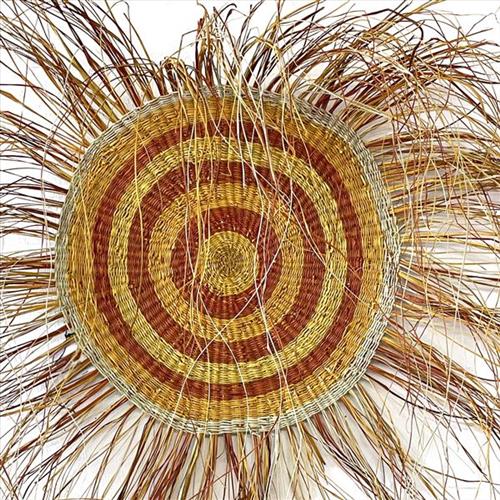
Woven Mat

Traditionally, Nganiyal (conical mats) were used as an insect screen when erected, and as a sitting mat when folded. They are used in Ceremony as well as a functional item. 

Nowadays, artists weave many different shapes including flat, round and oblong. 

115682268439


Woven Mat

Traditionally, Nganiyal (conical mats) were used as an insect screen when erected, and as a sitting mat when folded. They are used in Ceremony as well as a functional item. 

Nowadays, artists weave many different shapes including flat, round and oblong. 

359709482268435


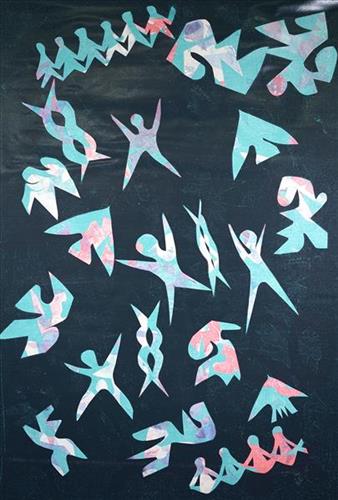
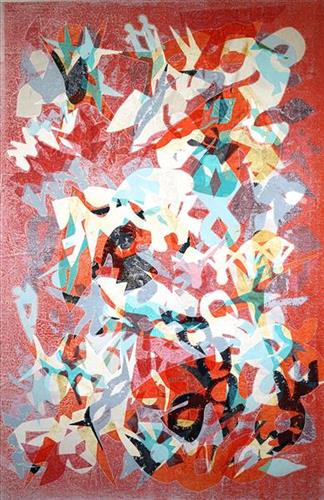
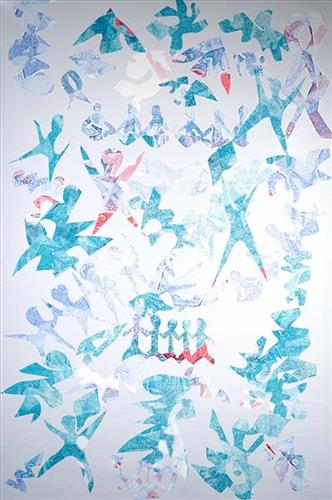
Freedom and Change

Freedom often flourishes in an environment of change. Embrace the idea that change is an opportunity for growth and personal liberation. 

Art Centre notes: Image size: 120cm x 80cm The artwork is a ‘pochoir’ print, or monoprint, printed on canvas. (The print covers the paper from edge to edge.)

359709482268434


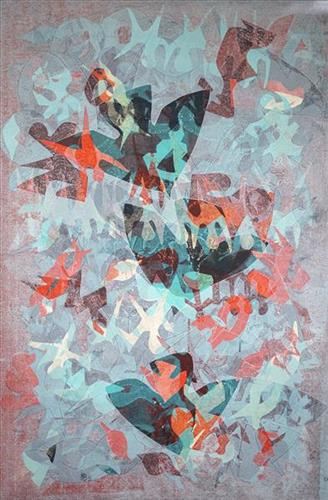
Uncovering our strengths & passion.

By unraveling our lives, we can discover hidden stregths, talents, and passions that may have been suppressed or overlooked. 

Art Centre notes: Image size: 120cm x 80cm The artwork is a ‘pochoir’ print, or monoprint, printed on canvas. (The print covers the paper from edge to edge.)

359709482268433


Mystical Freedom

Just like a bird, ‘freedom to fly’ is not just physical marvel; it represents an embodiment of freedom in all its forms. A breathtaking spectacle that captivates our imagination and encourages us to soar beyond our own limitations. 


Art Centre notes: Image size: 120cm x 80cm The artwork is a ‘pochoir’ print, or monoprint, printed on canvas. (The print covers the paper from edge to edge.)

359709482268432


Art Centre notes: Image size: 120cm x 80cm The artwork is a ‘pochoir’ print, or monoprint, printed on canvas. (The print covers the paper from edge to edge.)

115682268431


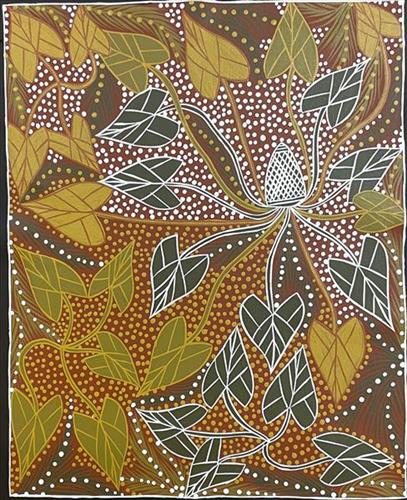
Dhulumburrk (Waterlily)

This painting depicts Dhulumburrk (Nymphaea violacea), a fresh waterlily. The flowers and lily pads of fresh waterlilies can be seen far and wide across the Arafura wetlands, providing coverage for many animal species including Banda (long-necked turtle) and Baru (crocodile). The flowers come in many beautiful colours, in particular a vibrant purple. 

377810582268590


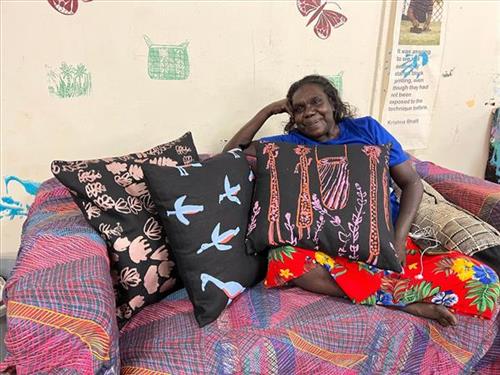
Hand Printed Cushion Cover – Single

A Bábbarra Designs Xmas special! 100% Linen hand printed cushion covers. 

The team at Bábbarra Women’s Centre have printed a range of archived screen-print designs onto 100% linen cushion covers in time for Xmas!

*Please note that your cushion covers will be selected by our team and may be different to the listed image. 

Being handmade there may be some print variations, making each item unique.

Bábbarra Women’s Centre supports the economic independence of Indigenous women in the Arnhem Land community of Maningrida, Northern Territory, Australia. Designs created by the women at Bábbarra reflect strong cultural knowledge, which is passed down to younger generations through their textile design practice.