11151030788


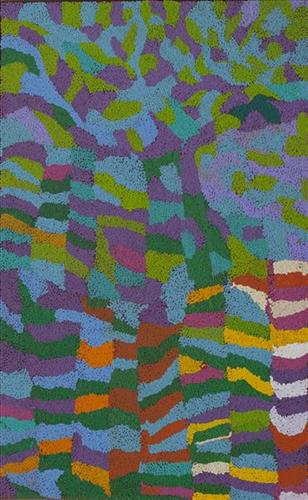
Warinki

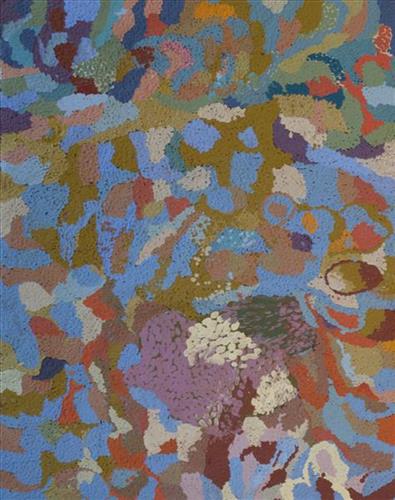
This artist primarily paints her country in the Canning Stock Route area. As a younger woman the artist lived and travelled traditionally with her family during the pujiman (bush) days. They travelled up and down the Stock Route from well 33 to well 38 and as far as Balgo. Well 33 is now known as Kunawarritji Community and is the artist’s ngurra (home).

111581425436


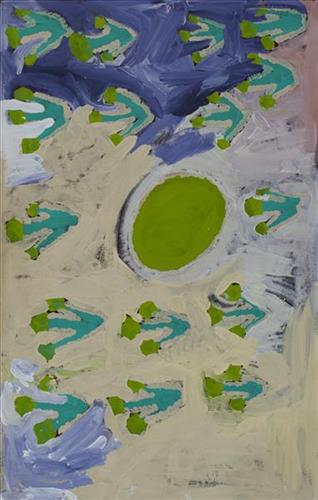
Untitled

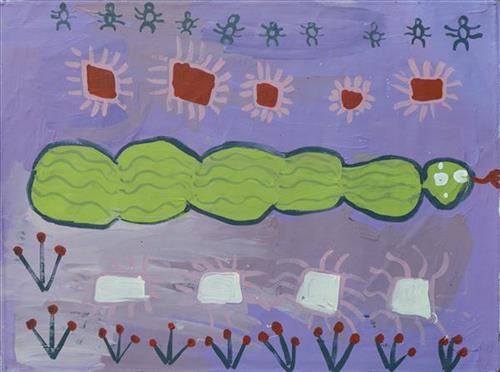
Doreen first learned to paint alongside her mother, beginning her artistic career with Martumili Artists in March 2009 when she and the other women of Punmu painted a large collaborative artwork to raise funds for the community. Doreen is now an established artist in her own right, known for her loose, uninhibited painting style. As a deaf woman, painting is an important means of communication and expression for Doreen. As a deaf woman, painting is an important means of communication and expression for Doreen.

Doreen likes to paint the comings and goings of community life- the motorcars, aeroplanes and critters that populate her homes of Warralong, Punmu and Port Hedland.

111581426517


Kunalimpi

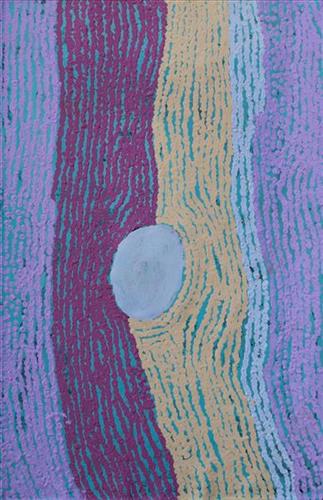
“Big water. Me and nanna walk around. Pujiman days. Nanna and me”. This painting portrays part of the artist’s country where their family lived traditionally during the pujiman (bush) days. The Martu lived very nomadically moving from water source to water source hunting and gathering bush tucker as they went. They would traverse very large distances visiting some areas in the dry and some in the wet season depending on the availability of water. As they travelled and hunted they would also burn areas of country creating a larger diversity of plant and animal life.

111581649198


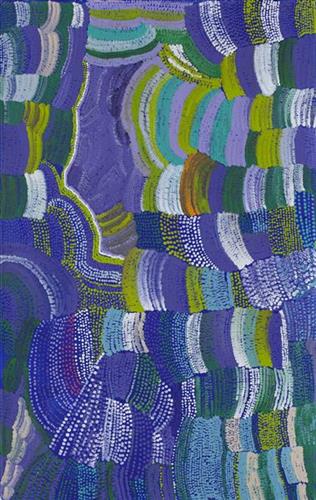
Untitled

This painting portrays physical elements of Martu Country, such as the dominant tali (sandhills), warta (trees, vegetation), and water sources. Rock holes, waterholes, soaks and springs were all extremely important sites for Martu people during the pujiman (nomadic bush) era, with many important jukurrpa (dreamtime stories) chronicling the creation of these landmarks. In the past the Martu lived nomadically, moving from water source to water source, and hunting and gathering bush tucker as they went. They would traverse very large distances annually, visiting specific areas in the dry and wet season depending on the availability of water. As they travelled and hunted they would also burn areas of country creating a larger diversity of plant and animal life.

111581649444


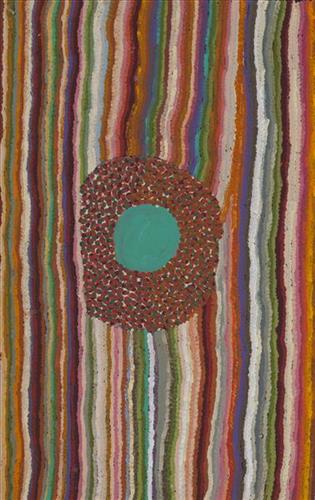
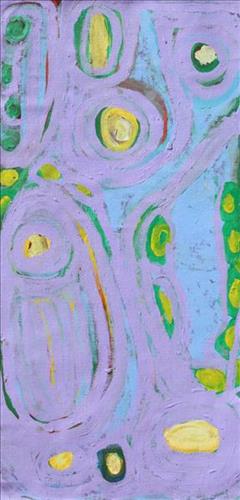
Wantili

“My ngurra (home Country), Wantili area. [Points to linear forms] Sandhill, sandhill, sandhill everywhere. Claypan there, in the middle. Good place for swimming and drinking, for hunting little kangaroo. When no water [we would] go to Well, when there rain we stay there at Wantili. Everywhere, we been walking everywhere.

Near to Wantili [there’s a] road going Kayili (North). Long time [ago] only horses and cattle [travelled along that road], going Meekatharra and back in the cold time, gone right up to Jijai Bore. Half way, when he see water at Wantili, that mob would camp one night, bullock eating all the grass and mens drinking water. One Martu been working with that mob, droving bullock. Every time he been give us meat, all the pujiman (nomadic bush dwellers).”

Wantili is dominated by claypans surrounded by tuwa (sandhills). Following rain the claypans are filled with water, with the overflow from nearby waterholes flowing to Wantili. At that time, Wantili becomes an important place for obtaining fresh water for drinking and bathing. Wantili is significant for the fact that at this site Kartujarra, Manyjilyjarra, Putujarra and Warnman people would all come together for ceremonies. Many jiwa (stones used by women for grinding seeds) from these times can still be found there today.

Wantili is an incredibly important cultural site, ‘‘where the creation started.’ The jukurrpa related to the creation at Wantili are just for Martu, but the site is open and anyone can go there. Wantili is one of the many sites featured in the epic Minyipuru (Seven Sisters) jukurrpa (dreamtime) narrative. The story follows the movement of seven sisters travelling all the way across the desert, beginning at Roebourne on the coast of Western Australia, as they are pursued by a lustful old man, Yurla. As the women travel they stop to rest at many sites to eat, dance, rest and sing, on the way leaving behind an assortment of articles that become formations in the land. The Seven Sisters rested at Wantili before throwing seeds, then continuing their journey on to Tiwa, Juntujuntu, and then onward to Pangkapini, where they finally escaped Yurla by flying into the sky to become the Pleaides constellation of stars.

111581656122


Untitled

Doreen first learned to paint alongside her mother, beginning her artistic career with Martumili Artists in March 2009 when she and the other women of Punmu painted a large collaborative artwork to raise funds for the community. Doreen is now an established artist in her own right, known for her loose, uninhibited painting style. As a deaf woman, painting is an important means of communication and expression for Doreen. As a deaf woman, painting is an important means of communication and expression for Doreen.

Doreen likes to paint the comings and goings of community life- the motorcars, aeroplanes and critters that populate her homes of Warralong, Punmu and Port Hedland.

111581833308


Untitled

This painting depicts the artist’s Country, where she and her sisters and fellow artists May Wokka Chapman and Nyanjilpayi Nancy Chapman lived and camped as children. Mulyatingki and her family walked extensively through this area with their extended family during pujiman (traditional, desert-dwelling) times.

359709482284659


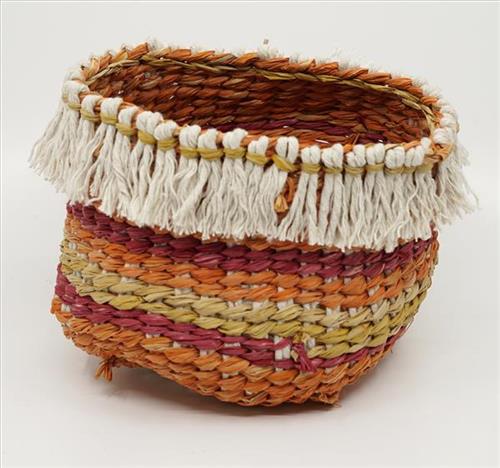
Guy coconut basket

Guy coconut is a coconut that stains your hands from the skin to the juices until you get to the hard shell. Guy coconut also holds plenty of good drinking water which is good to drink on hot days.

Art Centre notes: The basket is made of natural raffia / cotton. It is made using a traditional ‘one twist’ method. The dyes are commercial and colour fast.

359709482284657


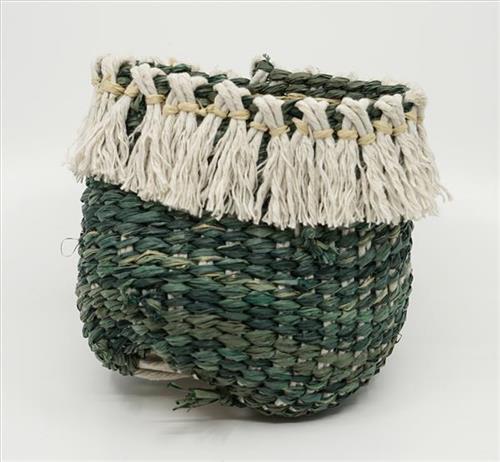
Hillside Basket

This basket is called hillside basket because of the lovely dark green colours and other dark shades of green/black and blue mixed well, it kinda looks like a land scape of hill side on the afternoon time.

Art Centre notes: The basket is made of natural raffia / cotton. It is made using a traditional ‘one twist’ method. The dyes are commercial and colour fast.