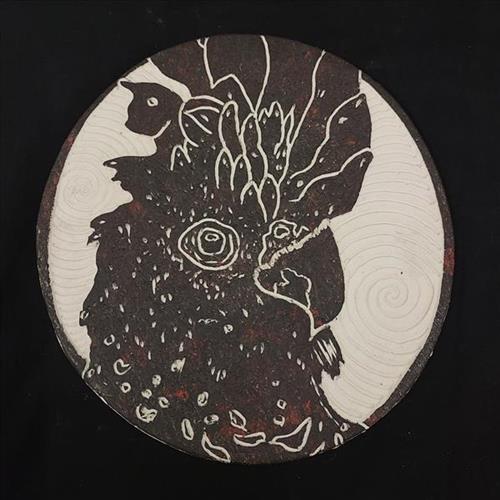
Kadanji (Black Cockatoo)
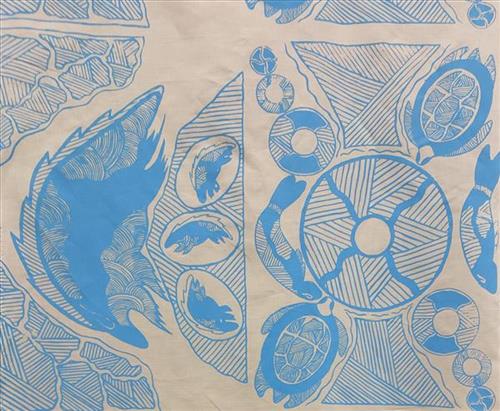
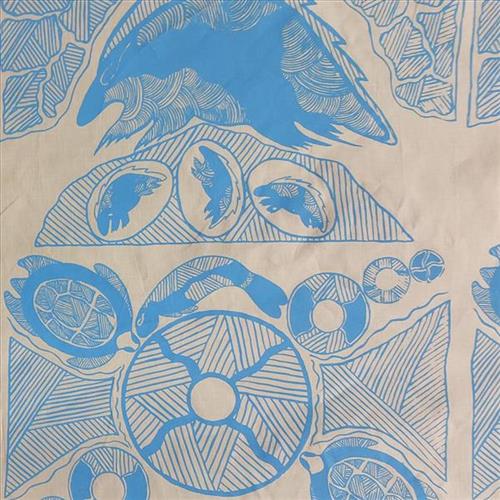
Kadanji (Black Cockatoo) is my mother’s mother’s totem from the Kuku Nyungkul clan. This totem is passed down generation after generation to your newborns.
Kadanji (Black Cockatoo) is my mother’s mother’s totem from the Kuku Nyungkul clan. This totem is passed down generation after generation to your newborns.

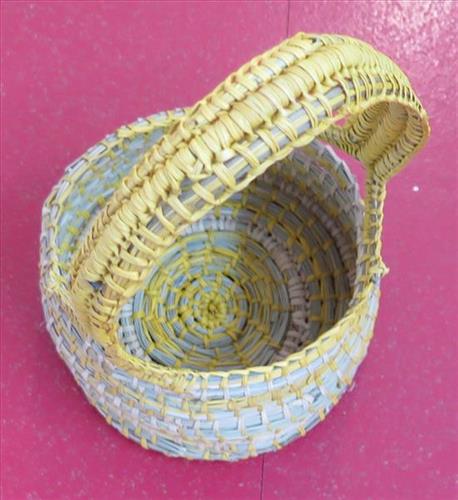
Fibre Art is an ancient Aboriginal women’s craft that is still made today using the same techniques as their ancestors. Making fibre art is labour intensive and much care and fine needlework is required to ensure the finished object is both functional and beautiful. Fibre art from the Ghunmarn Culture Centre includes dilly bags, floor mats, bush fans, woven creatures found in the landscape, plants such as yams (bush potato), baskets, place mats, and spirit figures such as mermaids and Mukuy’s. Natural pandanus fibre (Mukarra), is used to make much of the fibre art produced by the artists of Djilpin Arts. Women collect the pandaus by pulling from the top of the pandanus tree, then stripping and drying the leaves before they are dyed with natural bush colour collected from the Beswick surrounds.

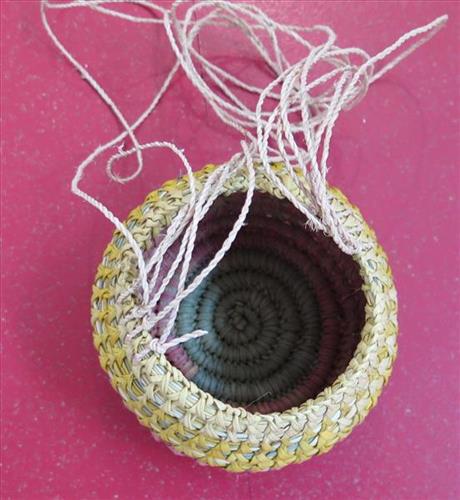
Fibre Art is an ancient Aboriginal women’s craft that is still made today using the same techniques as their ancestors. Making fibre art is labour intensive and much care and fine needlework is required to ensure the finished object is both functional and beautiful. Fibre art from the Ghunmarn Culture Centre includes dilly bags, floor mats, bush fans, woven creatures found in the landscape, plants such as yams (bush potato), baskets, place mats, and spirit figures such as mermaids and Mukuy’s. Natural pandanus fibre (Mukarra), is used to make much of the fibre art produced by the artists of Djilpin Arts. Women collect the pandaus by pulling from the top of the pandanus tree, then stripping and drying the leaves before they are dyed with natural bush colour collected from the Beswick surrounds.
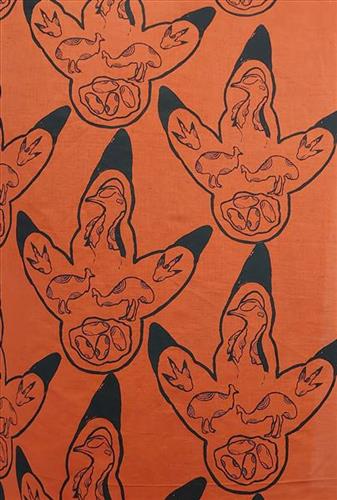
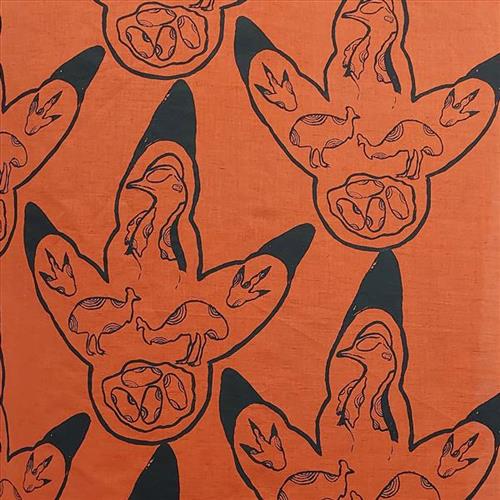
The cassowary is my totem. My mother’s sister handed it down to me when I was a young boy. I perform the cassowary dance in public ceremonies. As a young men, I was part of the Yalanji Dance group and was invited to Hong Kong to perform our traditional dance cycles including the cassowary dance.
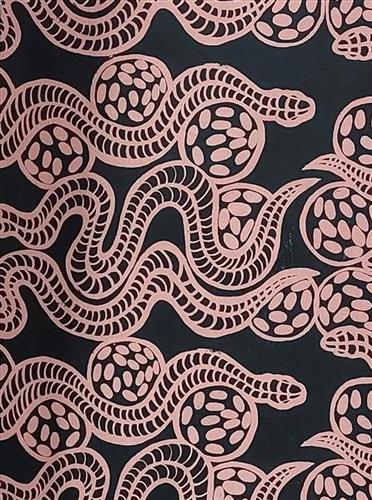
The carpet snake used to be an important food animal for our ancestors. They wrapped the meat in native ginger leaves and cooked it on the hot coals of the ground oven. They also used the skin to make head bands or skillfully sewed blankets to keep the families warm and dry at night.
The carpet snake also has spiritual significance for me. I inherited the carpet snake Totem and related cultural knowledge from my father’s side. According to our Kuku Yalanji creation stories, the carpet snake was an Ancestral Being that travelled in its human form across the country creating waterways wherever it went, including on my father’s clan lands.
In my upbringing I was taught to respect our elders who prepared me for my future role as carrier of cultural knowledge and spiritual traditions. I was also taught the values of taking responsibility for caring for our traditional clan country and help maintain it for the younger generations so they can become strong leaders.
Art is my way of keeping the cultural knowledge of my ancestors alive and passing it down to my children and grandchildren. Sharing this body of knowledge creates strong family ties and gives me my strength.
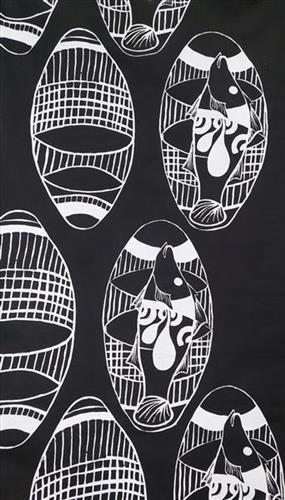
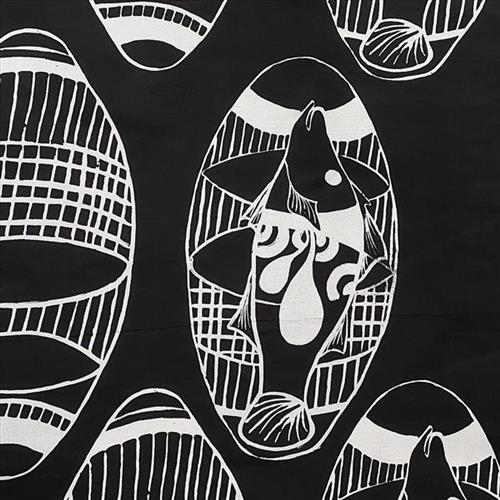
Our fish traps were only made by Yalanji men. They used lawyer cane vines. Often they place d the fish trap in the middle of the river over
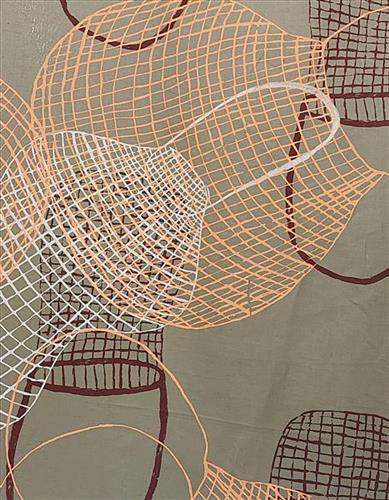
Dillybags played a vital part in Kuku Yalanji culture. Women used them to carry food when out hunting and gathering or soak bitter yams in creeks before cooking them. Dillybags were also used to hold personal and sacred items.
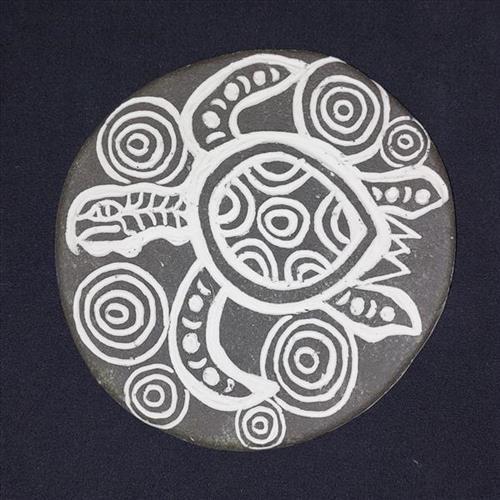
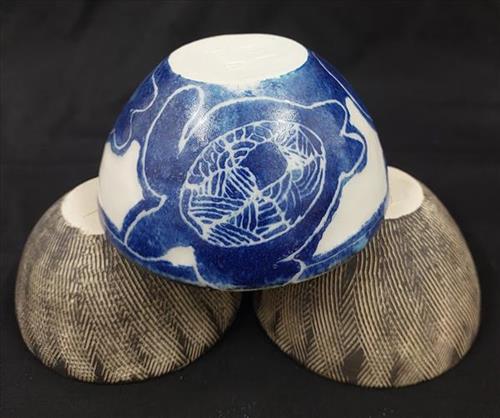
In the past, sea turtles were an important food source for Kuku Yalanji people. Only men were allowed to hunt them. The men were also responsible for cooking them in a ground oven and distributing the meat to all the families.
We ate turtle meat on special occasions such as the birth of a new born baby and during funeral ceremonies.
Our ancestors used the shell of sea turtles carrying, storing and serving food as well as making damper.