111982304730


Wak Wak

This painting depicts a sacred site at ‘Kurrurldul’, an outstation south of Maningrida.

The ‘rarrk’, or abstract crosshatching, on this work represents the design for the crow totem ancestor called ‘Djimarr’. Today this being exists in the form of a rock, which is permanently submerged at the bottom of Kurrurldul Creek. The ‘Djimarr’ rock in the stream at Kurrurldul is said to move around and call out in a soft hooting tone at night. Both the stone itself and the area around it are considered sacred.

The imagery represents the rock mentioned above at the bottom of Kurrurldul creek, which is the final transmutation of the dreaming ancestor ‘Djimarr’. Finally, the pattern used here is also the crow design used in the sacred ‘Mardayin’ ceremony, which is a large regional patri-moiety ceremony now rarely conducted in central and eastern Arnhem Land.
111982304729


Wak Wak

This painting depicts a sacred site at ‘Kurrurldul’, an outstation south of Maningrida.

The ‘rarrk’, or abstract crosshatching, on this work represents the design for the crow totem ancestor called ‘Djimarr’. Today this being exists in the form of a rock, which is permanently submerged at the bottom of Kurrurldul Creek. The ‘Djimarr’ rock in the stream at Kurrurldul is said to move around and call out in a soft hooting tone at night. Both the stone itself and the area around it are considered sacred.

The imagery represents the rock mentioned above at the bottom of Kurrurldul creek, which is the final transmutation of the dreaming ancestor ‘Djimarr’. Finally, the pattern used here is also the crow design used in the sacred ‘Mardayin’ ceremony, which is a large regional patri-moiety ceremony now rarely conducted in central and eastern Arnhem Land.
111982304728


Kun-madj – large dillybag vine

Kun-madj, or dilly bag, is a large woven collecting basket. These large bags are often made from the vine ‘Malasia scandens’, a strong pliable plant which grows along the floor and into the canopy of monsoon vine thickets. The bags are used to collect any kind of large numbers of heavy foods such as fish caught in conical fish traps or large collections of yams.

They can also be made from Pandanus spiralis, a plant which grows in many areas of Arnhem Land. These dilly bags are a tightly woven collecting basket, very finely made. These dilly bags are often used to collect sugarbag, the native honey

As well as being of practical use, dilly bags are also of religious significance to Arnhem Land people. Dilly bags are said to be totemic objects and associated with particular sites in the landscape.

11564004768


Status: Stock


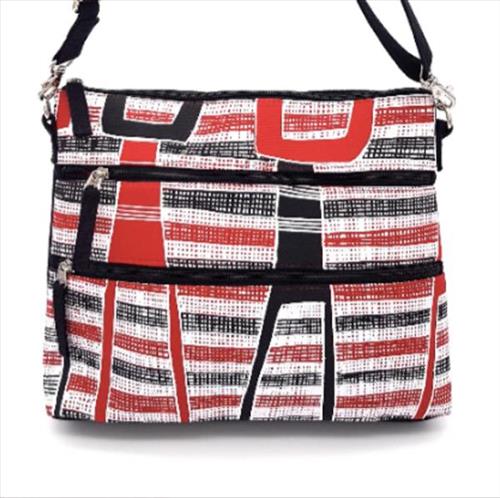
Charlotte crossbody bag

Features:

  • Fully lined
  • Zip closure
  • Adjustable strap
  • Can be worn on the shoulder or cross body
  • Two front, external zipper pockets
  • Internal zip pocket
  • Two internal pockets

FABRIC ARTWORK

This product was screenprinted by Yolŋu art workers at Bula’Bula Arts. We print small batches of tea towels, tshirts and fabric lengths by hand because we love putting Yolŋu designs on everyday items – especially ones that balanda (non-Yolŋu) use! Due to the lovely handmade nature of this product, print quality may vary.

 Available in four fabric designs and multiple colourways:

  • Dawurrmonuk (itchy caterpillar) by Evonne Gayuwrri
  • Lidjilidji (Crimson Finch) by Andrew Wanamilil
  • Lorrpu (Sulphur-crested Cockatoo) by Peter Gambung
  • Ngambi (limestone) spear by Shannon Ashley

Manymak (very good)! Buying Bula’Bula Arts products helps us build a sustainable income source for our 150 artists and artworkers from Ramingining and surrounding outstations.


WORKING WITH FLYING FOX FABRICS 

We work with Flying Fox Fabrics, a small social enterprise based in Darwin. Flying Fox Fabrics, make and sell accessories, clothing and homewares from fabrics designed by Aboriginal artists which have been hand printed in Australia. They work in partnership with Aboriginal artists and fair trade organisations in Cambodia that train and employ disabled artisans.

222082304450


Mapping

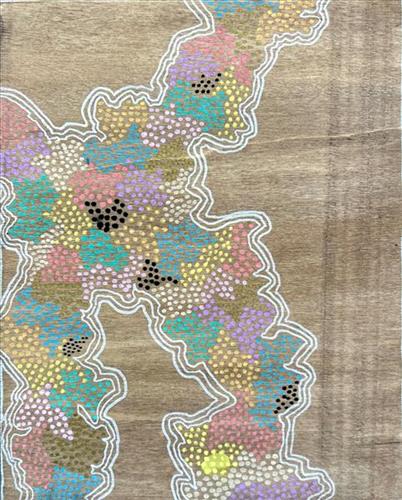
This painting represents ‘mapping’ of land. The different coloured dots represent different native floral and fauna of each land. I took inspiration from old maps that have lines around the land. The white line work around the dots helped give depth and outline where the water and lad hits. My painting aims to show the beauty of different places and how important it is to protect and keep native flora and fauna. 

222082304449


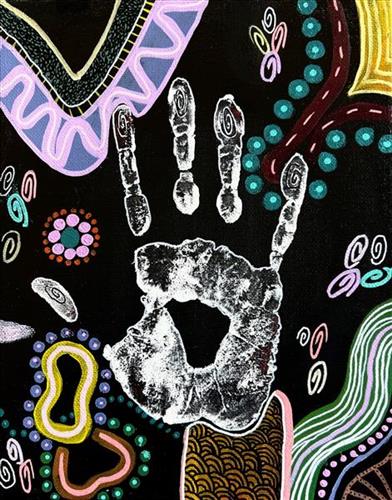
Chaos

This painting represents the ‘chaos’ in peoples lives but also your ability to make a mark. In this artwork I have used acrylic paint and paint pens to add colour, create shapes and fill the black background to outline the feeling of ‘chaos’. The central focus of this piece is the hand print representing a person’s life, each finger has a finger print, prints that you can find scattered all over the canvas to represent everything that a person touches or works on leaves a mark, good or bad. I would like the audience to understand that actions leave marks, and that people should act in a way that leaves a good mark and not a bad one. 

222082304448


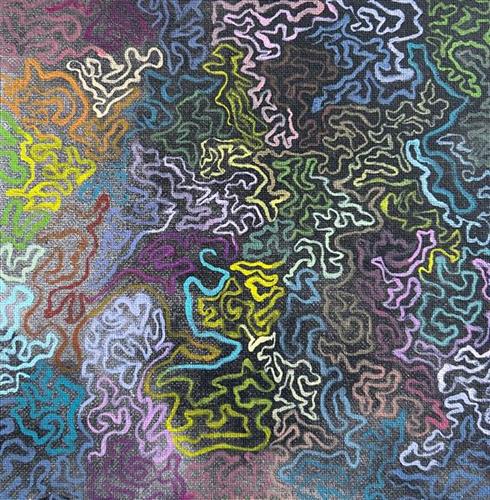
Trails

This painting represents someone’s walk or ‘trail’ through life. This artworks is made from one line with one start and one end mirroring a person’s life. Each change in colour along the line represents different fazes people go through in people’s lives. I would like this painting to show people that life isn’t just a straight line, that there is always shifts in peoples lives and that it is normal to go through different fazes to find yourself.

222082304447


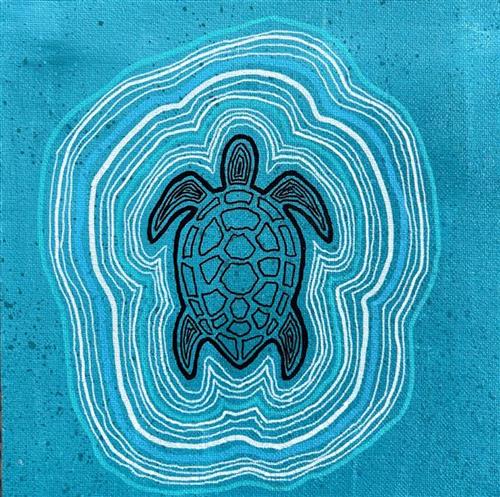
Ripples

This painting represents the ripples we make and the impact we have on the world around us with every decision that we make. To make this piece I used acrylic paint and splatter techniques to add depth and give the illusion of air bubbles in the ocean. I then used paint pens to outline the figure of a sea turtle. I used line work to represent ripples in the water made from the movements of the turtle. My intention is for viewers of my art to see the effect of your actions and how everything you do affects the things and people around you. 

111982304513


Gomarla (Egret bird)

The artist has carved the ‘Gomarla’, which in the Burarra word for Egret. This bird is native to the country of Yilan, which is the coastal region North West of Maningrida Community. 

People use feathers from gomarla to make ceremonial regalia for Yirrichinga. Many Yirrichinga groups own manikay ‘song’ for gomarla.

Gomarla mun-baparrurr Gopungorra. Jin-gubatbatcha jin-banga jiny-yorkiya. Gomarla waykin makukuya mu-guyinda.

The egret belongs to the Gopungorra clan. It always eats grasshoppers. The egret is high in a nest (builds its nest in the tree).

111982304511


Gomarla (Egret bird)

The artist has carved the ‘Gomarla’, which in the Burarra word for Egret. This bird is native to the country of Yilan, which is the coastal region North West of Maningrida Community. 

People use feathers from gomarla to make ceremonial regalia for Yirrichinga. Many Yirrichinga groups own manikay ‘song’ for gomarla.

Gomarla mun-baparrurr Gopungorra. Jin-gubatbatcha jin-banga jiny-yorkiya. Gomarla waykin makukuya mu-guyinda.

The egret belongs to the Gopungorra clan. It always eats grasshoppers. The egret is high in a nest (builds its nest in the tree).