377810582308375


Lorrkkon

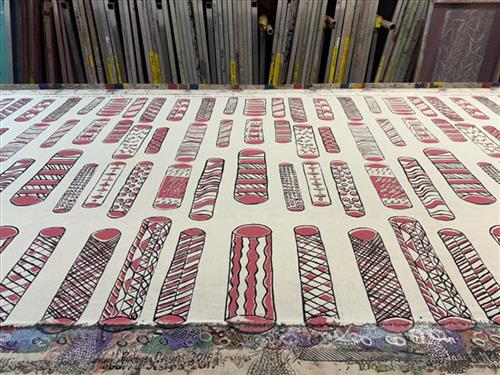
Marilyn’s first screen print design depicts the story of lorrkkon (hollow funeral logs). This the story of her great, great grandfather and grandmother who were bark painters, as well as also sacred lorrkkon painters.

When designing this screen print, Marilyn was remembering her childhood living in a small house on Liverpool river Ngar-wunja (Thompson hole) with other families.

Through the painting process, Marilyn remembered and relived the times when people still lived permanently on remote homelands, living off the land before balanda (non-indigenous people) arrived.

Marilyn recalls “it makes me think back, we did lots of things, some people was hunting, some was weaving, some was painting barks and lorrkkon. As my great, great grandfather and grandmother was painters, I painted this my story for them.”
10753999599


Status: Stock


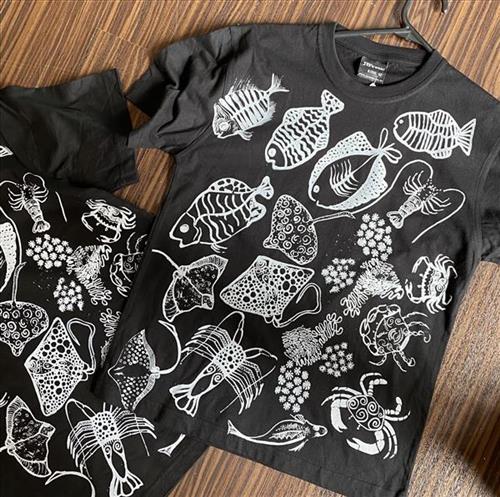
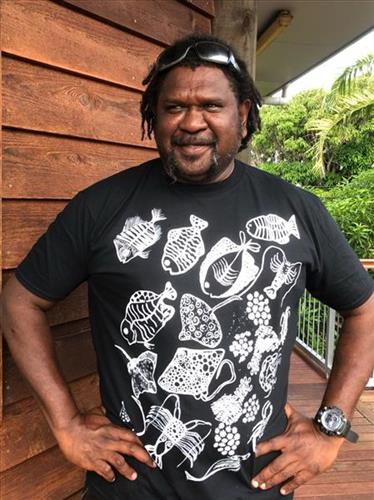
Sea Life T-shirt (Unisex)

100% cotton, preshrunk, soft style, set in sleeve.

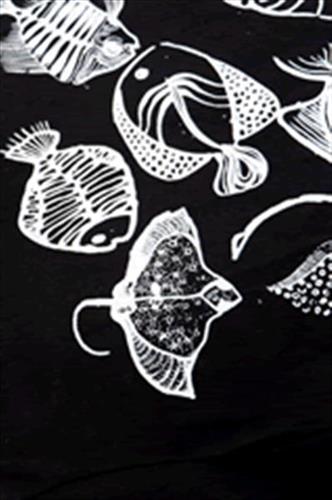
A collaborative design, worked in ink by the artists from ghost net art pieces and hand screen printed in the Erub studio. Any inconsistencies are an inherent quality of a handmade product and should be treated with care and treasured.

Debi Ari – Good Times!

115682301260


Warrnyu Dhawu (Flying Fox Story)

Back in the Creation time, Warrnyu (Flying Foxes) once lived, like men, in the cave at the place called Kurrki Warrnyu Yirri Djaringal (they also lived in caves called Wadatilmurr & Gurngurmirrngu). Warrnyu lived in these caves for many years and then one day Djanyarr (The Dog), an ancestral being in the form of a man, came along. He was looking around for a place to live. Djanyarr heard the sound of a Flying Fox screaming. He went down to the cliff and pushed the rock and the water came out at the Ganalbingu place called Gurrkawakarrmurr. He then went into the cave and into the sacred hole, frightening all the Flying Fox away. When he went into the hole he left his dilly bag in the tree and went out on the other side of the sacred cave and leaving his spear and woomera. He sat there for a long time. The Dog made three streams and the water went inside the cave. Two of these streams are good drinking water. In the middle it is a sacred water. No-one drinks from the middle of the stream. Children, men, women, young boys or girls are not allowed to drink from the middle of the stream. If they drink the water from the middle of the stream they will go grey too early.

At Kurrki Warrnyu Yirri Ngilaya Djaringal, the Flying Fox made himself into a young man… that’s what Aboriginal people do today. They have ceremonies and dances to make the young boys into men. The songs are called Yirrarwu, Gulumu, Rruburra and Burryun. Dhapi (initiation ceremony) happen today because the Warrnyu (Flying Fox) people performed them a long time ago before the Yolgnu people. It was the Warrnyu people who first performed circumcision of the young boys to make them into men. It all happened at Kurrki Warrnyu Yirri Ngilaya Djaringal, this is how this place got its name.

Leaving behind the cave at Kurrki Warrnyu Yirri Djaringal, the Dog travelled west across the Arafura Swamp and came to Djalkulmurr (Mount Delight). From there he travelled north and came to Dunganda (a hill situated a few kilometres east of Ramingining). There he met a female Dog, then they both headed north and came to a place called Garanydjirrmurr where they spoke the Mildjingi language. From Garanydjirrmurr they changed their direction and went west through Guliny’barra, Burgumara and onto the plains. When they reached the plains they smelled something cooking, way up in the north – at Wessel Islands. The aroma they smelt was so enticing that they decided to go there. Lungurrma (the north-east wind) was carrying the smell. One Dog headed north again, but the other Dog decided not to go with him and went back the opposite way. The first Dog that went to Malwanatharra (Sandy Point) went into the sea following its nose to wherever the smell was coming from. It is believed that this Dog still lives in the sea…

115682302984


Baru Dhawu (Crocodile Story)

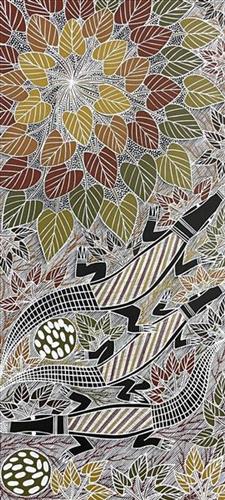
Baru (the crocodile man), was from the Gumatj clan. People usually call him Gurdu Gurdu or Baru which means crocodile. He lived his life at a place called Yirrkala. Living near him were other people, and when Baru didn’t have enough to eat he began to kill and eat these other people. After a while others noticed that some people were missing. When Baru went to the toilet, the people could smell this strong smell, so they knew that he ate the other people. Some men went to get help and they took message sticks to the other tribes. Some were sending smoke signals. When they came to Baru’s camp they started to spear him in the left side of his ribs. He dropped into the fire and burnt his left hand and maybe his right hand. He then ran into the bush and yelled to his countrymen – the animals, birds and fish that live on the land and in the sea. He stopped and he named the tribes and clans and also the places until he came to a place called Gamarru/Guyurru. There he took a rest and said to himself “This is where I stop and call this place Gamarru/Guyurru”. Baru, still in pain from the fire, then jumped into the water and turned himself into a crocodile. The fire left scars on his back. Baru paintings belong to Gumatj and Warrawarra and also the Marpi clan. This painting is used at death ceremonies or initiations and it normally is painted on the belly, which means the person the design is painted on is part of Gurdu Gurdu (the crocodile people).

115682303237


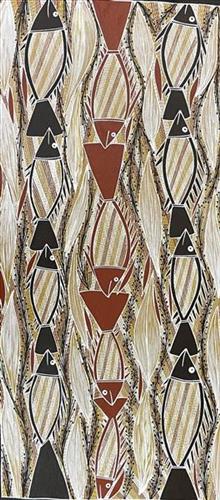
JB Fisher – Wuldulbal/badju (bream)

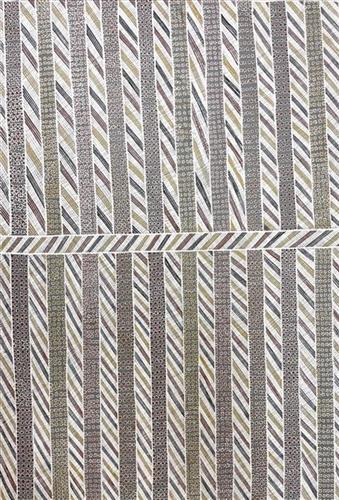
JB paints stories from his Dhuwa homeland in northeast Arnhem Land. Stories are passed on either paternally or maternally, and JB would have learnt these stories from his ancestors. The cross-hatching style is a traditional painting style of this area and can represent elements such as water, air and wind.

JB’s paintings often feature totemic animals of the fresh waters of north east Arnhem Land.

115682308234


Woven Mat

Traditionally, Nganiyal (conical mats) were used as an insect screen when erected, and as a sitting mat when folded. They are used in Ceremony as well as a functional item. 

Nowadays, artists weave many different shapes including flat, round and oblong. 

10754003239


Status: Stock


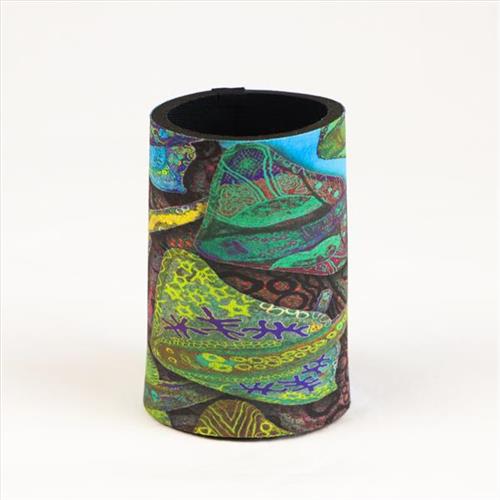
Stubby Cooler

Classic stubby can holder manufactured from 5mm genuine neoprene, will hold most drink cans. Prevents cold, wet hands as well as keeping drinks cool.

RAYS Merch

Erub Arts has been working with ghost net since 2010. From a practical beginning in creating bags, Erub Arts are now recognised for large-scale collaborative installations featuring marine animals that are found on reefs and in deep water which surrounds Erub. In 2022, Erub Arts artists were involved in the creation of eleven rays for Mermer Waiskeder: Stories of the Moving Tide, a vibrant fever of hand-stiched eagle rays installed to hang in the canopy of Exchange Square, Barangaroo in Sydney. The incredible large-scale public art installation was commissioned by Lendlease and created in collaboration with Ghost Net Collective. To celebrate this huge project, Erub Arts produced a range of ‘RAYS’ merchandise including fishing shirts, drink bottles, stubby holders and more.


10754003099


Status: Stock


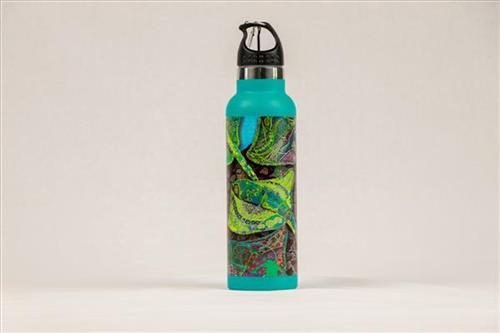
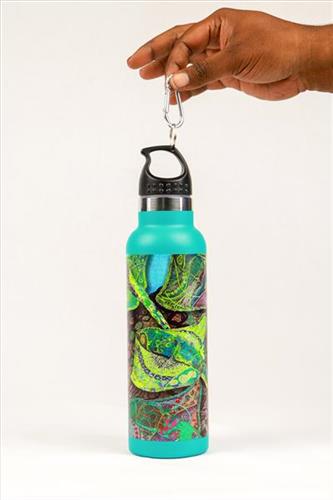
Vacuum Drink Bottle

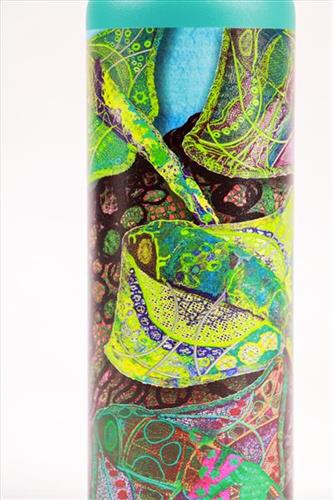
Vacuum insulated double walled 650mm drink bottle for hot and cold drinks. Lightweight and compact, this bottle keeps either hot or cold for hours.  Beautifully designed by Erub artists. A traditional hymn is printed tastefully within the design conveying how the gospel spread across the Torres Strait. Complete with secure screw top and handy carabineer clip, comes packaged in black gift box.   

RAYS Merch

Erub Arts has been working with ghost net since 2010. From a practical beginning in creating bags, Erub Arts are now recognised for large-scale collaborative installations featuring marine animals that are found on reefs and in deep water which surrounds Erub. In 2022, Erub Arts artists were involved in the creation of eleven rays for Mermer Waiskeder: Stories of the Moving Tide, a vibrant fever of hand-stiched eagle rays installed to hang in the canopy of Exchange Square, Barangaroo in Sydney. The incredible large-scale public art installation was commissioned by Lendlease and created in collaboration with Ghost Net Collective. To celebrate this huge project, Erub Arts produced a range of ‘RAYS’ merchandise including fishing shirts, drink bottles, stubby holders and more.


10754003007


Status: Stock


Switch (unisex, one size)

DESIGNS

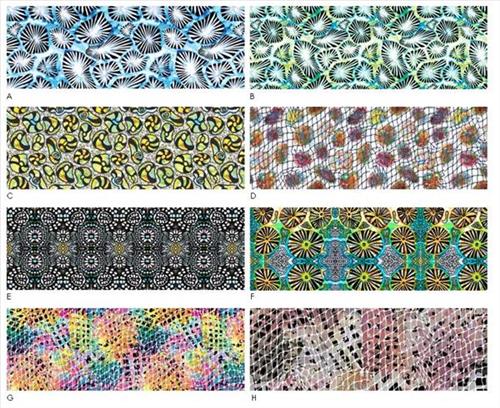
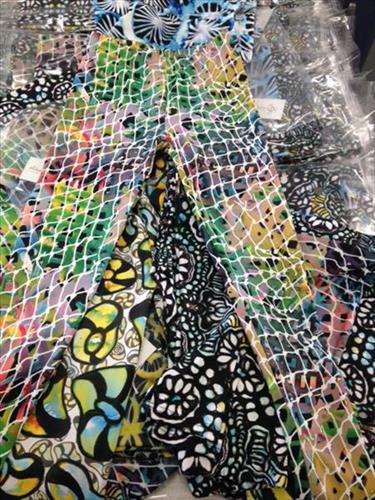
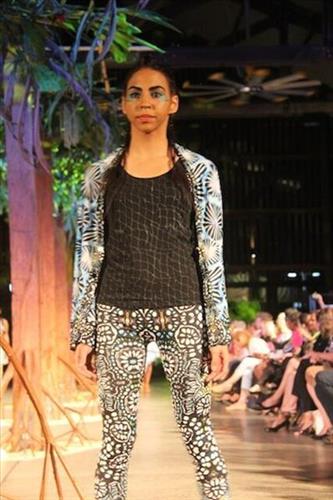
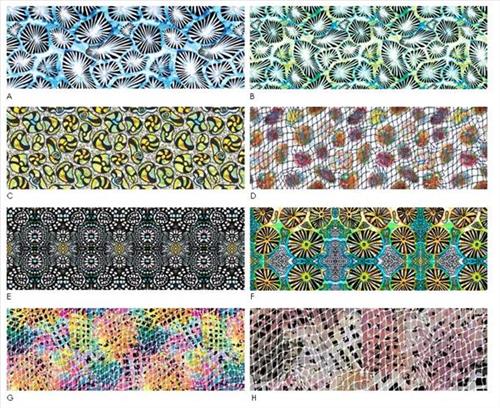
Our leggings are available in the following designs (see photo ref for details).

A & B: Bonau by Jimmy K Thaiday
C: Weswes by Ellarose Savage
D: Anemone by Milla Anson
E: Coral Garden by Lavinia Ketchell
F: Aper Weswes by Florence Gutchen
G, H: Reef Net by Lorenzo Ketchell

10754003006


Status: Stock


Leggings (unisex)


DESIGNS

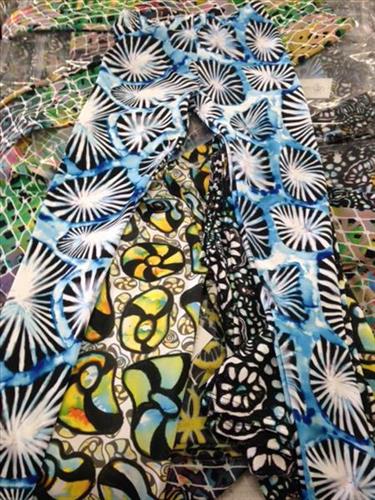
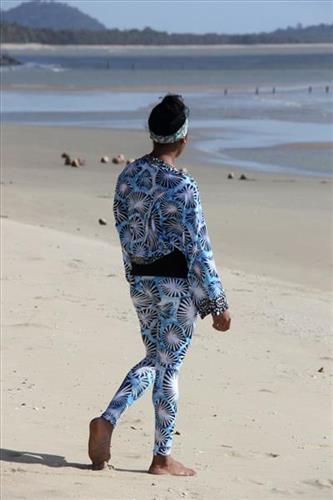
Our leggings are available in the following designs (see photo ref for details).

A & B: Bonau by Jimmy K Thaiday
C: Weswes by Ellarose Savage
D: Anemone by Milla Anson
E: Coral Garden by Lavinia Ketchell
F: Aper Weswes by Florence Gutchen
G, H: Reef Net by Lorenzo Ketchell