Stories by Campfire
Our people love to sit around a campfire telling stories told and handed down from mainly the elders.
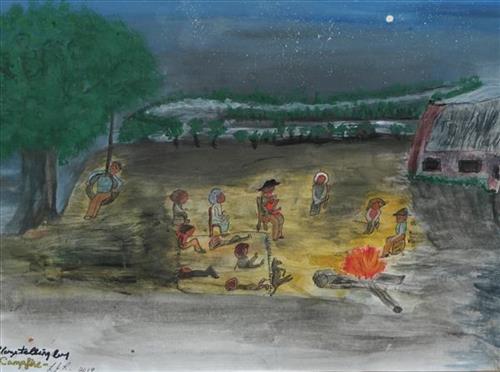
Our people love to sit around a campfire telling stories told and handed down from mainly the elders.
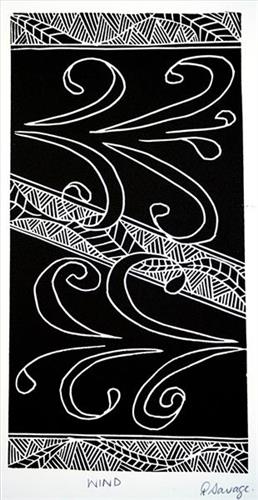
This print is based on certain days that are good to travel into Thursday Island before this big wind picks up.
Art Centre notes:
The artwork is a lino print, printed on BFK Rives paper (100% cotton rag with strong archival properties).

Yawk Yawk is the Kunwinjku term used for young women but also for special female water spirits that have fish tails. Sometimes they are described as ‘mermaids’ and are said to live in trees and in water in special places in western Arnhem Land. They are spirit guardians of a particular waterhole.
Yawk Yawk start out in a tadpole-like form and as they get older they grow fish tails. They spend most of their time in the water but when fully-grown are able to change their tails into legs and walk on land to forage for food.
They have Namarnkol (barramundi) as pets and Ngalyod (Rainbow Serpent) serves as their protector. At the end of the wet season Yawk Yawk change into dragonflies, which signifies to the Bininj (Aboriginal people) that the rains have finished.
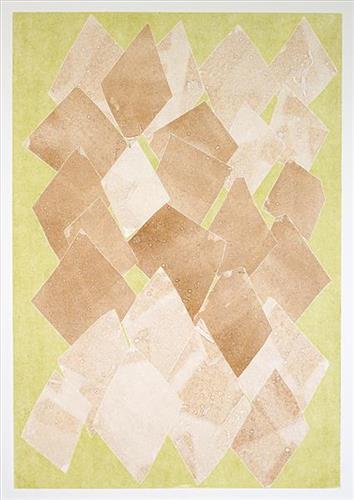
This print is based on snake scale tree snake hiding in a small area sometimes leave dried snake scale behind.
Art Centre notes: The artwork is a unique state print, or monotype, printed on BFK Rives paper (100% cotton rag with strong archival properties).
Artist: Paula Savage
Printer: Dian Darmansjah
Printed at Moa Arts 2021
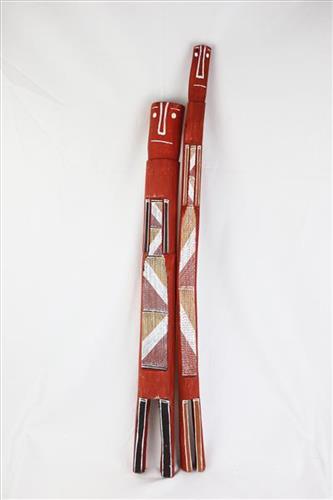
Aboriginal people of western Arnhem Land say that their Mimih rock pictures were painted not by humans but by the Mimih spirits. The drawings, usually in red ochre, show elegant, graceful stick-like human figures in action – fighting, running, dancing, leaping and hunting , preparing meat and using fire. The Mimih live in the nooks and crannies of the rocky landscape, coming out at night. They are said to be so thin and frail that they can emerge from their hiding places only when there is no wind, otherwise they would be blown away. The Mimih not only created these lively self-portraits, but also are the Dreaming ancestors who taught people to paint, hunt, dance and compose songs. They are like humans but they live in a different dimension. They were depicted during the freshwater period. The Mimih are dangerous if approached the wrong way, may kick, knee, slap, smash with a racket like object or sit on someone; which causes sometimes fatal injuries.

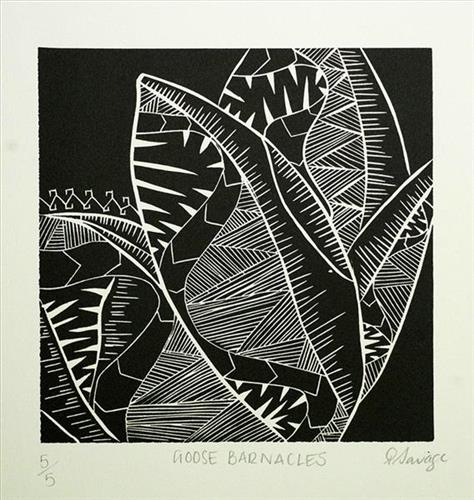
Goose barnacle also seen floating on the anything that’s in the ocean. Mostly seen on floating ropes, ghost nets, boats an jetty
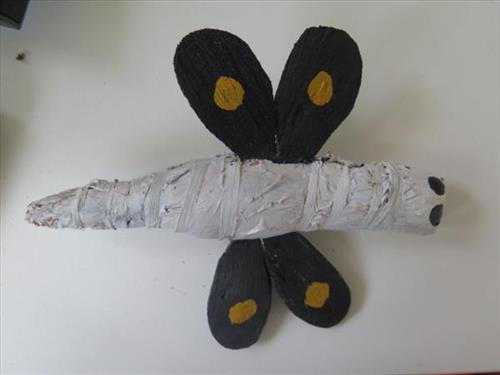
This is a MeleMele, or butterfly. Constructed from paperbark wrapped using bush string. Details such as wings are constructed from Kurrajong wood. Natural white ochre paint has been used. Black and yellow acrylic paint also used.
Djilpin Arts is a not for profit Aboriginal Corporation that promotes the maintenance, development and transmission of traditional cultural knowledge systems.
Djilpin Arts specialises in art, live cultural performance, digital media, and produced the popular performance event – the Walking With Spirits Festival as well as Concerts on Country.
Djilpin Arts operates the Ghunmarn Culture Centre – home of the Blanasi Collection and offers fine arts & crafts for sale. Djilpin Arts operates an outlet in Katherine – Shed 5, where all works are sourced from Ghunmarn Culture Centre. Ghunmarn Culture Centre is in the Wugularr (Beswick) community of South East Arnhem Land.
All artworks are made by local artists living in the community. Artwork reflects the traditional songs and stories that have been passed down through the generations with a contemporary edge. Fibre art is a special feature of Djilpin Arts as is its Gapu Series of fine art prints.
Djilpin Arts is a not for profit Aboriginal Corporation that promotes the maintenance, development and transmission of traditional cultural knowledge systems.
Djilpin Arts specialises in art, live cultural performance, digital media, and produced the popular performance event – the Walking With Spirits Festival as well as Concerts on Country.
Djilpin Arts operates the Ghunmarn Culture Centre – home of the Blanasi Collection and offers fine arts & crafts for sale. Djilpin Arts operates an outlet in Katherine – Shed 5, where all works are sourced from Ghunmarn Culture Centre. Ghunmarn Culture Centre is in the Wugularr (Beswick) community of South East Arnhem Land.
All artworks are made by local artists living in the community. Artwork reflects the traditional songs and stories that have been passed down through the generations with a contemporary edge. Fibre art is a special feature of Djilpin Arts as is its Gapu Series of fine art prints.
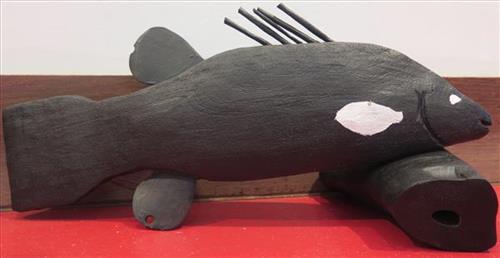
Wood carving has always been part of Aboriginal culture and Djilpin artists continue this tradition. Men carved wood for many purposes – tools for hunting or gathering food, axes and knives for building shelters, spears and clubs for protection of their lives and territory, objects for ceremony and to mark sacred sites.
Hunting implements include the boomerang, woomera and spear. The woomera is a lever which helps to increase the speed and distance the spear travels. Clapsticks are used as percussion instruments by the Songmen to accompany dancing along with the didgeridoo (mago).
As well as the more functional carvings, artists portray animals and birds in wood, and these carvings are often painted. Ceremonial carvings include spirit creatures including mukuy (devil devils) and mimi.
Some fine mimi figures have been cast in bronze.