225182235097
Yalanji Shield
225182237510
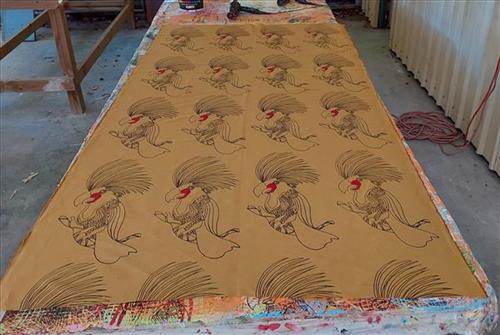
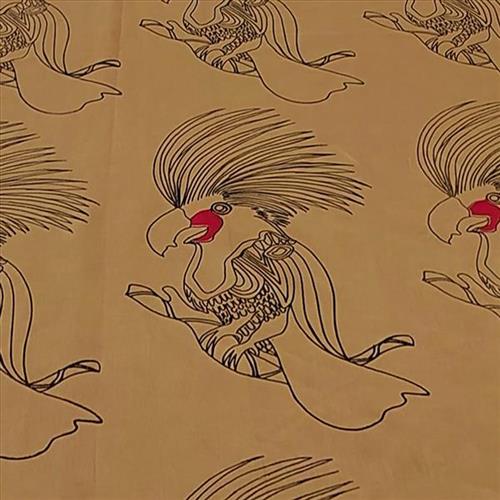
Kadanji (Palm Cockatoo)
Kadanji (Palm Cockatoo) is my family Totem. It is very important to me because it holds all the stories relating to the traditional land that was passed tdown to me and my siblings through my fathers side, grand fathers and great grand fathers side.
225182237508
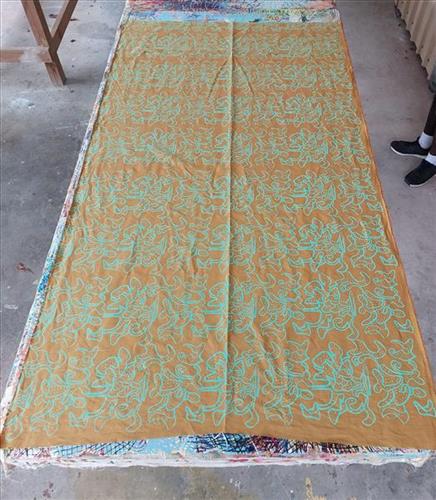
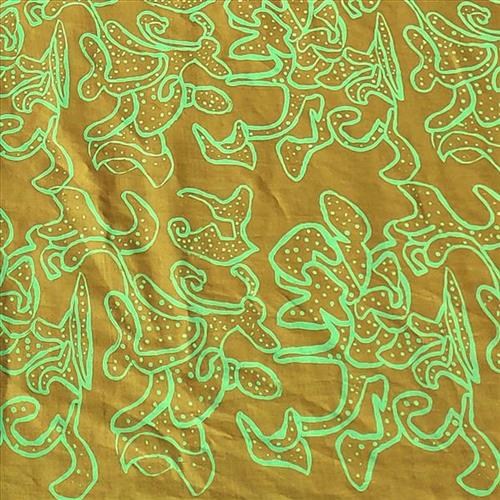
Karrangkal (Corals of the Great Barrier Reef)
Our beautiful Yalanji coastline has many places where the rainforest and the reef come very close together. The colourful corals on this fabric is a reminder of the rich ocean environments of the Great Barrier Reef that have nourished generations of our Kuku Yalanji families and culture.
This fabric helps to convey the traditional knowledge and complexe histories of how Kuku Yalanji used to live with the ocean, including the social rules and practical knowledge of how to hunt and cook various sea animals, distribute food and how to make important material cultural objects such as fish hooks, various traps etc.
225182237505
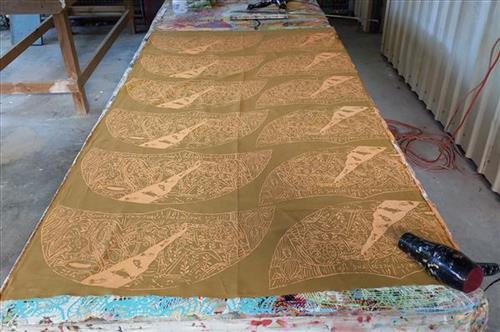
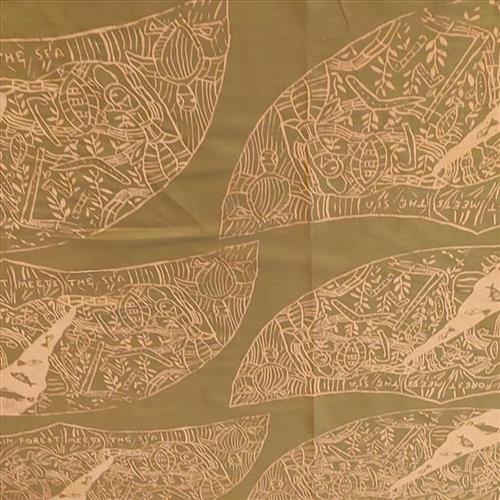
Rainforest Meets the Sea
225182237487
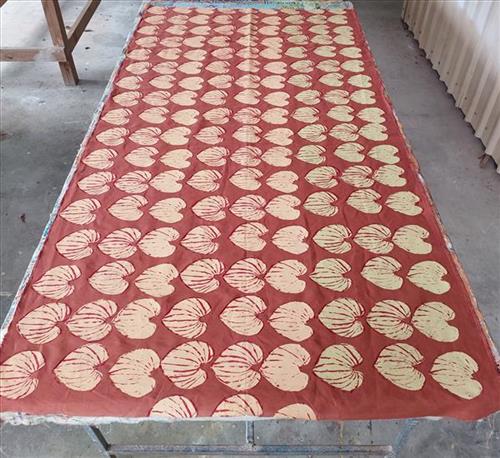
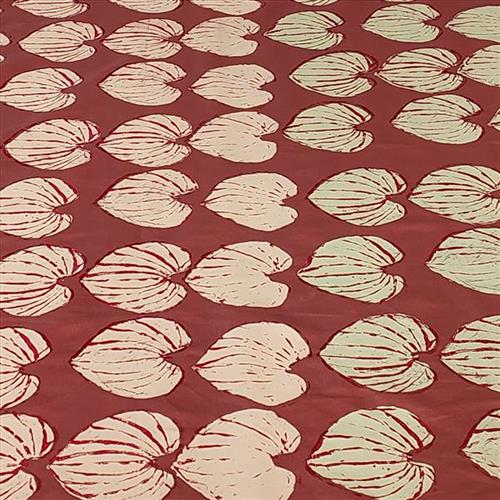
Bindi Bambayal (Yam Leaf)
This fabric shows my yam leaf design. Yams are bush tucker to all our families. We go out and dig for it when they are in season. When the leaves turn dark brown, we know that the tubers are ready for harvest. I personally like cooking yams on the coals of a camp fire.
I like drawing plants or parts of them because I work as a gardener and forester for Jabalbina, a cultural heritage body for our Kuku Yalanji Traditional Owners. We grow native plants from seeds or cuttings to help restore cleared land into a healthy rainforest.
225182237531
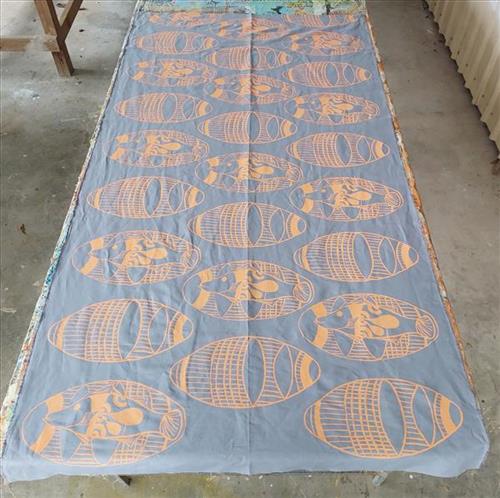
Makarr (Fish Trap)
Fish traps are called Makarr in our language. They were made by men only. Our fathers and uncles used to make them with the lawyer vine. They striped the stems and then soaked them in the river to keep them soft and bendy. They also had a special way of weaving the fish traps. They used them in the river to catch eels, jungle perch fresh water catfish and turtle. To attract fish our old people used to sprinkle rain forest berries as bait over the trap.
225182237520
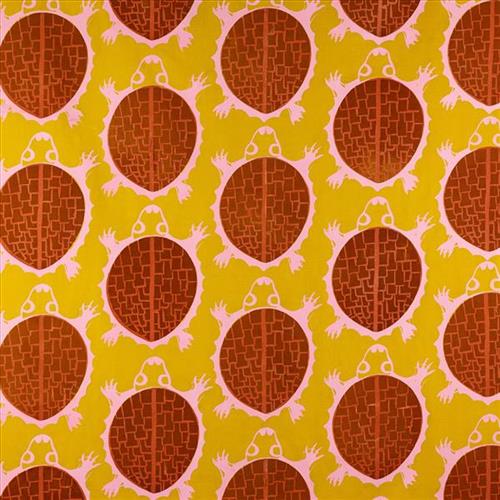
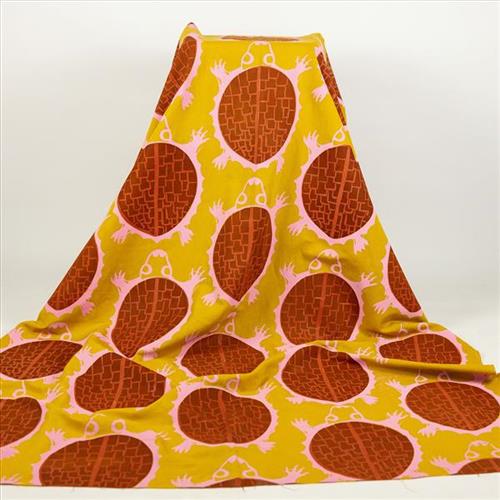
Ngujay (Freshwater Turtle)
225182237472
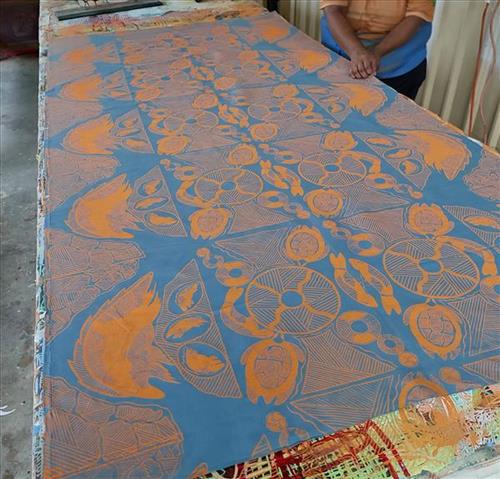
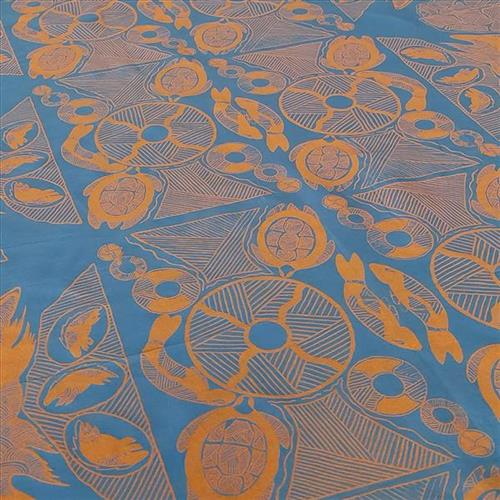
Jabu Birriny (Land and Sea)
225182237471
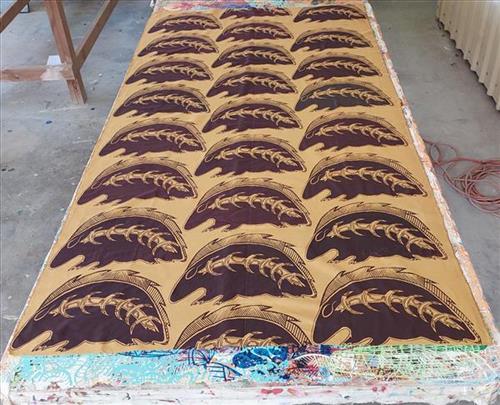
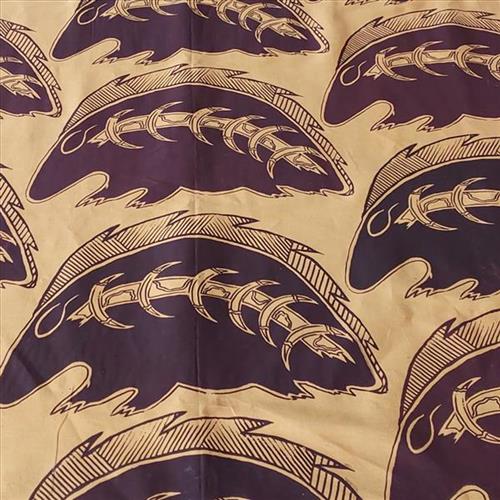
Ngangkin (Echidna)
Long time ago our ancestors used to hunt echidnas for their meat and fat. The fat was used as bush medicine. They rubbed it onto sore muscles to relieve pain.
The echidna also appears as part of a rock formation on one of the high mountains of Manjal Dimbi (Mossman Gorge). The rock formation represents a number of significant Ancestral Beings in their animal form and Kubirri, a man who came to help Kuku Yalanji when they were persecuted by the evil spirit, Wurrumbu.