Stained glass butterfly in winter
In Winter time the adult butterfly becomes dormant and hides behind the tree bark to stay warm from the Winter cold.
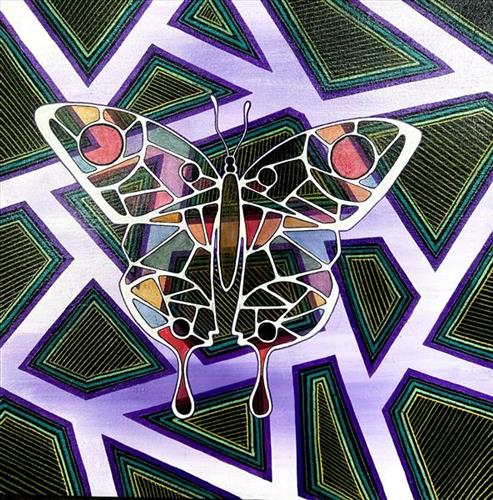
In Winter time the adult butterfly becomes dormant and hides behind the tree bark to stay warm from the Winter cold.
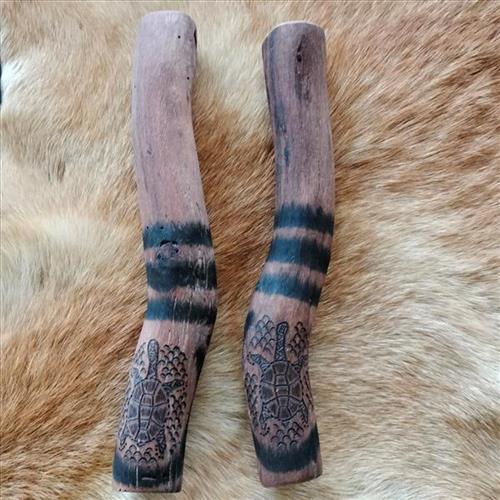
Made with red gum wood. Yorta Yorta people have more than one camp site, they have several so that they do not eat all the food in one spot.
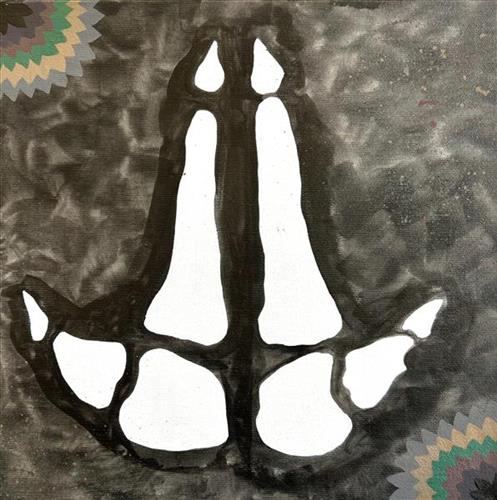
This painting is artwork one in a set of three. It expresses the importance and beauty of our native Australian animals. The name of this piece is “Kangaroo”. The central focus of this painting is the footprint of a kangaroo, this surrounded by paint splatter effect and patters made using the colours of a kangaroo representing the sun and stars. Your colours are in the sky, from sunrise to sunset. We see them in the stars as a subtle reminder… to keep the fire burning… to keep culture strong.
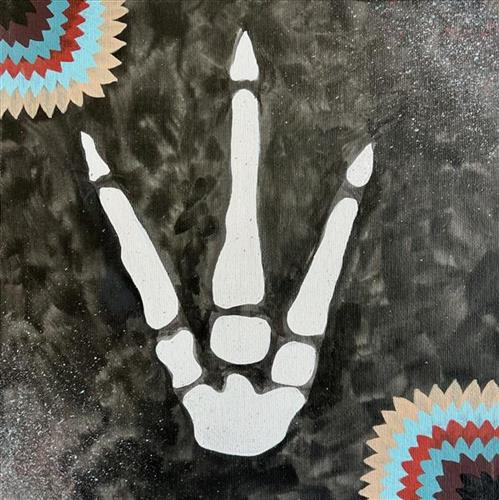
This painting is artwork one in a set of three. It expresses the importance and beauty of our native Australian animals. The name of this piece is “Gindaja” which is the name of cassowary in my traditional language Yidiny. The central focus of this painting is the footprint of a cassowary, this surrounded by paint splatter effect and patterns made using the colours of a cassowary representing the sun and stars. Your colours are in the sky, from sunrise to sunset. We see them in the stars as a subtle reminder… to keep the fire burning… to keep culture strong.
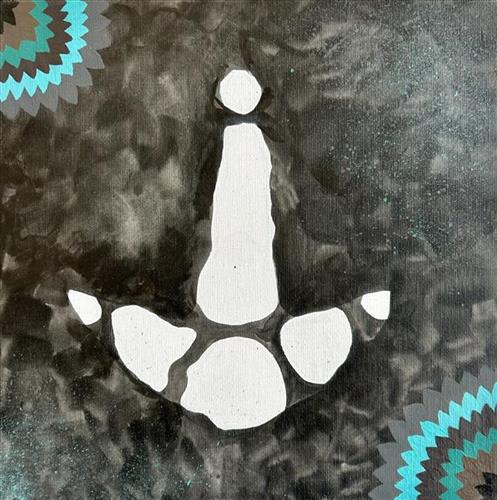
This painting is artwork one in a set of three. It expresses the importance and beauty of our native Australian animals. The name of this piece is “Emu”. The central focus of this painting is the footprint of an Emu surrounded by paint splatter effect and patters made using the colours of an Emu representing the sun and stars. Your colours are in the sky, from sunrise to sunset. We see them in the stars as a subtle reminder… to keep the fire burning… to keep culture strong.
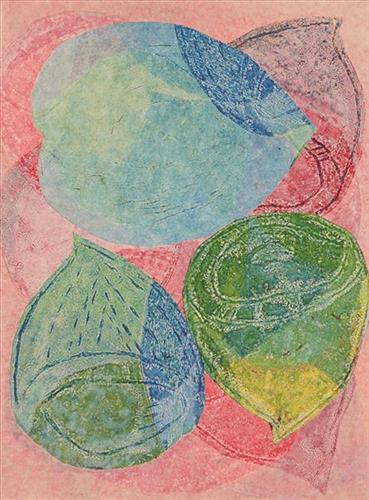
Scarppeh coconut is when we always collect coconuts to scrape for wakes (coconut oil) or used in cooking or squeezing the kaiak for its milk using a picket skin the coconut & scappeh the coconut
Art Centre notes: The artwork is a ‘pochoir’ print, or monoprint, printed on BFK Rives paper
100% cotton rag with strong archival properties.
Artist: Louisa Savage
Printer: Dian Darmansjah
Printed at: Moa Arts Studio, Feb 2024
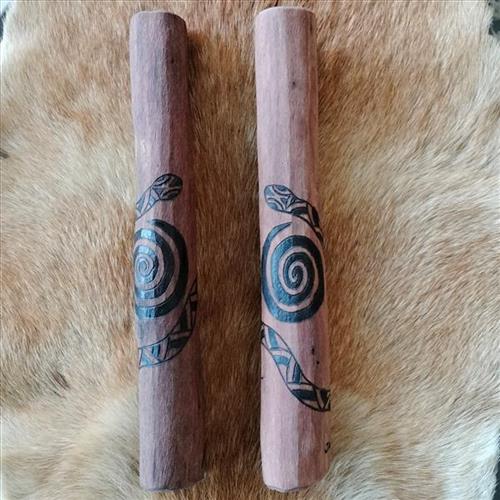
Made with red gum wood. The snake lookalike is the rainbow serpent. Yorta Yorta people believe rainbow serpent made the river, water hole, and their food as well.
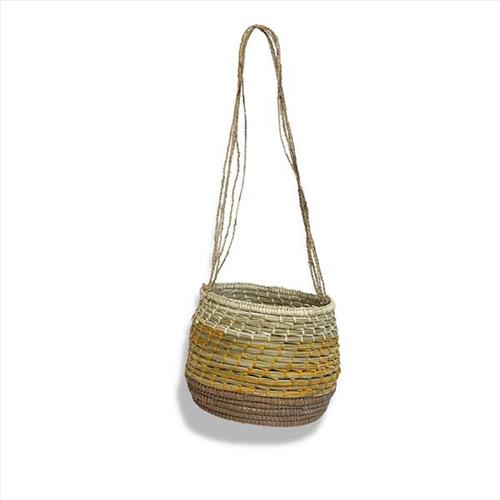
Bathi are woven from the split leaves of the Screw Palm (Pandanus Spiralis). Coil weaving was introduced to Arnhem Land in the 1930s. It was adapted from techniques used by Indigenous women throughout South East Australia.
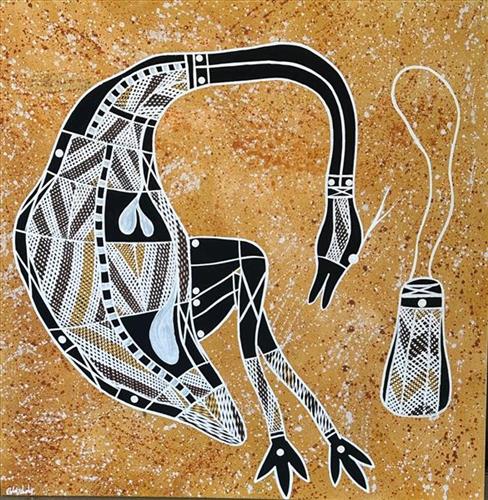
This painting represents ulupna clan group of the Yorta Yorta tribe and emu ceremony. The emu is in x-ray style traditional way and represents love and Country. The dillybag represents our knowledge, magic, and the power of our lore and spirit the old people way
This is a depiction of Ngalkunburriyaymi or Yawkyawk, the fish-women spirit. Sometimes compared to the European notion of mermaids, they exist as spiritual beings living in freshwater streams, particularly those in the stone country. These water spirits are perhaps the most enigmatic, and are usually described and depicted with the tails of fish. Thus the Kuninjku people sometime call them ngalberddjenj which literally means ‘the woman who has a tail like a fish’. They have long hair which is associated with trailing blooms of green algae (man-bak in Kuninjku) found in freshwater streams and rock pools. At times they leave their aquatic homes to walk about on dry land, particularly at night.
Aboriginal people believe that at one time all animals were humans. During the time of the creation of landscapes and plants and animals, these ancestor heroes in human form changed into their animal forms via a series of various significant events now recorded as oral mythologies. Today the Kuninjku believe that ngalkunburriyaymi are alive and well and living in freshwater sites in a number of sacred locations. The Kuninjku also believe that ‘clever’ man (magicians with mystical powers called na-kordang) may take these spirits as wives. The father of Mandarrk, a well known artist who resided in the Central Arnhem area, is said to have had such a spirit as a wife. Unfortunately, it is said, she failed one day to return from being sent to fetch water from the river, and returned to her kin. The ngalkunburriyaymi also have husbands and children of their own kind. Their sites are usually shared with the rainbow serpent ngalyod. Some have ritual importance, for example in some depictions, the yawkyawk spirit holds ceremonial string, just like the lengths of string women hold between both hands today during certain public ceremonies.
There are at least three major ngalkunburriyaymi sacred sites that are well known in the area south and south-west of Maningrida. One site Bolerrhlerr is on the Mann River at a place near Yikarrakkal Outstation where there are rugged rocky banks and clefts beneath stone overhangs in the water. Another very similar site further west in the Kumadderr River district is surrounded by a number of small but very old rock art sites and has become known in English as ‘Dreaming Lady’. A third site is a major yawkyawk dreaming place which is so significant that the traditional Dangkorlo clan custodians have set up an outstation near the site. The identity of this group is very much related to their yawkyawk dreaming for which they have spiritual and practical responsibility.