221382258994


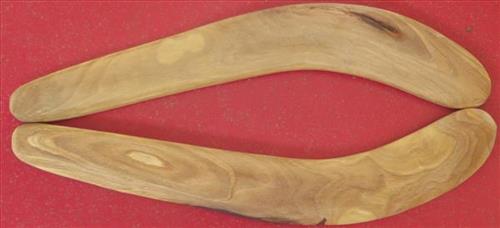
Kali Kali

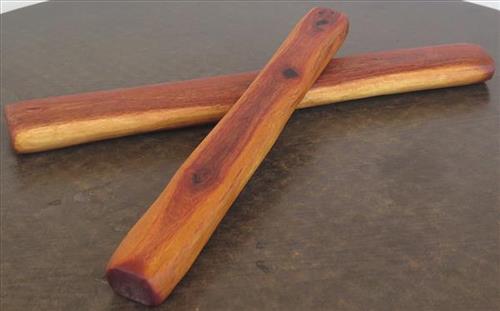
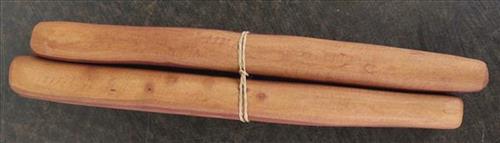
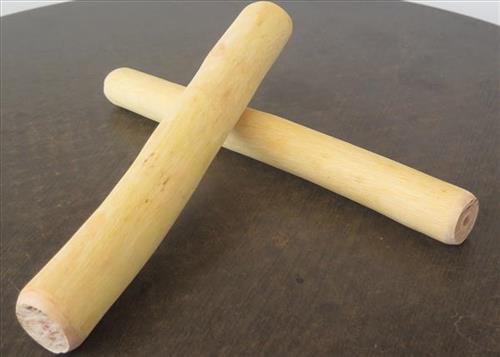
These Kali Kali, or boomerang shaped clapsticks can be used for both ceremonial or hunting purposes. Carved from White Gum timber, they have been hand finished using boiled linseed oil.

Wood carving has always been part of Aboriginal culture and Djilpin artists continue this tradition. Men carved wood for many purposes – tools for hunting or gathering food, axes and knives for building shelters, spears and clubs for protection of their lives and territory, objects for ceremony and to mark sacred sites.

Hunting implements include the boomerang, woomera and spear. The woomera is a lever which helps to increase the speed and distance the spear travels. Clapsticks are used as percussion instruments by the Songmen to accompany dancing along with the didgeridoo (mago).

As well as the more functional carvings, artists portray animals and birds in wood, and these carvings are often painted. Ceremonial carvings include spirit creatures including mukuy (devil devils) and mimi.

Some fine mimi figures have been cast in bronze.
221382260308


Clapsticks

Wood carving has always been part of Aboriginal culture and Djilpin artists continue this tradition. Men carved wood for many purposes – tools for hunting or gathering food, axes and knives for building shelters, spears and clubs for protection of their lives and territory, objects for ceremony and to mark sacred sites.

Hunting implements include the boomerang, woomera and spear. The woomera is a lever which helps to increase the speed and distance the spear travels. Clapsticks are used as percussion instruments by the Songmen to accompany dancing along with the didgeridoo (mago).

As well as the more functional carvings, artists portray animals and birds in wood, and these carvings are often painted. Ceremonial carvings include spirit creatures including mukuy (devil devils) and mimi.

Some fine mimi figures have been cast in bronze.
110682262182


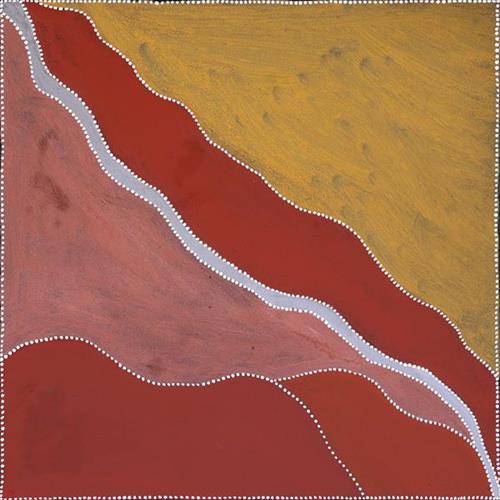
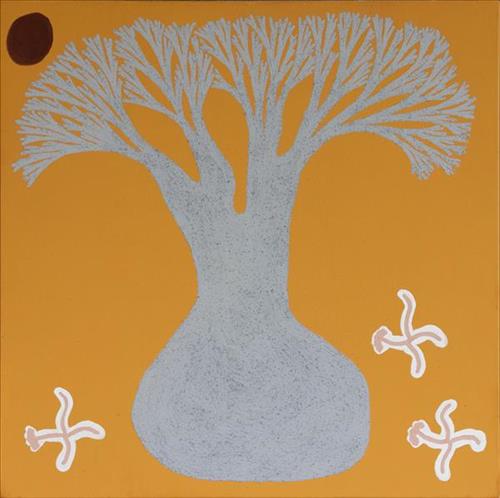
Ngaginyji Joomooloony- ‘My boab tree’ by Eileen Bray

This painting is about Joomena’s Ngaginyji Joomooloony, her boab tree. “The boab tree we are born under becomes our special tree; this one is Ngaginyji Joomooloony, which means ‘My Boabtree'” 


Eileen Bray Joomena was born on the side of a dusty highway along the road to Ord River and next to the creek that runs into Birnuwun (Alice Downs), Joomoon’s traditional country. The family had ventured out on a fishing trip when Eileen’s mum went into labour and was ‘laid down, with her sisters in law’, under a big boab tree and gave birth. The women stayed under the boab for a week, as is customary, and until ready to go back to camp.

221382262080


Clapsticks

Wood carving has always been part of Aboriginal culture and Djilpin artists continue this tradition. Men carved wood for many purposes – tools for hunting or gathering food, axes and knives for building shelters, spears and clubs for protection of their lives and territory, objects for ceremony and to mark sacred sites.

Hunting implements include the boomerang, woomera and spear. The woomera is a lever which helps to increase the speed and distance the spear travels. Clapsticks are used as percussion instruments by the Songmen to accompany dancing along with the didgeridoo (mago).

As well as the more functional carvings, artists portray animals and birds in wood, and these carvings are often painted. Ceremonial carvings include spirit creatures including mukuy (devil devils) and mimi.

Some fine mimi figures have been cast in bronze.
225182264708


Rainforest Shield

Traditional shields were carved from a single piece of timber cut from side of the buttress root of a rainforest fig-tree. The kidney shaped shields are unique to the rainforest Bama of Far North Queensland. They were decorated with clan, totem or moiety designs using natural ochres and a water, fat or blood binder.

Shields were primarily used for deflecting spears in tribal fighting in conjunction with large rainforest swords.

Shields were usually made and painted by senior men and were a significant personal possession of adult males.

110682265169


Birnoo Crocodile and Goanna Ngarrangarni

This painting is dreamtime story my father- Gordon Barney has passed on to me and share the story here;

‘That’s an Alice Down Story, that’s Alice Down Hills, true story. That two hill on top of the hill again, and the thing like a flat, and that’s an old time, they call him Ngarrangarni (dreaming), that Country. And that crocodile and goanna, that two looking one another. That’s that hill, that’s their country. I bin go to that hill and have a look. I’ve seen that hill, that’s why I bin do that painting. And I bin do it the right way. Everytime, picnic time, we used to go there and he got that river come down. We used to go picnic there, looking for some really small fish. They used to get em with that netting, that spinifex, to catch them. That’s that place now. 

That two hill, that crocodile and goanna, they looking at one another. That crocodile want to take em off that goanna’s head, and put it on his head. That goanna bin say “No, I can’t give you my head. You gotta have your own head.” They been nearly swap each other, but that goanna bin say “No, I can’t give you, you gotta have your own head.” That’s all.

The hills Gordon talks about are in his ancestral country Birnoo, which is known as Alice Downs. The Ngarrangarni (dreaming) for those hills tells the story of a crocodile who wanted to swap heads with a goanna, who refused his request. 

221382266359


Clapsticks

Wood carving has always been part of Aboriginal culture and Djilpin artists continue this tradition. Men carved wood for many purposes – tools for hunting or gathering food, axes and knives for building shelters, spears and clubs for protection of their lives and territory, objects for ceremony and to mark sacred sites.

Hunting implements include the boomerang, woomera and spear. The woomera is a lever which helps to increase the speed and distance the spear travels. Clapsticks are used as percussion instruments by the Songmen to accompany dancing along with the didgeridoo (mago).

As well as the more functional carvings, artists portray animals and birds in wood, and these carvings are often painted. Ceremonial carvings include spirit creatures including mukuy (devil devils) and mimi.

Some fine mimi figures have been cast in bronze.
221382268483


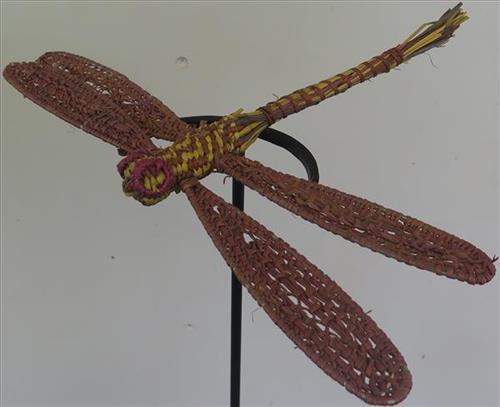
Woven Dragonfly

This finely crafted hand woven dragonfly is a cheerful reminder of the real dry season dragonflies.

Signalling in the dry season, dragonflies are ubiquitous with dry winds, cool nights and saying goodbye to the wet season! Our ridiculously talented pandanus artists are continuing to push their skills and techniques with these cute dragonflies a fine example of this. Each are unique, hand woven and coloured using natural bush dyes.

Pandanus fibre art is labour intensive requiring a high level of care and fine needlework. Finished works are both functional and beautiful. Women collect pandanus by pulling from the top of a pandanus tree, stripping then dying the leaves using natural bush colour.

221382268479


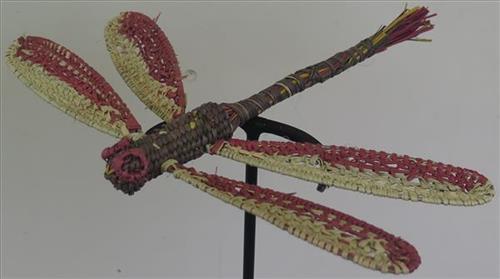
Woven Dragonfly

This finely crafted hand woven dragonfly is a cheerful reminder of the real dry season dragonflies.

Signalling in the dry season, dragonflies are ubiquitous with dry winds, cool nights and saying goodbye to the wet season! Our ridiculously talented pandanus artists are continuing to push their skills and techniques with these cute dragonflies a fine example of this. Each are unique, hand woven and coloured using natural bush dyes.

Pandanus fibre art is labour intensive requiring a high level of care and fine needlework. Finished works are both functional and beautiful. Women collect pandanus by pulling from the top of a pandanus tree, stripping then dying the leaves using natural bush colour.

221382269612


Yidaki (Key F, Toot A#)

Key: F
Toot: A#

Didjeridus from this region are made in the West Arnhem style. Called Mago, they’re different and special and follow the tradition made famous by Beswick’s Mago Master, elder David Blanasi.

Ghunmarn didjeridus are sourced on country, and hand cut from Woolybutt trees. Artists travel considerable distances on foot to find the right woolybutt tree naturally hollowed out by termites. Good instruments are hand-cut and taken back to camp to be worked, shaped, sanded, tuned and then finally painted.

These are top quality musical instruments, highly regarded worldwide, and still used in ceremony and performance today. Featuring traditional designs handed painted with a Jarlk grass brush.


Most Ghunamrn didjeridus are high pitch D, low pitch D, F, C or G. The longer the dij the lower the pitch, a shorter didj will give a higher sound.