221382310706


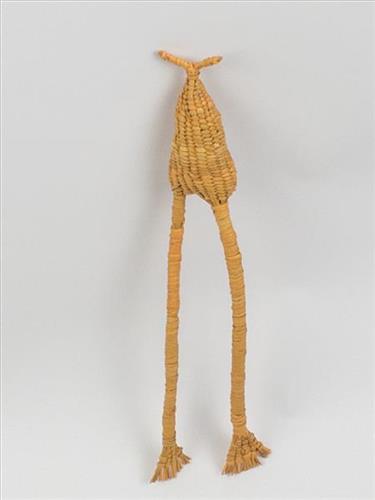
Mukuy Spirit Figures

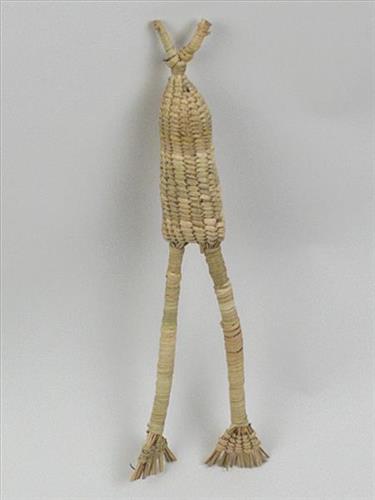
These finely crafted woven figures represent Mukuy Spirit creatures. The Mukuy belong in Yirritja country called Galanbirni. At night you might hear them playing the Didjeridu. The Mukuy travel around a lot and are often found in sacred places. They are mysterious, sometimes playful and sometimes cheeky characters, often referred to as Devil Devil. Mukuy figures tell the stories of country, culture and spiritual beliefs.

221382310690


Mukuy Spirit Figures

These finely crafted woven figures represent Mukuy Spirit creatures. The Mukuy belong in Yirritja country called Galanbirni. At night you might hear them playing the Didjeridu. The Mukuy travel around a lot and are often found in sacred places. They are mysterious, sometimes playful and sometimes cheeky characters, often referred to as Devil Devil. Mukuy figures tell the stories of country, culture and spiritual beliefs.

377813282309824


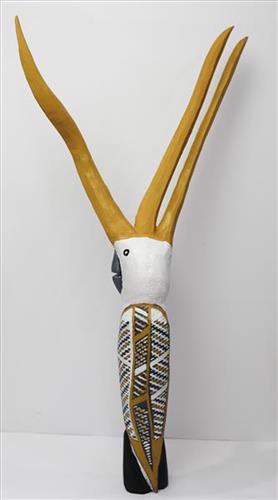
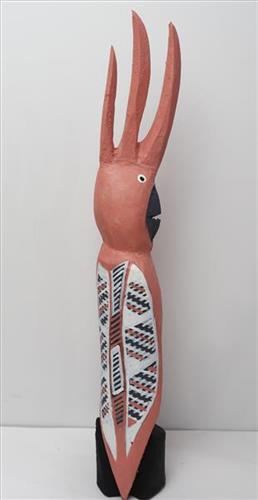
Ngarradj (Sulphur Crested Cockatoo)

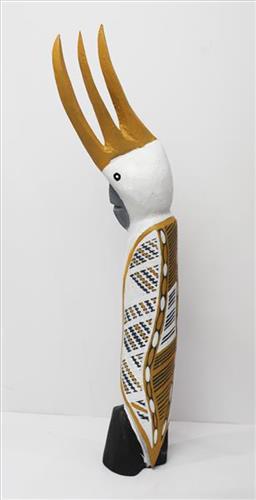
This piece was carved by Harold Goodman and painted by Irene Henry. Irene and Harold are partners that live at the Kakadu Outstation of Kapalga. Irene’s family are from Tiwi islands, which are represented through her artistic narrative of painting.

“My cousin brother, Sebastian, used to make bird’s. Roy’s dad used to make the Jabiru bird. Then Harold got the idea of doing Cockatoo. My Grandmother was an artist, my sister Aileen was an artist, so I’ve got it in my blood. Harold picked up carving really quick like Sebastian. Harold has to look at the tree first to see if it’s strong enough [for carving], you can tell when that stringy bark peels off, then you can see if it’s right to cut it and do carving.” – Irene Henry

377813282309823


Ngarradj (Sulphur Crested Cockatoo)

This piece was carved by Harold Goodman and painted by Irene Henry. Irene and Harold are partners that live at the Kakadu Outstation of Kapalga. Irene’s family are from Tiwi islands, which are represented through her artistic narrative of painting.

“My cousin brother, Sebastian, used to make bird’s. Roy’s dad used to make the Jabiru bird. Then Harold got the idea of doing Cockatoo. My Grandmother was an artist, my sister Aileen was an artist, so I’ve got it in my blood. Harold picked up carving really quick like Sebastian. Harold has to look at the tree first to see if it’s strong enough [for carving], you can tell when that stringy bark peels off, then you can see if it’s right to cut it and do carving.” – Irene Henry

377813282309822


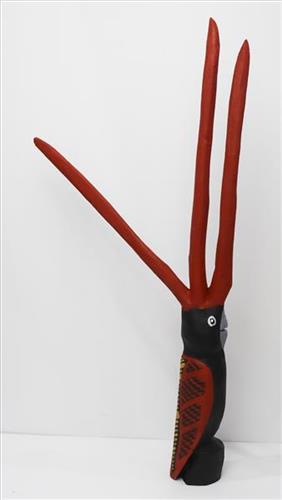
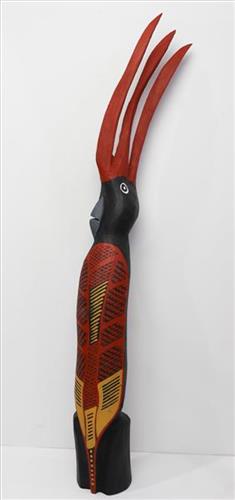
Karnamarr (Red Tailed Black Cockatoo)

This piece was carved by Harold Goodman and painted by Irene Henry. Irene and Harold are partners that live at the Kakadu Outstation of Kapalga. Irene’s family are from Tiwi islands, which are represented through her artistic narrative of painting.

“My cousin brother, Sebastian, used to make bird’s. Roy’s dad used to make the Jabiru bird. Then Harold got the idea of doing Cockatoo. The Black Cockatoo plays an important role in Tiwi ceremony… Harold has to look at the tree first to see if it’s strong enough [for carving], you can tell when that stringy bark peels off, then you can see if it’s right to cut it and do carving.” – Irene Henry

“The baby Cockatoos, they always sitting on a tree, on the branch. Because thats what they do. The mother flies off and leaves the babies in the hollow log. So you can tell which carving is a baby one”- Rhonda Henry

377813282309821


Karnamarr (Red Tailed Black Cockatoo)

This piece was carved by Harold Goodman and painted by Irene Henry. Irene and Harold are partners that live at the Kakadu Outstation of Kapalga. Irene’s family are from Tiwi islands, which are represented through her artistic narrative of painting.

“My cousin brother, Sebastian, used to make bird’s. Roy’s dad used to make the Jabiru bird. Then Harold got the idea of doing Cockatoo. The Black Cockatoo plays an important role in Tiwi ceremony… Harold has to look at the tree first to see if it’s strong enough [for carving], you can tell when that stringy bark peels off, then you can see if it’s right to cut it and do carving.” – Irene Henry

“The baby Cockatoos, they always sitting on a tree, on the branch. Because thats what they do. The mother flies off and leaves the babies in the hollow log. So you can tell which carving is a baby one”- Rhonda Henry

377813282309820


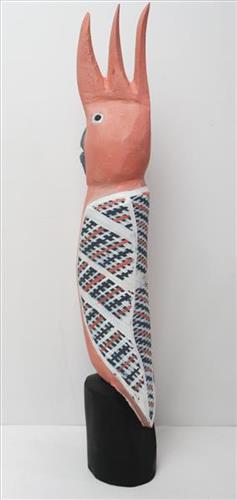
Wirliwirlih (Galah)

This piece was carved by Harold Goodman and painted by Irene Henry. Irene and Harold are partners that live at the Kakadu Outstation of Kapalga. Irene’s family are from Tiwi islands, which are represented through her artistic narrative of painting.

“My cousin brother used to make bird’s, Roy’s dad used to make the Jabiru bird. Then Harold got the idea of doing birds. Birds plays an important role in Tiwi ceremony… Harold has to look at the tree first to see if it’s strong enough [for carving], you can tell when that stringy bark peels off, then you can see if it’s right to cut it and do carving.” – Irene Henry

377813282309819


Wirliwirlih (Galah)

This piece was carved by Harold Goodman and painted by Irene Henry. Irene and Harold are partners that live at the Kakadu Outstation of Kapalga. Irene’s family are from Tiwi islands, which are represented through her artistic narrative of painting.

“My cousin brother used to make bird’s, Roy’s dad used to make the Jabiru bird. Then Harold got the idea of doing birds. Birds plays an important role in Tiwi ceremony… Harold has to look at the tree first to see if it’s strong enough [for carving], you can tell when that stringy bark peels off, then you can see if it’s right to cut it and do carving.” – Irene Henry

111582309843


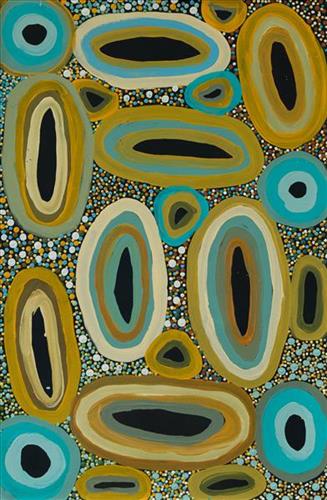
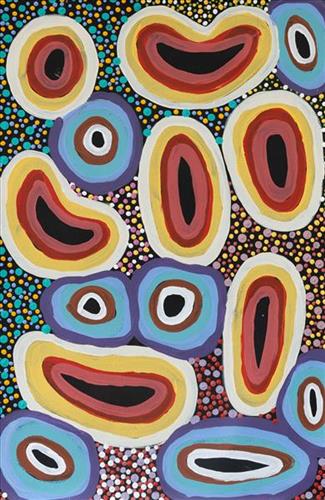
Pitu (Separation Well)

“I paint Pitu because my father come[s] from Pitu and all the rest of the family, they belong to there. Family hear the stories all the time from Jakayu [Biljabu]. It’s their connection to that place. All the old people were walking through that area, aunty Jakayu was born there. It’s a sad story, hers. We [went] there… to see it again. It’s a long, long way from Punmu. All the other family [saw] where their family is from and where they belong to.”


–       Kuru Gladys Bidu


Pitu (Separation Well) forms part of Kuru’s ngurra (home Country, camp) through her father. It is a significant cultural site and large soak located yulparirra (south) of Wuranu (Canning Stock Route Well 29) and Kulilu rockhole and soak. As a site where fresh water was available all year, Pitu was an important camp and a meeting place for Kartujarra and Manyjilyjarra people during the pujiman (traditional, desert dwelling) era. At this time, knowledge of water sources was critical for survival, and today Martu Country is still defined in terms of the location and type of water. Each of the hundreds of claypans, rockholes, waterholes, soaks and springs found in the Martu desert homelands is known by name, location, quality and seasonal availability through real life experience and the recounting of Jukurrpa (Dreaming) narratives. 


Soaks, or soakwaters, derive their name from the manner in which their waters generally seep into the sand from below stores, sometimes as part of an ephemeral river or creek. Soaks were an especially important source of water during the pujiman era, being the most dependable water source in times of drought. Water was obtained from soaks by scooping away the sand with a piti (timber bowls used for carrying food and water) until clear water gathered at the base of the hole, sometimes at a depth of several metres. Pitu is also surrounded by shrubs that need to be cleared to access its waters.
111582309842


Pitu (Separation Well)

“I paint Pitu because my father come[s] from Pitu and all the rest of the family, they belong to there. Family hear the stories all the time from Jakayu [Biljabu]. It’s their connection to that place. All the old people were walking through that area, aunty Jakayu was born there. It’s a sad story, hers. We [went] there… to see it again. It’s a long, long way from Punmu. All the other family [saw] where their family is from and where they belong to.”


–       Kuru Gladys Bidu


Pitu (Separation Well) forms part of Kuru’s ngurra (home Country, camp) through her father. It is a significant cultural site and large soak located yulparirra (south) of Wuranu (Canning Stock Route Well 29) and Kulilu rockhole and soak. As a site where fresh water was available all year, Pitu was an important camp and a meeting place for Kartujarra and Manyjilyjarra people during the pujiman (traditional, desert dwelling) era. At this time, knowledge of water sources was critical for survival, and today Martu Country is still defined in terms of the location and type of water. Each of the hundreds of claypans, rockholes, waterholes, soaks and springs found in the Martu desert homelands is known by name, location, quality and seasonal availability through real life experience and the recounting of Jukurrpa (Dreaming) narratives. 


Soaks, or soakwaters, derive their name from the manner in which their waters generally seep into the sand from below stores, sometimes as part of an ephemeral river or creek. Soaks were an especially important source of water during the pujiman era, being the most dependable water source in times of drought. Water was obtained from soaks by scooping away the sand with a piti (timber bowls used for carrying food and water) until clear water gathered at the base of the hole, sometimes at a depth of several metres. Pitu is also surrounded by shrubs that need to be cleared to access its waters.