225182313450


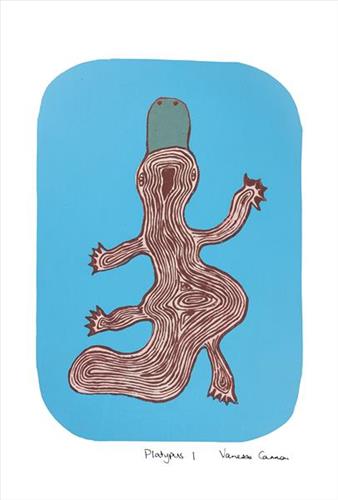
Wambiji (Platypus)

Platypus are very shy. They like to hide under rocks and can rarely be seen when people are around.  When I was 17 years old, I used to go for a swim with my partner, Laurence, in the Mossman River, at a site called Jabuljabul (Girls/Women). Some mornings, a  platypus was coming out of his hiding place, searching for food. He swam around. When he heard us, he swam back to his hiding place until we were gone.

________________

FRAMED

Custom framed locally with Tru Vue Museum Glass ®.

Hand printed screen print, limited edition on archival Hahnemühle, signed by the artist.
225182313445


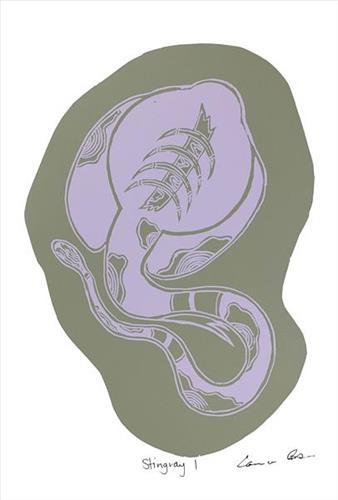
Yawu (Stingray)

In the past stingrays were an important food source for our Kuku Yalanji people. We used to hunt them using a spear and cook them over the hot coals of an open fire. We call stingray ‘Yawu’. When stingrays make a mark in the sand, that is where the crabs hide into. 

________________

FRAMED

Custom framed locally with Tru Vue Museum Glass ®.

Hand printed screen print, limited edition on archival Hahnemühle, signed by the artist.
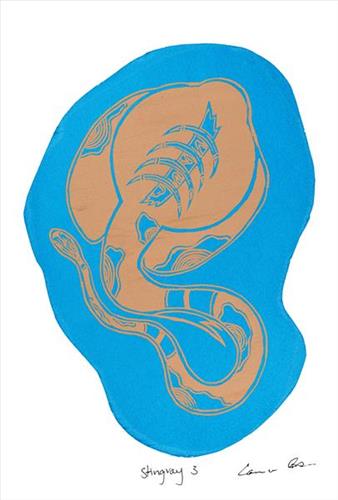
225182313440


Yawu (Stingray)

In the past stingrays were an important food source for our Kuku Yalanji people. We used to hunt them using a spear and cook them over the hot coals of an open fire. We call stingray ‘Yawu’. When stingrays make a mark in the sand, that is where the crabs hide into. 

________________

FRAMED

Custom framed locally with Tru Vue Museum Glass ®.

Hand printed screen print, limited edition on archival Hahnemühle, signed by the artist.
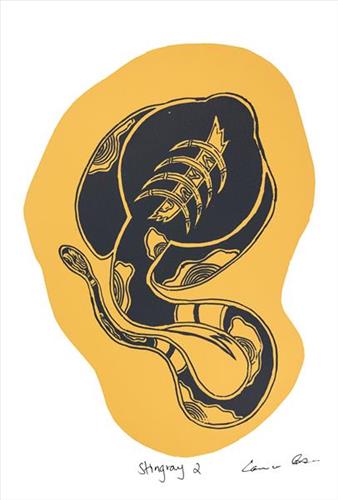
225182313436


Yawu (Stingray)

In the past stingrays were an important food source for our Kuku Yalanji people. We used to hunt them using a spear and cook them over the hot coals of an open fire. We call stingray ‘Yawu’. When stingrays make a mark in the sand, that is where the crabs hide into. 

________________

FRAMED

Custom framed locally with Tru Vue Museum Glass ®.

Hand printed screen print, limited edition on archival Hahnemühle, signed by the artist.
225182313421


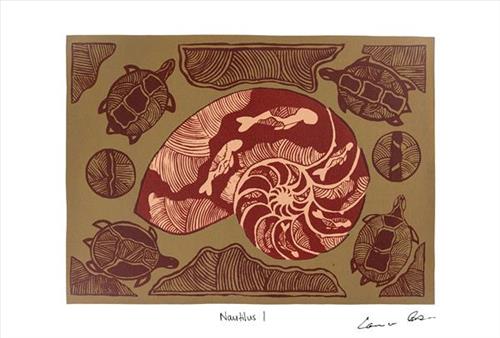
Nautilus Shell

I am an Eastern Kuku Yalanji man. Members of my extended family have totems related directly to the Great Barrier Reef. The nautilus shell in this design represents our sea country. The reef is sacred to us but also our traditional hunting ground for turtle, dugong, coral trout, sharks and crayfish.

In my upbringing I was taught to respect our elders who prepared me for my future role as carrier of cultural knowledge and spiritual traditions. I was also taught the values of taking responsibility for caring for our traditional land and sea country and help maintain it for the younger generations so they can become strong leaders.

________________

FRAMED

Custom framed locally with Tru Vue Museum Glass ®.

Hand printed screen print, limited edition on archival Hahnemühle, signed by the artist.
225182313416


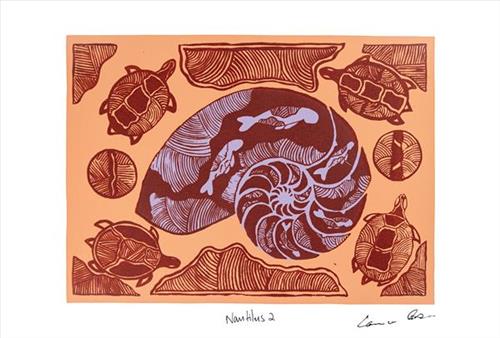
Nautilus Shell

I am an Eastern Kuku Yalanji man. Members of my extended family have totems related directly to the Great Barrier Reef. The nautilus shell in this design represents our sea country. The reef is sacred to us but also our traditional hunting ground for turtle, dugong, coral trout, sharks and crayfish.

In my upbringing I was taught to respect our elders who prepared me for my future role as carrier of cultural knowledge and spiritual traditions. I was also taught the values of taking responsibility for caring for our traditional land and sea country and help maintain it for the younger generations so they can become strong leaders.

________________

FRAMED

Custom framed locally with Tru Vue Museum Glass ®.

Hand printed screen print, limited edition on archival Hahnemühle, signed by the artist.
225182313411


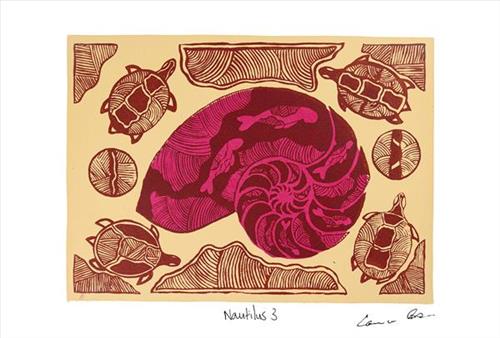
Nautilus Shell

I am an Eastern Kuku Yalanji man. Members of my extended family have totems related directly to the Great Barrier Reef. The nautilus shell in this design represents our sea country. The reef is sacred to us but also our traditional hunting ground for turtle, dugong, coral trout, sharks and crayfish.

In my upbringing I was taught to respect our elders who prepared me for my future role as carrier of cultural knowledge and spiritual traditions. I was also taught the values of taking responsibility for caring for our traditional land and sea country and help maintain it for the younger generations so they can become strong leaders.

________________

FRAMED

Custom framed locally with Tru Vue Museum Glass ®.

Hand printed screen print, limited edition on archival Hahnemühle, signed by the artist.
225182313384


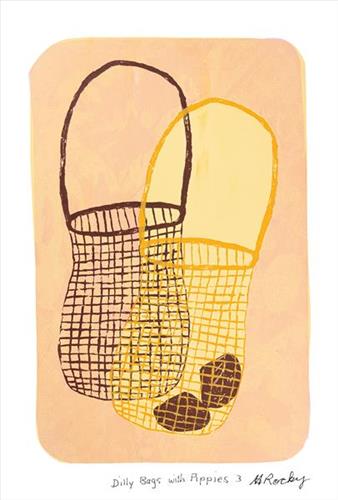
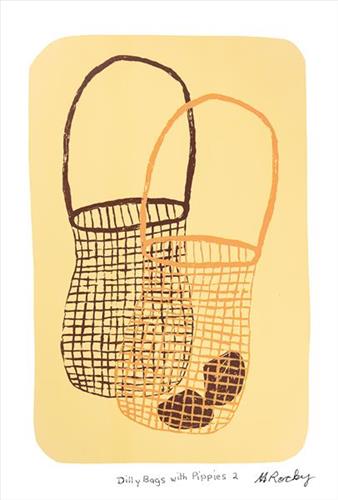
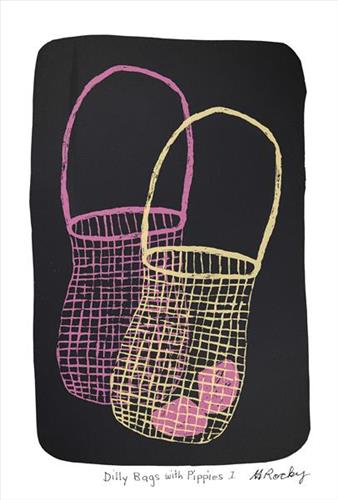
Kakan (Black Palm) Dillybag.

Our ancestors used Kakan (Black Palm) dilly bags to carry food when out hunting and gathering or soak bitter yams in creeks before cooking them. They were also used to hold personal items.

When I was a young girl my grandmother would teach me how to make Black Palm dillybags. We used to set up camp with other Kuku Yalanji women at a creek near Helenvale. It is very hard work. The men would help us cutting down the palm trees and separate the crownshaft from the trunk and the leaves. Then the women used to peel away the outer leaves until they felt strong threads they could pull out. They cleaned these threads from pulp with a mussel shell. When we moved away from Helenvale I forgot how to make them. Luckily years later I asked a relative of mine, Wilma Walker, who is great weaver, if she could refresh my memories. From then on I kept making dillybags as long as my health allowed it. I really enjoyed making them.

________________

FRAMED

Custom framed locally with Tru Vue Museum Glass ®.

Hand printed screen print, limited edition on archival Hahnemühle, signed by the artist.
225182313378


Kakan (Black Palm) Dillybag.

Our ancestors used Kakan (Black Palm) dilly bags to carry food when out hunting and gathering or soak bitter yams in creeks before cooking them. They were also used to hold personal items.

When I was a young girl my grandmother would teach me how to make Black Palm dillybags. We used to set up camp with other Kuku Yalanji women at a creek near Helenvale. It is very hard work. The men would help us cutting down the palm trees and separate the crownshaft from the trunk and the leaves. Then the women used to peel away the outer leaves until they felt strong threads they could pull out. They cleaned these threads from pulp with a mussel shell. When we moved away from Helenvale I forgot how to make them. Luckily years later I asked a relative of mine, Wilma Walker, who is great weaver, if she could refresh my memories. From then on I kept making dillybags as long as my health allowed it. I really enjoyed making them.

________________

FRAMED

Custom framed locally with Tru Vue Museum Glass ®.

Hand printed screen print, limited edition on archival Hahnemühle, signed by the artist.
225182313373


Kakan (Black Palm) Dillybag.

Our ancestors used Kakan (Black Palm) dilly bags to carry food when out hunting and gathering or soak bitter yams in creeks before cooking them. They were also used to hold personal items.

When I was a young girl my grandmother would teach me how to make Black Palm dillybags. We used to set up camp with other Kuku Yalanji women at a creek near Helenvale. It is very hard work. The men would help us cutting down the palm trees and separate the crownshaft from the trunk and the leaves. Then the women used to peel away the outer leaves until they felt strong threads they could pull out. They cleaned these threads from pulp with a mussel shell. When we moved away from Helenvale I forgot how to make them. Luckily years later I asked a relative of mine, Wilma Walker, who is great weaver, if she could refresh my memories. From then on I kept making dillybags as long as my health allowed it. I really enjoyed making them.

________________

FRAMED

Custom framed locally with Tru Vue Museum Glass ®.

Hand printed screen print, limited edition on archival Hahnemühle, signed by the artist.