225182312307


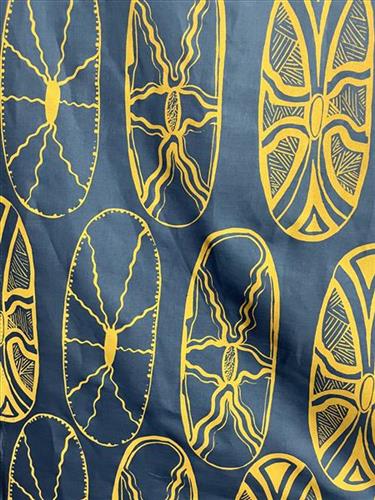
Kunjuri (Rainforest Shield)

Traditional shields were carved from a single piece of timber cut from side of the buttress root of a rainforest fig-tree. The kidney shaped shields are unique to the rainforest Bama of Far North Queensland. They were decorated with clan, totem or moiety designs using natural ochres and a water, fat or blood binder.

Shields were primarily used for deflecting spears in tribal fighting in conjunction with large rainforest swords.

Shields were usually made and painted by senior men and were a significant personal possession of adult males.

225182312306


Kadanji (Palm Cockatoo)

Kadanji (Palm Cockatoo) is my family Totem. It is very important to me because it holds all the stories relating to the traditional land that was passed down to me and my siblings through my fathers side, grandfathers and great grandfathers side.

225182312299


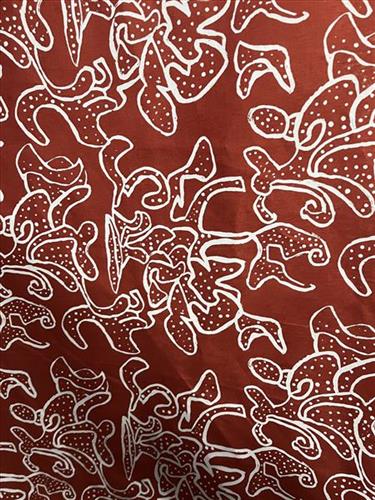
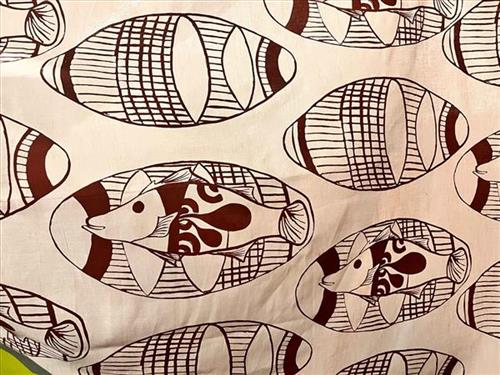
Karrangkal (Corals of the Great Barrier Reef)

Our beautiful Yalanji coastline has many places where the rainforest and the reef come very close together. The colourful corals on this fabric is a reminder of the rich ocean environments of the Great Barrier Reef that have nourished generations of our Kuku Yalanji families and culture.

This fabric helps to convey the traditional knowledge and complexe histories of how Kuku Yalanji used to live with the ocean, including the social rules and practical knowledge of how to hunt and cook various sea animals, distribute food and how to make important material cultural objects such as fish hooks, various traps etc.

225182312296


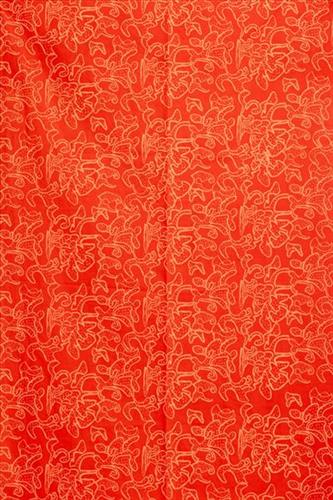
Karrangkal (Corals of the Great Barrier Reef)

Our beautiful Yalanji coastline has many places where the rainforest and the reef come very close together. The colourful corals on this fabric is a reminder of the rich ocean environments of the Great Barrier Reef that have nourished generations of our Kuku Yalanji families and culture.

This fabric helps to convey the traditional knowledge and complexe histories of how Kuku Yalanji used to live with the ocean, including the social rules and practical knowledge of how to hunt and cook various sea animals, distribute food and how to make important material cultural objects such as fish hooks, various traps etc.

225182312292


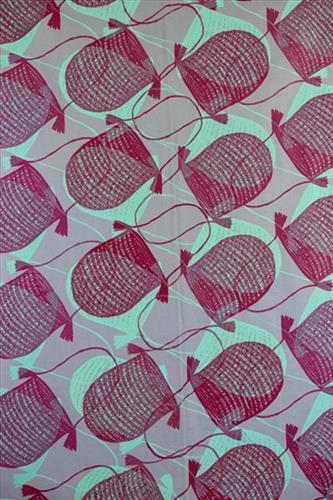
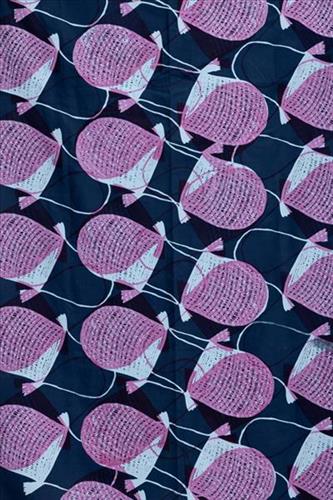
Makarr (Fish Trap)

Fish traps are called Makarr in our language. They were made by men only. Our fathers and uncles used to make them with the lawyer vine. They stripped the stems and then soaked them in the river to keep them soft and bendy. They also had a special way of weaving the fish traps. They used them in the river to catch eels, jungle perch, fresh water catfish and turtle. To attract fish our old people used to sprinkle rain forest berries as bait over the trap.

225182312290


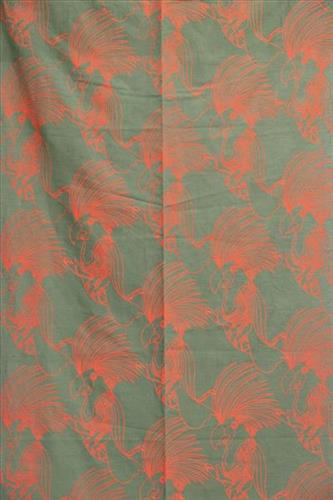
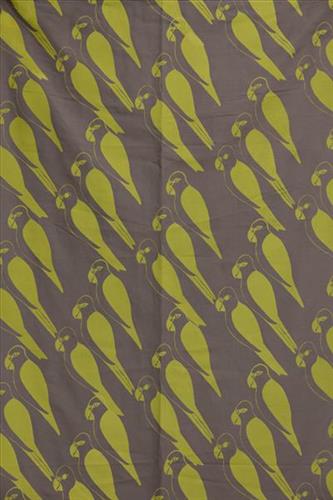
Yinjul (Rainforest Parrot)

The rainforest parrot is a very important totem (spirit being) for all Kuku Yalanji clan groups. Cultural knowledge of this spirit being has been passed down from generation to generation. The rainforest parrot cannot be touched or hunted for food. They have to be left alone. They are special birds that have a sacred meaning for us.

111582312174


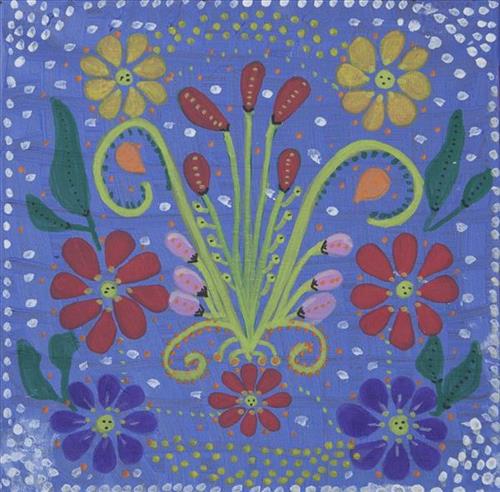
Where the wild flowers grow

This work portrays an area known to the artist, painted here from memory. During the pujiman (traditional, desert dwelling) era one’s survival depended on their intimate knowledge of the location of resources; thus physical elements of Country, such as sources of kapi (water), tali (sandhills), and different varieties of warta (trees, vegetation) were carefully observed and remembered. Today, this relationship with Country remains equally strong, despite the movement of Martu out of the desert and into remote Aboriginal communities, towns and cities.

Also visible may be traces of life cycles based around kalyu (rain, water) and waru (fire). A thousands of year old practice, fire burning continues to be carried out as both an aid for hunting and a means of land management today. As the Martu travelled and hunted they would burn tracts of land, ensuring plant and animal biodiversity and reducing the risk of unmanageable, spontaneous bush fires. The patchwork nature of regrowth is visible in many landscape works, with each of the five distinctive phases of fire burning visually described with respect to the cycle of burning and regrowth.  

Finally, metaphysical information relating to a location may also be recorded; Jukurrpa (Dreaming) narratives chronicle the creation of physical landmarks, and can be referenced through depictions of ceremonial sites, songlines, and markers left in the land. 
225182312151


Wambiji (Platypus)

Platypus are very shy. They like to hide under rocks and can rarely be seen when people are around.  When I was 17 years old, I used to go for a swim with my partner, Laurence, in the Mossman River, at a site called Jabuljabul (Girls/Women). Some mornings, a  platypus was coming out of his hiding place, searching for food. He swam around. When he heard us, he swam back to his hiding place until we were gone.