Clay pan
This painting shows the clay pan of the pilbara from an aerial perspective.
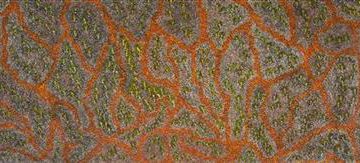
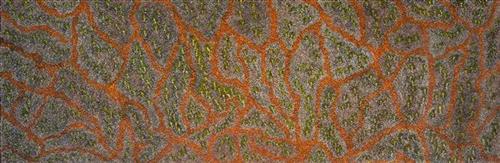
This painting shows the clay pan of the pilbara from an aerial perspective.
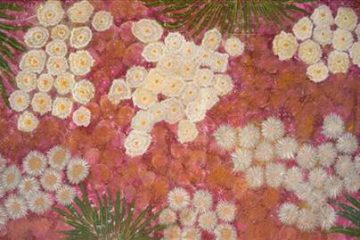
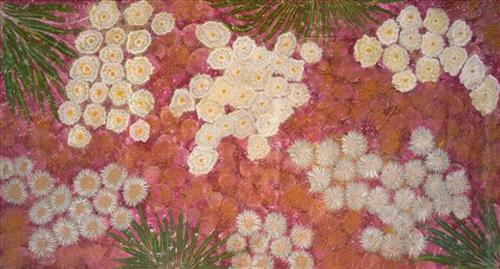
This painting shows the different types of wildflowers that come out during the springtime season like the white mulla mulla.
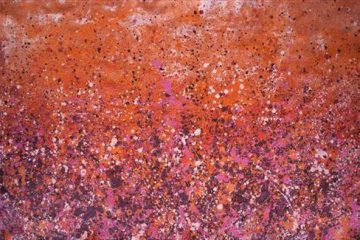
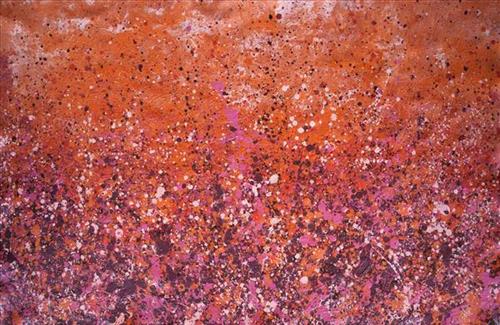
The colours in the background represent the pilbara landscape with a hint of colour piercing through representing the scattered wildflowers found all across the countryside.
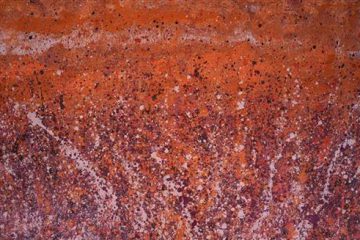
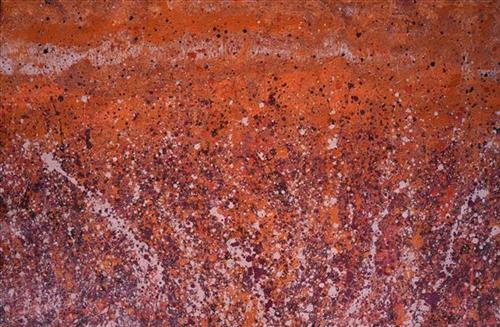
The colours in the background represent the pilbara landscape with a hint of colour piercing through representing the scattered wildflowers found all across the country side.


Wood carving has always been part of Aboriginal culture and Djilpin artists continue this tradition. Men carved wood for many purposes – tools for hunting or gathering food, axes and knives for building shelters, spears and clubs for protection of their lives and territory, objects for ceremony and to mark sacred sites.
Hunting implements include the boomerang, woomera and spear. The woomera is a lever which helps to increase the speed and distance the spear travels. Clapsticks are used as percussion instruments by the Songmen to accompany dancing along with the didgeridoo (mago).
As well as the more functional carvings, artists portray animals and birds in wood, and these carvings are often painted. Ceremonial carvings include spirit creatures including mukuy (devil devils) and mimi.
Some fine mimi figures have been cast in bronze.

Wood carving has always been part of Aboriginal culture and Djilpin artists continue this tradition. Men carved wood for many purposes – tools for hunting or gathering food, axes and knives for building shelters, spears and clubs for protection of their lives and territory, objects for ceremony and to mark sacred sites.
Hunting implements include the boomerang, woomera and spear. The woomera is a lever which helps to increase the speed and distance the spear travels. Clapsticks are used as percussion instruments by the Songmen to accompany dancing along with the didgeridoo (mago).
As well as the more functional carvings, artists portray animals and birds in wood, and these carvings are often painted. Ceremonial carvings include spirit creatures including mukuy (devil devils) and mimi.
Some fine mimi figures have been cast in bronze.
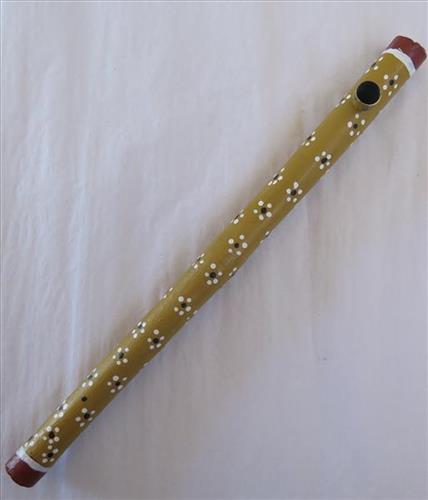
This piece has been cut from a green plum tree, and hollowed out using a burning hot wire. Cone piece is from a rifle shell, and has been finished using modern acrylic paint.

Wood carving has always been part of Aboriginal culture and Djilpin artists continue this tradition. Men carved wood for many purposes – tools for hunting or gathering food, axes and knives for building shelters, spears and clubs for protection of their lives and territory, objects for ceremony and to mark sacred sites.
Hunting implements include the boomerang, woomera and spear. The woomera is a lever which helps to increase the speed and distance the spear travels. Clapsticks are used as percussion instruments by the Songmen to accompany dancing along with the didgeridoo (mago).
As well as the more functional carvings, artists portray animals and birds in wood, and these carvings are often painted. Ceremonial carvings include spirit creatures including mukuy (devil devils) and mimi.
Some fine mimi figures have been cast in bronze.
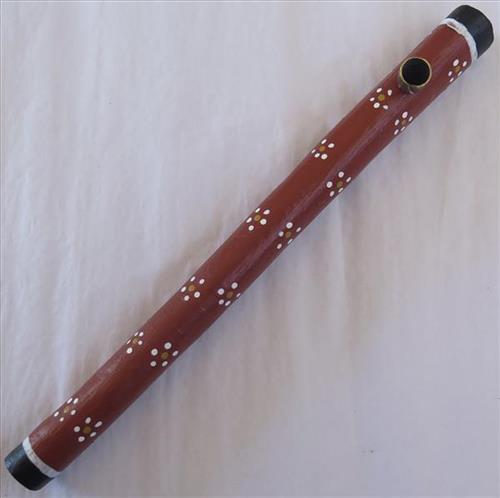
This piece has been cut from a green plum tree, and hollowed out using a burning hot wire. Cone piece is from a rifle shell, and has been finished using modern acrylic paint.

Wood carving has always been part of Aboriginal culture. Men carved wood for many purposes – tools for hunting or gathering food, axes and knives for building shelters, spears and clubs for protection of their lives and territory, objects for ceremony and to mark sacred sites.
Artists source the timber on country, walking from tree to tree to find the right piece for the desired functional outcome. Once found, it is cut and then brought back to camp to be worked, shaped, sanded and finally finished.
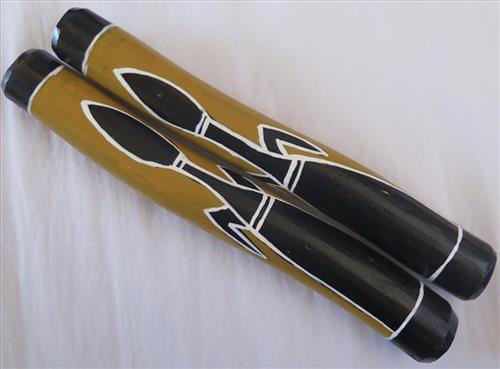
Clapsticks are used in traditional ceremony and dance as a percussion instrument to accompany Mago (didjeridu). Denser woods such as Ironwood or Kerosene wood are preferred due to their crisper clap sound. Clapsticks can be left raw or painted and decorated. Straight timber from younger trees is preferred as it requires less work to make functional.

Wood carving has always been part of Aboriginal culture. Men carved wood for many purposes – tools for hunting or gathering food, axes and knives for building shelters, spears and clubs for protection of their lives and territory, objects for ceremony and to mark sacred sites.
Artists source the timber on country, walking from tree to tree to find the right piece for the desired functional outcome. Once found, it is cut and then brought back to camp to be worked, shaped, sanded and finally finished.
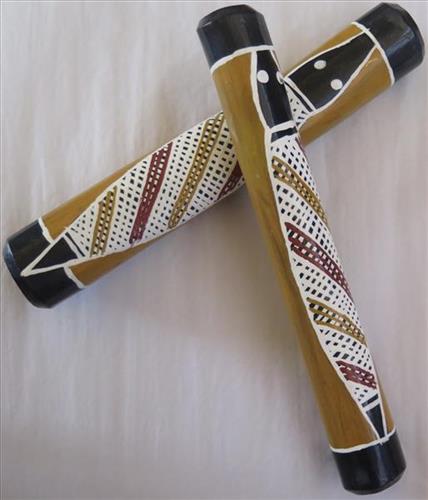
Clapsticks are used in traditional ceremony and dance as a percussion instrument to accompany Mago (didjeridu). Denser woods such as Ironwood or Kerosene wood are preferred due to their crisper clap sound. Clapsticks can be left raw or painted and decorated. Straight timber from younger trees is preferred as it requires less work to make functional.

Wood carving has always been part of Aboriginal culture. Men carved wood for many purposes – tools for hunting or gathering food, axes and knives for building shelters, spears and clubs for protection of their lives and territory, objects for ceremony and to mark sacred sites.
Artists source the timber on country, walking from tree to tree to find the right piece for the desired functional outcome. Once found, it is cut and then brought back to camp to be worked, shaped, sanded and finally finished.
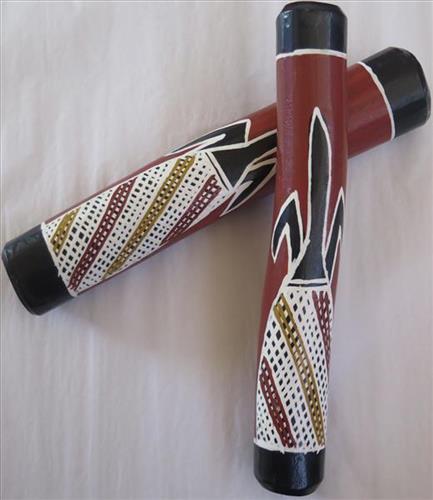
Clapsticks are used in traditional ceremony and dance as a percussion instrument to accompany Mago (didjeridu). Denser woods such as Ironwood or Kerosene wood are preferred due to their crisper clap sound. Clapsticks can be left raw or painted and decorated. Straight timber from younger trees is preferred as it requires less work to make functional.