220982319814


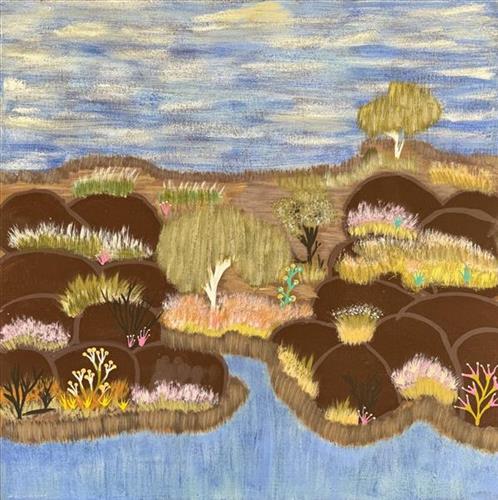
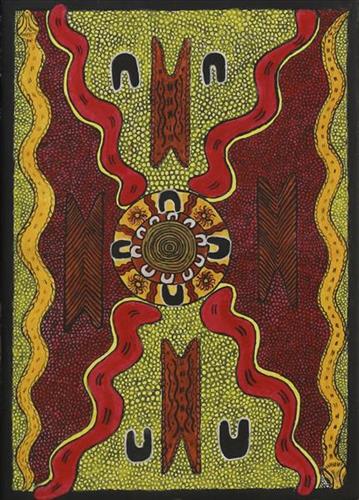
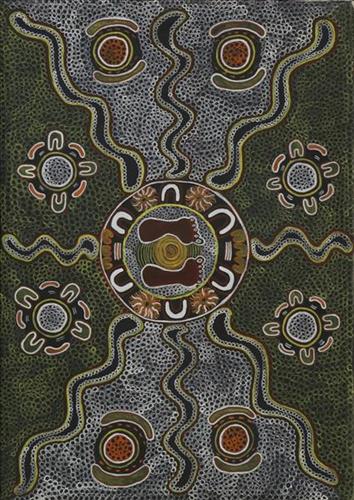
My Mother’s Country – Beverly Pula Luck

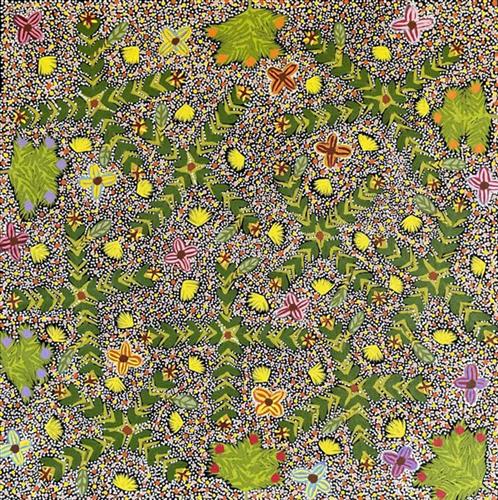
The community of Ampilatwatja made a conscious decision not to paint ‘altyerr’ dreaming stories. The artists paint their country where those stories sit.

Beverly has painted her Mother’s country. When Beverly was a child her mother took her all around her country and showed her the bush medicine and bush tucker.

220982319810


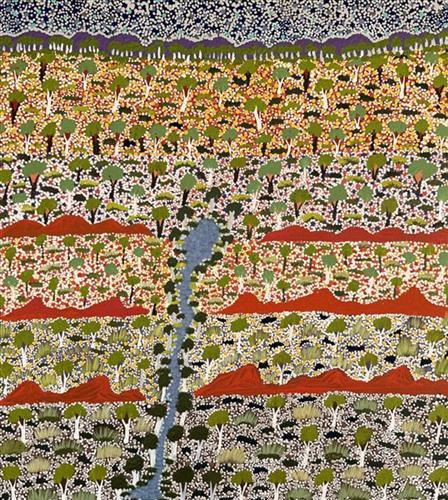
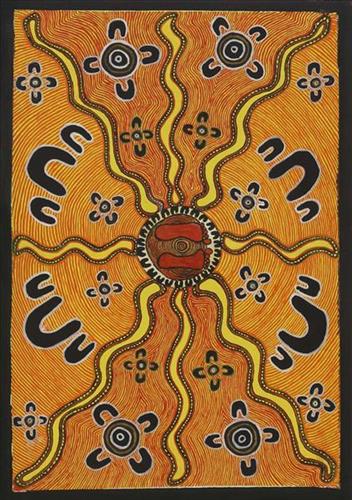
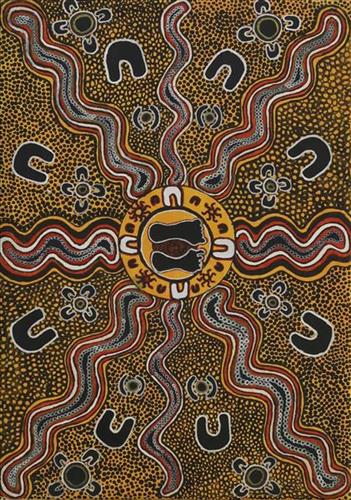
My Fathers Country

“This is my Father’s country.

This country provides many bush foods for my people.

Painting my country helps to keep the country very strong for current and future generations of Alyawarr people.”

220982319809


My Fathers Country

“This is my Father’s country.

This country provides many bush foods for my people.

Painting my country helps to keep the country very strong for current and future generations of Alyawarr people.”

111582319918


Jila (snake)

The Western Desert term jila is used interchangeably to describe springs considered to be ‘living’ waters and snakes, both of which play a central role in Martu culture and Jukurrpa (Dreaming). During the pujiman (traditional, desert dwelling) period, knowledge of water sources was critical for survival, and today Martu Country is still defined in terms of the location of water sources. Of the many permanent springs in Martu Country, very few are ‘living waters’; waters inhabited by jila. Before they became snakes, these beings were men who made rain, formed the land and introduced cultural practices like ceremonies and ritual songs. Some of the men travelled the desert together, visiting one another, but they all ended their journeys at their chosen spring alone, transformed into a snake. These important springs are named after their jila inhabitant, guarding their waters. Some of the jila snakes are known by Martu as quiet and benevolent, others as dangerous and ‘cheeky’. Regardless of the nature of the inhabitant snake, jila sites must be entered respectfully; particular rituals are practiced, such as lighting fires, sweeping the ground with branches, approaching in single file, and calling out to the site’s jila to announce one’s arrival and introduce people who are new to the jila. Those who do not follow these guidelines are in danger of becoming sick, or even being killed. “Two Jilas (snake) going to rest in the spring, within the dry and wet wood from the mulga tree. They leave a trace wherever they go” – Ned Booth Ned’s artwork depicts Punmu Aboriginal community, which sits on the edge of a large salt lake known as Nyayartakujarra, or Lake Dora. The lake runs south into Karlamilyi River. Surrounding Punmu are numerous fresh water soaks and the red tali (sandhills) typical of the area. The most frequently visited yinta (permanent springs) around Punmu include Wilarra, Rawa, Yilyara, Jila-jila and Tuu-tuu. Ned’s painting of Punmu, and the Jila stories and physical characteristics of ngurra (country), helps to keep the wellbeing and culture of the Martu alive and strong.
111582319912


Wiliny (wind)

The traditional lands of the Martu people encompass the Great Sandy Desert and Rudall River regions of Western Australia, an enormous tract dominated by distinctive red tali, or tuwa (sandhills). These sandhills present an unforgiving landscape; sparse vegetation covers a seemingly never-ending expanse of dunes, and yet these lands and the location of resources within them was known intimately by its pujiman (traditional, desert dwelling) inhabitants. At this time, Martu traversed very large distances annually in small family groups, moving from water source to water source through the harsh desert landscape with incredible stamina and resourcefulness. Travel was often undertaken at night, and when travelling during the day, Martu wore yakipiri (woven bark sandals) to protect their feet from the hot desert sand. “The wiliny (wind) comes and blows in all directions, it clears the spinifex” – Ned Booth Ned’s work celebrates the aesthetic of Wiliny (wind) and can be understood to create change in nguraa (country). Ned’s work highlights the power of wiliny (wind) – how vital it can be to country and spinifex, particularly when spinifex and other plant species have become old growth and pose a risk of destructive bushfires.

111582319911


Yalta (cold)

In the heart of central Western Australia, the Martu people are the traditional owners of a vast landscape stretching from the Great Sandy Desert in the north to Wiluna in the south. Across this Country, their lives are bound by a common ancestral heritage, law, and culture. To one another, they are walytja (family). Inspired and informed by their predecessors, Ned represents familiar themes of tradition, culture, and Country in exciting and experimental ways. “It’s about sitting close together, waru (fire) burning and staying warm” – Ned Booth This piece depicts Bidu ngurra (home Country, camp), the area which is found in the sandplains, sandhills and rocky hills of Western Australia’s Mid-West, Pilbara. As Ned explains, this work is a depiction of coming together in the colder months. When it was kurluwa (winter rain), Martu would build a wuungku (shelter) where they could sleep and stay warm beside a waru (fire). When they camped in a particular location for a period the elders would go hunting, leaving the children behind.

111582319909


After the Burn

The Western Desert term ‘ngurra’ is hugely versatile in application. Broadly denoting birthplace and belonging, ngurra can refer to a body of water, a camp site, a large area of Country, or even a modern house. People identify with their ngurra in terms of specific rights and responsibilities, and the possession of intimate knowledge of the physical and cultural properties of one’s Country. This knowledge is traditionally passed intergenerationally through family connections. Painting ngurra, and in so doing sharing the Jukurrpa (Dreaming) stories and physical characteristics of that place, has today become an important means of cultural maintenance. Physical maintenance of one’s ngurra, like cultural maintenance, ensures a site’s wellbeing, and is a responsibility of the people belonging to that area. Ned acknowledges the Martu cycle of burning and regrowth and its relationship to the individual. First is nyurnma (freshly burnt Country), which is depicted here, followed after the rains by waru-waru, when young, bright green plants start to grow. Nyukura occurs between one and three years after burning, when plants have matured and are fruiting and seeding. Manguu is four to six years post burning, when spinifex has matured to the point that it can be burned once again. Finally, kunarka signifies the time when spinifex and other plant species have become old growth and pose a risk of destructive bushfires. “The spinifex has been cleared because of the fire and it is settled now – the grass has been burnt and it’s settled”. – Ned Booth Ned’s work celebrates the aesthetic of nyurnma (freshly burnt Country) and the process of life coming back to country. Through his work, the intrinsic value of country is showcased, by our remarkably diverse flora and fauna and it’s ability to come back to life after the Martu cycle of burning.

11474004798


Status: Stock


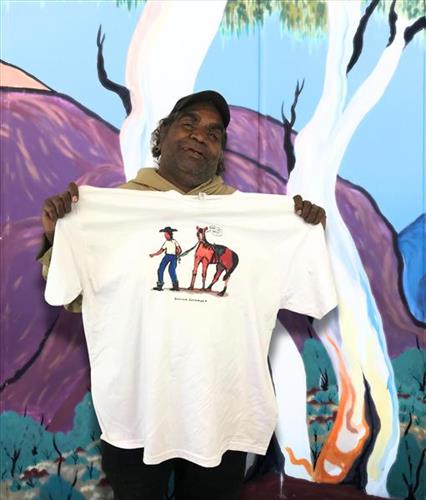
Where we going? tee by Reinhold Inkamala

Cowboy trying to take brumby home to rest out at 8mile. They been roaming around all day so the brumby is tired and doesn’t want to walk anymore. The cowboy is pulling him, but brumby has had enough. -Reinhold Inkamala