


22134006298
Status: Stock
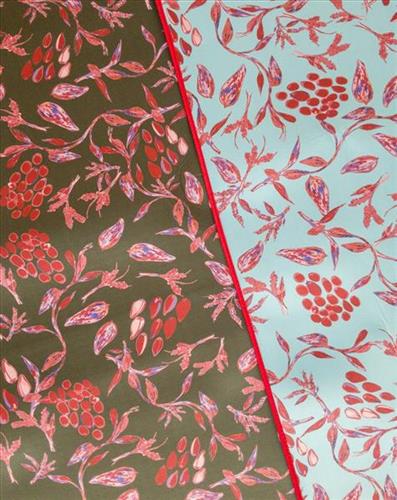
Bush Fruits by Anderson George
The Djilpin Arts Picnic Rug range is a celebration of life on country around the waterways of Wugularr community and surrounds. Inspired by the artists’ love of heading out bush and throwing down a calico to fish, swim and relax on their traditional lands, these designs feature fish, bush fruits, billabong flowers and medicinal plants.

22134006297
Status: Stock
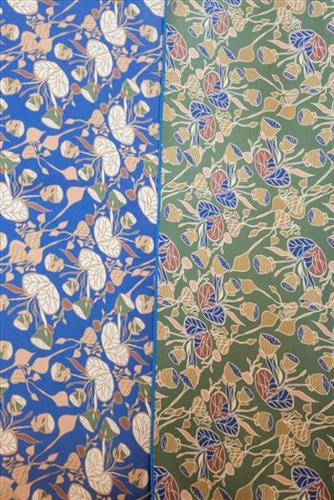
Picnic Rug – Loretta George – Bush Plants
The Djilpin Arts Picnic Rug range is a celebration of life on country around the waterways of Wugularr community and surrounds. Inspired by the artists’ love of heading out bush and throwing down a calico to fish, swim and relax on their traditional lands, these designs feature fish, bush fruits, billabong flowers and medicinal plants.

22134006296
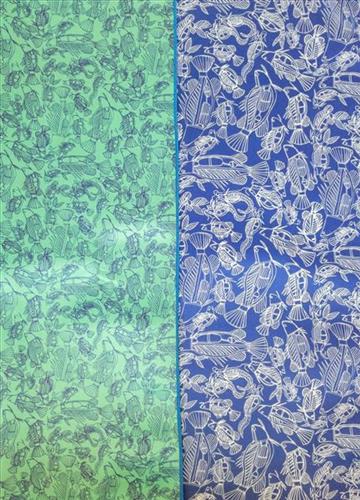
Status: Stock
Fish by Peter Lindsay
The Djilpin Arts Picnic Rug range is a celebration of life on country around the waterways of Wugularr community and surrounds. Inspired by the artists’ love of heading out bush and throwing down a calico to fish, swim and relax on their traditional lands, these designs feature fish, bush fruits, billabong flowers and medicinal plants.

22134006295
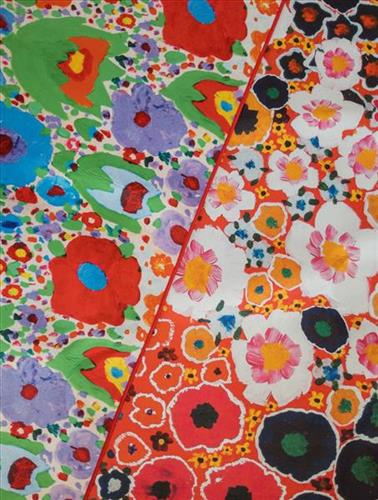
Status: Stock
Billabong Flowers by Angelina George
The Djilpin Arts Picnic Rug range is a celebration of life on country around the waterways of Wugularr community and surrounds. Inspired by the artists’ love of heading out bush and throwing down a calico to fish, swim and relax on their traditional lands, these designs feature fish, bush fruits, billabong flowers and medicinal plants.

37781064000559
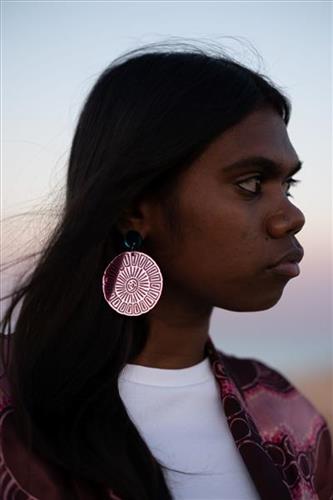
Status: Stock
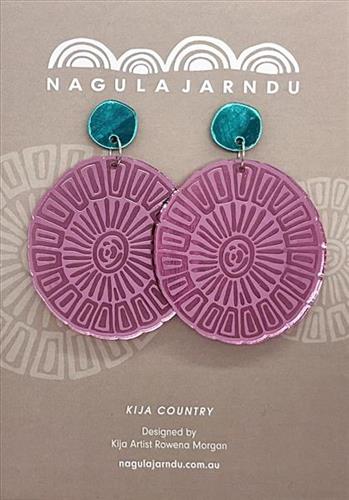
Kija Pink – Rowena Morgan
Kija Country is designed by Rowena Morgan, a Kija woman from the Halls Creek area of The Kimberley. The design depicts the hills of this Country, particularly the Landsdowne Ranges.
Handcrafted from acrylic with a stainless steel post.
Size: Diameter approx. 5cm.
- pink mirror with a teal mirror circle top.
111982330325
Wangarra Spirit
The An-mujolkuwa clan lie a few kilometres in from the mouth of the Blyth River, on the eastern bank. The An-mujolkuwa clan belongs to a larger ‘family’ which all speak the Burarra language.
The Wangarra spirits that inhabit the clan waterhole are also reborn as new members of the clan. The birth of a child is always announced in a dream, when the spirit of the new child makes itself known to the child’s father. The spirit comes from the clan waterhole, and ‘gets hold’ of the mother when she is out collecting.
When a person dies, the various ceremonies that are associated with the stages of the body’s disposal are concerned with making sure that the dead person’s spirit finds its way back to the clan waterhole from where it came. Hence the incarnation of a human being can be seen as one form of a clan spirit in the cycle of it leaving and returning to the clan waterhole. Because these spirits are themselves part of the power of the Ancestral Beings who created it rested in the land, so too are the clan members who are the human forms of these spirits.
The Wangarra are linked to Ji-marda, an outstation in clan lands, and the waterhole nearby. The An-mujalkuwa Wangarra are associated with the Lorrkon mortuary ceremony. Humans are said to have learnt how to perform this ritual from the Wangarra.
111982330323
Gomarla (Egret bird)
The artist has carved the ‘Gomarla’, which in the Burarra word for Egret. This bird is native to the country of Yilan, which is the coastal region North West of Maningrida Community.
People use feathers from gomarla to make ceremonial regalia for Yirrichinga. Many Yirrichinga groups own manikay ‘song’ for gomarla.
Gomarla mun-baparrurr Gopungorra. Jin-gubatbatcha jin-banga jiny-yorkiya. Gomarla waykin makukuya mu-guyinda.
The egret belongs to the Gopungorra clan. It always eats grasshoppers. The egret is high in a nest (builds its nest in the tree).
111982330319
Warraburnburn
In Burarra and Gun-nartpa languages the figure represented in this artwork is generally known as a wangarra ‘ghost spirit’. For the Warrawarra clan ghost spirits have their own particular characteristics and their own name – Warraburnburn.
The Warraburnburn and the closely related Galabarrbarr spirit (owned by the Balkarranga clan) are also manikay song topics. The spirits are related to each other as maternal grandparent and grandchild, just as the people of Warrawarra and Balkarranga are. The dancing of the two ghost spirit figures forms the finale performance for funerals, and is the final goodbye to a deceased family member.
In many ways the Warraburnburn and Galabarrbarr ghost spirits are like people. They emerge from the patches of jungle on Warrawarra and Balkarranga country in the late afternoon and go hunting in family groups of men, women and children. They stay in contact with each other by calling out as the men hunt for fish and the women walk with their dillybags looking for vegetable food.
The ghost spirits are associated closely with white ochre and artists commonly paint the bodies of carved figures in white. Different types of ghost spirit wear different patterns. Warraburnburn is decorated with uniform white dots while others are painted white all over. Some ghost spirits are shown with a design painted on their chest infilled with rarrk ‘cross-hatching’, the same designs that are painted onto japi an-guyinda ‘male initiations’.
They also have supernatural characteristics including superhuman size (jarra anbaykarda ‘super tall’). They know the country intimately – some are malevolent towards humans and will lead people astray, taking them to unfamiliar and dangerous places. These malevolent spirits are likened to an-muburda ‘sorcerers’ and can conduct dangerous rituals that cause harm to people. Others are benign and will lead humans back to familiar paths and their own camps.