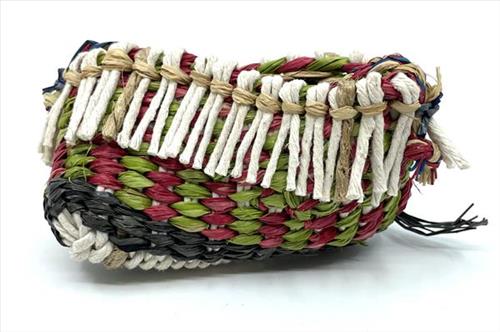
Bag
Art Centre notes:
The bag is made of natural raffia / cotton / jute / sea chord.
It is made using a traditional ‘one twist’ method.
The dyes are commercial and colour fast.
Size of bowl: 7 x 12cm
Length of strap: 40cm
Art Centre notes:
The bag is made of natural raffia / cotton / jute / sea chord.
It is made using a traditional ‘one twist’ method.
The dyes are commercial and colour fast.
Size of bowl: 7 x 12cm
Length of strap: 40cm
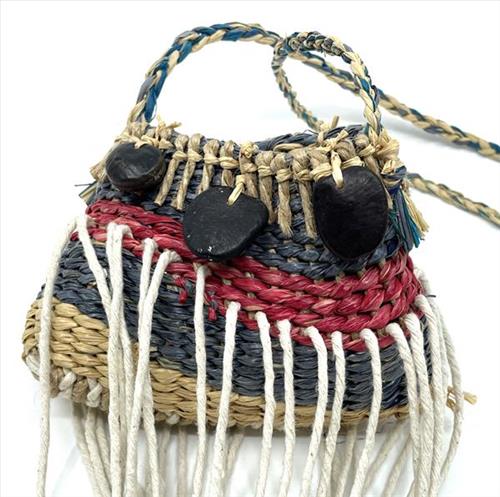
Art Centre notes:
The bag is made of natural raffia / cotton / jute / sea chord / seeds.
It is made using a traditional ‘one twist’ method.
The dyes are commercial and colour fast.
Size of bowl: 11 x 16cm
Length of strap: 40cm
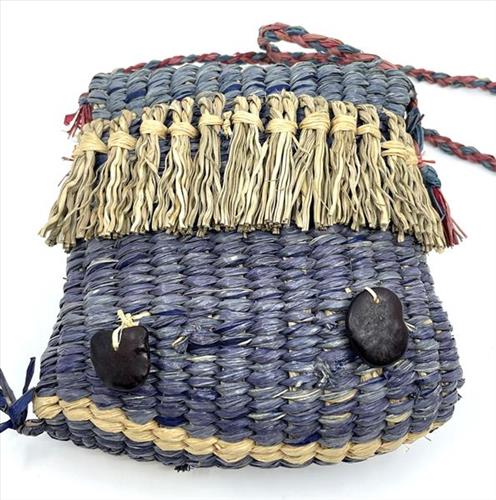
Art Centre notes:
The bag is made of natural raffia / cotton / jute / sea chord / seeds.
It is made using a traditional ‘one twist’ method.
The dyes are commercial and colour fast.
Size of bowl: 18 x 20cm
Length of strap: 40cm
This is a piece from the old times, about how Yolngu ancestors used to live. Men used to go into the Arafura Swamp, and caught the fish with a drag net.
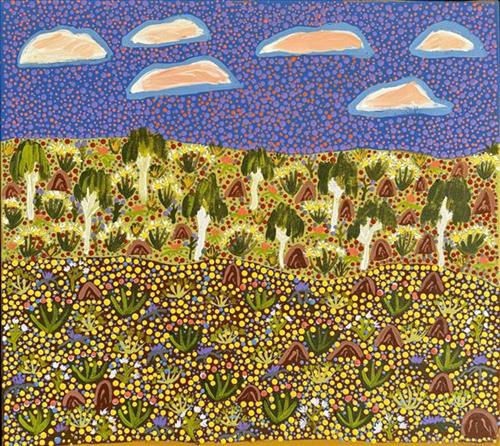
“This is my Grandfather’s country. I paint the spinnifex, wild tobacco, the witchetty grub tree, mulga and ant hills. Sometimes I paint the dry river bed but I always paint the afternoon sky and rolling hills.
I paint in this style, I like colour, this is my way.”
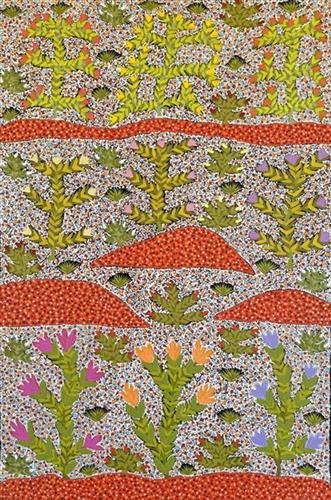
This is my country out in Utopia an outstation called Soapy Bore it’s my Father’s country, there’s big soakage, hills, bush medicine and bush tucker. All my family paint, my grandmother, my mother and aunties. I like to paint, I think about my country, the colours and my family who have gone.
The community of Ampilatwatja made a conscious decision not to paint ‘altyerr’ dreaming stories. The artists paint their country where these stories belong.
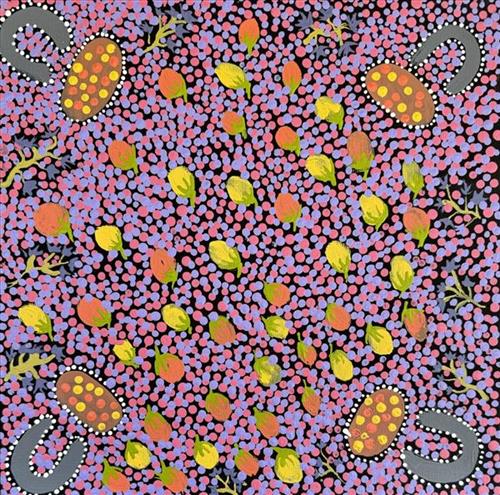
“This is my Grandfather’s country. I paint the spinnifex, wild tobacco, the witchetty grub tree, mulga and ant hills. Sometimes I paint the dry river bed but I always paint the afternoon sky and rolling hills.
I paint in this style, I like colour, this is my way.”
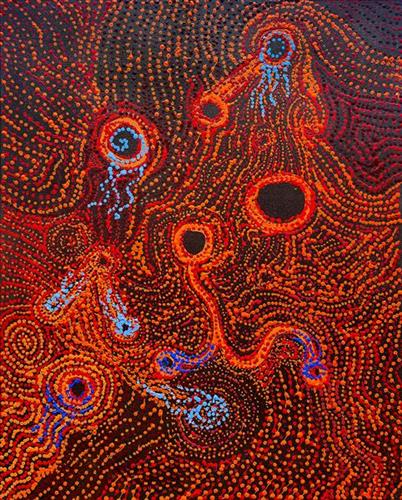
This is the story of two powerful magicians who came to the Ngaanyatjarra Lands from far away to the west;
‘These two men are always together, always camping together. They do all sorts of tricks when they travel across the lands as they stop from place to place. When they reached ‘Wirtapi Wara’ (Long Black or Blackstone Range) they argued about which way to go around. One went around the south side and the other the north side.
At a distance it seemed they didn’t recognise each other or perhaps they were just pretending not to recognise each other! It is also said that at Papulankutja they tricked each other by changing their appearance at the same time so they had no chance to recognise each other. The name Papulankutja comes from the Ngaanyatjarra word meaning, ‘to stare without recognising each other’.
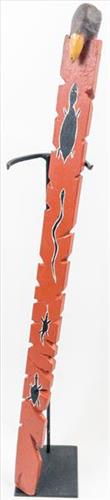
Wood carving has always been part of Aboriginal culture and Djilpin artists continue this tradition. Men carved wood for many purposes – tools for hunting or gathering food, axes and knives for building shelters, spears and clubs for protection of their lives and territory, objects for ceremony and to mark sacred sites.
Hunting implements include the boomerang, woomera and spear. The woomera is a lever which helps to increase the speed and distance the spear travels. Clapsticks are used as percussion instruments by the Songmen to accompany dancing along with the didgeridoo (mago).
As well as the more functional carvings, artists portray animals and birds in wood, and these carvings are often painted. Ceremonial carvings include spirit creatures including mukuy (devil devils) and mimi.
Some fine mimi figures have been cast in bronze.
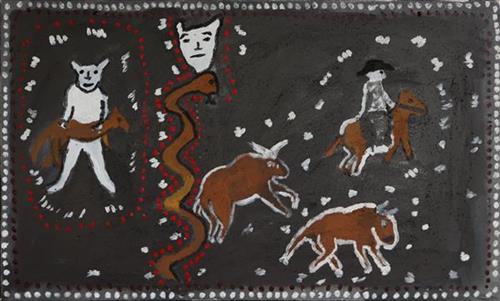
This is a painting depicting all the scenes that I have scene in cave paintings in different areas of Gija Country.