114182331296


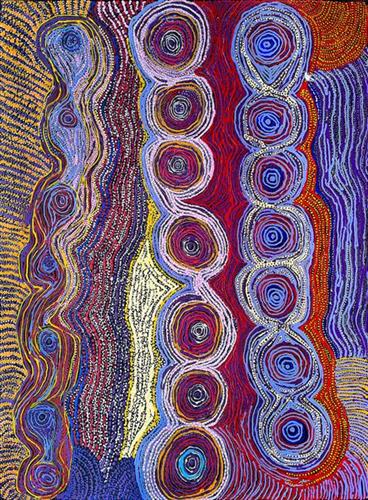
Minyma Tingarri – Angilyiya Tjapiti Mitchell

‘Minyma Tingarri’, is significant tjukurrpa (dreaming) that Angilyiya shares through her artwork. The Tingarri songlines are sacred knowledge held by elders across the Ngaanyatjarra Lands and recognised by different groups across Australia for its explanation of origins in the dream time. 

” Here ladies are sitting around, then the men persuade them to go in a direction that is to their advantage. The ladies come by a big lake. This tjukurrpa today, you can understand its location to be between Walu and Jameson”.

This artwork is a rare gem – a collaboration and handing over of  knowledge between Angilyiya and her husband. The painting was initiated by Angilyiya’s husband who was a Tingarri man. He became ill and unable to finish the artwork. For a husband to entrust his wife with the continuation of knowledge is recognition of her strength as a teacher and her ability to translate the songlines into the geographical mapping of the land. Angilyiya contributes a womens perspective to the Tingarri tjukurrpa. 

Angilyiya continues to be a strong voice in the teaching and sharing of songlines in Papulankutja through her paintings and vision she holds with the other senior ladies in the community.
220982331294


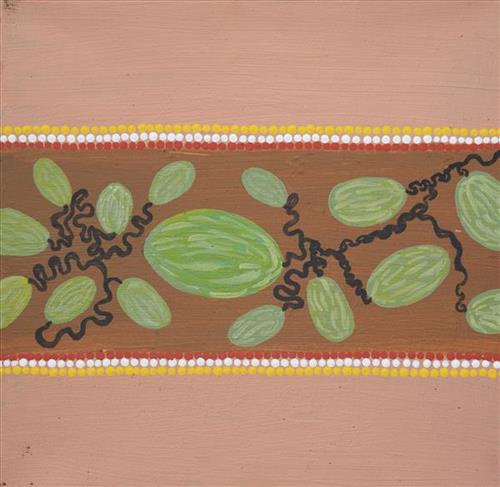
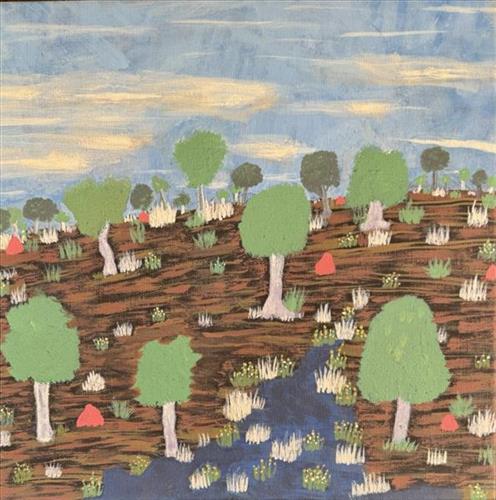
View Of Country

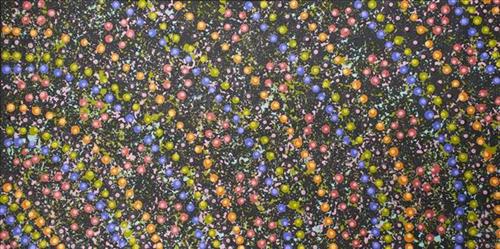
The community of Ampilatwatja made a conscious decision not to paint ‘altyerr’ dreaming stories, the artists paint their country where those stories sit.

This painting shows the layered landscape of Alyawarr, Central Australia. Knowing your country is an important part of living in a remote community like Ampilatwatja. Knowing when and where to go hunting and gathering, knowing where there is ‘soakage’ (where you can dig for water), travelling with family for ceremonies, and maintaining a connection with the land.

“This is my country, my view of country.”

116482331379


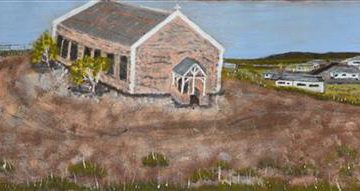
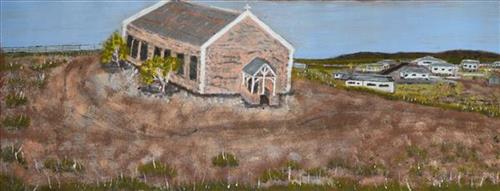
Roebourne Holy Trinity Church

Rodney paints from images in his mind of buildings and places from his childhood. He captures of essence of the place as he remembers.

111582331329


Jatarrngara


Jatarrngara is located along the Karlamilyi River (Rudall River); the birthplace for Jatarr Lily Long, and the site for which she was named. This area forms part of her ngurra (home Country, camp), the area which she knew intimately and travelled extensively with her family in her youth. 

Karlamilyi is Warnman Country, located in the very heart of the Martu homelands. The region is situated south west of the Great Sandy Desert and north east of the Little Sandy Desert. According to two of the central Martu Jukurrpa (Dreaming) narratives, the Karlamilyi River and its surrounds were created by the ancestral beings Jila Kujarra (Two Snakes) and the Wati Kujarra (Two Goanna Men) as they travelled across the lands.

111582331372


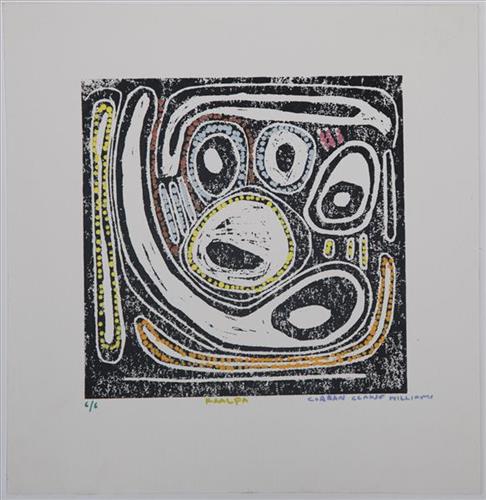
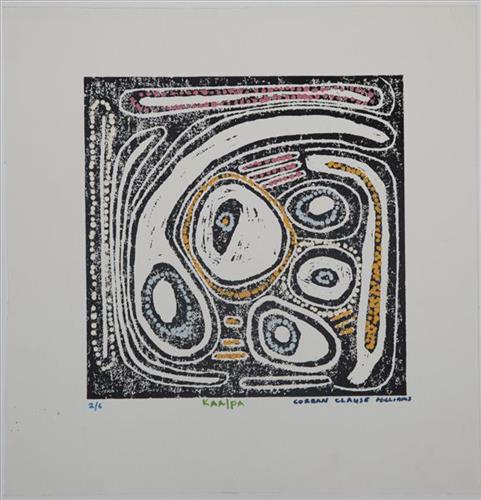
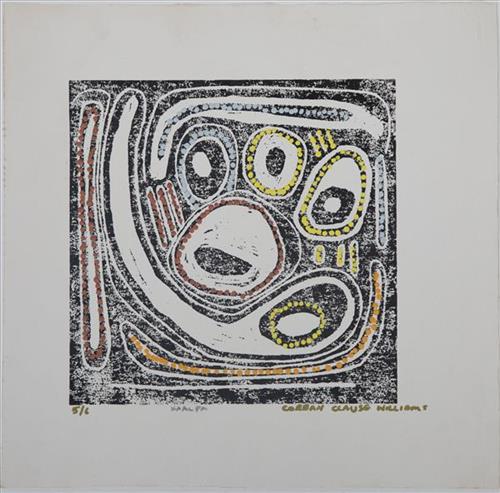
Printmaking (Linoprint)

The traditional lands of the Martu people encompass the Great Sandy Desert and Rudall River regions of Western Australia, and include speakers of Manyjilyjarra, Warnman, Kartujarra, Putijarra and Martu Wangka languages. Martumili Artists work in the Newman based gallery and studio spaces, as well as within remote Aboriginal communities Punmu, Parnngurr, Kunawarritji, Jigalong, Irrungadji (Nullagine), and Warralong. Recognised for their diverse, energetic and unmediated painting styles, their works reflect the dramatic geography and scale of their homelands.

The artists are predominantly painters, working in acrylics and oils, though many also weave baskets from gathered grasses and wool. Popular mediums among younger Martu artists include photography and animation. In this artwork, the process of printmaking has been explored to expand the artist’s creative repertoire. Through workshops in the Newman Studio, Martumili Artists have learnt to translate their designs to linoprint, using a printmaking press to edition their work.

111582331363


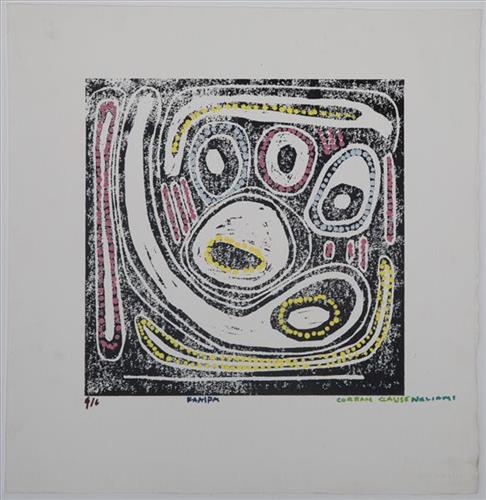
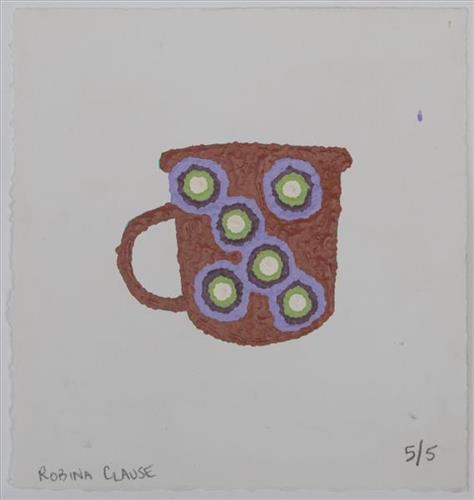
Printmaking (Linoprint)

The traditional lands of the Martu people encompass the Great Sandy Desert and Rudall River regions of Western Australia, and include speakers of Manyjilyjarra, Warnman, Kartujarra, Putijarra and Martu Wangka languages. Martumili Artists work in the Newman based gallery and studio spaces, as well as within remote Aboriginal communities Punmu, Parnngurr, Kunawarritji, Jigalong, Irrungadji (Nullagine), and Warralong. Recognised for their diverse, energetic and unmediated painting styles, their works reflect the dramatic geography and scale of their homelands.

The artists are predominantly painters, working in acrylics and oils, though many also weave baskets from gathered grasses and wool. Popular mediums among younger Martu artists include photography and animation. In this artwork, the process of printmaking has been explored to expand the artist’s creative repertoire. Through workshops in the Newman Studio, Martumili Artists have learnt to translate their designs to linoprint, using a printmaking press to edition their work.

111582331362


Printmaking (Linoprint)

The traditional lands of the Martu people encompass the Great Sandy Desert and Rudall River regions of Western Australia, and include speakers of Manyjilyjarra, Warnman, Kartujarra, Putijarra and Martu Wangka languages. Martumili Artists work in the Newman based gallery and studio spaces, as well as within remote Aboriginal communities Punmu, Parnngurr, Kunawarritji, Jigalong, Irrungadji (Nullagine), and Warralong. Recognised for their diverse, energetic and unmediated painting styles, their works reflect the dramatic geography and scale of their homelands.

The artists are predominantly painters, working in acrylics and oils, though many also weave baskets from gathered grasses and wool. Popular mediums among younger Martu artists include photography and animation. In this artwork, the process of printmaking has been explored to expand the artist’s creative repertoire. Through workshops in the Newman Studio, Martumili Artists have learnt to translate their designs to linoprint, using a printmaking press to edition their work.

111582331361


Printmaking (Linoprint)

The traditional lands of the Martu people encompass the Great Sandy Desert and Rudall River regions of Western Australia, and include speakers of Manyjilyjarra, Warnman, Kartujarra, Putijarra and Martu Wangka languages. Martumili Artists work in the Newman based gallery and studio spaces, as well as within remote Aboriginal communities Punmu, Parnngurr, Kunawarritji, Jigalong, Irrungadji (Nullagine), and Warralong. Recognised for their diverse, energetic and unmediated painting styles, their works reflect the dramatic geography and scale of their homelands.

The artists are predominantly painters, working in acrylics and oils, though many also weave baskets from gathered grasses and wool. Popular mediums among younger Martu artists include photography and animation. In this artwork, the process of printmaking has been explored to expand the artist’s creative repertoire. Through workshops in the Newman Studio, Martumili Artists have learnt to translate their designs to linoprint, using a printmaking press to edition their work.

111582331359


Printmaking (Linoprint)

The traditional lands of the Martu people encompass the Great Sandy Desert and Rudall River regions of Western Australia, and include speakers of Manyjilyjarra, Warnman, Kartujarra, Putijarra and Martu Wangka languages. Martumili Artists work in the Newman based gallery and studio spaces, as well as within remote Aboriginal communities Punmu, Parnngurr, Kunawarritji, Jigalong, Irrungadji (Nullagine), and Warralong. Recognised for their diverse, energetic and unmediated painting styles, their works reflect the dramatic geography and scale of their homelands.

The artists are predominantly painters, working in acrylics and oils, though many also weave baskets from gathered grasses and wool. Popular mediums among younger Martu artists include photography and animation. In this artwork, the process of printmaking has been explored to expand the artist’s creative repertoire. Through workshops in the Newman Studio, Martumili Artists have learnt to translate their designs to linoprint, using a printmaking press to edition their work.