111982331606


Bush Jewellery – Earrings

The women of Maningrida and surrounding homelands use a combination of locally found seeds, bone and shells to make a variety of jewellery including necklaces. earrings and bracelets.  Many of the artists use complex patterns and designs to make their beautiful creations.

111982331605


Bush Jewellery – Earrings

The women of Maningrida and surrounding homelands use a combination of locally found seeds, bone and shells to make a variety of jewellery including necklaces. earrings and bracelets.  Many of the artists use complex patterns and designs to make their beautiful creations.

111982331604


Bush Jewellery – Earrings

The women of Maningrida and surrounding homelands use a combination of locally found seeds, bone and shells to make a variety of jewellery including necklaces. earrings and bracelets.  Many of the artists use complex patterns and designs to make their beautiful creations.

111982331603


Lorrkon (Hollow Log)

The Lorrkon or bone pole coffin ceremony was the final ceremony in a sequence of mortuary rituals celebrated by the people of Arnhem Land. This ceremony involves the placing of the deceased’s bones into a hollow log which was decorated with painted clan designs and ceremonially placed into the ground where it remained until it slowly decayed over many years.

The log is made from a termite hollowed Stringybark tree (Eucalyptus tetradonta) and is decorated with totemic emblems. The western Arnhem Land version of the Lorrkon ceremony involves the singing of sacred songs to the accompaniment of karlikarli, a pair of sacred boomerangs used as rhythm instruments. During the final evening of the ceremony, dancers decorate themselves with kapok down, or today, cotton wool and conduct much of the final segments of the ceremony in the secrecy of a restricted mens’ camp. The complete ceremony may stretch over a period of two weeks, but on the last night the bones of the deceased, which have been kept in a bark container or today wrapped in cloth and kept in a suitcase are taken out, are painted with red ochre and placed inside the hollow log. This ceremony may take place many years after the person has died.

At first light on the final morning of the Lorrkon ceremony, the men appear, coming out of their secret bush camp carrying the pole towards the women’s camp. The two groups call to each other using distinct ceremonial calls. The women have prepared a hole for the pole to be placed into and when it is stood upright, women in particular kinship relationships to the deceased dance around the pole in a jumping/shuffling motion. The Lorrkon is then often covered with a tarpaulin and left to slowly decay.

11564006340


Status: Stock


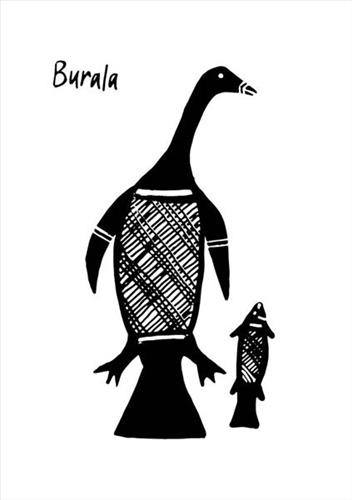
Burala (Diving Ducks) by Peter Gambung

Manymak (very good)! This product helps build a sustainable source of income for Yolŋu artists and art workers at Bula’Bula Arts.

  • Screenprinted linen tea towel with Gurrumatji (Magpie Geese) design 
  • 100% linen
  • 70cm x 50cm
  • Available in black and flax colours 


ARTWORK STORY 

This painting depicts diving ducks, both realistically and symbolically. A particular clan group uses the object in the painting during a hollow log ceremony (traditional funeral ceremony). The rrark (cross hatching) is the water. One group will perform the catfish dance whilst another performs as diving ducks. The object is whirled above the head to make a noise that emulates the ducks “roar”. The dance crescendos into the catfish coming closer to the diving ducks allowing them to eat the catfish in a frenzy.


220982295036


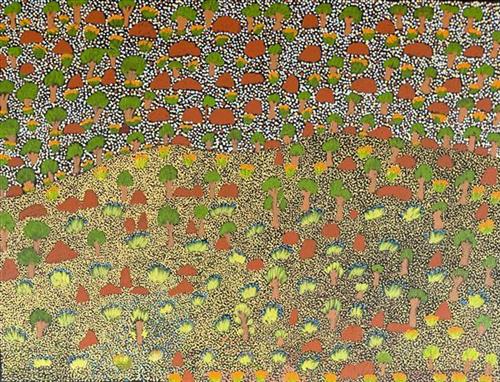
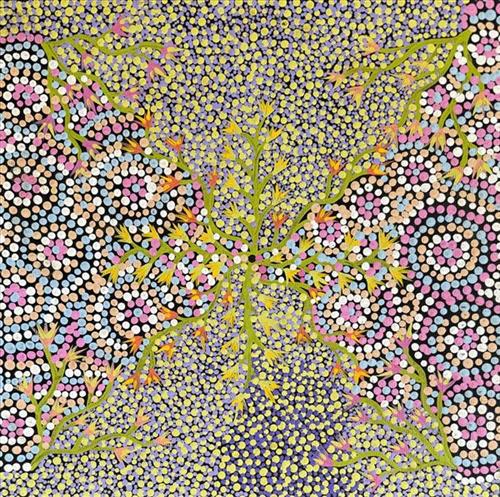
View Of Country

The community of Ampilatwatja made a conscious decision not to paint ‘altyerr’ dreaming stories, the artists paint their country where those stories sit.

This painting shows the layered landscape of Alyawarr, Central Australia. Knowing your country is an important part of living in a remote community like Ampilatwatja. Knowing when and where to go hunting and gathering, knowing where there is ‘soakage’ (where you can dig for water), travelling with family for ceremonies, and maintaining a connection with the land.

“This is my country, my view of country.”

220982319811


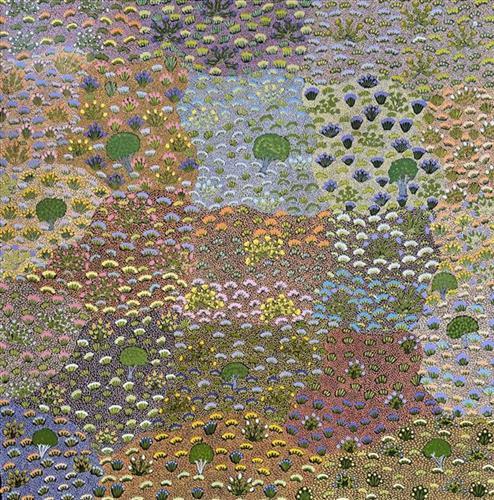
Bush Flowers

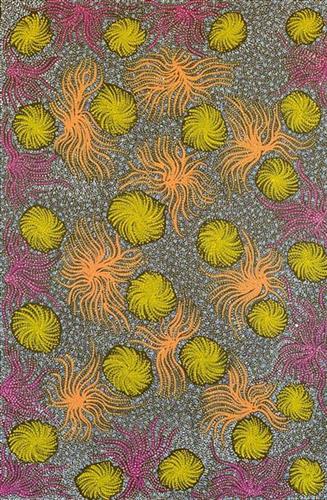
The artists of Ampilatwatja made a conscious decision not to paint ‘altyerr’ dreaming stories. The artists paint their country where those stories sit.
These bush flowers grow seasonly in Alyawarr country, some of which are also used in bush medicine remedies.

“When I go out hunting, I like to see all the bush flowers that are flowering and then when I come back, I paint them.”

220982319808


My Country – Jessie Ngwarraye Ross

The community of Ampilatwatja made a conscious decision not to paint ‘altyerr’ dreaming stories. The artists paint their country where those stories belong.
Jessie’s landscapes beautifully communicate the rich knowledge she possesses of medicinal plants and country, the heart of her culture.
Jessie’s has painted her country, Ampilatwatja. The brightly coloured flowers and small bushes are bush medicine and are still used within the community.
Jessie’s predominant theme in her paintings is ‘strong bush medicine’, demonstrating a deep connection to her country. Her work pays homage to the significance and use of traditional bush medicine, allowing an insight into her community. Yet underneath the iridescent surface, there is an underlying sense that there is more to this landscape than meets the eye. In keeping with the religious laws, Jessie reveals only a small amount of knowledge to the uninitiated.

220982322239


My Country – Alana Ngwarraye Holmes

I was born in Ali Curung, my father was Cigarette George, he was a drover and my Mother is Edie Kemarre Holmes.  My mother taught me to paint, I watched her when I was small, she is an important artist who was involved in the Utopia Batik movement and now paints at Ampilatwatja.  I spent my childhood around Murray Downs.

My paintings are influenced by my Fathers country. I was taught to hunt bush tucker, sugar bags, Kangaroo and Goanna when I was little.

I travel to my Mothers country on Antarrengeny outstation and I teach my kids and grandchildren to go hunting. 

I like to get busy on painting, it feels good.

The community of Ampilatwatja made a conscious decision not to paint ‘altyerr’ dreaming stories. The artists paint their country where those stories sit.