222082340766
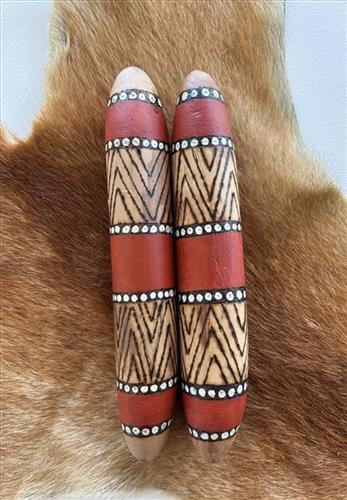
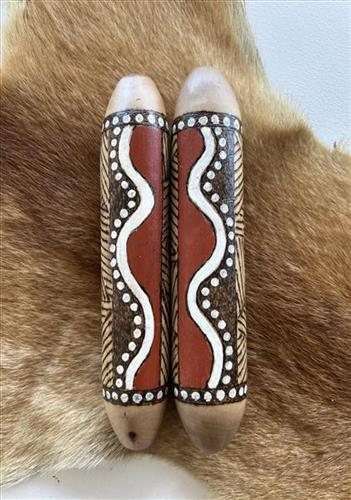
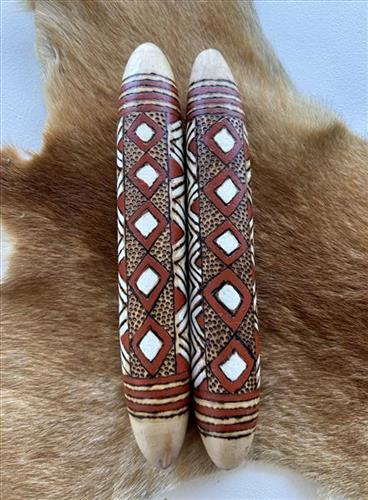
Red Gum Clapsticks
222082340765
Red Gum Clapsticks
116482340761

Ochre Colours
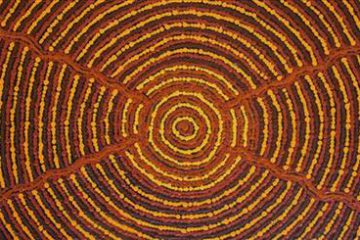
Ochre colours are used for Law and culture ceremonies. Love seeing our colours during this time, especially our Law and culture ceremony,
221776318664

Goonoonoorra
This is my mother’s country and traditional country for Miriwoong people. The name of this place is Goornoonoorra. In my language Miriwong, this name means Big Waters. In the old days we all lived here and walked this country looking for bush tucker. We used to have corroboree at Thethebelung (the Sleeping Buddha) beside Goonoonoorra (the Ord River).In the center of the painting the hill is called Thegoowiyeng – (Kelly’s Knob).My grandparents grew me up near the Nemoowalem ( the Ivanhoe Ranges) and we lived under the boab trees. In this painting you can see the Mirima Community where all the humpy camps are. The town camp is where all the whitefellas who built Kununurra lived. This is where the town houses are today.

221776303903
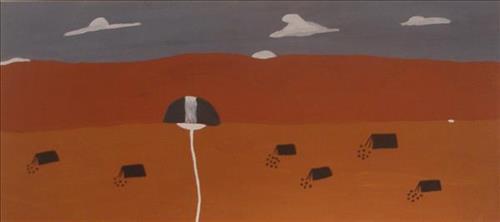
Black Rock Falls
This painting shows Black Rock Falls. During the wet season – flood water time – this was our camp spot. We would camp up on the hillsides to keep dry form the rains and the rising flood waters of the Ord River. When the waterfalls are flowing you couldn’t get to town because of the rivers and creeks overflowing. There is lots of bush tucker here and a swimming hole. We eat this bush tucker. I spent a lot of my growing up years here.
221776307741
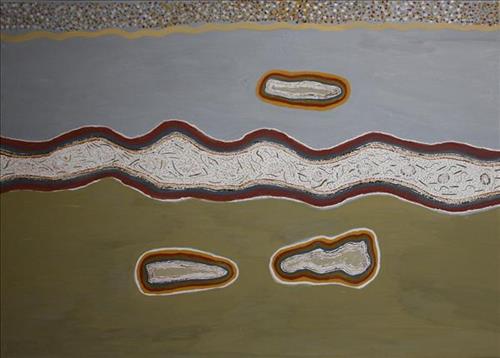
Binjin & Jarnem
In this painting the artist represents the billabong country on either side of Moonoomoorrem – the Keep River. Binjin is her mother’s traditional country and Jarnem is her uncle’s country. Only the billabongs are shown here and not the river that flows through the country.
115681619562
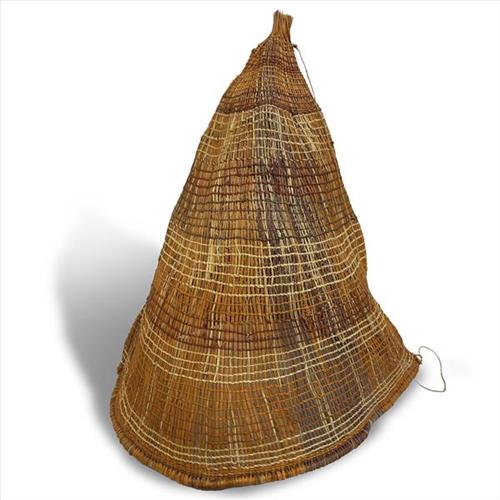
Dhawurr/batjbarra fish trap
Fish traps are placed into the river to face the oncoming fish. The woven tunnel traps the fish and prevents their escape. The traps are tapered so when they are submerged in the water, the water pressure wedges them into place. Traditionally, the fish traps are operated at night time.
111581626518
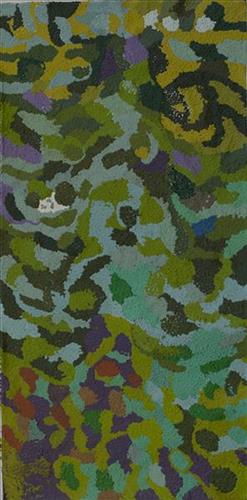
Waru Waru
“This is the waru-waru, the yukarri warta (green shoots and young plants). After the waru (fire) the mirrka (bush tucker) grows up. After the burning. you get all the animals coming to that place ”
Martu artists paint Country in all it’s different seasonal stages. Important to Martu, and to Martu Country, is the practice of waru (fire burning); a practice that assists with hunting, regenerates growth, and encourages greater diversity in plant and animal life. When Martu Country burns, mosaic fire scars are left on the Country, and patches of regeneration form a kind of mosaic pattern across the land. This is called nyurnma – burnt Country. Waru is typically burnt in small, controlled areas, leaving a defined patchwork pattern of nyurnma in the land, across tali (sand hills), linyji (clay pans), parulyukurru (spinifex country) and pila (sandy plains). This patterning is clearly visible in Ngamaru’s works, where she paints fire from an aerial perspective.
115682106673
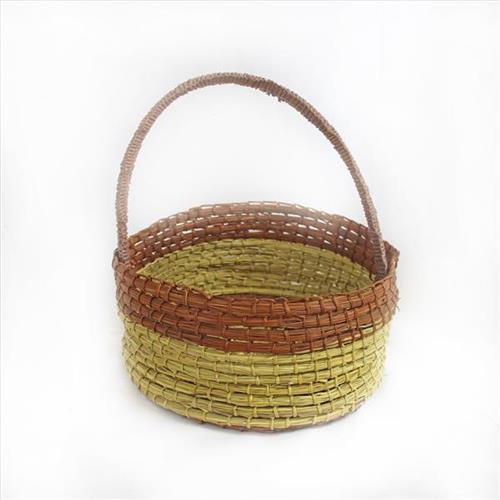
Bathi (Pandanus Basket)
Bathi are woven from the split leaves of the Screw Palm (Pandanus Spiralis). Coil weaving was introduced to Arnhem Land in the 1930s. It was adapted from techniques used by Indigenous women throughout South East Australia.