221382350344


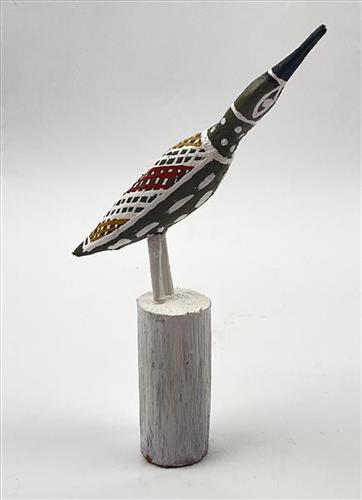
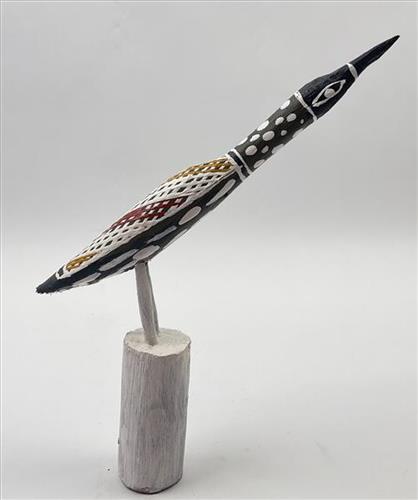
Bird Wood Carving

Wood carving has always been part of Aboriginal culture and Djilpin artists continue this tradition. Men carved wood for many purposes – tools for hunting or gathering food, axes and knives for building shelters, spears and clubs for protection of their lives and territory, objects for ceremony and to mark sacred sites.

Hunting implements include the boomerang, woomera and spear. The woomera is a lever which helps to increase the speed and distance the spear travels. Clapsticks are used as percussion instruments by the Songmen to accompany dancing along with the didgeridoo (mago).

As well as the more functional carvings, artists portray animals and birds in wood, and these carvings are often painted. Ceremonial carvings include spirit creatures including mukuy (devil devils) and mimi.

Some fine mimi figures have been cast in bronze.
221382350343


Bird Wood Carving

Wood carving has always been part of Aboriginal culture and Djilpin artists continue this tradition. Men carved wood for many purposes – tools for hunting or gathering food, axes and knives for building shelters, spears and clubs for protection of their lives and territory, objects for ceremony and to mark sacred sites.

Hunting implements include the boomerang, woomera and spear. The woomera is a lever which helps to increase the speed and distance the spear travels. Clapsticks are used as percussion instruments by the Songmen to accompany dancing along with the didgeridoo (mago).

As well as the more functional carvings, artists portray animals and birds in wood, and these carvings are often painted. Ceremonial carvings include spirit creatures including mukuy (devil devils) and mimi.

Some fine mimi figures have been cast in bronze.
221382350342


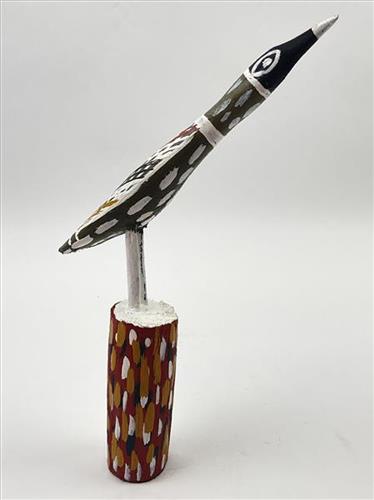
Bird Wood Carving

Wood carving has always been part of Aboriginal culture and Djilpin artists continue this tradition. Men carved wood for many purposes – tools for hunting or gathering food, axes and knives for building shelters, spears and clubs for protection of their lives and territory, objects for ceremony and to mark sacred sites.

Hunting implements include the boomerang, woomera and spear. The woomera is a lever which helps to increase the speed and distance the spear travels. Clapsticks are used as percussion instruments by the Songmen to accompany dancing along with the didgeridoo (mago).

As well as the more functional carvings, artists portray animals and birds in wood, and these carvings are often painted. Ceremonial carvings include spirit creatures including mukuy (devil devils) and mimi.

Some fine mimi figures have been cast in bronze.
359709482350807


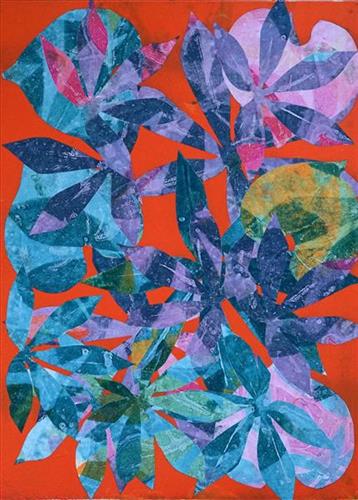
Maniyotha / Gabau Leaf 6 of 6

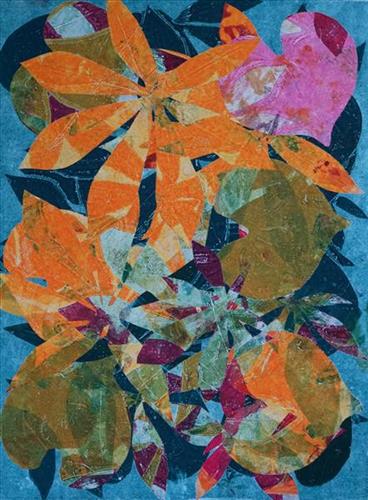
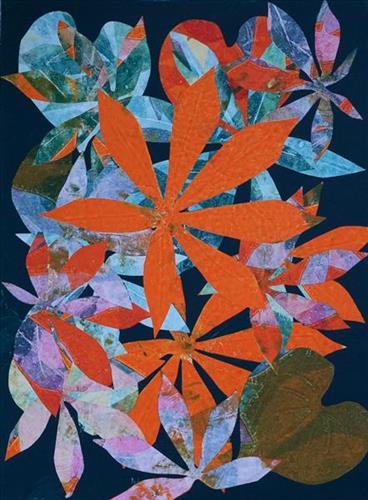
My story is about garden kaikai (foods). I grew up with my parents planting Cassava bones, this is maniyotha/gabau leaf, gives me a glimpse of my childhood.

Art Centre notes:

Image size: 37 x 28cm

Paper size: 53 x 39cm

The artwork is a ‘pochoir’ print, or monoprint, printed on BFK Rives paper

(100% cotton rag with strong archival properties). 

Artist: Gertie Tomsana

Printer: Dian Darmansjah

Printed: Moa Arts Studio, Jan 2025


359709482350803


Maniyotha / Gabau Leaf 5 of 6

My story is about garden kaikai (foods). I grew up with my parents planting Cassava bones, this is maniyotha/gabau leaf, gives me a glimpse of my childhood.

Art Centre notes:

Image size: 37 x 28cm

Paper size: 53 x 39cm

The artwork is a ‘pochoir’ print, or monoprint, printed on BFK Rives paper

(100% cotton rag with strong archival properties). 

Artist: Gertie Tomsana

Printer: Dian Darmansjah

Printed: Moa Arts Studio, Jan 2025

359709482350802


Maniyotha / Gabau Leaf 4 of 6

My story is about garden kaikai (foods). I grew up with my parents planting Cassava bones, this is maniyotha/gabau leaf, gives me a glimpse of my childhood.

Art Centre notes:

Image size: 37 x 28cm

Paper size: 53 x 39cm

The artwork is a ‘pochoir’ print, or monoprint, printed on BFK Rives paper

(100% cotton rag with strong archival properties). 

Artist: Gertie Tomsana

Printer: Dian Darmansjah

Printed: Moa Arts Studio, Jan 2025

359709482350799


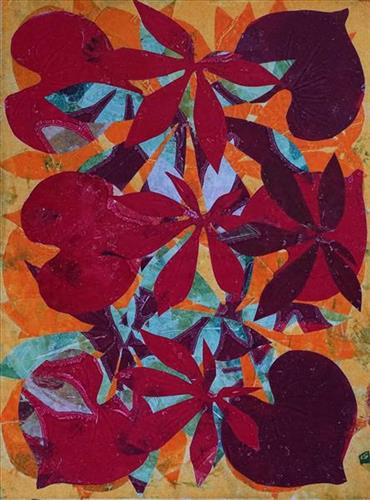
Maniyotha / Gabau Leaf 3 of 6

My story is about garden kaikai (foods). I grew up with my parents planting Cassava bones, this is maniyotha/gabau leaf, gives me a glimpse of my childhood.

Art Centre notes:

Image size: 37 x 28cm

Paper size: 53 x 39cm

The artwork is a ‘pochoir’ print, or monoprint, printed on BFK Rives paper

(100% cotton rag with strong archival properties). 

Artist: Gertie Tomsana

Printer: Dian Darmansjah

Printed: Moa Arts Studio, Jan 2025


359709482350797


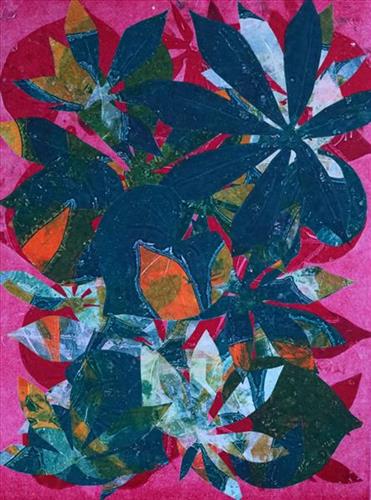
Maniyotha / Gabau Leaf 2 of 6

My story is about garden kaikai (foods). I grew up with my parents planting Cassava bones, this is maniyotha/gabau leaf, gives me a glimpse of my childhood.

Art Centre notes:

Image size: 37 x 28cm

Paper size: 53 x 39cm

The artwork is a ‘pochoir’ print, or monoprint, printed on BFK Rives paper

(100% cotton rag with strong archival properties). 

Artist: Gertie Tomsana

Printer: Dian Darmansjah

Printed: Moa Arts Studio, Jan 2025

359709482350795


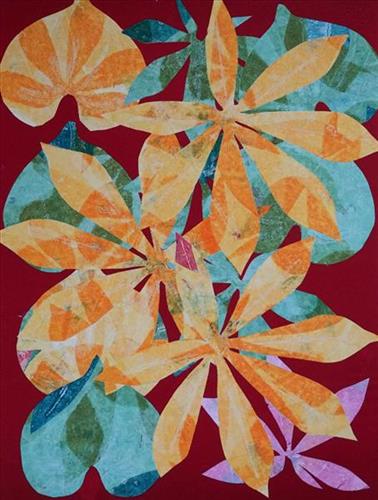
Maniyotha / Gabau Leaf 1 of 6

My story is about garden kaikai (food) I grew up with my parents planting Cassava bones, and. this maniyotha/gabau leaf gives me a glimpse of my childhood.

Art Centre notes:

Image size: 37 x 28cm

Paper size: 53 x 39cm

The artwork is a ‘pochoir’ print, or monoprint, printed on BFK Rives paper

(100% cotton rag with strong archival properties). 

Artist: Gertie Tomsana

Printer: Dian Darmansjah

Printed: Moa Arts Studio, Jan 2025

377810582351000


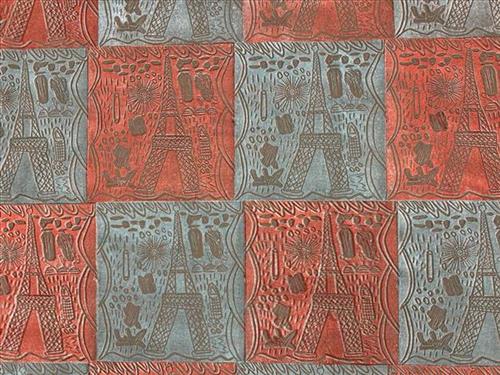
Eiffel tower and the Maladj spirit

“I want to tell you about my design, that Eiffel tower one.

This year it was my first time going to Paris. I didn’t know that place, nothing. We travelled around the world to get there, we flew underneath the world in an aeroplane.

Paris was a big, crowded city. They speak a different language there, just like here in Maningrida with all our different languages.

The Bábbarra artists and Ingrid, we were all walking around, like tourists. We went on the boat in the Paris river. There was a film crew taking videos of us. We saw so many beautiful buildings covered with black string (iron balconies) and big statues. We’d never seen things like that before.

I remember when we got off that boat and I looked up and saw that tower. When I first looked up at that tower, it made me happy- it’s so long up into the sky. We walked towards it. I was standing there watching that tower and thinking, ‘wow, first time for me seeing a tower like that’.

Then I was thinking, and I said to myself, when I go back to my own country, I’m going to paint that tower.

We came to Maningrida, I started to draw. I drew that tower from France, but also I drew maladj (stone country orphan spirit), women’s sacred woven mat, fish traps and rolk (insects). I also put round kunngol (clouds) in the design, those circles. That maladj spirit, it’s standing there next to the Eiffel tower, looking at the dancing lights at night. The tower is from Paris, but everything else in my design I took from my mother’s country and my father’s country.

Maybe one day I’ll travel back to France, and take my design with me to show them, all the French mob.” Janet Marawarr